 how-to
How to Prepare Your Backyard for Hot Tub Delivery
Table of Contents
- Start With a Site Walkthrough
- Measure the Delivery Path and Gate Width
- Hot Tub Foundation Options: Pick the Right Base
- Hot Tub Electrical Requirements and GFCI Protection
- Clear the Route and Plan for Delivery Day
- DIY vs. Professional Site Preparation
- Conclusion: Your Backyard, Ready for Installation
- Frequently Asked Questions
Last Updated: September 7, 2026
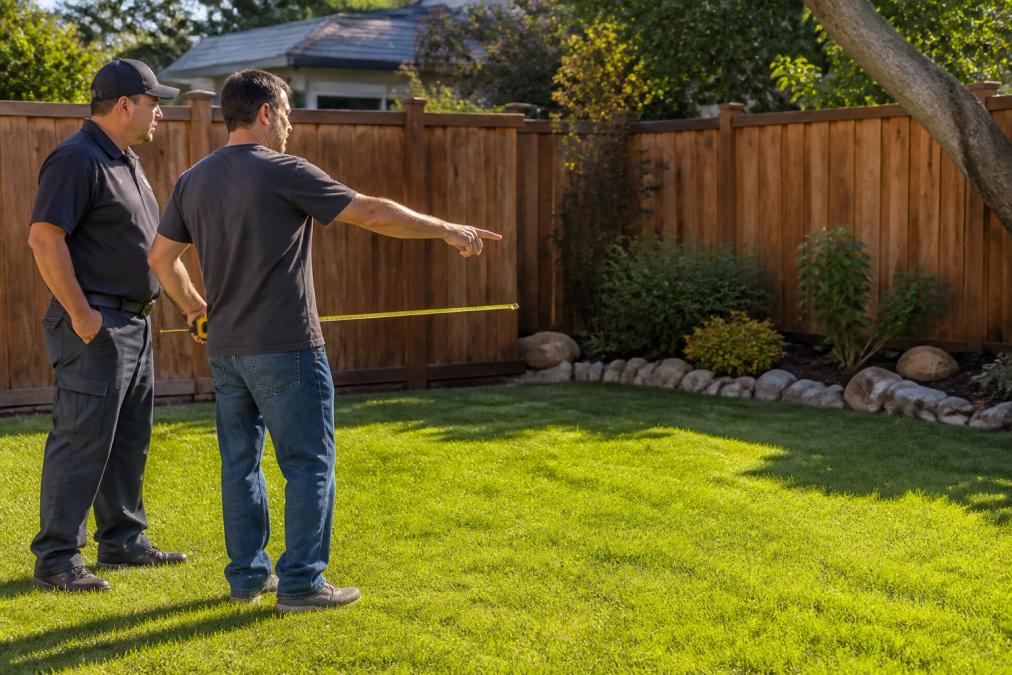
Start With a Site Walkthrough
Preparing your backyard for hot tub delivery starts long before the truck arrives. The first step is a slow, deliberate walkthrough of your outdoor space to identify where the spa will live and what stands between that spot and the street. At allvalley, we've spent over 26 years guiding homeowners through this process.
During your walkthrough, grab a tape measure and a notepad. You're looking for three things: a level area large enough for the spa footprint, a clear path from the street to that area, and access to a power source. Most hot tubs need about 3 feet of clearance on at least one side for panel access.
A common mistake is choosing a spot purely for aesthetics, like under a shade tree or tucked against a fence. That choice often creates problems with delivery clearance requirements or makes wiring far more expensive. Pick the location first, then plan the path.
Measure the Delivery Path and Gate Width
Hot tub delivery clearance requirements are strict because spas are large, heavy, and unforgiving to move. Before you commit to a location, measure every choke point between the street and the final resting spot, including gate openings, side-yard passages, and the turning radius around corners.
- Gate width: Most standard gates are 36 inches wide. Many hot tubs, even when tipped on edge, need 30 to 34 inches of clear passage. If your gate is narrower, you may need to remove a panel or plan for a crane lift.
- Turning radius: A straight path is rare. Measure the diagonal space at corners, because a spa on a delivery cart needs more room to pivot than you might expect.
- Overhead clearance: Check for low-hanging branches, roof overhangs, or patio covers that could block a crane or tall delivery truck.
- Surface condition: Dirt, loose gravel, or steep slopes make moving a 500-plus-pound spa dangerous for the crew and your property.
If the path fails any of these checks, you have two options: widen the route or choose a different placement. The American National Standards Institute guidance on spa installation emphasizes that safe delivery depends entirely on unobstructed access, so don't assume the crew can "figure it out" on site.
Hot Tub Foundation Options: Pick the Right Base
Your hot tub foundation options come down to three practical choices: a poured concrete pad, a gravel base, or a pre-formed spa pad. The right answer depends on your soil, your budget, and how permanent you want the installation to be. What matters most is that the base is level, stable, and capable of supporting the filled weight of the spa, which can exceed 4,000 pounds for larger models.
Concrete Pad vs. Gravel Base vs. Spa Pad
| Foundation Type | Best For | Key Considerations |
|---|---|---|
| Concrete Pad | Permanent installations | Requires cured concrete, typically 4 inches thick; most stable option |
| Gravel Base | Budget-friendly setups | Needs crushed stone or pea gravel, compacted and leveled; drains well |
| Spa Pad | Quick, portable placement | Pre-formed plastic panels; easy to install but less durable on soft soil |
Weight Distribution and Structural Support
A filled hot tub is heavy. A 7-foot spa holding 300 gallons of water weighs roughly 3,000 pounds before you add people. That load must be distributed evenly across a surface that won't shift or sink. Concrete pads offer the best weight distribution; gravel bases work when properly compacted, but they require deeper excavation and a weed barrier to stay stable.
The International Code Council's residential construction guidelines recommend verifying that your foundation can support the concentrated load of a filled spa, especially if you're placing it on a deck or patio. Most decks are not engineered for this weight without reinforcement.
Calculating Load-Bearing Capacity for Decks and Patios
Most guides stop at "use a level surface," but the real risk is structural failure. The filled weight of your spa is listed in the manufacturer's specifications; for a typical 7-foot by 7-foot spa, this is often between 3,500 and 4,500 pounds. Divide that number by the spa's footprint area (in square feet) to get the pounds per square foot (psf) the surface must support. For a 49-square-foot spa weighing 4,000 pounds, that's roughly 82 psf.
A standard residential deck is typically engineered for a live load of 40 psf, according to the American Wood Council's span tables, meaning it is likely undersized for a hot tub without reinforcement (awc.org). If your deck is elevated, you will almost certainly need to consult a structural engineer to assess joist spacing, beam sizing, and footing depth. Adding support posts or sistering joists are common retrofits, but not DIY projects for most homeowners.
For a patio slab, a 4-inch-thick concrete slab on compacted gravel can generally support a hot tub, provided it is in good condition and poured over stable soil. However, if your patio is older, cracked, or was poured without rebar or wire mesh, it may not have the tensile strength to handle the load. If you have any doubt, a licensed contractor can perform a core sample or visual inspection to assess the slab's integrity.
The Unique Angle: A Step-by-Step Load Test
Before committing to a location, place a 4-foot by 4-foot piece of plywood on the proposed spot and stand a fully loaded water heater (roughly 450 pounds) or a stack of concrete pavers on it. Leave it for 48 hours and measure any deflection or settling with a level. This is not a substitute for an engineer's calculation, but it is a low-cost way to identify obvious soft spots. If the surface moves, you need a different location or a reinforced foundation.
Hot Tub Electrical Requirements and GFCI Protection
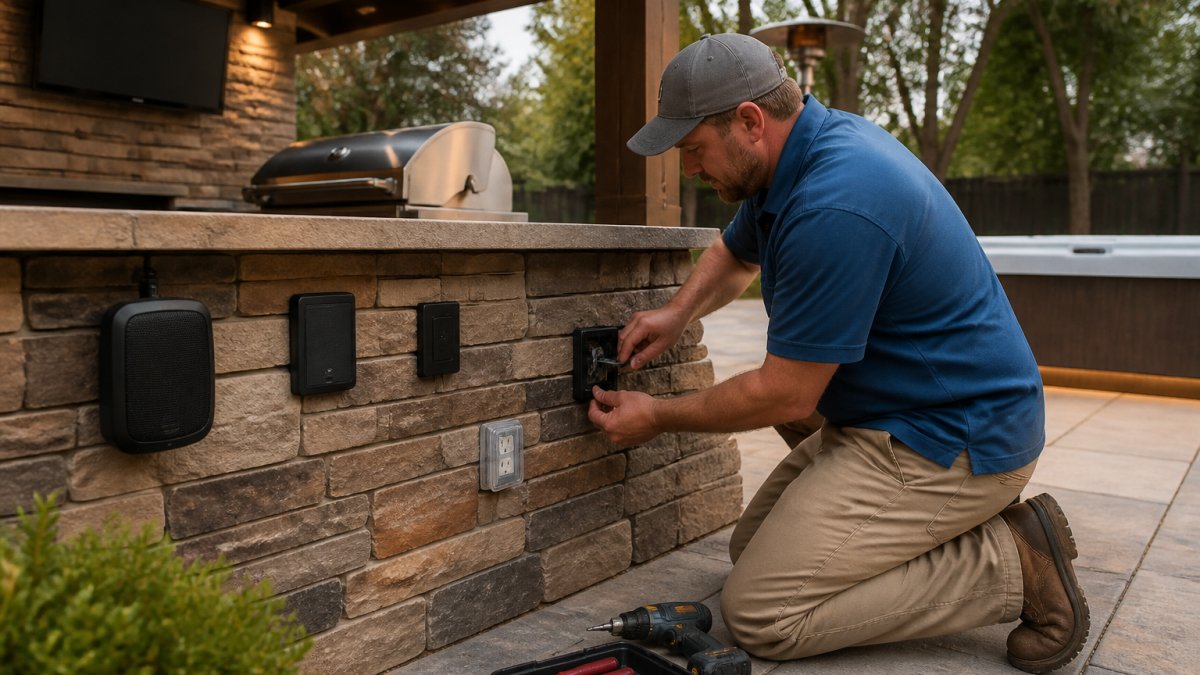
Hot tub electrical requirements are non-negotiable, and they're governed by the National Electrical Code. Your spa must be on a dedicated circuit with a ground fault circuit interrupter, commonly called a GFCI. This device shuts off power instantly if it detects a current leak, which is essential when water and electricity share a space.
Most hot tubs require either a 120-volt plug-and-play connection or a 240-volt hardwired circuit. The 240-volt option delivers faster heating and supports all jets and features simultaneously, but it requires a licensed electrician to run a dedicated line from your breaker panel. The electrical disconnect must be located within sight of the spa, typically 5 to 10 feet away, and at least 5 feet from the water's edge.
This is not a DIY job. Hiring a licensed electrician ensures your installation meets local code and passes inspection. Many manufacturers will not honor warranties if the electrical work was done improperly. Check your local permit requirements before scheduling the work, because most municipalities require an inspection before the spa can be powered on.
Clear the Route and Plan for Delivery Day
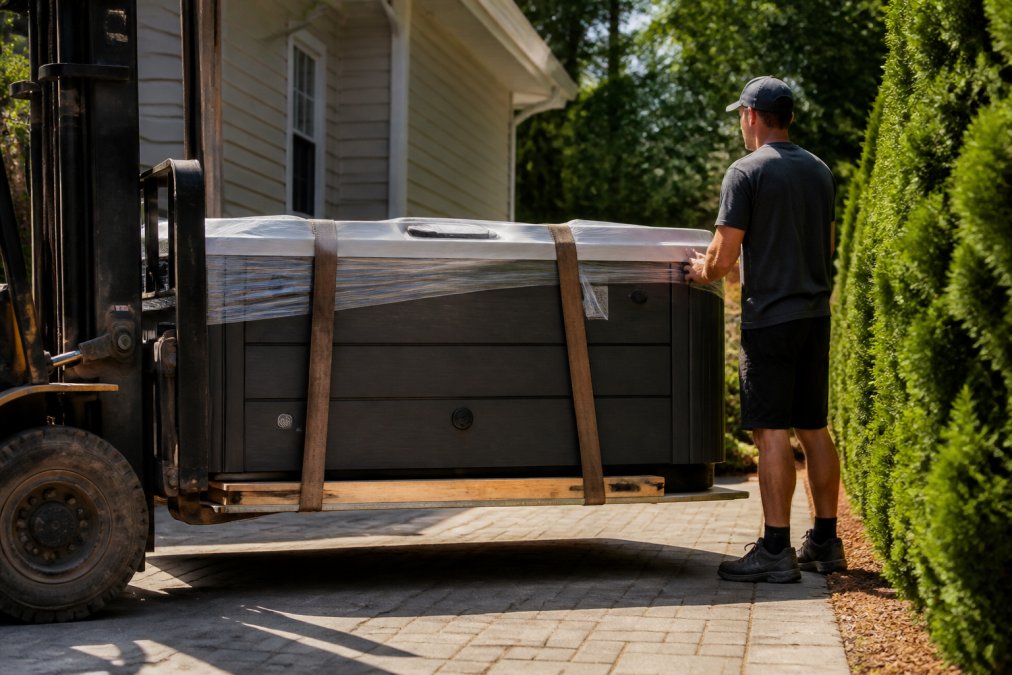
Delivery day goes smoothly when you've done the prep work in advance. The delivery crew is there to place the spa, not to clear your yard, so treat the route as a runway that must be ready before they arrive.
- Trim tree branches and remove any obstacles along the delivery path.
- Move patio furniture, planters, hoses, and children's toys out of the way.
- Confirm the gate opens fully and stays open during the delivery.
- Protect your floors and doorways if the crew needs to pass through the house.
- Have a clear plan for where the crew can park the truck, ideally within 20 feet of the spa location.
Ask your dealer about what the delivery day expectations include. Some companies offer white-glove delivery where the crew handles placement, leveling, and even the initial hookup. Others drop the spa at the curb and leave the rest to you. Confirming this in advance prevents surprises. measure your yard.
Winter Delivery: The Overlooked Preparation
If you live in a climate where temperatures drop below freezing, delivery day prep takes on a whole new dimension. A frozen backyard is a leading cause of delivery delays and crew refusals. Here is what you need to handle before the truck arrives.
Snow and Ice Removal: The entire path from the street to the spa pad must be clear of snow and ice. A delivery crew moving a 500-pound spa on a wheeled cart cannot stop or steer on an icy surface. Clear the path down to the bare ground or pavement, then apply a generous layer of ice melt or sand to prevent refreezing. Pay special attention to slopes or inclines.
Frozen Ground and the Spa Pad: If you are placing the spa on a gravel base or a spa pad, frozen ground can make it difficult to level the base or set the pad flush. If you are pouring a concrete pad, do not pour it when the ground is frozen; concrete will not cure properly in freezing temperatures. Schedule concrete work for a day when the ambient temperature is above 40°F, and use a curing blanket if there is any risk of an overnight freeze.
Crew Access and Warm-Up: Ensure the path is clear and wide enough for the crew to maneuver with bulky gloves and heavy boots. If the spa is going into a backyard with a gate, make sure the latch is not frozen shut; lubricate the hinge and latch with silicone spray the day before delivery. Consider having a warm, dry area where the crew can take a break if needed.
Post-Delivery Freeze Protection: Once the spa is placed, fill it and power it up quickly to prevent any water in the plumbing from freezing. If the delivery is scheduled for late afternoon, confirm with your dealer that the electrician can complete the hookup the same day. A spa sitting empty in sub-freezing temperatures is at risk for damage to its pumps and pipes.
The First 48 Hours: A Post-Delivery Maintenance Checklist
Once the spa is in place, the first 48 hours are critical for the longevity of your investment. Here is a checklist that most guides omit.
- Fill the Spa Immediately: Connect a garden hose to the fill spout and begin filling the spa as soon as the crew has leveled it. Do not wait until the next day. An empty spa is vulnerable to wind uplift and structural stress.
- Power Up and Check for Leaks: Once the water level is above the skimmer, turn on the power at the breaker. Check all the jets, the pump, and the heater for any signs of leaks. Look under the spa skirt for drips or puddles.
- Balance the Water Chemistry: Within the first 24 hours, test the water and add the initial doses of sanitizer, pH balancer, and alkalinity increaser. Your dealer should provide a starter kit; if not, purchase one from a local pool supply store. Do not soak in the spa until the chemical levels are within the safe range.
- Re-Check the Level: After the spa is full, re-check that it is still level. The weight of the water can cause a slight settling. If you notice more than a 1/4-inch difference, you may need to shim the base or adjust the spa pad.
- Cover and Lock: Place the cover on the spa and secure the locks. This prevents debris from entering and helps the water reach the target temperature faster, saving you on energy costs.
DIY vs. Professional Site Preparation
Some homeowners prefer to handle site preparation themselves, and that's reasonable for simpler tasks like clearing the path, trimming branches, and confirming measurements. Draw the line at foundation and electrical work, where mistakes are costly and dangerous.
DIY site prep makes sense when you're comfortable with manual labor and have the tools to level ground or assemble a spa pad. However, pouring a concrete pad requires knowledge of forms, rebar, and curing times. A poorly poured pad will crack and shift, taking your spa with it.
Professional site preparation covers the full scope: foundation assessment, electrical coordination, delivery logistics, and final placement. The benefit is accountability, if something goes wrong, one team handles it. For most homeowners, the peace of mind is worth the investment.
Conclusion: Your Backyard, Ready for Installation
Proper preparation for hot tub delivery comes down to measuring twice, building the right foundation, and confirming your electrical setup meets code. Skip any of these steps and you risk a delayed installation, a damaged spa, or a safety hazard.
At allvalley, we've helped homeowners prepare their backyards for hot tub delivery and installation for more than 26 years. Our team handles delivery and installation so you don't have to coordinate between contractors, and every hot tub purchase includes free starter kits and chemicals to get you soaking on day one.
Get started with allvalley by calling us at 760-342-5277, and let's get your backyard ready for years of relaxation.
Frequently Asked Questions
How far away from a house should a hot tub be placed?
Most local building codes require a hot tub to be at least 5 to 10 feet from the house structure. This distance protects the foundation and gives the delivery crew and electrician room to work. Check your local permit requirements before installation day. Also, keep the spa clear of overhead wires and eaves. Your installer will confirm the exact setback for your model during the site walkthrough.
Do I need a concrete pad for my hot tub?
A concrete pad is one of the best hot tub foundation options, but it is not the only one. A 4-inch-thick reinforced concrete pad that is properly cured works well. You can also use a compacted crushed stone base or a pre-formed spa pad. The key is a level surface that can handle the weight of the tub when filled with water and people, which can exceed 5,000 pounds.
What electrical requirements are needed for a hot tub installation?
Most hot tubs need a dedicated 240-volt electrical circuit with a GFCI breaker, though some smaller plug-and-play models run on a standard 120-volt outlet. The electrical circuit must be installed by a licensed electrician and meet local code. You will also need an electrical disconnect within sight of the spa. Verify your home's amperage capacity before the electrician starts work.
What is the best way to prep the ground for a hot tub installation?
Start by marking the spa location and checking the delivery path for clearance. Remove sod and level the ground, then lay a base of compacted crushed stone or pour a concrete pad. Confirm the surface is perfectly level with a long level. Finally, confirm the route to the backyard has enough width and turning radius for the delivery crew to move the hot tub safely.