 how-to
How to Maintain Hot Tub Water Chemistry: A Step-by-Step Guide
Table of Contents
- Why Hot Tub Water Chemistry Matters
- Testing Your Hot Tub Water: How Often and What to Check
- Essential Hot Tub Chemicals and What They Do
- How to Balance Hot Tub Alkalinity and pH
- Sanitization Methods: Chlorine vs. Bromine
- How to Shock a Hot Tub and When You Need To
- Filter Care, Drain Schedules, and Troubleshooting
- Conclusion
- Frequently Asked Questions
Why Hot Tub Water Chemistry Matters
Getting your hot tub water right isn't just about comfort, it's about safety and longevity. Poorly balanced water corrodes equipment, breeds bacteria, damages your skin, and turns your retreat into a maintenance nightmare. The good news: maintaining hot tub water chemistry isn't complicated once you understand the fundamentals.
At allvalley, we've helped homeowners transform their backyards into relaxation spaces that actually stay clean and safe. The secret isn't expensive equipment or constant fiddling, it's understanding what your water needs and checking it regularly. When you know what to test for and how to balance it, you're not fighting your hot tub anymore. You're just keeping it running.
Think of your water like a living system. It gets stressed by bathers, heat, sunlight, and time. Without proper maintenance, it becomes a breeding ground for algae and harmful bacteria. With the right approach, it stays crystal clear and safe for everyone who uses it. This guide walks you through exactly how to maintain hot tub water chemistry so your investment works for you, not against you.
Testing Your Hot Tub Water: How Often and What to Check
Test your hot tub water at minimum twice per week, ideally every other day if you use it regularly. This frequency catches problems before they become expensive. You're checking for four critical parameters: pH, alkalinity, sanitizer level, and calcium hardness.
pH balance measures how acidic or basic your water is on a scale of 0-14. The ideal range is 7.2-7.8 (the CDC). Too low, and your water becomes corrosive, eating away at metal components and irritating skin. Too high, and sanitizers stop working effectively, allowing bacteria to thrive. This is the foundation, get pH wrong and nothing else matters.
Alkalinity acts as a buffer that keeps pH stable. Think of it as shock absorbers for your water chemistry. The target range is 80-120 ppm (parts per million) (the CDC). Without adequate alkalinity, your pH bounces around constantly, making your hot tub impossible to maintain. With it, small changes in pH are absorbed without drama.
Sanitizer levels (whether you use chlorine or bromine) kill bacteria and algae. Your sanitizer should stay between 2-4 ppm (the CDC). Test this daily if you're using your hot tub regularly. Low sanitizer means bacteria wins. Too much, and you're wasting chemicals and potentially irritating skin.
Calcium hardness prevents scale buildup on pipes and equipment. Target 200-400 ppm. Hard water (high calcium) leaves crusty deposits. Soft water (low calcium) causes corrosion. Either extreme costs you money in repairs.
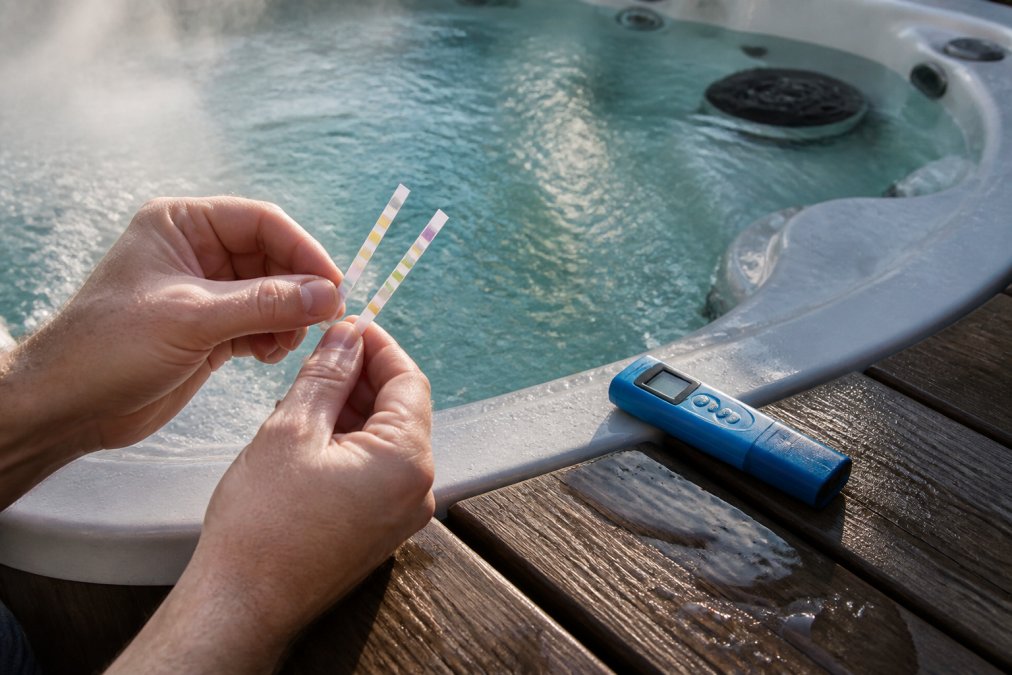
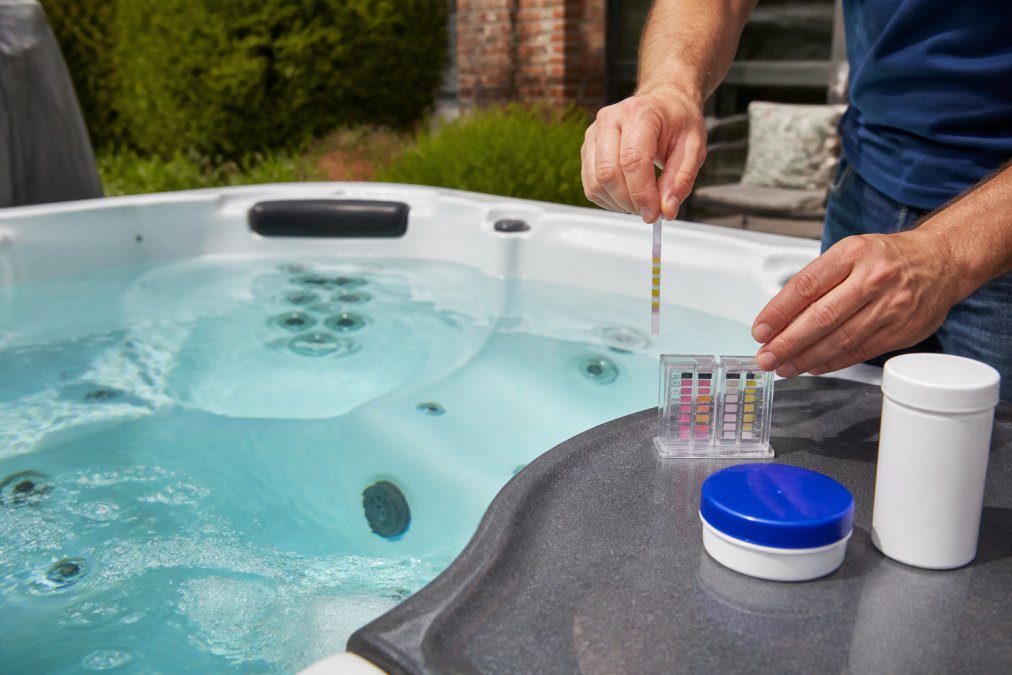
You have two testing options: test strips or a digital water tester. Test strips are cheap and quick, dunk them in, wait 15 seconds, match colors to the chart. Digital testers are more accurate but cost more upfront. Many people use both: strips for daily quick checks, digital for weekly detailed analysis.
Essential Hot Tub Chemicals and What They Do
Your hot tub needs four types of chemicals working together. Understanding what each does prevents panic when something goes wrong.
Sanitizers are your frontline defense. Chlorine and bromine both kill bacteria and algae, but they work differently. Chlorine acts fast and breaks down quickly, making it ideal for frequent testing and adjustment. Bromine works slower but lasts longer and is gentler on skin. Both have trade-offs, chlorine is cheaper and more common, bromine is more stable in hot water. Most people start with chlorine and switch to bromine if they have sensitive skin.
pH adjusters come in two forms: pH increaser (sodium carbonate) raises pH when it's too low, and pH decreaser (sodium bisulfate) lowers it when it's too high. You'll use these regularly to keep water in the sweet spot of 7.2-7.8.
Alkalinity increaser (sodium bicarbonate) buffers your water and prevents wild pH swings. This is the chemical that saves you from constant pH tweaking. Add it when alkalinity drops below 80 ppm.
Shock treatment is a concentrated dose of oxidizer that breaks down organic waste and restores sanitizer effectiveness. You shock your hot tub weekly or after heavy use. It's not optional, shock prevents cloudy water and keeps your sanitizer from getting overwhelmed.
Additional chemicals you might need include calcium hardness increaser if your water is too soft, water clarifier if your water turns cloudy despite proper sanitizer levels, and test kits to verify your water is balanced. A quality hot tub chemical starter kit from allvalley includes all the essentials you need to get started.
How to Balance Hot Tub Alkalinity and pH
Alkalinity and pH are inseparable. You must balance alkalinity first, then adjust pH. If you do it backwards, you'll chase your tail forever.
Step 1: Test alkalinity. Use test strips or a digital tester to measure your current alkalinity level. If it's between 80-120 ppm, you're done with this step. If it's low, move to step 2.
Step 2: Add alkalinity increaser if needed. If alkalinity is below 80 ppm, add alkalinity increaser according to package directions (typically 1.5 lbs per 10,000 gallons raises alkalinity by about 10 ppm). Dissolve it in a bucket of hot tub water first, then pour it into the tub away from where people are sitting. Let the jets run for 2 hours, then retest.
Step 3: Test pH. Once alkalinity is balanced, test your pH. The ideal range is 7.2-7.8.
Step 4: Adjust pH if needed. If pH is too low (below 7.2), add pH increaser. If pH is too high (above 7.8), add pH decreaser. Add these chemicals slowly, a little goes a long way. Use half the recommended dose, wait 2 hours, retest, then adjust again if needed. This prevents overcorrection.
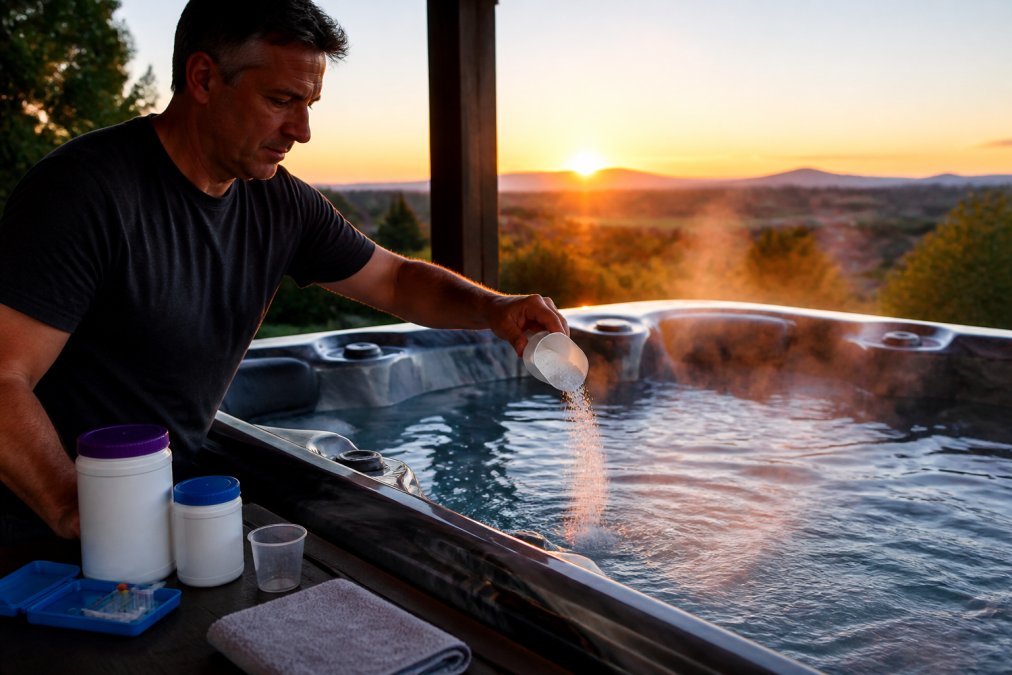
The reason alkalinity comes first is simple: alkalinity stabilizes pH. If you balance pH first, then add alkalinity increaser, the alkalinity will pull your pH back out of range. Start with alkalinity, then fine-tune pH around it.
Most people struggle here because they expect instant results. Chemistry takes time. After adding any chemical, run your jets for at least 2 hours before retesting. Patience prevents wasted chemicals and frustration.
Sanitization Methods: Chlorine vs. Bromine
Both chlorine and bromine sanitize effectively, but they're fundamentally different chemicals with different trade-offs.
Chlorine is the traditional choice. It kills bacteria fast, costs less, and is widely available. The downside: chlorine breaks down quickly in hot water, especially in sunlight, so you need to test and adjust frequently. Chlorine also produces a stronger smell, that "chlorine" scent most people associate with pools. Some people find chlorine irritates their skin or eyes.
Bromine works more slowly than chlorine but lasts longer in hot water. It's gentler on skin and eyes for most people, and it doesn't produce that sharp chlorine smell. The trade-off: bromine costs more and requires slightly different testing and adjustment procedures. It's also less forgiving if you miss a day of maintenance, bromine doesn't bounce back as quickly if levels drop.
For most hot tub owners, chlorine is the practical choice. It's cheaper, easier to find, and requires less specialized knowledge. If you have sensitive skin or use your hot tub daily, bromine might be worth the extra cost.
Whichever you choose, stick with it. Switching between chlorine and bromine mid-season confuses your water chemistry and wastes chemicals. Pick one and commit for the season.
How to Shock a Hot Tub and When You Need To
Shocking your hot tub is non-negotiable. It's the one maintenance task that prevents everything else from falling apart.
What shock does: Shock treatment oxidizes organic waste, sweat, oils, cosmetics, sunscreen, that accumulates in your water. Over time, this waste builds up and makes sanitizers less effective. Shock breaks it down and restores your sanitizer's power. Without regular shocking, you'll end up with cloudy water, algae growth, and a hot tub that smells bad no matter how much chlorine or bromine you add.
When to shock: Shock your hot tub weekly at minimum. If you use it heavily (more than 3-4 people daily), shock twice weekly. After a party or heavy use day, shock immediately. Cloudy water is a sign you need to shock right now.
How to shock:
- Test your sanitizer level first. If it's above 4 ppm, wait a few hours for it to drop.
- Follow package directions for dosage (typically 1-2 lbs per 10,000 gallons).
- Dissolve shock in a bucket of hot tub water first, never add it dry.
- Pour the dissolved shock into the tub away from where people are sitting.
- Run jets on high for at least 2 hours.
- Wait 24 hours before using the hot tub (or follow package instructions, some shocks are faster-acting).
- Test sanitizer level again before anyone gets in.
The biggest mistake people make is shocking, then immediately getting in the tub. Shock needs time to work. Let it circulate overnight, then retest before use.
Filter Care, Drain Schedules, and Troubleshooting
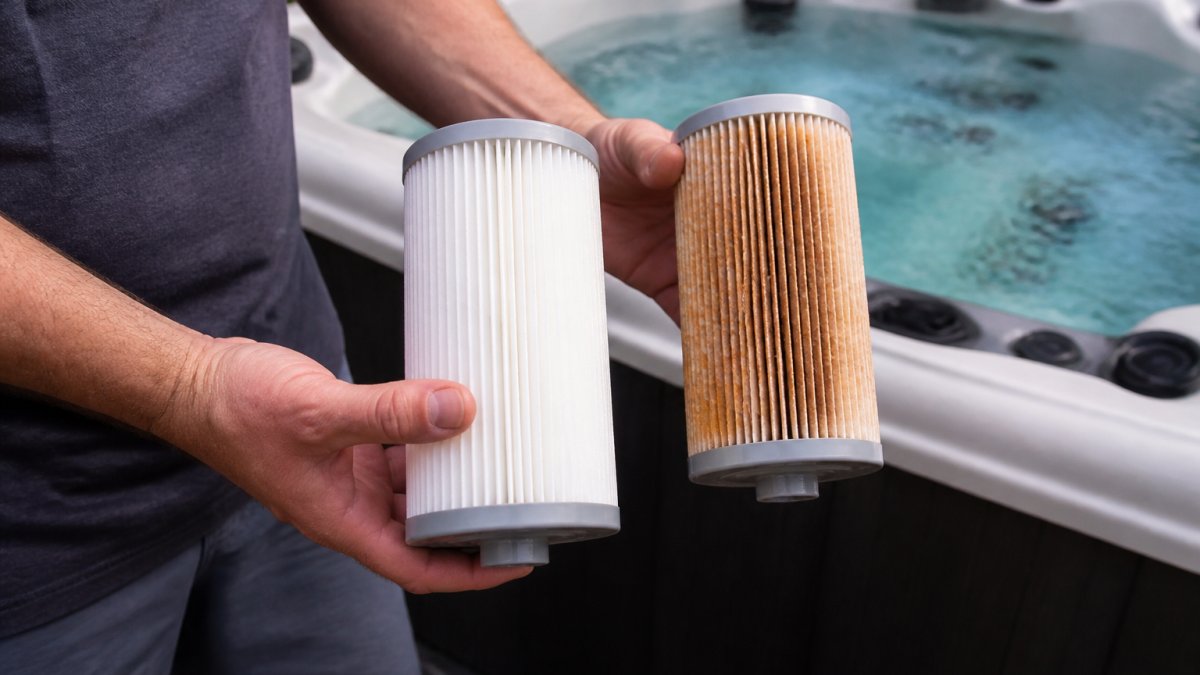
Your filter is your hot tub's lungs. A dirty filter can't remove debris, which means your water gets cloudy and chemistry becomes harder to maintain.
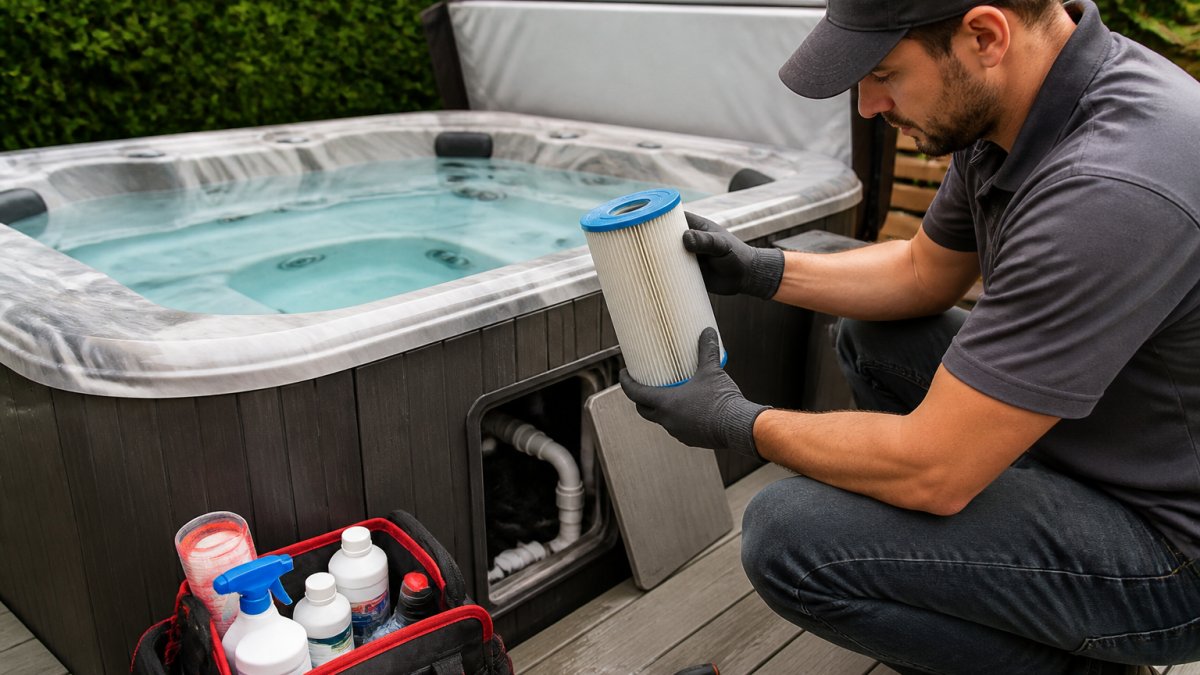
Filter maintenance: Rinse your filter cartridge with a garden hose every 1-2 weeks during regular use. Point the spray between the pleats to flush out debris. Every 3-6 months, soak the filter in a filter cleaning solution overnight to remove oils and buildup. Replace your filter cartridge every 1-2 years depending on use frequency.
Drain and refill: Drain your entire hot tub every 3-4 months. Over time, total dissolved solids (TDS) accumulate in your water, minerals and chemicals that don't break down. Eventually, TDS gets so high that sanitizers stop working effectively, and your water chemistry becomes impossible to balance. A complete drain and refill resets everything.
To drain: turn off the heater and jets, attach a submersible pump to a hose, and pump water away from your foundation. Clean the shell while it's empty, then refill with fresh water.
Troubleshooting cloudy water: Cloudy water means something is wrong. Test your sanitizer level first, if it's low, add sanitizer and retest in a few hours. If sanitizer is adequate but water is still cloudy, shock your tub. If it's still cloudy after shocking, your filter is likely dirty, rinse or replace it. As a last resort, add a water clarifier product, which clumps particles together so your filter can catch them.
Troubleshooting green or brown water: This is algae. Add shock immediately, then add extra sanitizer. Brush the sides and bottom of the tub to break up algae colonies. Retest in 24 hours. If algae persists, you may need to drain and refill.
Troubleshooting foaming water: Foam usually means too many organic compounds (sweat, sunscreen, oils) in the water. Shock your tub and add an anti-foam product. If foam returns quickly, drain and refill.
Troubleshooting water that smells like chlorine: Counterintuitively, this often means low chlorine, not high. When chlorine levels drop, chloramines form, compounds that smell strongly of chlorine. Shock your tub to break down chloramines and restore free chlorine.
Conclusion
Maintaining hot tub water chemistry comes down to three habits: test regularly, adjust gradually, and shock weekly. These three things prevent 95% of hot tub problems.
The barrier most people hit isn't knowledge, it's consistency. Life gets busy, you skip a week of testing, and suddenly your water is a mess. The solution is making testing routine, like brushing your teeth. Pick a day and time each week, test your water, make adjustments, and move on.
When you buy a hot tub from allvalley, you get a free chemical starter kit and professional installation that includes setup guidance. We've been helping homeowners maintain their outdoor retreats for over 26 years, and we know that the right start makes all the difference. Our team can walk you through your water chemistry setup and answer questions as they come up.
Start with the fundamentals: test twice weekly, balance alkalinity before pH, shock weekly, and rinse your filter regularly. Master these basics and your hot tub will reward you with years of crystal-clear, safe water. Get started with allvalley and let us help you build the backyard retreat you've been imagining.
Frequently Asked Questions
How often should you test hot tub water chemistry?
Test your hot tub water at least 2-3 times per week during regular use. If you use your spa daily or have high bather load, test every day. Use test strips or a digital water tester to check pH, alkalinity, sanitizer levels, and calcium hardness. Regular testing catches imbalances early and prevents cloudy water, scale buildup, and bacterial growth.
What chemicals should I put in my hot tub for the first time?
Start with a hot tub chemical starter kit, which typically includes alkalinity increaser, pH decreaser or increaser, sanitizer (chlorine or bromine), and calcium hardness increaser. Follow the kit's instructions for your tub's volume. Most starter kits are included free with new hot tub purchases from quality retailers. After initial setup, maintain levels weekly based on test results.
What happens if hot tub pH is too low?
Low pH (below 7.2) makes water acidic, which corrodes equipment, irritates skin and eyes, and reduces sanitizer effectiveness. It can also cause foaming and cloudy water. Raise pH by adding an alkalinity increaser or pH increaser. Test again after 4-6 hours. Maintaining pH between 7.2 and 7.8 keeps water safe and prevents expensive damage to your spa's components.
How long does a hot tub chemical starter kit last?
A starter kit typically lasts 4-8 weeks depending on tub size, usage frequency, and weather. After the starter kit is depleted, ongoing chemical costs depend on how often you use your spa and local water conditions. Most owners spend modestly on maintenance chemicals monthly. For current pricing on replacement chemicals and kits, contact allvalley for a quote based on your specific tub model.
Ready to upgrade your backyard with a hot tub that's built for easy maintenance? Call allvalley at 760-342-5277 to explore our selection of premium hot tubs with free starter kits and professional installation. We'll help you choose the right model for your space and get you set up for success.
This article was written using GrandRanker