 listicle
Best Hot Tub Chemicals for Beginners: 2026 Starter Guide
Table of Contents
- Understanding Hot Tub Sanitizers: Chlorine vs. Bromine for Spas
- Essential Chemicals Every Beginner Needs
- Top Starter Kits for Hot Tub Chemicals
- Water Testing and Hot Tub Water Testing Frequency
- How to Clean Hot Tub Filters and Maintain Water Quality
- Step-by-Step Startup Guide for New Hot Tub Owners
- Common Beginner Mistakes to Avoid
- Eco-Friendly and Sensitive-Skin Alternatives
Last Updated: August 27, 2026
Understanding Hot Tub Sanitizers: Chlorine vs. Bromine for Spas
When you're setting up your first hot tub, the sanitizer you choose determines how much time you'll spend on maintenance. Chlorine and bromine are the two dominant sanitizers, and they work differently enough that picking the wrong one creates months of frustration.
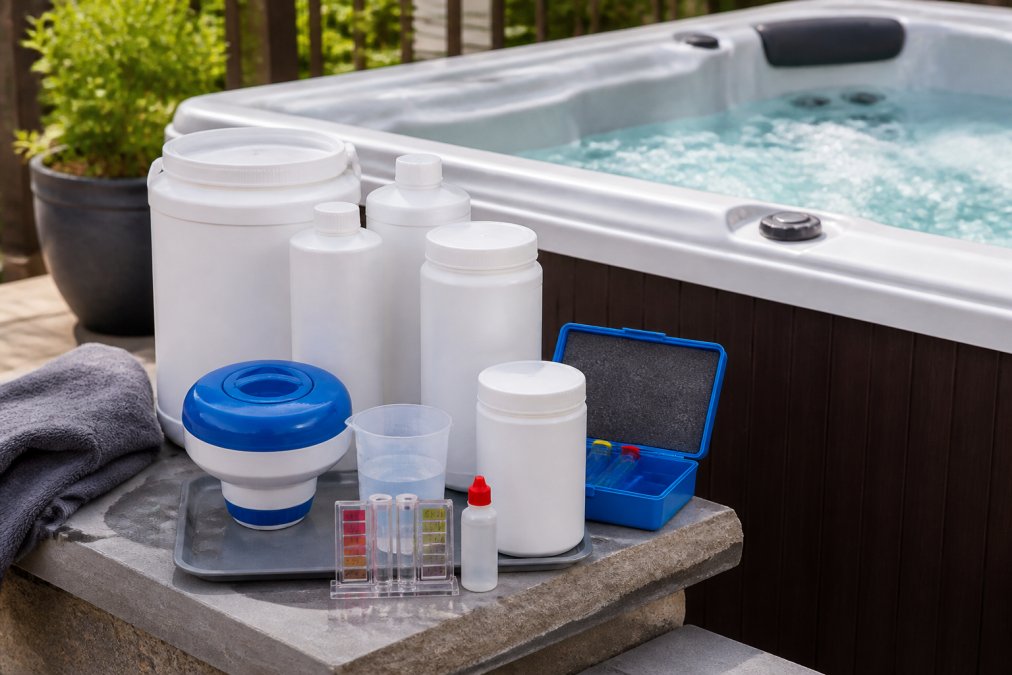
Chlorine is faster-acting and cheaper upfront. It kills bacteria and algae quickly, making it ideal if you want immediate results. The downside: chlorine breaks down faster in hot water (spas run hotter than pools), and it can leave a noticeable chemical smell when imbalanced. Bromine tablets dissolve more slowly and stay effective longer in high temperatures, which is why many spa owners prefer them. Bromine also produces less odor and is gentler on sensitive skin. The tradeoff is cost, bromine runs higher per month, and you'll need a floating dispenser to apply it properly.
For beginners, chlorine-based systems are more forgiving because they're easier to adjust quickly if something goes wrong. Bromine requires more patience and planning. That said, if anyone in your household has sensitive skin or chemical sensitivities, bromine or alternative sanitizers like biguanide might be worth the extra expense.
Essential Chemicals Every Beginner Needs
Beyond your sanitizer, you'll need supporting chemicals to keep water balanced and clear. These aren't optional, skipping them leads to cloudy water, foaming, and equipment damage.
Sanitizers and Oxidizers
Your sanitizer prevents bacterial growth. Chlorine granules work best for routine dosing, while shock treatments (oxidizers) burn off organic waste like sweat, lotions, and body oils that accumulate between uses. Non-chlorine shock treatments are compatible with any sanitizer system and won't spike your chlorine levels, making them useful for midweek refreshes. Bromine systems typically use sodium bromide granules for initial setup, then bromine tablets for ongoing maintenance.
The confusion most beginners face: they think shock and sanitizer are the same thing. They're not. Shock is a concentrated oxidizer that clears buildup; sanitizer prevents new bacteria from growing.
pH Balancers and Alkalinity Adjusters
pH measures how acidic or basic your water is. The ideal range for spas is 7.2 to 7.8 (the CDC). If pH drifts below 7.2, the water becomes corrosive and irritates eyes and skin. Above 7.8, water becomes cloudy and sanitizer stops working effectively. pH Up and pH Down are your adjustment tools.
Total alkalinity is different from pH, it's the water's ability to resist pH changes. Think of it as a buffer. You want alkalinity between 80 and 120 ppm (parts per million) (the CDC). Low alkalinity means pH swings wildly with each chemical addition. High alkalinity makes pH nearly impossible to adjust. Get this right first, then fine-tune pH.
Water Clarifiers and Conditioners
Clarifiers bind tiny particles together so your filter can catch them. This is what makes cloudy water turn crystal clear overnight. Conditioners like sequestering agents prevent minerals (calcium, magnesium) from staining your spa shell and equipment. If you live in an area with hard water, a conditioner is non-negotiable.
Top Starter Kits for Hot Tub Chemicals
Rather than buying chemicals individually, starter kits bundle everything you need for initial setup. They're cheaper than buying separately and include a care guide.
Leisure Time Chlorine Quick Start Up Kit
The Leisure Time Chlorine Quick Start Up Kit includes chlorinating granules, shock treatment, foam reducer, and test strips. At approximately $52, it covers the essentials for a first fill. The granules dissolve fast, the shock treatment clears organic buildup, and the foam reducer handles any foaming issues that crop up early.
The limitation: this kit doesn't include pH balancers or alkalinity adjusters. You'll need to buy those separately unless your tap water happens to be perfectly balanced (rare). For a true beginner, expect to spend an additional $20-30 on pH Up, pH Down, and alkalinity increaser.
Best for: Chlorine-system beginners who want an organized first step without overthinking it.
SpaPure Chlorine Starter Spa Care Kit
The SpaPure Chlorine Starter Spa Care Kit is the more comprehensive option. This 8-piece set includes chlorinating granules, shock, pH Up, pH Down, clarifier, stain and scale preventer, conditioner, and test strips. At approximately $68, it's about $15 more than the Leisure Time kit, but you're not buying additional chemicals afterward.
The included care guide walks you through the startup sequence, which matters because order matters, alkalinity first, then pH, then sanitizer. Skip this sequence and you'll chase your tail adjusting chemicals.
Best for: Beginners who want everything in one box and a clear roadmap for initial setup.
FROG @ease In-line SmartChlor Cartridge System
The FROG @ease In-line SmartChlor Cartridge System is a different animal. Instead of adding granules and tablets manually, this system uses replaceable cartridges that release chlorine automatically as water flows through. The SmartChlor Technology self-regulates chlorine output, which means you're less likely to overdose or underdose.
A single replacement cartridge costs approximately $20, and you'll replace it every 4 months depending on usage. The system also includes mineral cartridges that condition water and reduce chlorine demand by up to 75%. This appeals to people who hate the smell of chlorine or have sensitive skin.
The catch: your hot tub must have an in-line system compatible with FROG cartridges, or you'll need to buy a separate floating system ($40-60). If your spa doesn't support it, this won't work.
Best for: Owners who want hands-off sanitization and don't mind replacing cartridges every few months.
Water Testing and Hot Tub Water Testing Frequency
Testing is where most beginners fall short. They assume "it looks clear, so it's fine." Water can look perfect and still have dangerous pH or chlorine levels.
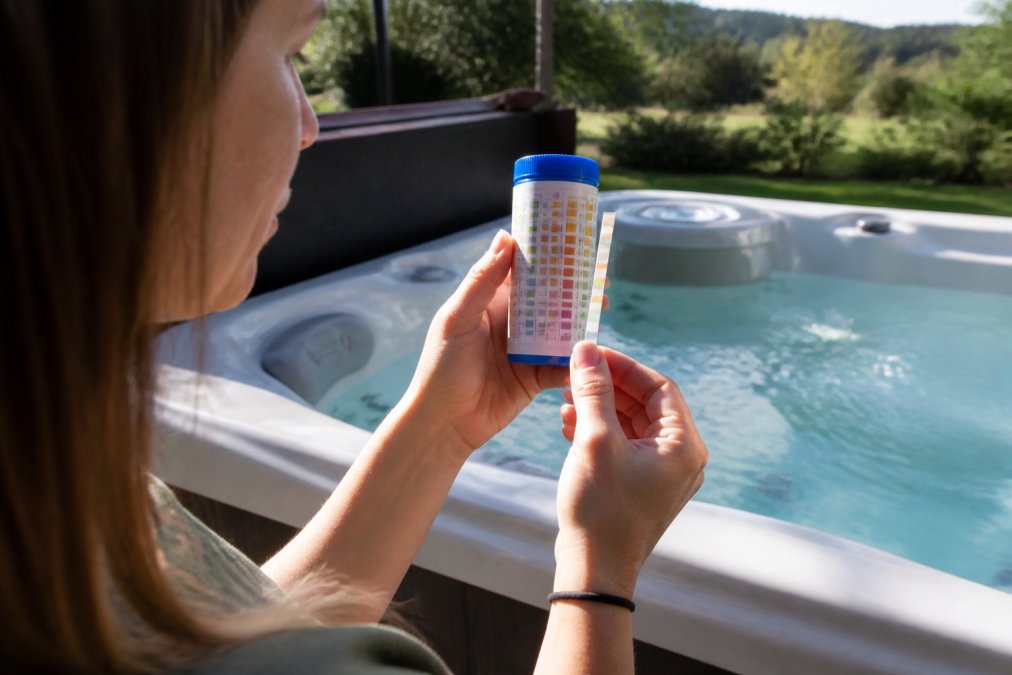
Test strips are the fastest method, dip and read in seconds. The O-ACE-sis Pool/Spa Test Strips (50-count, approximately $5) test for free chlorine, bromine, alkalinity, pH, and total hardness. They're affordable and accessible, but less precise than liquid test kits. Sunlight and humidity degrade them, so store them in a cool, dry place.
Liquid test kits cost more ($20-40) but are more accurate. They use reagent drops and color-matching vials, which takes longer but catches imbalances that strips might miss.
Testing frequency matters more than the method. During the first month, test twice weekly, once mid-week and once before the weekend. After water chemistry stabilizes, weekly testing is usually enough. Heavy use (multiple people daily) requires more frequent testing.
How to Clean Hot Tub Filters and Maintain Water Quality
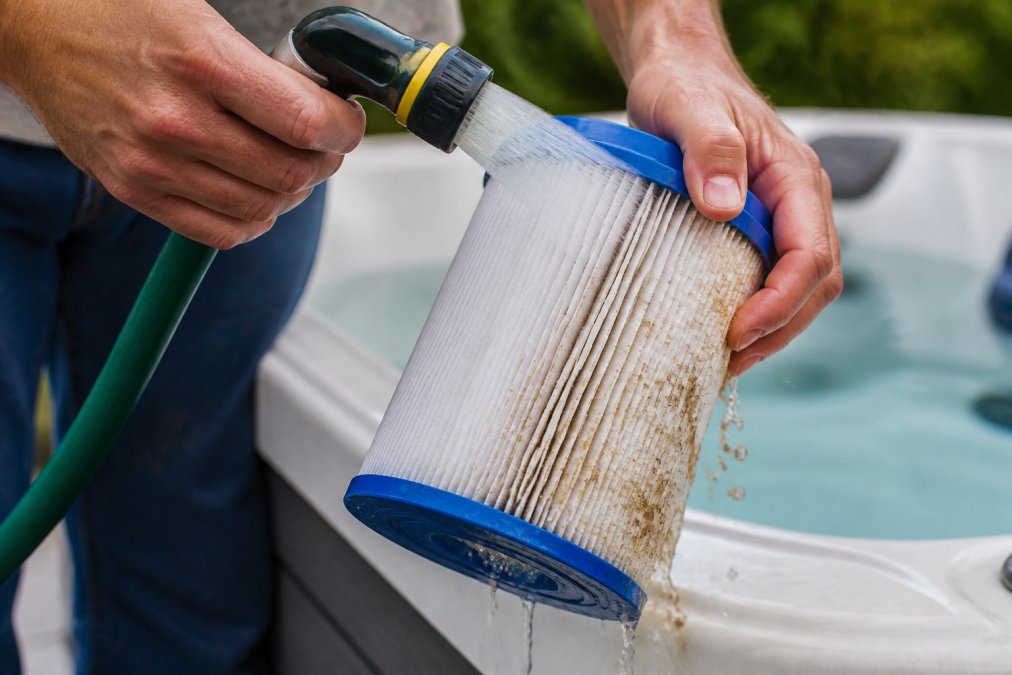
Your filter is the silent workhorse. A clogged filter can't remove debris, which clouds water and stresses your pump. Clean filters every 2 weeks during normal use, more often if you're hosting parties or using the tub daily.
Rinse the cartridge filter with a garden hose, spraying from top to bottom to flush debris out of the pleats. Don't use high pressure, you'll damage the media. For stubborn buildup, soak the cartridge overnight in a diluted filter cleaner solution, then rinse thoroughly.
Replace the cartridge every 12-18 months depending on water quality and usage. A degraded cartridge can't trap particles, and no amount of rinsing brings it back.
Between filter cleanings, maintain water quality by testing regularly and adjusting chemicals as needed. Cloudy water often means either low chlorine, high alkalinity, or a clogged filter, test first to diagnose which. Foaming usually signals too much conditioner or body oils; foam reducers handle this in 24 hours.
Step-by-Step Startup Guide for New Hot Tub Owners
Filling your hot tub for the first time requires a specific sequence. Skip steps or do them out of order, and you'll waste chemicals.
Step 1: Fill and balance alkalinity (Day 1) Fill the tub completely with fresh water. Test alkalinity immediately. If it's below 80 ppm, add alkalinity increaser according to the kit instructions. If it's above 120 ppm, you'll need alkalinity decreaser (not always included in starter kits). Let the tub circulate for 2 hours before testing again. Aim for 80-120 ppm.
Step 2: Adjust pH (Day 1) Once alkalinity is correct, test pH. Add pH Up or pH Down to reach 7.2-7.8. This step is easier when alkalinity is already balanced, that's why order matters.
Step 3: Add sanitizer (Day 1) Add your chosen sanitizer (chlorine or bromine) according to the kit instructions. For chlorine systems, this is usually chlorinating granules. For bromine, you'll add sodium bromide granules first to establish a "bromide bank," then switch to bromine tablets for ongoing maintenance.
Step 4: Shock treatment (Day 2) The next day, add shock treatment to burn off any organic matter from the initial fill. This clears the water and ensures your sanitizer can work effectively.
Step 5: Test and adjust (Days 2-7) Test water daily for the first week. You're looking for stable chlorine (2-4 ppm for chlorine systems, 4-6 ppm for bromine), pH between 7.2-7.8, and alkalinity between 80-120 ppm. Make small adjustments and retest after 2 hours of circulation. Resist the urge to add chemicals all at once, patience prevents overcorrection.
Step 6: Establish routine (Week 2 onward) Once water chemistry stabilizes, test weekly and add sanitizer as needed. Most chlorine systems require granule additions every 3-5 days depending on usage (the CDC). Bromine tablets last longer but dissolve more slowly. Shock treatment once weekly keeps water fresh.
Common Beginner Mistakes to Avoid
Mistake 1: Adding all chemicals at once. Chemicals interact. Adding pH Up, alkalinity increaser, and shock on the same day causes unpredictable reactions. Spread them out over 24-48 hours and test between additions.
Mistake 2: Testing immediately after chemical additions. Chemicals need time to dissolve and distribute. Testing too soon gives false readings.
Mistake 3: Ignoring alkalinity. Beginners focus on chlorine and pH, then wonder why pH keeps drifting. Alkalinity is the foundation. Get it right first, and pH adjustments become predictable.
Mistake 4: Overusing conditioner or softeners. These products accumulate over time. More isn't better. Follow the kit instructions exactly. Too much conditioner causes foaming and cloudiness.
Mistake 5: Letting the filter go too long between cleanings. A clogged filter stresses your pump and reduces water circulation. Dirty water is harder to keep balanced. Clean every 2 weeks minimum.
Mistake 6: Not draining and refilling periodically. Chemicals and minerals accumulate. After 3-4 months, drain the tub completely and refill with fresh water. This resets your chemistry and prevents mineral buildup that no amount of conditioner can fix.
Eco-Friendly and Sensitive-Skin Alternatives
Chlorine and bromine work, but they're not the only options. If you have sensitive skin or prefer a gentler approach, alternatives exist.
Natural Chemistry Spa Perfect is an enzyme-based product that breaks down organic contaminants like body oils and cosmetics. It's 100% biodegradable and compatible with any sanitizer system. At approximately $22, it's affordable and reduces the chemical smell significantly. The tradeoff: it doesn't sanitize, you still need chlorine or bromine. Use it as a supplement, not a replacement.
Biguanide is a non-chlorine, non-bromine sanitizer that's gentler on skin and eyes. It produces no chemical odor and is popular with people who can't tolerate chlorine. The downside: it's more expensive than chlorine and requires specific shock treatments. Not all hot tub suppliers carry biguanide chemicals, so availability can be an issue depending on where you live.
Mineral-based systems like FROG use mineral cartridges alongside reduced chlorine. The minerals (silver and copper ions) kill bacteria, allowing you to use 75% less chlorine. This reduces odor and irritation while keeping water sanitized. Replacement cartridges cost more upfront, but the lower chemical consumption offsets the cost over time.
Starting a hot tub doesn't have to be overwhelming. The chemicals are straightforward once you understand what each one does and why order matters. Test regularly, follow the sequence, and resist the urge to over-correct. Most problems come from imbalance, not missing chemicals.
If you're in the Coachella Valley or Riverside County area, allvalley handles the heavy lifting. Their hot tubs come with free starter kits and professional installation, so your water is balanced from day one. Call 760-342-5277 to discuss your setup and get a quote on a system that minimizes maintenance while maximizing your soaking experience.
=== FAQ ANSWERS (audit these too, same rules) ===
[1] Q: What chemicals should I put in my hot tub when I first fill it? A: Start with a complete hot tub chemicals starter kit that includes sanitizer (chlorine or bromine), shock treatment, pH balancer, and alkalinity increaser. Test the water first to establish baseline levels. Most beginner kits like the Leisure Time or SpaPure options come with instructions that guide you through the order of adding chemicals. Always add chemicals to the water, never water to chemicals, and allow proper circulation between each addition. Your hot tub may come with a free starter kit included, which simplifies the initial setup process.
[2] Q: How often should I test my hot tub water? A: Test your water at least twice per week during regular use, and daily if the tub gets heavy use or if you notice cloudy water or odor issues. New owners should test more frequently until they understand how their specific tub behaves. Use test strips for quick readings of pH, alkalinity, and sanitizer levels. Proper hot tub water testing frequency prevents chemical imbalances that lead to cloudy water, foaming, and bacterial growth. Keep a simple log of your readings to spot trends over time.
[3] Q: Is chlorine or bromine better for a hot tub? A: Chlorine vs bromine for spas depends on your priorities. Chlorine is faster-acting, more affordable, and widely available, making it ideal for beginners. Bromine is gentler on skin and eyes, more stable at higher temperatures, and produces less odor, though it costs more. Bromine tablets dissolve slowly and require a floating dispenser. Chlorine works well for most hot tubs and is the most common choice for new owners. Choose bromine if you or family members have sensitive skin or chemical sensitivities.
[4] Q: What's the difference between a sanitizer and an oxidizer? A: A sanitizer kills bacteria and algae to keep water safe, while an oxidizer (shock treatment) burns off organic contaminants like body oils, sweat, and cosmetics. Both are essential: sanitizers work continuously, while oxidizers are used weekly or after heavy use. Many chlorine products combine both functions, but bromine systems typically require separate shock treatments. Using both maintains clear, safe, odor-free water and extends the life of your filtration system.
[5] Q: Do I need to drain my hot tub if I use a startup kit? A: No, a proper startup kit is designed for a full tub of fresh water. Follow the kit's instructions to add chemicals in the correct order and allow circulation time between additions. You only need to drain and refill when water becomes too saturated with dissolved solids (typically every 3-4 months) or if you experience persistent problems like cloudy water that chemical adjustments cannot fix. Regular testing and maintenance prevent the need for frequent drains.
Frequently Asked Questions
Q: What chemicals should I put in my hot tub when I first fill it?
A: Start with a complete hot tub chemicals starter kit that includes sanitizer (chlorine or bromine), shock treatment, pH balancer, and alkalinity increaser. Test the water first to establish baseline levels. Most beginner kits like the Leisure Time or SpaPure options come with instructions that guide you through the order of adding chemicals. Always add chemicals to the water, never water to chemicals, and allow proper circulation between each addition. Your hot tub may come with a free starter kit included, which simplifies the initial setup process.
Q: How often should I test my hot tub water?
A: Test your water at least twice per week during regular use, and daily if the tub gets heavy use or if you notice cloudy water or odor issues. New owners should test more frequently until they understand how their specific tub behaves. Use test strips for quick readings of pH, alkalinity, and sanitizer levels. Proper hot tub water testing frequency prevents chemical imbalances that lead to cloudy water, foaming, and bacterial growth. Keep a simple log of your readings to spot trends over time.
Q: Is chlorine or bromine better for a hot tub?
A: Chlorine vs bromine for spas depends on your priorities. Chlorine is faster-acting, more affordable, and widely available, making it ideal for beginners. Bromine is gentler on skin and eyes, more stable at higher temperatures, and produces less odor, though it costs more. Bromine tablets dissolve slowly and require a floating dispenser. Chlorine works well for most hot tubs and is the most common choice for new owners. Choose bromine if you or family members have sensitive skin or chemical sensitivities.
Q: What's the difference between a sanitizer and an oxidizer?
A: A sanitizer kills bacteria and algae to keep water safe, while an oxidizer (shock treatment) burns off organic contaminants like body oils, sweat, and cosmetics. Both are essential: sanitizers work continuously, while oxidizers are used weekly or after heavy use. Many chlorine products combine both functions, but bromine systems typically require separate shock treatments. Using both maintains clear, safe, odor-free water and extends the life of your filtration system.
Q: Do I need to drain my hot tub if I use a startup kit?
A: No, a proper startup kit is designed for a full tub of fresh water. Follow the kit's instructions to add chemicals in the correct order and allow circulation time between additions. You only need to drain and refill when water becomes too saturated with dissolved solids (typically every 3-4 months) or if you experience persistent problems like cloudy water that chemical adjustments cannot fix. Regular testing and maintenance prevent the need for frequent drains.
This article was written using GrandRanker