 how-to
Hot Tub Chemical Starter Kit Guide
Table of Contents
- What's Inside a Hot Tub Chemical Starter Kit
- Understanding Water Chemistry Basics
- The Correct Hot Tub Chemical Startup Order
- How to Clean Hot Tub Filters and Maintain Water Clarity
- Shock Treatment and Sanitizer Application
- Troubleshooting Cloudy or Foamy Water
- Chemical Storage and Safety
- Conclusion
Last Updated: August 29, 2026
What's Inside a Hot Tub Chemical Starter Kit
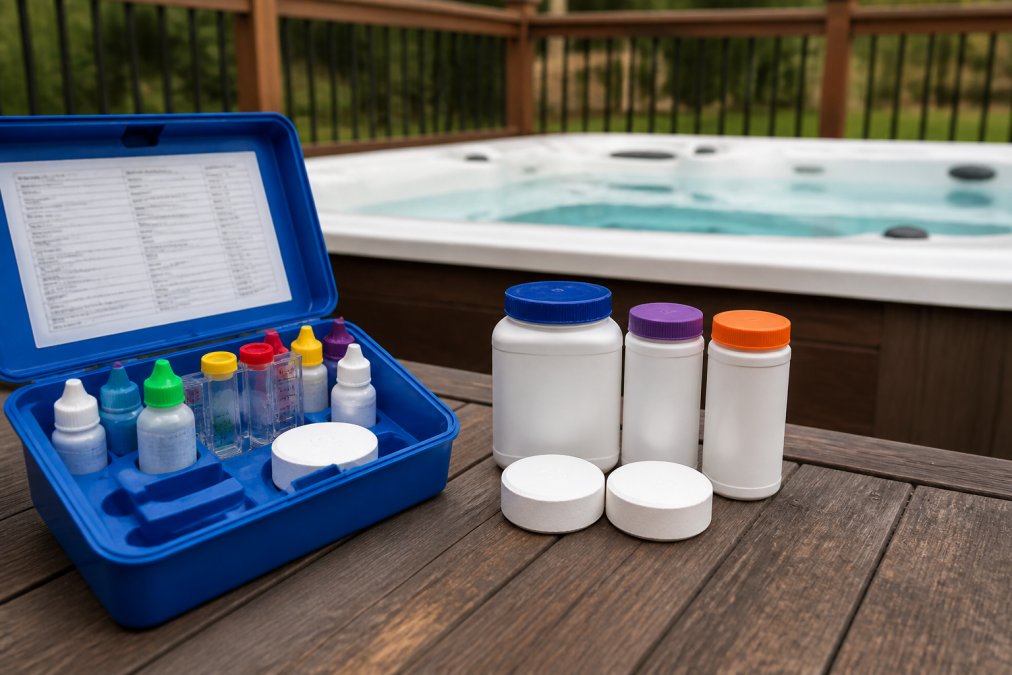
A hot tub chemical starter kit contains essential compounds to balance water and keep it safe for soaking. At allvalley, we include these kits with every hot tub purchase because getting the chemistry right from day one prevents months of frustration and cloudy water.
The typical kit includes sanitizer (chlorine or bromine), alkalinity increaser, pH decreaser and increaser, calcium booster, shock treatment, and test strips. Without proper chemical balance, bacteria multiply, water turns cloudy, and equipment corrodes. A starter kit establishes that balance quickly with the right proportions.
Understanding what each chemical does and when to add it separates a successful startup from weeks of guessing and retesting.
Understanding Water Chemistry Basics
Hot tub water chemistry revolves around three measurable values: pH, total alkalinity, and sanitizer levels. Get these three right, and everything else follows.
pH balance measures acidity on a scale of 0 to 14. Hot tub water should sit between 7.2 and 7.8 (the CDC). Below 7.2, water corrodes metal parts. Above 7.8, water becomes cloudy. pH drifts constantly as bathers use the tub, so test and adjust every few days.
Total alkalinity acts as a buffer that prevents pH from swinging wildly. The target range is 80 to 120 parts per million (ppm) (the CDC). Most startup problems stem from alkalinity being out of range.
Sanitizer levels kill bacteria and algae. Chlorine works faster and costs less. Bromine works better in hot water and produces less odor. Both need to stay between 1 and 3 ppm to be effective without irritating skin (the CDC).
Hot Tub Alkalinity vs pH: Why Both Matter
Alkalinity and pH are linked but separate. Alkalinity is the total amount of alkaline compounds dissolved in water. pH is how those compounds affect acidity. You can have high alkalinity with normal pH, or low alkalinity with swinging pH.
If pH drifts, adjust pH chemicals. If alkalinity is wrong, adjust alkalinity first, because pH won't stabilize until alkalinity is in range. Balance alkalinity before pH, not the other way around. This is why the startup order matters.
Most startup kits include both alkalinity increaser and pH adjusters. Alkalinity increaser adds sodium bicarbonate. pH decreaser is typically sodium bisulfate. pH increaser is sodium carbonate or potassium hydroxide.
Total Alkalinity, Calcium Hardness, and Sanitizer Levels
Beyond pH and alkalinity, three more values keep water stable: calcium hardness, cyanuric acid, and sanitizer concentration.
Calcium hardness measures dissolved calcium in water. Too little, and water pulls calcium from equipment. Too much, and scaling builds up on jets and heaters. Target range is 200 to 400 ppm.
Cyanuric acid (stabilizer) protects chlorine from UV breakdown. Bromine doesn't need it. If using chlorine, cyanuric acid should be 30 to 50 ppm.
Sanitizer concentration is what you measure most often. Keep chlorine at 1 to 3 ppm and bromine at 2 to 4 ppm. These ranges kill pathogens without irritating eyes and skin.
The startup sequence matters because adding shock before balancing pH wastes the shock. Adding sanitizer before alkalinity is stable means constant adjustments.
The Correct Hot Tub Chemical Startup Order
The startup sequence is non-negotiable. Skip steps or reverse the order, and you'll spend two weeks chasing water problems instead of enjoying your tub.
Step-by-Step Startup Procedure
Start with clean water. Fill the tub completely and let the filter run for 24 hours before adding chemicals.
Step 1: Test the water. Use test strips to check pH, alkalinity, and any existing chlorine or bromine. Record these numbers. Your baseline tells you what adjustments the kit needs to make.
Step 2: Adjust total alkalinity. Add alkalinity increaser if the reading is below 80 ppm. Follow kit instructions for dosing based on water volume. Stir thoroughly. Wait 6 hours and retest. Alkalinity changes slowly, so patience prevents overcorrection.
Step 3: Adjust pH. Once alkalinity is stable, check pH. Add pH decreaser if above 7.8, or pH increaser if below 7.2. Test after 6 hours.
Step 4: Add calcium booster if needed. If calcium is below 200 ppm, add calcium hardness increaser now.
Step 5: Add shock treatment. Shock oxidizes organic matter and kills bacteria. Use the amount specified in your kit. Add it in the evening and let the tub circulate overnight with the cover off if possible.
Step 6: Add sanitizer. After shock has worked (12-24 hours), add your primary sanitizer. If using chlorine, add chlorinating granules. If using bromine, add bromine tablets to a floater. Maintain the target ppm range from this point forward.
Step 7: Retest everything. After 24 hours, test pH, alkalinity, sanitizer, and calcium hardness. Write down the results as your baseline for ongoing maintenance.
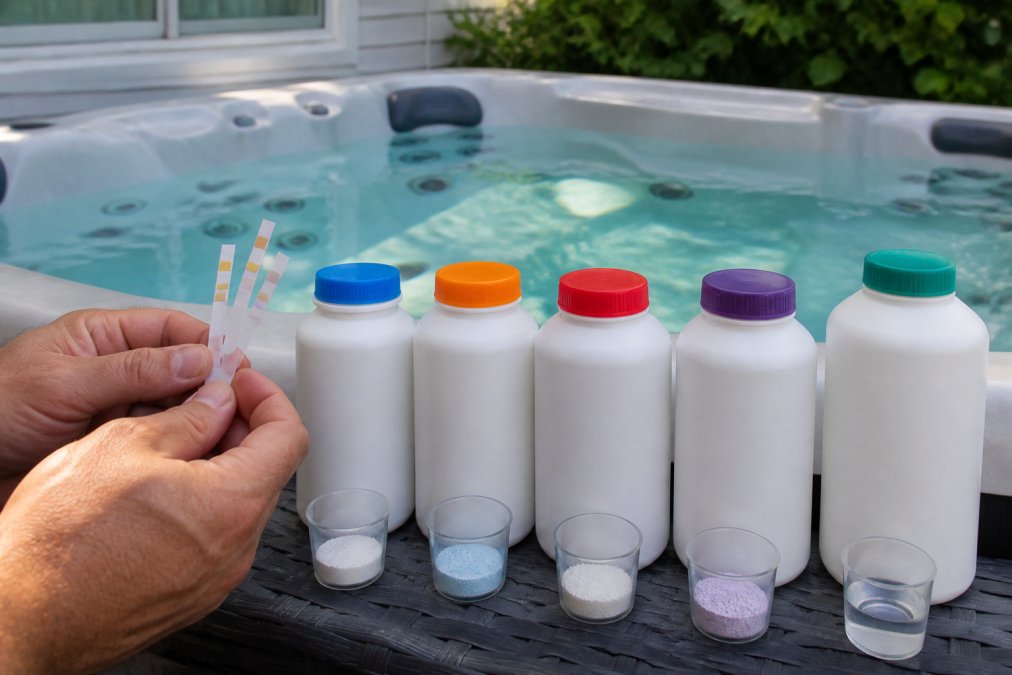
Testing Water Chemistry After Each Step
Test strips are your most important tool. They're cheap, fast, and accurate enough for routine use. Dip a strip into the water away from jets and returns. Pull it out after the specified time (usually 15 seconds). Match the colors to the chart on the bottle.
Write down your readings to create a record of how your water behaves. After a few weeks, you'll see patterns and know whether pH tends to rise or fall and how quickly sanitizer depletes.
If readings don't match expected ranges after following the startup order, retest. Sometimes a strip is faulty. If the second test confirms an odd reading, wait 6 hours and test again. Chemical reactions take time.
How to Clean Hot Tub Filters and Maintain Water Clarity
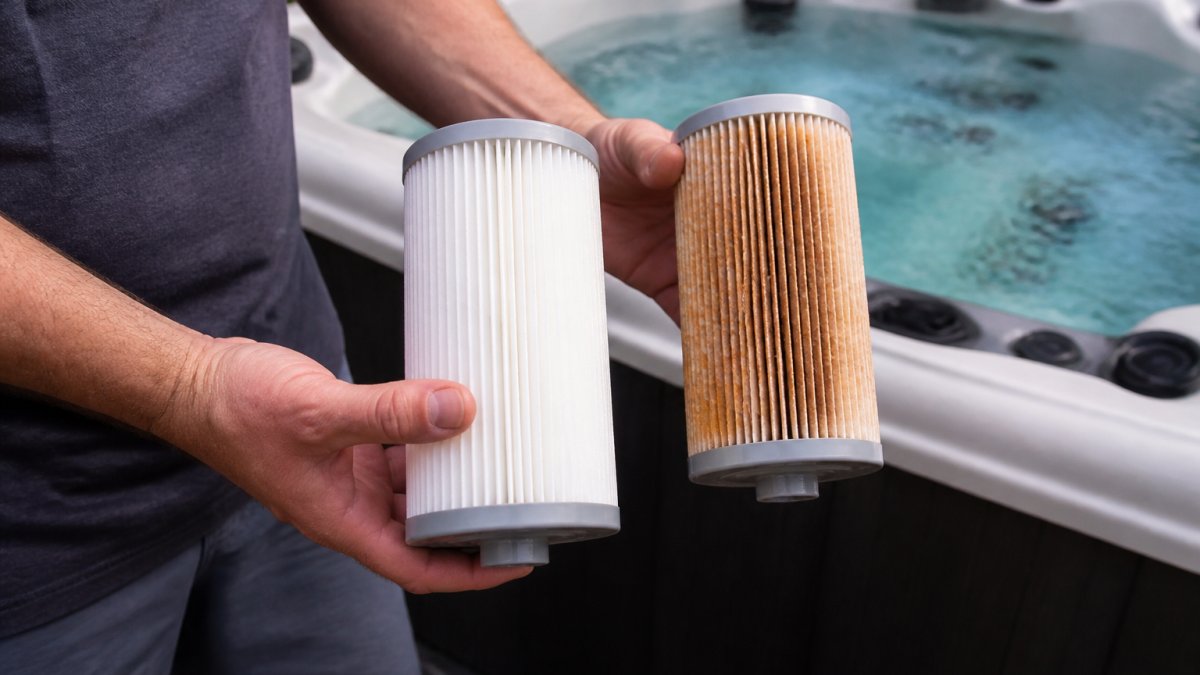
Filter maintenance is the single biggest factor in water clarity. A clogged filter can't trap particles, so they stay suspended and make water cloudy. Clean filters every two weeks during heavy use, monthly during light use.
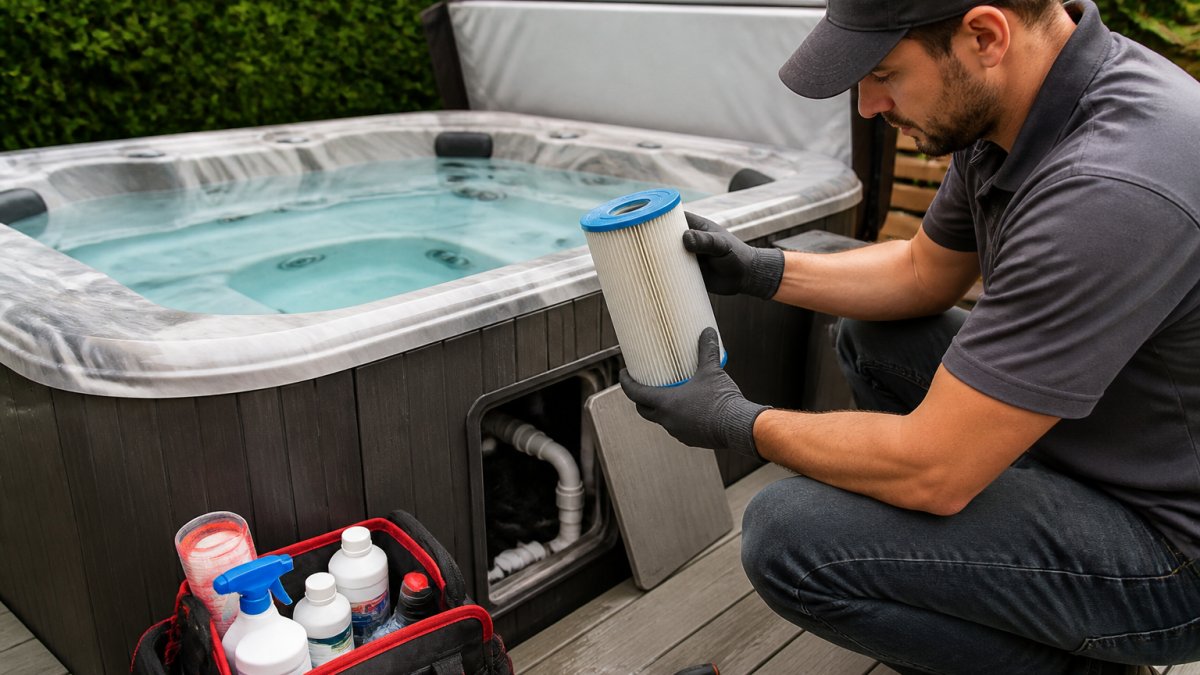
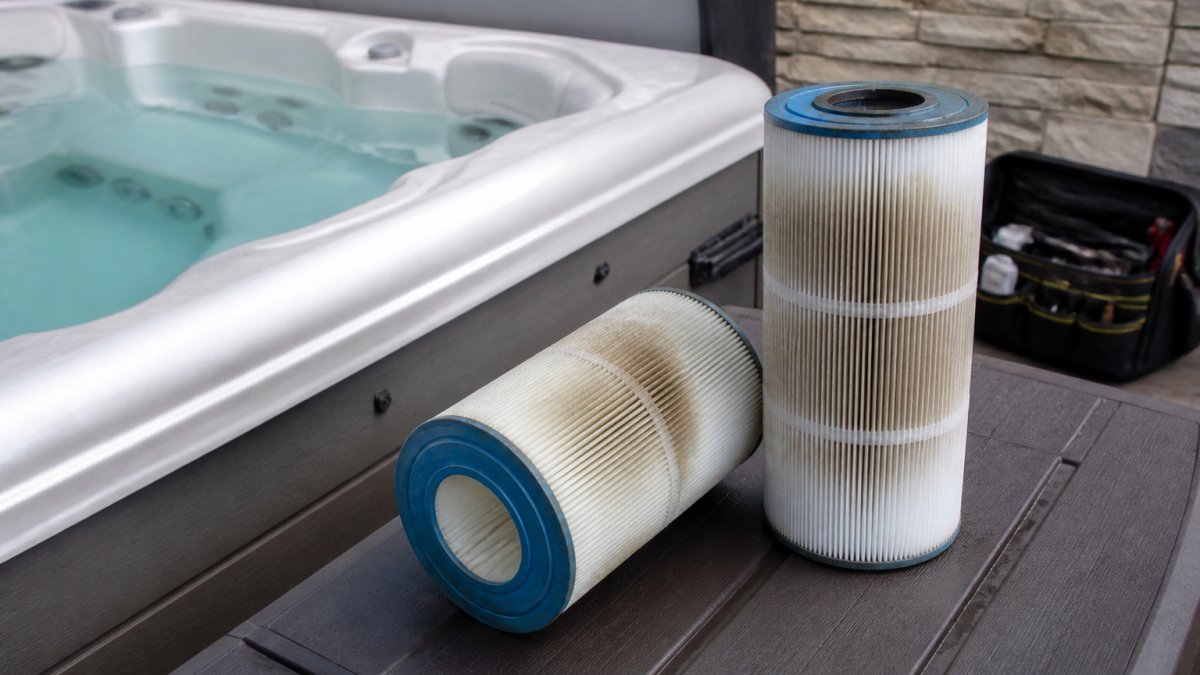
Turn off the pump before removing the filter. Most hot tubs have a cartridge filter that lifts straight out. Rinse it with a garden hose, spraying from top to bottom between the pleats. Don't use high pressure or you'll damage the material. If visibly dirty, soak overnight in filter cleaning solution, then rinse again.
Replace the filter every 12 to 18 months. Over time, pleats become permanently clogged. A new filter costs $30 to $80 and makes an immediate difference in clarity.
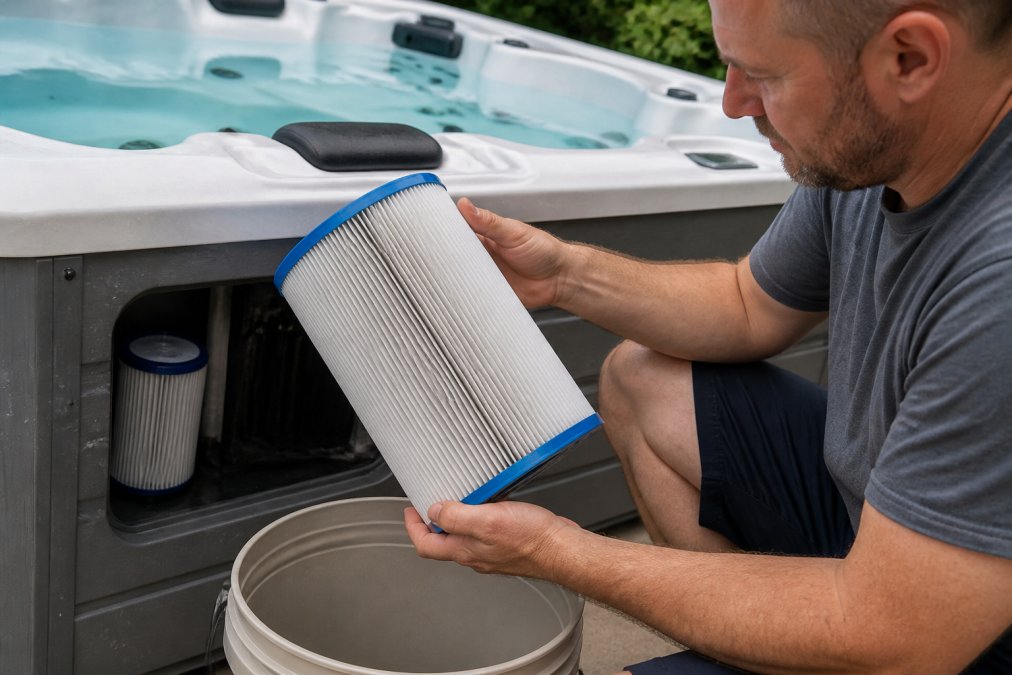
Run the circulation pump for at least 4 hours daily. This keeps water moving through the filter and prevents stagnation. If water stays cloudy despite clean filters and balanced chemistry, the issue is usually insufficient filtration time or a filter needing replacement sooner than expected.
Shock Treatment and Sanitizer Application
Shock treatment oxidizes organic matter, sweat, sunscreen, oils, and bacteria that regular sanitizer misses. Most owners shock weekly or after heavy use.
Two types exist: chlorine-based and non-chlorine. Chlorine shock is cheaper and faster. Non-chlorine shock doesn't add chlorine residue. If using bromine as your sanitizer, use non-chlorine shock.
Add shock in the evening. Follow your kit's dosing instructions based on water volume. Stir thoroughly. Let the pump run with the cover off if possible. The smell fades overnight. By morning, water is clearer and sanitizer works more efficiently.
After shock, wait 12 to 24 hours before heavy use. Then resume normal sanitizer maintenance.
For ongoing sanitizer, chlorine granules dissolve quickly and are easy to dose. Bromine tablets dissolve slowly and work better in hot water. Both maintain the 1 to 3 ppm range. Test every few days and add sanitizer as needed.
Troubleshooting Cloudy or Foamy Water
Cloudy water usually means particles are suspended. Foamy water means organic buildup is creating bubbles. Both respond to different fixes.
For cloudy water, first check your filter. If it's clean and you've run the pump for 24 hours, the issue is chemistry. Test alkalinity, pH, and sanitizer. If alkalinity is high (over 120 ppm), lower it with pH decreaser. If pH is off, adjust it. If sanitizer is low, add more. Cloudy water often clears within 24 hours of balanced chemistry and filter circulation.
If cloudiness persists, add a clarifier. Clarifiers bind tiny particles together so the filter can trap them. Run the filter for 24 hours. Water should clear noticeably.
Foamy water is usually caused by organic buildup or soap residue. Add an anti-foam product. If foam returns quickly, shock the water. Organic matter is accumulating faster than sanitizer can break it down.
Both problems are preventable. Regular filter cleaning, consistent sanitizer levels, and weekly shock treatment keep water crystal clear.
Chemical Storage and Safety
Store your hot tub chemical starter kit in a cool, dry place away from direct sunlight. Heat breaks down chemicals and reduces effectiveness. Keep chemicals away from children and pets.
Never mix chemicals directly. Add each chemical separately to the water, not to each other. Mixing chlorine and bromine, or mixing sanitizers with shock, creates dangerous reactions. Always add chemicals to the water, never water to chemicals.
Wear gloves and eye protection when handling powders or granules. Some chemicals irritate skin and eyes. Avoid breathing dust.
Store chlorine separately from other chemicals. It's oxidizing and can degrade other compounds. Keep bromine in a sealed container; it produces fumes.
Check expiration dates. Most chemicals last 2 to 3 years if stored properly. Old chemicals lose potency and may not dissolve correctly.
If you spill chemicals, clean up immediately. Wear gloves. Sweep granules into a bag and dispose according to local regulations. For liquid spills, absorb with sand or kitty litter, then sweep into a bag.
Maintaining a hot tub is straightforward once you understand the chemistry and follow the startup sequence. A hot tub chemical starter kit from allvalley gives you everything needed to get water balanced quickly and keep it that way. The key is testing regularly, adjusting one chemical at a time, and staying consistent with filter cleaning and shock treatment. After the first month, maintenance becomes routine, just a few minutes every few days to test water and add chemicals as needed. Call allvalley at 760-342-5277 to discuss your hot tub setup and get a starter kit matched to your specific water volume and local water conditions. We've been helping homeowners keep their hot tubs crystal clear and ready for relaxation for over 26 years.
Frequently Asked Questions
What chemicals should I put in my hot tub when I first fill it?
A hot tub chemical starter kit typically includes alkalinity increaser, pH increaser or decreaser, sanitizer (chlorine or bromine), and shock treatment. Fill the tub with water first, then add alkalinity increaser and test with test strips to reach 80-120 ppm. Adjust pH to 7.2-7.8, add sanitizer according to dosing instructions, then perform shock treatment. Each product in the kit includes specific ppm targets and dosing amounts based on your water volume.
What is the proper procedure for starting up chemicals in a hot tub?
The startup order matters: (1) Fill with water and run the filtration cycle for 15-30 minutes, (2) Test water and add alkalinity increaser if needed, (3) Adjust pH with pH increaser or decreaser, (4) Add sanitizer (chlorine granules or bromine tablets), (5) Run another filtration cycle for 2-4 hours, (6) Perform shock treatment according to kit instructions, (7) Test again after 12 hours and make final adjustments. This sequencing prevents chemical reactions that can cloud water or create ineffective sanitizer.
How often should I test my hot tub water after initial startup?
Test water 12 hours after shock treatment, then daily for the first week. After that, test 2-3 times per week during regular use. Test strips check total alkalinity, pH, and sanitizer levels in seconds. Maintain alkalinity at 80-120 ppm, pH at 7.2-7.8, and sanitizer at 2-4 ppm (chlorine) or 4-6 ppm (bromine). Weekly testing prevents imbalanced water that can cause cloudiness, foam, or irritation.
What are the essential components of a hot tub starter kit?
A complete hot tub chemical starter kit includes alkalinity increaser, pH increaser and decreaser, sanitizer (chlorine granules or bromine tablets), shock treatment (oxidizer), test strips, and a chemical dispenser. Some kits add calcium booster for hard water areas or cyanuric acid for chlorine pools exposed to sunlight. The kit also includes dosing instructions based on water volume in gallons, so you apply the correct ppm of each chemical without guessing.
This article was written using GrandRanker