 how-to
How to Clean Hot Tub Filters: A Step-by-Step Guide
Table of Contents
- What You'll Need Before You Clean Hot Tub Filters
- Safety Precautions: Power Off and Prep Your Spa
- Step-by-Step: How to Clean Hot Tub Filters at Home
- Best Hot Tub Filter Cleaner: Commercial vs. DIY Options
- How Often to Clean Hot Tub Filter for Best Results
- When to Replace Hot Tub Filter Instead of Cleaning It
- Troubleshooting Cloudy Water After Cleaning Your Filter
- Common Mistakes to Avoid When Cleaning Spa Filters
Last Updated: August 7, 2026
What You'll Need Before You Clean Hot Tub Filters
Getting organized before touching the filter cartridge saves time and protects filter media from damage. At allvalley, we've helped Coachella Valley homeowners maintain their spas for over 26 years, and the most common mistake we see is jumping in unprepared.
Here's everything you'll want on hand:
- Garden hose with a spray nozzle (a filter wand attachment is even better)
- Large plastic bucket or container (5-gallon minimum for soaking)
- Commercial filter cleaner or chemical soak solution
- Rubber gloves to protect your hands from sanitizer and cleaning agents
- A soft brush for stubborn scale or calcium buildup
- Clean towels or a dry surface for the filter to air out
- Replacement O-rings (optional, but smart to have nearby)
The Pool & Hot Tub Alliance maintenance guidelines recommend keeping a dedicated cleaning kit near your spa so routine maintenance never gets skipped. Check your water chemistry before you start, if sanitizer levels are off or water is cloudy, note it now to compare readings after reinstallation.
Safety Precautions: Power Off and Prep Your Spa
Power off the hot tub completely before removing any components. Running the pump without a filter cartridge can pull debris into the circulation system and cause serious pump damage.
Locate your spa's GFCI breaker or disconnect switch and shut it down fully. Don't rely on the topside control panel alone.
Before proceeding:
- Let the water cool if you've been soaking recently.
- Wear rubber gloves when handling the filter cartridge.
- Work on a stable, flat surface when cleaning.
- Keep chemical soak solutions away from children and pets.
Once the power is off and you're gloved up, you're ready to pull the filter.
Step-by-Step: How to Clean Hot Tub Filters at Home
Cleaning hot tub filters at home is straightforward when you follow the right sequence. Skipping steps or rushing the soak time is where most people go wrong.
Step 1: Remove the Filter Cartridge from the Housing
Open the filter compartment according to your spa's manual. Most hot tubs use a twist-and-lift mechanism on the filter housing lid. Grip the top of the filter cartridge firmly and lift straight up. Some models have a locking tab you'll need to release first.
Inspect the housing itself once the cartridge is out and wipe away any visible debris, scale, or slime before reinstalling.
Step 2: Rinse the Filter Pleats with a Garden Hose
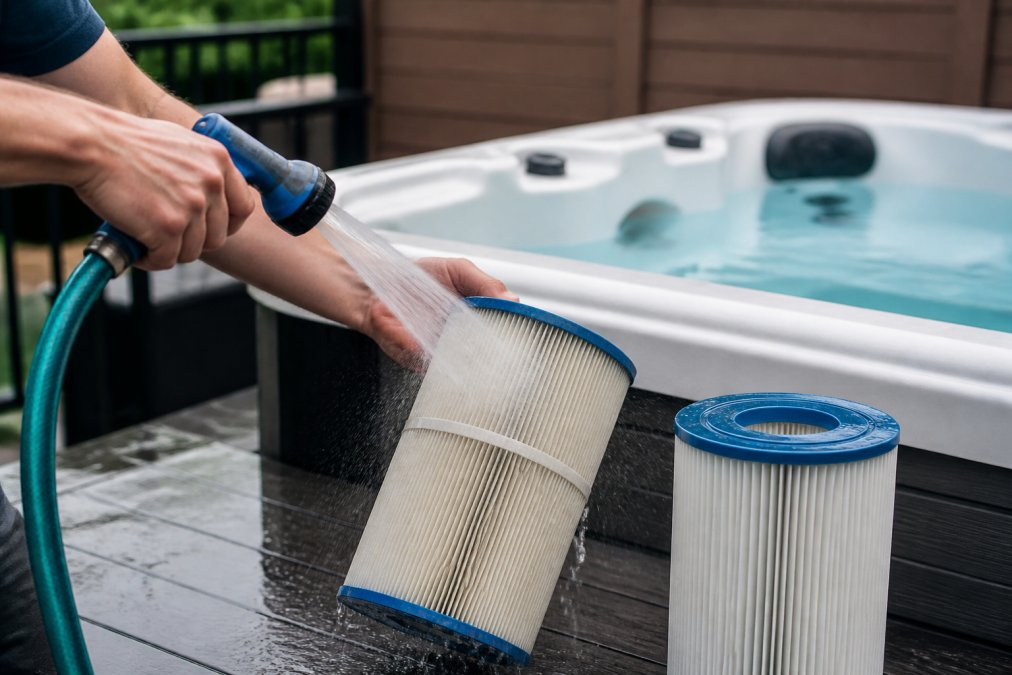
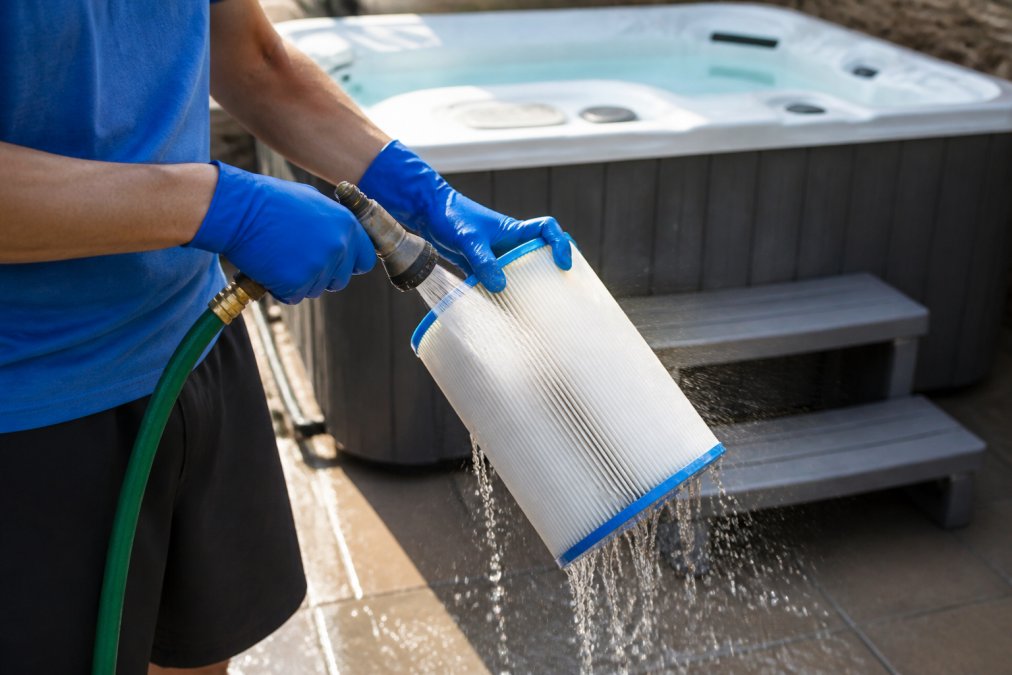
Hold the filter cartridge at a 45-degree angle and work the hose nozzle between each pleat from top to bottom to dislodge trapped debris, body oils, and loose calcium buildup. A dedicated filter wand attaches to your hose and fits precisely between pleats, making this step significantly more thorough.
Avoid using a pressure washer, the force will damage the filter media permanently. A firm garden hose stream is all you need.
Step 3: Deep Clean with a Chemical Soak
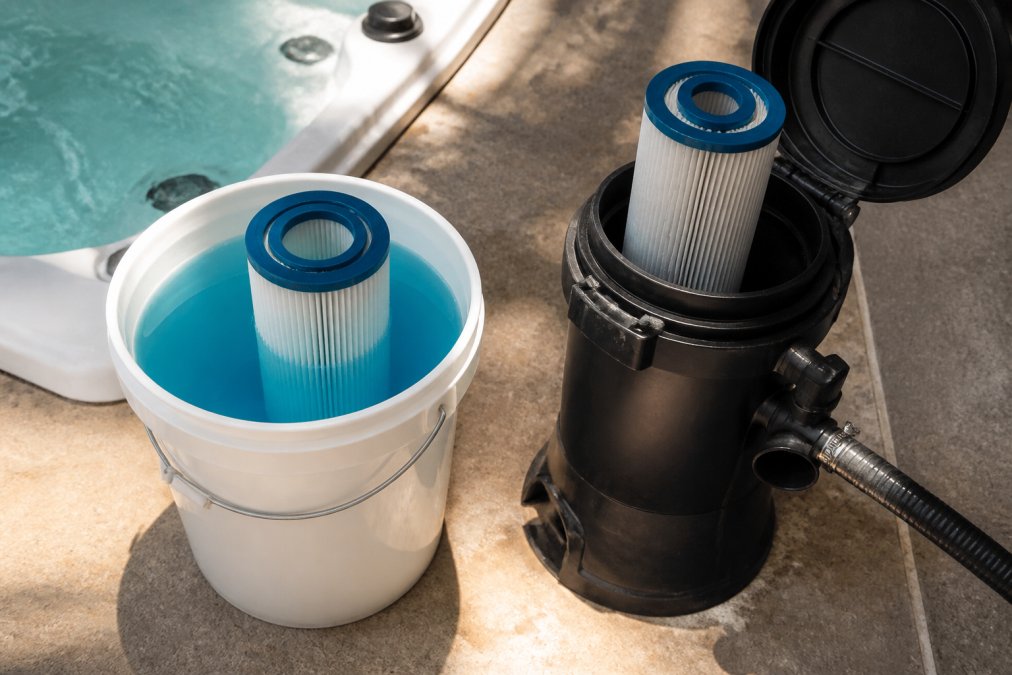
Rinsing alone handles surface debris, but chemical soaking removes oils, minerals, and micro-organisms embedded deep in the filter media. Fill your bucket with water and add your chosen filter cleaner according to product directions. Submerge the filter cartridge completely and let it soak for the recommended time, typically one hour for routine cleaning and overnight for a deep clean.
After soaking, rinse the cartridge thoroughly with the garden hose to flush out all traces of cleaning solution before reinstallation.
Step 4: Dry the Filter Before Reinstallation
Reinstalling a wet filter cartridge traps moisture and accelerates bacterial growth inside the filter housing. Set the rinsed cartridge on a clean towel in a shaded spot and allow it to air dry completely. Once dry, seat the cartridge back into the filter housing, secure the lid, restore power, and run the spa for 15-30 minutes before testing water chemistry.
Best Hot Tub Filter Cleaner: Commercial vs. DIY Options
Commercial filter degreasers are formulated specifically to break down body oils, sunscreen residue, and scale that accumulate in filter media. They're pH-balanced to avoid damaging the filter cartridge and generally produce a more thorough clean than improvised solutions.
DIY options typically involve diluted dishwasher detergent or diluted muriatic acid for calcium buildup. These can work for light maintenance but carry risks. Dish soap leaves residue that causes foaming. Acid solutions, if improperly diluted, can degrade filter media over time.
| Method | Best For | Soak Time | Risk Level |
|---|---|---|---|
| Commercial filter degreaser | Routine and deep cleaning | 1 hour to overnight | Low |
| Diluted dishwasher detergent | Light debris, no oils | 1-2 hours | Medium (foaming risk) |
| Diluted muriatic acid rinse | Heavy calcium buildup only | 15-30 minutes | High if misused |
| Water rinse only | Weekly quick maintenance | N/A | Low |
For eco-conscious homeowners, enzyme-based filter cleaners break down organic matter without harsh chemicals. According to the EPA's safer choice program for pool and spa products, enzyme-based and plant-derived cleaners can be effective alternatives to traditional chemical degreasers when used consistently.
How Often to Clean Hot Tub Filter for Best Results
A general maintenance schedule that works for most households:
- Weekly quick rinse: Remove the cartridge and rinse with a garden hose to clear surface debris.
- Monthly chemical soak: Full soak in a filter cleaner solution to address embedded oils and scale.
- Quarterly deep clean: Extended overnight soak, plus thorough inspection of the filter media for damage.
Heavy use changes everything. A spa used daily by multiple people needs more frequent cleaning than one used twice a week. Spas in areas with hard water accumulate calcium buildup faster and benefit from more frequent chemical soaks.
The CDC's healthy swimming guidelines for hot tubs emphasize that consistent filter maintenance is the most effective way to control bacterial growth and maintain safe water chemistry.
When to Replace Hot Tub Filter Instead of Cleaning It
Cleaning extends filter life, but it doesn't last forever. Signs a filter cartridge needs replacing:
- Frayed or torn filter pleats: Damaged pleats allow debris and micro-organisms to bypass the filter entirely.
- Persistent discoloration: A filter that stays brown or gray after a thorough chemical soak has media that's saturated beyond recovery.
- Collapsed or flattened pleats: Loss of pleat structure reduces water flow and filtration efficiency.
- Visible cracks in the end caps: Structural damage means the cartridge can't seal properly in the filter housing.
- Consistently poor water clarity: If your water stays cloudy despite correct chemical balance and regular cleaning, the filter media is likely exhausted.
Most filter cartridges last between one and two years with proper care. Check your spa's documentation for the manufacturer's recommended replacement cycle. Waiting until the filter visibly fails means water quality has usually already deteriorated.
Troubleshooting Cloudy Water After Cleaning Your Filter
Cloudy water after cleaning your filter is usually one of a few solvable problems.
Residual cleaner in the filter media is the most common culprit. If you didn't rinse the cartridge thoroughly after the chemical soak, detergent residue enters the spa water and disrupts chemistry. Remove the filter, rinse it again under a strong garden hose stream for several minutes, let it dry, and reinstall.
Imbalanced water chemistry often surfaces after a filter clean because the cleaning process temporarily reduces the sanitizer load. Test your water immediately after reinstallation and adjust pH, alkalinity, and sanitizer levels as needed.
A worn-out filter that looks clean but has degraded filter media will allow fine particles to pass through. If your water clears up after installing a new cartridge, the old one had reached the end of its replacement cycle.
Air introduced during reinstallation can cause temporary cloudiness. Run the spa for 30 minutes with the jets on to purge air from the lines before drawing conclusions about water clarity.
Common Mistakes to Avoid When Cleaning Spa Filters
Most damage during filter maintenance is self-inflicted. The cleaning process itself is simple; the mistakes happen in the details.
Using a pressure washer. The high-pressure stream tears filter media and collapses pleats. A garden hose is all you need.
Skipping the chemical soak. A rinse removes loose debris but does nothing for oils, scale, and biofilm embedded in the filter media. Without regular chemical soaking, filters degrade faster.
Reinstalling a wet filter. Moisture trapped in the filter housing creates conditions for bacterial growth. Always let the cartridge dry fully before reinstalling.
Cleaning with dish soap and not rinsing completely. Soap residue causes foaming in the spa water. If you use a DIY cleaning solution, rinse more than you think is necessary.
Running the spa without the filter. Without filtration, debris and micro-organisms accumulate rapidly. Never run your spa without a filter cartridge in place.
Ignoring the filter housing. The housing itself accumulates scale and biofilm. Wipe it down every time you pull the cartridge.
According to NSF International's standards for spa water quality, proper filtration is one of the primary barriers against waterborne pathogens in residential hot tubs. A clean, functional filter is a health safeguard.
For homeowners who want a spa that requires less day-to-day effort, allvalley's hot tubs come with free starter kits and chemicals, giving you everything needed to establish a solid maintenance routine from day one. Call us at 760-342-5277 to learn more about what's included.
Keeping up with filter maintenance is one of those tasks that feels tedious until you skip it and spend a weekend fighting cloudy water and bacterial growth. A consistent routine takes less than 30 minutes a month and extends both filter life and overall spa enjoyment. allvalley has been helping Coachella Valley homeowners get more out of their spas for over 26 years. If you're ready for a hot tub that's built to stay clean with less effort, get started with allvalley and enjoy professional delivery, installation, and a free starter kit to keep your water chemistry on track from day one. Call us at 760-342-5277.
Frequently Asked Questions
What is the best thing to clean hot tub filters with?
A dedicated filter degreaser or filter cleaner formulated for spa use is your most reliable option. These products break down body oils, calcium buildup, and scale that water alone can't remove. For a deep clean, soak the filter cartridge in the solution for at least one hour, or overnight for heavy buildup. White vinegar diluted in water works as a mild eco-friendly alternative for mineral deposits, but it won't cut through oils as effectively as a commercial filter cleaner.
Can I use vinegar to clean hot tub filters?
Yes, white vinegar diluted in water is a reasonable eco-friendly option for removing calcium buildup and mineral scale from filter pleats. Mix one part white vinegar with one part water and soak the filter for one to two hours. It won't remove body oils or organic debris as thoroughly as a commercial filter degreaser, so vinegar works best as a maintenance rinse between deep chemical soaks rather than a full replacement for dedicated spa filter cleaners.
How often should you clean your hot tub filter?
A quick rinse with a garden hose every two weeks keeps debris and buildup from accumulating in the filter media. A full chemical soak should happen once a month. If your hot tub sees heavy use, multiple bathers, or is located in a dusty environment like the Coachella Valley, bump the rinse schedule to weekly. Most filters also benefit from a thorough inspection every three to four months to check for damaged pleats or persistent scale that cleaning won't fix.
How do I know when my hot tub filter needs to be replaced?
Visible signs include frayed, torn, or collapsed filter pleats, a gray or brown discoloration that doesn't rinse away, and a persistent musty smell even after a chemical soak. Functionally, if your water clarity stays poor after cleaning and your water chemistry is balanced, or if your pressure gauge shows restricted water flow despite a clean filter, the filter media has likely degraded past recovery. Most hot tub filters reach the end of their useful life after 12 to 24 months of regular use.
This article was written using GrandRanker