 ultimate-guide
Best Practices for Hot Tub Water Maintenance
Table of Contents
- Why Hot Tub Water Maintenance Matters More Than You Think
- Your Hot Tub Maintenance Schedule: Daily, Weekly, and Monthly Tasks
- Hot Tub pH and Alkalinity: The Balance That Protects Your Spa
- Sanitizer Systems Compared: Chlorine, Bromine, and Alternatives
- How to Clean a Hot Tub Filter (And When to Replace It)
- How Often to Change Hot Tub Water and How to Do It Right
- Troubleshooting Cloudy Water and Other Common Problems
- Chemical Safety and Storage: What Every Hot Tub Owner Should Know
- Frequently Asked Questions
Last Updated: October 6, 2026
Why Hot Tub Water Maintenance Matters More Than You Think
Hot tub water maintenance is the routine of testing, balancing, and sanitizing spa water so it stays clear, comfortable, and safe.
Here is the part most owners learn the hard way. A spa holds a tiny volume of water compared with a pool, often just a few hundred gallons, and it runs hot.
Below, we break down a schedule you can keep, the pH and alkalinity targets that protect your shell and equipment, and how to fix the problems that send most owners searching for answers.
Your Hot Tub Maintenance Schedule: Daily, Weekly, and Monthly Tasks
A workable hot tub maintenance schedule splits into three tiers: a daily check, a weekly routine, and monthly or quarterly jobs. Spa water chemistry moves fast, a 400-gallon spa at 100-104°F with two bathers can burn through 1-3 ppm of free chlorine in under an hour, so a weekly-only routine will not hold a sanitizer reading.
Daily Checks (5 Minutes)
- Confirm the pump is running on its programmed cycle, most spas need 4-6 hours of filtration per day, more in summer or after heavy use
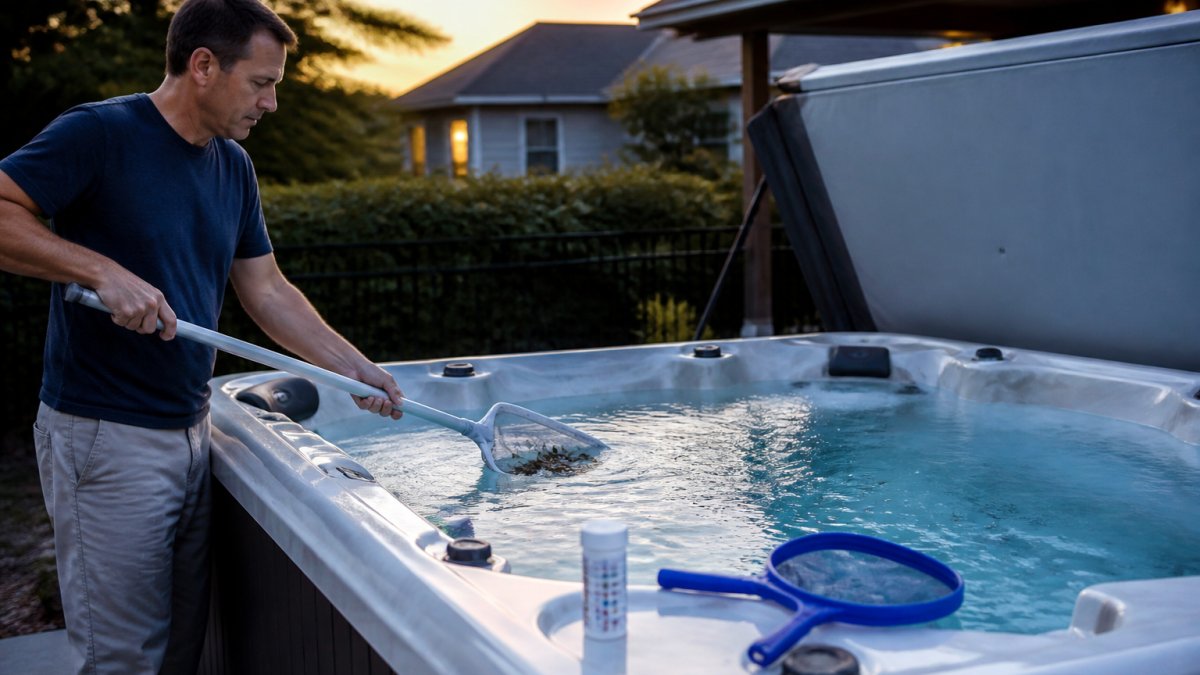
- Skim leaves, insects, and debris off the surface before they sink and dissolve
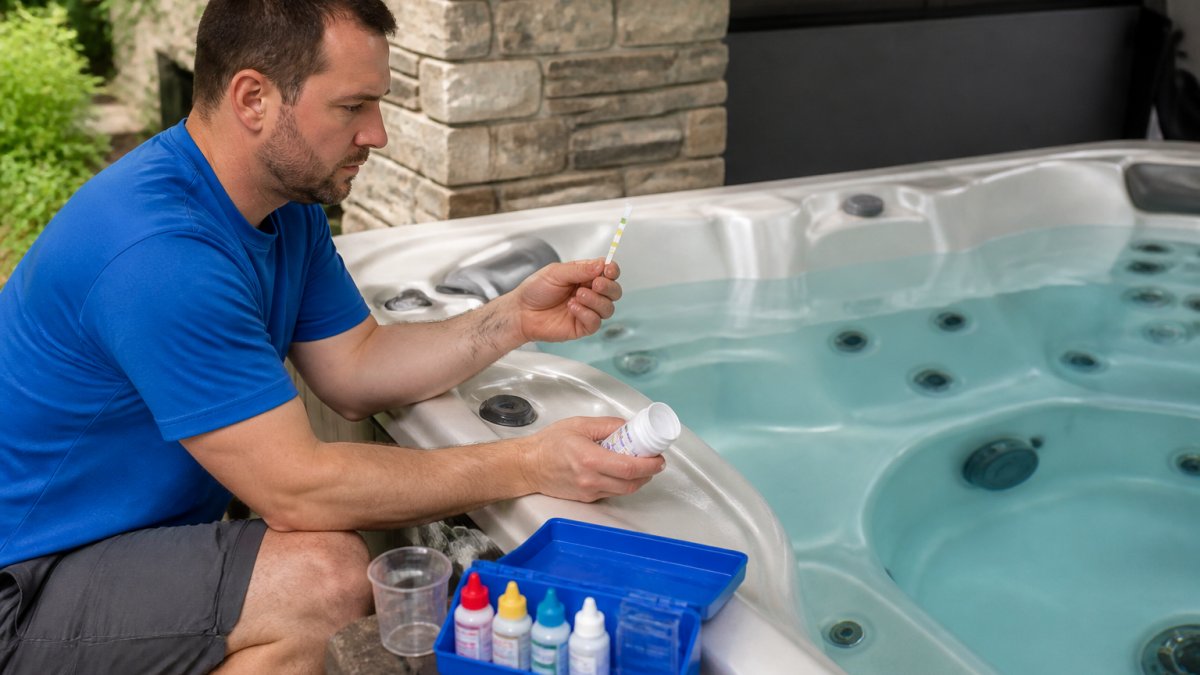
- Test free chlorine or bromine with a strip; if free chlorine reads below 1 ppm or bromine below 3 ppm, dose before the next soak
Weekly Tasks (20-30 Minutes)
- Run a full test: pH, total alkalinity, calcium hardness, and sanitizer. Strips work for a quick read; a drop-test kit or digital meter is more accurate for pH and alkalinity, which most balancing decisions hinge on
- Shock the water, 1 ounce of 56% dichlor per 500 gallons, or the label-equivalent dose of non-chlorine shock (potassium monopersulfate), typically 1 ounce per 100-200 gallons
- Clean the skimmer basket and wipe the waterline where oils and lotions collect
Monthly and Quarterly Maintenance
Every month, deep clean the filter with a cartridge cleaner, inspect the cover for cracks or waterlogging, and check the cabinet and fittings for leaks or corrosion. Quarterly, inspect the pump seals and heater connections, and plan your water change if the spa sees heavy use. Owners who never fight cloudy water log test results, a notebook or spa app, so they spot rising sanitizer demand before it becomes a problem.
Adjusting for Bather Load and Season
The baseline schedule assumes one or two users, a few soaks a week. Scale it:
- Heavy use (4+ bathers or daily soaks): test sanitizer before and after every soak, shock every 2-3 days, and change water every 8-10 weeks
- Light use (weekends only): daily sanitizer checks can drop to every other day, but keep the weekly full test
- Hot, sunny months: expect faster sanitizer burn-off and more top-offs; uncovered spas can lose 1-2 ppm of chlorine to sunlight in hours
Hot Tub pH and Alkalinity: The Balance That Protects Your Spa
Hot tub pH and alkalinity decide whether every other chemical you add actually works. pH measures how acidic or basic the water is; total alkalinity measures its ability to resist pH swings.
The targets most spa manufacturers and water-care guides point to are pH between 7.4 and 7.6 and total alkalinity between 80 and 120 parts per million.
Adjust alkalinity first, then pH. Alkalinity acts as a buffer, so raising it often pulls pH up with it.
Sanitizer Systems Compared: Chlorine, Bromine, and Alternatives
Chlorine and bromine are the two mainstream sanitizer systems for spas, and the right pick depends on how you use the tub. Chlorine is cheaper and reacts quickly, but burns off fast in hot water and needs frequent testing. Bromine is more stable at spa temperatures and gentler on skin for many bathers, though it costs more. The table below adds the trade-offs most guides skip: dosing, compatibility, and maintenance impact.
| System | Best For | Dosing Baseline | Trade-Off |
|---|---|---|---|
| Chlorine (dichlor or liquid) | Frequent, short soaks; budget-conscious owners | 1-3 ppm free chlorine; ~1 tsp dichlor per 250 gal raises FC ~1 ppm | Burns off faster in heat; needs daily attention |
| Bromine | Hot tubs kept hot and used regularly | 3-5 ppm; ~1 tsp bromine granules per 250 gal | Higher cost; slower to clear a heavy bather load |
| Biguanide | Sensitive skin; owners who dislike chlorine odor | Follow label; typically 30-50 ppm | Limited shock compatibility; pricier upkeep |
| Mineral cartridges | Supplementing a primary sanitizer | Not a standalone sanitizer | Must pair with chlorine or bromine |
Dosing by Water Volume: The Step Most Owners Skip
A spa holding 400 gallons needs a different amount than one holding 250, and label instructions are written per volume for a reason. Worked example: if your 400-gallon spa tests at 0.5 ppm free chlorine and you want 3 ppm, raise it by 2.5 ppm. At roughly 1 tsp of dichlor per 250 gallons per 1 ppm, that is about 4 tsp, or 1 tbsp plus 1 tsp, for 400 gallons.
Compatibility Rules That Prevent Dangerous Mistakes
- Never mix chlorine and bromine products, or add one directly on top of the other. The reaction releases dangerous gas. Choose one system and stick with it.
- Non-chlorine shock (potassium monopersulfate) is compatible with chlorine, bromine, and biguanide. Chlorine shock is not compatible with biguanide.
- Mineral cartridges and ozone generators are supplements, not replacements. They reduce sanitizer demand but do not eliminate the need for a residual sanitizer.
Never mix chlorine and bromine products, or add one directly on top of the other. The reaction releases dangerous gas. Choose one system and stick with it.
Matching the System to Your Routine
If you soak daily and want the simplest routine, bromine's stability at spa temperatures means fewer mid-week corrections. If you soak a few times a week and want lower cost, chlorine with a non-chlorine shock after each soak works well. If skin sensitivity is the driver, bromine or biguanide is worth the higher cost, but plan on stricter label adherence, since these systems tolerate dosing errors poorly.
How to Clean a Hot Tub Filter (And When to Replace It)
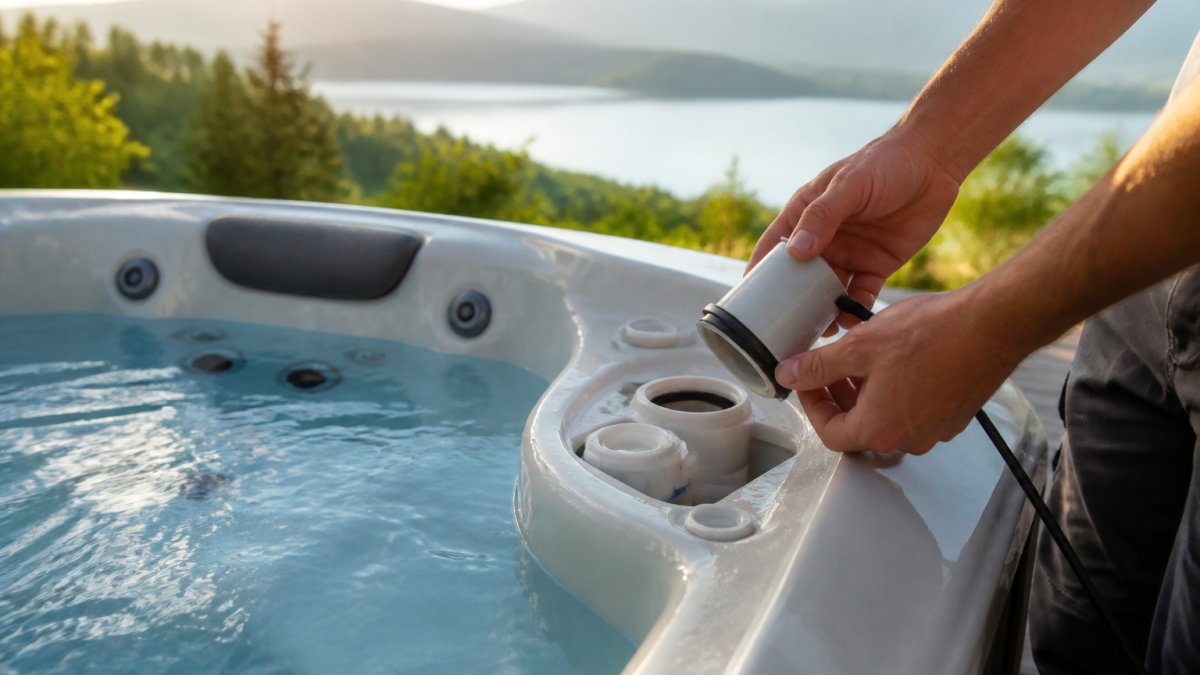
How to clean a hot tub filter comes down to a simple routine: rinse weekly, deep clean monthly, replace when it stops bouncing back.
- Turn off the spa and remove the cartridge per your manual
- Rinse the pleats with a hose, working top to bottom between each fold
- Soak the cartridge in a filter-cleaning solution for the time the label states
- Rinse thoroughly until no suds remain
- Let it air dry completely before reinstalling
- Keep a spare cartridge on hand so you can swap rather than wait
Replace the cartridge when the pleats stay flattened, the fabric looks frayed, or cleaning no longer restores normal water flow. Most owners replace once a year, sooner with heavy use. Cartridges are inexpensive compared with a pump, so do not stretch one past its useful life.
How Often to Change Hot Tub Water and How to Do It Right
How often to change hot tub water depends on use, but a common guideline is every three to four months for a regularly used spa.
Signs it is time to drain:
- Water stays cloudy even after shocking and balancing
- Foam appears quickly and will not dissipate
- The spa will not hold a sanitizer reading
To do it right, turn off the power, attach a hose to the drain valve or use a submersible pump, and empty the spa completely. Wipe the shell, clean the filter, and refill through a hose filter to strip metals and minerals before they enter the spa.
Refilling through a hose filter is the step owners skip and regret. Source water carrying iron or calcium can stain the shell and cloud the spa within days, and you will spend more fixing it than the filter costs.
Troubleshooting Cloudy Water and Other Common Problems
Troubleshooting by symptom saves you from dumping in chemicals at random. Cloudy water usually means low sanitizer, unbalanced pH or alkalinity, or a dirty filter. Test first, then treat the actual cause.
| Symptom | Likely Cause | Fix |
|---|---|---|
| Cloudy water | Low sanitizer, high pH, clogged filter | Shock, rebalance, clean or replace filter |
| Green tint | Algae or copper in source water | Shock heavily; use a hose filter on refill |
| Foamy surface | Oils, lotions, low calcium hardness | Shock, add defoamer, raise calcium if low |
| Strong chemical smell | Chloramines from trapped waste | Shock to burn off; do not just add more chlorine |
| Itchy skin after soaking | pH out of range or low sanitizer | Retest and rebalance before the next soak |
Most "chemical problems" are really filtration or balance problems. Owners who test before treating solve them in one step instead of five.
Chemical Safety and Storage: What Every Hot Tub Owner Should Know
Chemical safety and storage matter as much as dosing. Spa chemicals are concentrated, and how you store them affects their shelf life and your household's safety.
- Keep chemicals in their original labeled containers, lids sealed
- Store in a cool, dry, ventilated spot away from direct sun
- Never store chlorine and bromine, or acids and bases, side by side
Add chemicals slowly with the jets running so they disperse instead of settling on the shell, and never mix two products in one container. Following the CDC guidance on healthy swimming and spa water is a solid baseline for anyone unsure how sanitizer levels relate to safety.
Keeping a spa clear takes a rhythm, not a chemistry degree, and the payoff is a backyard always ready when friends show up. Our hot tubs come with free starter kits and chemicals so you begin with the right products in hand.
Frequently Asked Questions
How often should you test hot tub water?
Test your hot tub water at least three to four times per week using test strips, and daily during heavy use. Check pH, total alkalinity, and sanitizer levels each time. If you notice cloudy water or a strong chemical smell, test immediately. Keep a log of your readings so you can spot trends before they become problems. Regular testing takes about two minutes and prevents most water issues.
What should hot tub pH and alkalinity be?
Keep pH between 7.4 and 7.6 and total alkalinity between 80 and 120 parts per million. These ranges let your sanitizer work efficiently and protect spa components from corrosion or scale. If pH drifts high, add pH decreaser in small amounts, run the jets for 30 minutes, then retest. If alkalinity is low, add alkalinity increaser to stabilize pH and prevent it from bouncing around.
How often should you change hot tub water?
Drain and refill your hot tub every three to four months for typical residential use. If the spa sees heavy bather load or you struggle to keep water clear despite balanced chemicals, change it sooner. A quick rule: divide your spa's gallon capacity by the number of daily users, then divide that result by three. That gives you the number of days between water changes. Use a hose filter when refilling to remove metals and minerals.
How often should you clean a hot tub filter?
Rinse your filter cartridge every two weeks with a garden hose, and give it a deeper soak in filter cleaner once a month. Replace the cartridge every 12 to 18 months, or sooner if you see damage, persistent odors, or reduced water flow. A clean filter keeps water circulating properly, which helps chemicals distribute evenly and prevents cloudy water. Keep a spare cartridge on hand so you can swap while cleaning.
What is the best weekly hot tub maintenance routine?
Each week: test and balance pH, alkalinity, and sanitizer; shock the water with a non-chlorine or chlorine shock; clean the filter; and wipe down the waterline with a spa-safe cleaner. Skim debris with a net and check the skimmer basket. Run the jets for 15 to 30 minutes after adding chemicals. This routine takes about 30 minutes and keeps water clear, safe, and ready to use.
Can you use a hot tub if the water is cloudy?
Skip it until the water clears. Cloudy water often signals low sanitizer, unbalanced pH, or a dirty filter, which means bacteria may be present. Shock the spa, run the filter cycle for several hours, and retest. If cloudiness persists after 24 hours, clean or replace the filter and check for biofilm in the plumbing. Clear water is the best sign your spa is safe to enter.