 how-to
How to Balance Hot Tub pH Levels: A Complete Guide
Table of Contents
- Understanding Hot Tub Alkalinity vs pH
- What the Ideal pH Range for Hot Tubs Actually Means
- How to Test Hot Tub Water: Methods and Frequency
- How to Raise pH Levels in Your Hot Tub
- How to Use pH Decreaser in Your Hot Tub
- Common Causes of pH Imbalance and How to Prevent Them
- Safety Precautions When Handling Hot Tub Chemicals
- Frequently Asked Questions
Last Updated: September 23, 2026
Understanding Hot Tub Alkalinity vs pH
Total alkalinity and pH are two separate measurements that work together to help you balance hot tub pH and keep your water properly balanced. Many people confuse them, but they're not the same thing.
pH measures how acidic or alkaline your water is on a scale from 0 to 14. A reading of 7 is neutral. Below 7 is acidic. Above 7 is alkaline or basic. Your skin and eyes prefer water that sits in a specific pH range.
Total alkalinity is the water's ability to resist changes in pH. Think of it as a buffer. High alkalinity keeps pH stable. Low alkalinity means pH swings wildly with small chemical additions. This is why you test alkalinity first, it's the foundation for everything else.
The relationship matters because alkalinity directly affects how your pH behaves. If alkalinity is too low, adding even a small amount of pH increaser or decreaser causes dramatic swings. If alkalinity is too high, pH becomes stubborn and resists change. Both problems make balancing your hot tub frustrating.
When you start with the right alkalinity, balancing hot tub pH levels becomes straightforward. Most people skip alkalinity and jump straight to pH adjustments, that's the mistake that causes ongoing problems.
What the Ideal pH Range for Hot Tubs Actually Means
The ideal pH range for hot tubs is 7.2 to 7.8 (the CDC). This narrow window keeps water comfortable for swimmers while protecting equipment from corrosion and scale buildup.
Why this range? Water below 7.2 becomes acidic and corrosive. It eats away at metal fittings, pumps, and heater components. It also irritates skin and eyes. Water above 7.8 turns alkaline, which causes calcium to precipitate out and form scale on surfaces. Scale clogs jets, damages heater elements, and makes water cloudy.
The sweet spot is 7.4 to 7.6. This matches the pH of human tears and sweat, so it feels gentlest on skin. Most hot tub owners find this range easiest to maintain once they've balanced alkalinity properly.
Testing frequency matters here. Many people test once and assume they're done. In reality, pH drifts constantly from bather load, sunlight, chemicals, and water circulation. Bather load, the number of people using the tub, is one of the biggest pH shifters. More people means more body oils, sweat, and bacteria that change water chemistry. Consistent monitoring remains the only reliable way to manage these fluctuations, as the discipline required for testing water chemistry often reveals broader insights into maintaining delicate aquatic environments.
You'll notice pH drift happens faster than alkalinity drift. This is why you might test alkalinity weekly but need to check pH every few days. The balance hot tub pH levels requires staying on top of these changes before they become problems.
How to Test Hot Tub Water: Methods and Frequency
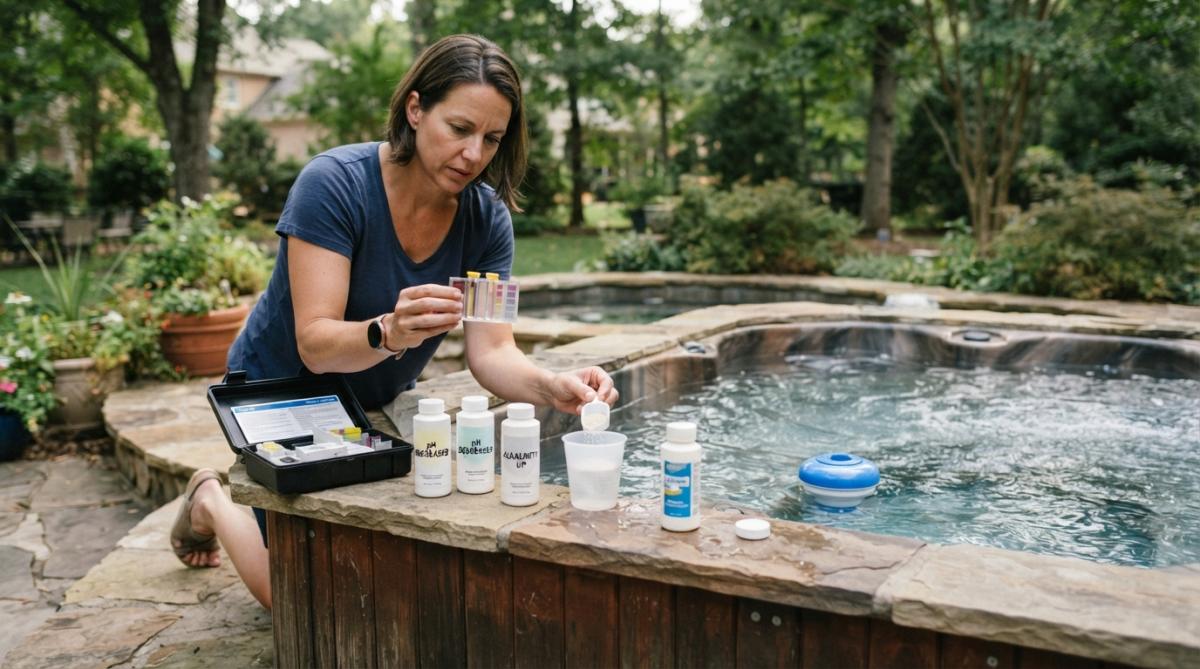
Testing is the foundation of water balance. You can't adjust what you don't measure. Two main testing methods exist: test strips and liquid reagent test kits.
Test strips are fast and convenient. You dip the strip in water, wait 15 seconds, and compare the color to a chart. Most strips test pH, alkalinity, chlorine, and bromine in one go. The downside is accuracy, color matching by eye is imprecise, especially in dim lighting or for people with color vision differences.
Liquid reagent test kits are more accurate but take longer. You add drops of reagent to water samples in small vials, watch the color change, and count drops until the color matches a reference. These kits test alkalinity and pH with greater precision than strips.
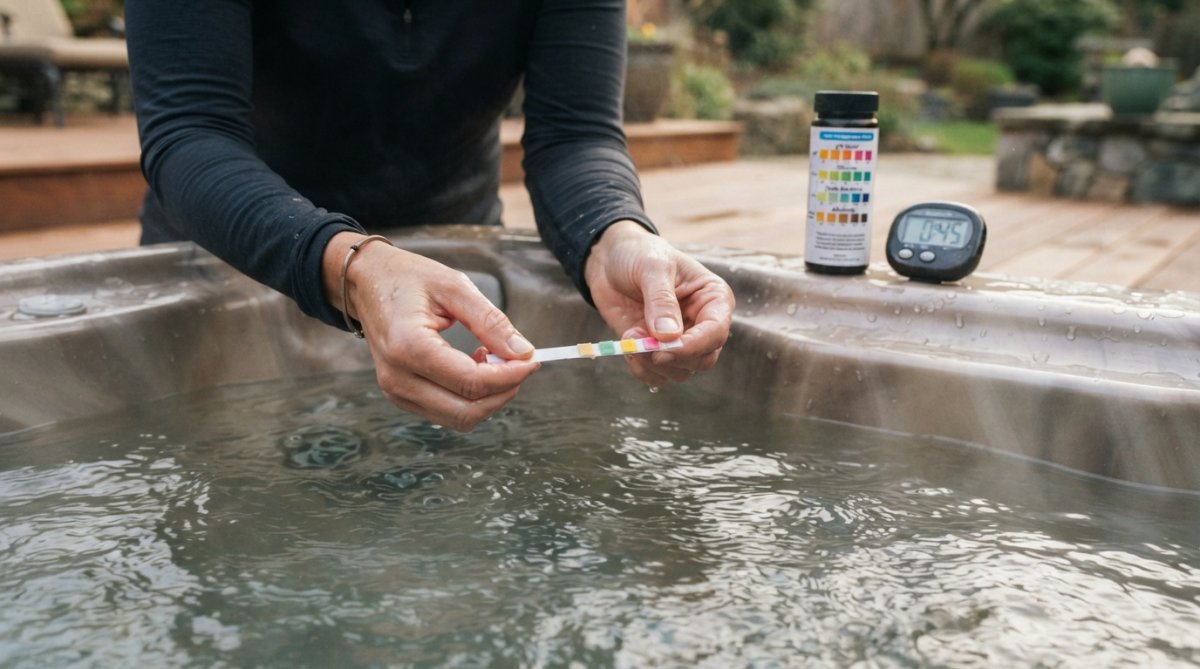
For serious hot tub owners, a combination approach works best. Use test strips for quick daily checks. Use a liquid kit weekly for precise readings that guide chemical adjustments.
Testing frequency depends on usage:
- Light use (1-2 people, few times weekly): Test pH every 3-4 days, alkalinity weekly
- Moderate use (3-4 people regularly): Test pH every 2-3 days, alkalinity every 5-7 days
- Heavy use (parties, frequent guests): Test pH every day, alkalinity every 2-3 days
Hot tub water testing frequency increases with bather load because more people introduce more contaminants. After a party or gathering, test immediately. You'll often find pH has shifted noticeably.
Store test strips in a cool, dry place. Humidity and heat degrade them. Replace strips annually or when they stop giving consistent readings. Liquid kits last longer but reagents also degrade over time, so replace them yearly too.
How to Raise pH Levels in Your Hot Tub
When pH drops below 7.2, your water turns acidic and corrosive. Raising pH requires adding an alkaline chemical called pH increaser, which is typically sodium carbonate (also called soda ash).
Steps to raise pH:
-
Test your current pH and alkalinity using strips or a liquid kit. Write down both numbers.
-
Calculate the dosage based on your hot tub's gallon capacity. Most pH increaser packages include a dosage chart. A typical starting dose is 1-2 pounds per 10,000 gallons for a 0.5 pH point increase.
-
Dissolve the powder in a bucket of hot water before adding it to the tub. Never pour dry powder directly into the water, it clumps and distributes unevenly.
-
Pour the dissolved mixture slowly around the perimeter of the tub while the circulation system runs. Circulation ensures even distribution.
-
Wait 6 hours before retesting. pH changes take time to stabilize, especially if alkalinity is low.
-
Retest and adjust if needed. If pH is still below 7.2, add another small dose and wait another 6 hours.
Common mistakes happen when people add too much pH increaser at once. The water becomes too alkaline (above 7.8), then they add pH decreaser to correct it. This back-and-forth wastes chemicals and makes balancing hot tub pH levels harder.
If your pH keeps dropping despite repeated adjustments, check alkalinity first. Low alkalinity is usually the root cause. Fix alkalinity, and pH becomes much more stable.
How to Use pH Decreaser in Your Hot Tub
When pH climbs above 7.8, your water becomes too alkaline. Lowering pH requires pH decreaser, typically sodium bisulfate (also called dry acid or pH down).
Steps to lower pH:
-
Test pH and alkalinity and record both readings.
-
Check the dosage chart on your pH decreaser package. A typical dose is 1-2 pounds per 10,000 gallons for a 0.5 pH point decrease.
-
Dissolve the powder in a bucket of water, warm water works best for faster dissolving.
-
Add the solution slowly to the tub while circulation runs. Add it to the deepest part of the tub.
-
Wait 6 hours before retesting. pH changes need time to fully distribute.
-
Retest and adjust if pH is still above 7.8. Add another small dose if needed.
How to use pH decreaser safely matters because sodium bisulfate is acidic and can irritate skin if concentrated. Always dissolve it first. Never add it directly to the water. Wear gloves when handling the powder.
pH decreaser works faster than pH increaser, so be conservative with dosing. It's easier to add more than to correct an overshoot. If you accidentally drop pH below 7.0, you'll need to add pH increaser to bring it back up, creating a frustrating cycle.
One thing many people miss: pH decreaser also lowers alkalinity slightly. If your alkalinity is already low, using pH decreaser will make it lower. This is why understanding alkalinity versus pH matters so much for maintaining stable water chemistry.
Common Causes of pH Imbalance and How to Prevent Them
pH doesn't drift randomly. Specific factors cause it to shift. Understanding these helps you prevent problems before they start.
High bather load is the biggest culprit. Body oils, sweat, cosmetics, and bacteria enter the water with every person.
Prevention strategies:
- Test regularly to catch drift early
- Maintain consistent circulation
- Cover the tub when not in use
- Limit bather load when possible
- Drain and refill periodically
- Use a pre-filter when filling with fresh water
Safety Precautions When Handling Hot Tub Chemicals
Hot tub chemicals are effective but require respect. Mishandling them causes injury or damage.
Frequently Asked Questions
What is the ideal pH range for a hot tub?
The ideal pH range for hot tubs is 7.2 to 7.8 parts per million (ppm). This range keeps water comfortable for bathers while allowing sanitizers like chlorine and bromine to work efficiently. pH below 7.2 becomes acidic and can corrode equipment and irritate skin; above 7.8 the water becomes alkaline, reducing sanitizer effectiveness and causing scale formation on surfaces.
How often should I test my hot tub pH levels?
Test your hot tub pH at least 2-3 times per week during regular use, and daily if the tub is heavily used or temperatures fluctuate. After adding chemicals or if you notice water clarity issues, retest within 4-6 hours. Consistent testing catches imbalances early before they damage equipment or affect bather comfort. Use either test strips or a liquid reagent test kit for accurate results.
Does baking soda raise pH in a hot tub?
Baking soda (sodium carbonate) does raise pH, but it also increases total alkalinity significantly. While it can temporarily boost pH, it's not the best choice for pH adjustment alone because high alkalinity makes pH harder to control later. Instead, use a dedicated pH increaser product designed for hot tubs, which raises pH without over-buffering the water. If alkalinity is already high, focus on lowering pH first.
Is it safe to go in a hot tub if pH is high?
High pH (above 7.8) water is uncomfortable and potentially unsafe. It reduces chlorine or bromine effectiveness, allowing bacteria and algae to grow. High pH also causes skin irritation, red eyes, and cloudy water. Scale can form on equipment, shortening its lifespan. Do not use the tub until pH is back in the 7.2-7.8 range. Lower pH using a pH decreaser and retest before allowing bathers back in.