how-to
Why Is My Hot Tub Water Cloudy? 7 Causes & Fixes
Table of Contents
- Why Is My Hot Tub Water Cloudy? 7 Common Causes
- How to Clear Cloudy Hot Tub Water: Step-by-Step
- How to Clean Hot Tub Filters to Prevent Cloudiness
- Water Age and Total Dissolved Solids (TDS)
- Troubleshooting Specific Water Colors
- Environmental Factors That Cloud Hot Tub Water
- Frequently Asked Questions
Last Updated: September 11, 2026
Why Is My Hot Tub Water Cloudy? 7 Common Causes
Cloudy water is almost always a chemistry or filtration problem, not a mystery. At allvalley, we've helped homeowners troubleshoot spa water for over 26 years, and the same handful of causes come up again and again. This guide covers each one, plus a step-by-step fix you can run in an afternoon.
Cloudy hot tub water is the suspension of tiny particles, oils, and dissolved solids that your filter and sanitizer can no longer clear. When you ask why is my hot tub water cloudy, the answer is usually one of seven things: pH and alkalinity drift, low sanitizer, a clogged filter, organic contaminants, poor circulation, hard water minerals, or biofilm in the plumbing. Here's how to diagnose which one is yours.
Unbalanced pH and Alkalinity Levels
pH balance is the most common culprit. When pH climbs above the ideal range, sanitizer stops working efficiently and dissolved minerals fall out of solution as haze.
- Ideal pH: 7.4 to 7.6 (the CDC)
- Ideal total alkalinity: 80 to 120 ppm (the CDC)
- Low alkalinity makes pH bounce; high alkalinity locks pH high and clouds water
Test first, then adjust alkalinity before pH. Chasing pH while alkalinity is off wastes chemicals and never holds.
Low Sanitizer Levels
Chlorine or bromine below 1 to 3 ppm lets bacteria, algae, and organics multiply faster than the filter can remove them (the CDC). The water turns dull, then milky.
A common mistake is adding sanitizer without checking whether it's actually being consumed by contaminants. If your free chlorine reads zero right after dosing, you have a chlorine demand problem, not a dosing problem. Shock first, then re-test.
Dirty or Clogged Filter Cartridges
A filter cartridge loaded with oils and debris stops trapping particles and starts recirculating them. It's the most overlooked cause because the pump still runs and the water still moves.
- Check pressure gauge readings; a rise of 8 to 10 psi above clean baseline means it's time to clean
- Rinse cartridges every 2 to 4 weeks with a hose
- Deep-clean with filter cleaner every 6 to 8 weeks
Organic Contaminants (Body Oils, Lotions, Sweat)
Sunscreen, lotion, deodorant, and sweat bind with sanitizer and create the gray-white haze most people mistake for a chemical problem. Higher bather load speeds this up dramatically.
Poor Water Circulation
Circulation moves water through the filter and distributes sanitizer. Closed jets, a failing pump, or a clogged skimmer basket reduce flow and let stagnant zones form.
Run your filtration cycle at least 4 to 6 hours daily, longer after heavy use. If your spa has a low-speed setting, use it for continuous turnover.
High Mineral Content (Calcium Hardness)
Calcium hardness above 250 to 400 ppm causes scale and cloudiness, especially when pH is high. Hard fill water is common in desert regions, so this shows up more often than most guides admit.
If hardness is high, a partial drain and refill with softer water is usually faster than fighting it chemically.
Biofilm Buildup in Plumbing
Biofilm is a slimy layer of bacteria and organic matter coating the inside of your plumbing. It's the cause most manufacturer blogs ignore, and it explains cloudy water that returns days after every shock.
Signs of biofilm:
- Cloudy water that clears then returns within 3 to 5 days
- Persistent sanitizer demand
- Slimy feel on jet fittings or the shell
Fixing biofilm requires a plumbing-line flush product, not just surface shocking. This is where most DIY routines fail.
How to Clear Cloudy Hot Tub Water: Step-by-Step
Clearing cloudy water is a decision tree: you test, read the numbers, and the numbers tell you which branch to take. Running steps out of order is why so many spa owners burn through chemicals for a week and still have haze.

| Step | Action | Time | Frequency |
|---|---|---|---|
| 1 | Test water | 5 min | Weekly |
| 2 | Balance chemistry | 20 min | As needed |
| 3 | Clean or replace filter | 15-30 min | Every 2-4 weeks |
| 4 | Shock the spa | 20 min | Weekly |
| 5 | Add clarifier or flocculant | 10 min | As needed |
| 6 | Drain and refill | 2-4 hrs | Every 3-4 months |
Step 1: Test Your Water
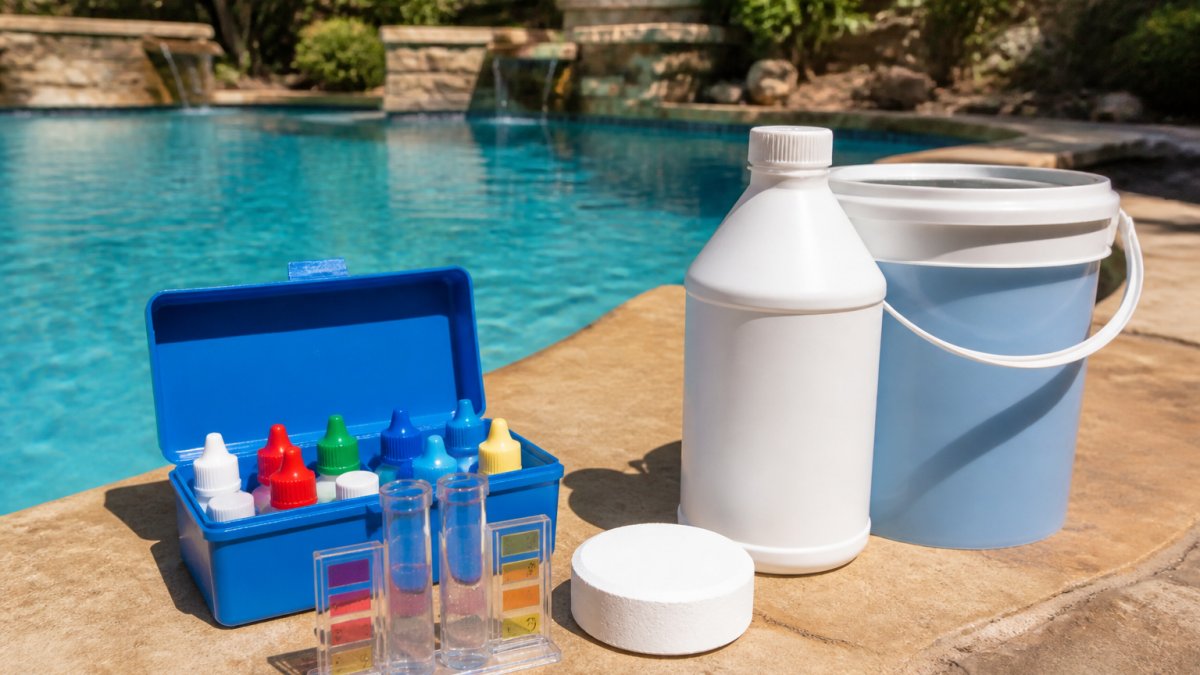
Use test strips or a liquid kit to check pH, alkalinity, sanitizer, and calcium hardness. Write the numbers down. Guessing is how cloudy water becomes a recurring problem.
Step 2: Balance Your Hot Tub Water Chemistry Balance
Adjust total alkalinity to 80 to 120 ppm first, then pH to 7.4 to 7.6. Add chemicals in small doses, run jets for 30 minutes, and retest before adding more. Hot tub water chemistry balance is a sequence, not a product.
Step 3: Clean or Replace Your Filter
Rinse the cartridge thoroughly. If it's more than a year old, discolored, or matted, replace it. A worn cartridge will keep clouding your water no matter how well you balance chemistry.
Step 4: How to Shock a Hot Tub
To shock a hot tub, add an oxidizer dose based on your gallon capacity, run the jets for 30 to 60 minutes with the cover off, and keep bathers out until sanitizer drops to safe levels. Shocking burns off organics that cause haze.
Step 5: Use a Clarifier or Flocculant
A clarifier clumps tiny particles so the filter can catch them. A flocculant sinks them to the floor for vacuuming. Use one or the other, never both at once, and never within 24 hours of shocking.
Step 6: Drain and Refill If Needed
If TDS is high or hardness won't come down, drain and refill. Most spas need a full water change every 3 to 4 months.
Read Your Results Before You Act
The order above is fixed, but which steps you need depends on your test results. Match your numbers to the branch below instead of running all six steps every time.
| What You See | Most Likely Cause | Do This First | Skip This |
|---|---|---|---|
| pH above 7.8, alkalinity above 120 | High pH locking minerals out of solution | Lower pH with a pH decreaser, then retest | Don't shock yet, high pH eats the oxidizer |
| Free chlorine 0 ppm right after dosing | Chlorine demand from organics or biofilm | Shock to break demand, then re-test | Don't just re-dose sanitizer |
| Pressure gauge 8-10 psi above clean baseline | Clogged cartridge recirculating debris | Clean or swap the cartridge | Don't add clarifier to a dirty filter |
| Cloudy clears, then returns in 3-5 days | Biofilm in the plumbing | Run a plumbing-line flush | Don't keep surface-shocking |
| Water 3-4 months old, chemistry won't hold | High TDS / saturation point | Drain and refill | Don't chase it with chemicals |
Why Order Matters
Shocking before balancing alkalinity wastes the oxidizer, because sanitizer efficiency drops sharply as pH climbs. Adding clarifier before cleaning the filter just loads a clogged cartridge further. And draining before ruling out a simple chemistry fix throws away water you didn't need to replace. The sequence stops you from paying twice for the same problem.
When to Call It
If chemistry is balanced, the filter is clean, and you've just shocked, and the water is still cloudy after 48 hours, the cause is almost certainly one of the two things most guides skip: biofilm in the lines or water that has hit its TDS saturation point. Neither responds to more chemicals. maintaining pool water.
How to Clean Hot Tub Filters to Prevent Cloudiness
Learning how to clean hot tub filters properly is the cheapest cloudiness prevention you have, but most owners clean the pleats and ignore the real cause of recurring haze. A cartridge has two failure modes: the pleats load up with debris, and the media gets coated with an invisible film of oils and lotion that water alone won't strip. The second is why a filter can look clean and still let particles pass through.
The Rinse Routine
Rinse the cartridge with a hose from the top down every 2 to 4 weeks. Work each pleat individually and use a fan-pattern nozzle, not a jet, high pressure drives debris deeper into the media and can tear the pleats.
The Deep Clean
Soak the cartridge in a dedicated filter cleaner every 6 to 8 weeks to strip the oil film rinsing leaves behind. Follow the label's soak time, then rinse thoroughly before reinstalling. If it still beads water after a deep clean, it's still coated and needs another soak.
Read the Pressure Gauge
The gauge on your filter housing is the most honest signal you have. Note the reading when the cartridge is clean and new. When it climbs 8 to 10 psi above baseline, flow is restricted and the filter is bypassing debris. When it reads below baseline, the pleats are worn or torn and the cartridge isn't filtering at all, a common cause of cloudy water that chemistry fixes never solve.
When to Replace Instead of Clean
Replace the cartridge when any of these is true:
- It is more than a year old
- The pleats are matted, flattened, or torn
- It stays discolored after a deep clean
- The pressure gauge reads below your clean baseline
A worn cartridge keeps clouding your water no matter how well you balance chemistry, because it no longer traps the particles that cause haze.
Rotate a Spare
Keep a spare cartridge on hand so you can rotate one out while the other soaks. This alone prevents most recurring haze, because your spa never runs on a filter that's mid-clean or partially loaded.
The Biofilm Connection
Here's the part most filter guides miss: a filter that keeps clogging faster than it should, or water that clouds again within days of a fresh cartridge, usually points to biofilm in the plumbing upstream of the filter. Biofilm continuously sheds slime and organic matter into the water, so the filter does its job and still loses the race. If you clean and replace cartridges on schedule and the water still clouds, the filter isn't the problem, run a plumbing-line flush before buying another cartridge.
Water Age and Total Dissolved Solids (TDS)
Total dissolved solids (TDS) is the accumulated sum of everything dissolved in your water: minerals, salts, chemicals, and organics. As water ages, TDS climbs, and once it's high enough, no amount of balancing or shocking will clear the cloudiness.
TDS is the metric most spa owners never test. If your water is more than 3 to 4 months old and cloudy despite balanced chemistry, TDS is likely the reason, drain and refill, don't add more chemicals.
Troubleshooting Specific Water Colors
Color tells you what's actually in the water, which narrows the diagnosis fast.
| Water Color | Likely Cause | First Fix |
|---|---|---|
| Milky white | High pH, low sanitizer, organics | Balance pH, shock |
| Green | Algae or copper | Shock, check metals |
| Brown or tea-colored | Iron or manganese | Metal sequestrant, refill |
| Clear but foamy | Soap or lotion residue | Shock, rinse filter |
Green usually means algae or copper from a heater component. Brown points to metals in the fill water. Milky white is almost always chemistry or filtration.
Environmental Factors That Cloud Hot Tub Water
Environmental conditions outside the spa change what's inside it. In desert climates, dust, pollen, and windblown debris enter the water every time the cover comes off, and intense sun breaks down chlorine faster than in cooler regions.
Rain carries airborne contaminants, and heavy use during hot months raises bather load and organic input simultaneously. Adjust your maintenance rhythm to the season, not the calendar.
Frequently Asked Questions
Is it safe to go in a hot tub with cloudy water?
No, it's not safe. Cloudy water often means sanitizer levels are too low to kill bacteria, or that organic contaminants and biofilm are present. The CDC advises against entering any hot tub that looks cloudy or has an unusual odor, as it can harbor Pseudomonas and Legionella. Skip the soak until you've tested the water, cleaned the filter, and restored proper chlorine or bromine levels.
How long does it take for cloudy hot tub water to clear after treatment?
Most cases clear within 24 to 48 hours after you shock the tub, clean the filter, and balance the chemistry. If cloudiness is caused by high calcium hardness or total dissolved solids, it won't clear until you partially drain and refill. Run the jets and pump continuously during treatment to speed up filtration. If water is still cloudy after 72 hours, check for biofilm in the plumbing.
Does shock clear a cloudy hot tub?
Shocking oxidizes organic contaminants like sweat, lotions, and body oils that cloud the water, so it works for most mild cases. Use a chlorine or non-chlorine shock at the dose on the label, run the jets for 30 minutes, and let the filter run overnight. If cloudiness persists after shocking, the problem is likely a dirty filter cartridge, high calcium hardness, or biofilm, not a sanitizer shortage.
Can high pH cause cloudy hot tub water?
Yes. When pH rises above 7.8, dissolved minerals like calcium fall out of solution and turn the water milky. High pH also cuts chlorine's killing power, so contaminants build up faster. Test your water with strips or a kit, then add pH decreaser (sodium bisulfate) in small doses, retesting every few hours until you land in the 7.4 to 7.6 range. Alkalinity should sit between 80 and 120 ppm.
Cloudy water is a symptom, not a sentence. Diagnose the cause, work the steps in order, and most spas clear within 24 to 48 hours. If you'd rather skip the guesswork entirely, allvalley has spent over 26 years helping homeowners get spa water right the first time. Every hot tub we sell comes with a free starter kit and chemicals, professional delivery and installation, and the kind of low-maintenance setup that keeps your backyard retreat ready for fun. Call us at 760-342-5277 to get started.