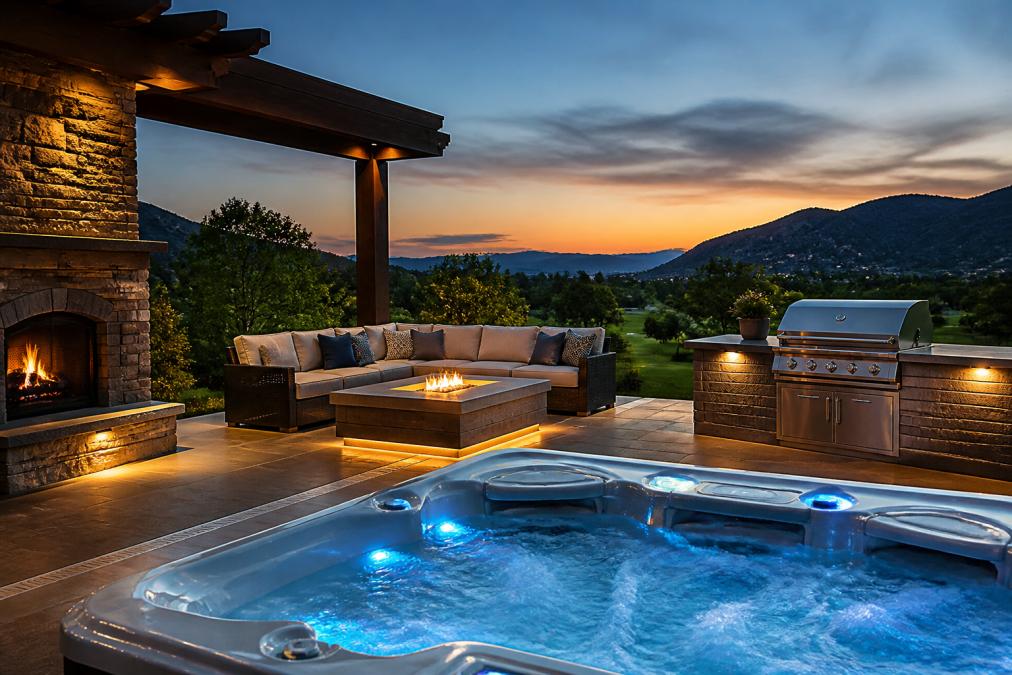
 ultimate-guide
How to Design a Luxury Backyard Retreat
Table of Contents
- Start With a Master Plan and Zoning Strategy
- Design Luxury Outdoor Kitchen Ideas That Work
- Select the Best Hot Tubs for Luxury Backyards
- Create Low-Maintenance Luxury Landscaping
- Layer Lighting, Fire Features, and Ambiance
- Smart Home Integration and Sustainability
- Budget, ROI, and Maintenance Planning
- Frequently Asked Questions
Last Updated: September 17, 2026
Start With a Master Plan and Zoning Strategy
A luxury backyard retreat begins with intentional spatial planning, not impulse purchases. Before selecting a single piece of furniture or a fire feature, map out how your outdoor living space will function across different activities and times of day.
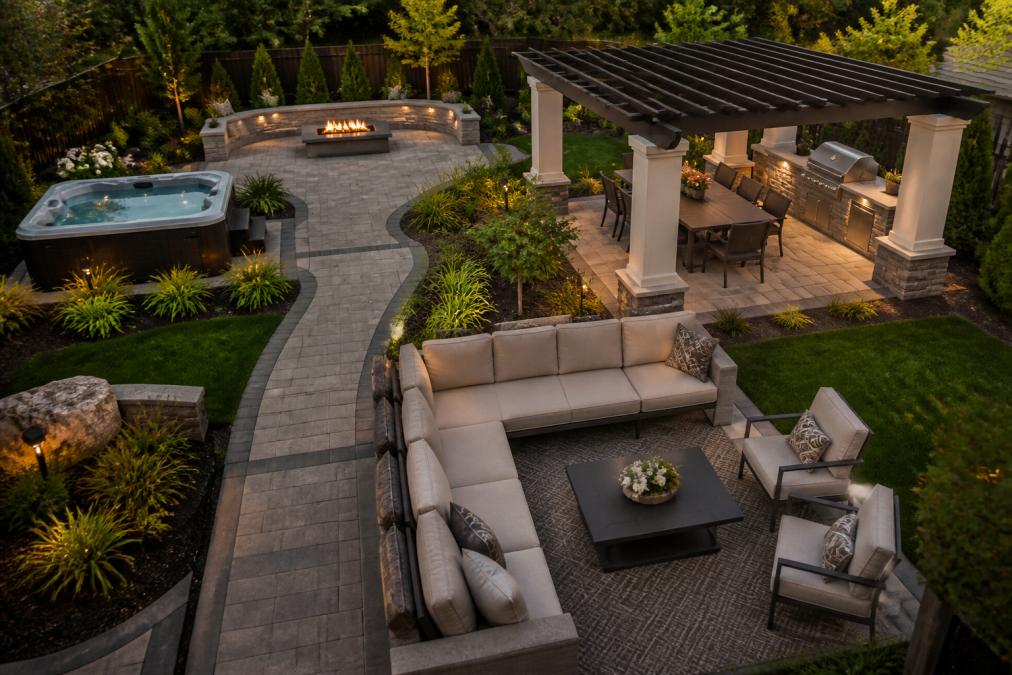
Zoning means dividing your backyard into functional areas: entertaining, dining, relaxation, and water features. This creates flow and prevents the scattered, cluttered feeling that kills the retreat vibe. Think about sun and shade patterns throughout the day. A pergola or natural stone patio in one zone might get brutal afternoon heat, while another spot stays shaded until evening. Careful placement of these elements ensures that a custom backyard patio serves as a cohesive anchor for your outdoor living space while balancing the practical demands of your landscape.
Here's the process most people skip: sketch your yard to scale, mark where the sun hits at different times, and identify natural focal points like views or mature trees. This 30-minute exercise saves thousands in misplaced investments. At allvalley, we've spent 26 years helping homeowners transform backyards into personal resorts.
Mark your entertainment zones first. Where will guests naturally gather? Where will you want to cook and eat? Where will you relax with a book or soak in the spa? Once zones are clear, you can layer in the premium materials, ambient lighting, and water features that tie everything together into a refined aesthetic.
Design Luxury Outdoor Kitchen Ideas That Work
The outdoor kitchen is where your luxury backyard retreat either impresses or disappoints. A poorly designed kitchen becomes a hot, cramped afterthought. A well-planned one becomes the social center of your entire property.
Start with the essentials: a high-quality grill, counter space for prep, and storage for tools and supplies. Premium materials matter here because weather exposure is relentless. Natural stone countertops, stainless steel appliances, and durable cabinetry handle the elements without degrading. The difference between a mid-range setup and a luxury outdoor kitchen isn't just aesthetics, it's longevity and functionality.
Layout is everything. Your grill should face away from prevailing winds to keep smoke and heat away from seating areas. Counter space should surround the grill so you're not running back inside constantly. Many outdoor kitchens fail because they're too cramped or positioned in direct sun with no shade. A pergola or retractable awning over the prep area makes cooking in summer actually enjoyable.
Consider the workflow: food prep, cooking, plating, and serving should flow logically. If your grill is 20 feet from your dining area, you're fighting your own design. The best luxury outdoor kitchens integrate seamlessly with dining and entertaining zones, creating one continuous entertaining space rather than isolated features.
Storage is underrated. Built-in cabinetry keeps grilling tools, charcoal, propane, and entertaining supplies accessible but hidden. Open shelving looks good in photos but collects dust and debris. Closed storage maintains that curated, intentional aesthetic that defines a true retreat.
Select the Best Hot Tubs for Luxury Backyards
A hot tub transforms a backyard from nice to resort-style. But buying the wrong one, undersized, high-maintenance, or cheaply built, turns it into an expensive regret.
For a luxury backyard retreat, size matters. A tub that seats 4-6 people is the sweet spot for most families. Anything smaller feels cramped; anything larger becomes hard to heat efficiently and maintain. Look for jets that target specific muscle groups and variable speed controls so you can adjust intensity without draining and refilling.
The real luxury isn't the tub itself, it's what you don't have to do. Many hot tub owners dread the maintenance: chemical balancing, filter cleaning, winterization. This is where allvalley stands apart. Our hot tubs come with free starter kits and chemicals included, so you're not scrambling to figure out what goes in the water or spending your first month buying supplies.
Low-maintenance systems use advanced filtration that requires less frequent cleaning. Saltwater systems reduce the need for constant chlorine adjustments. Insulated covers and thermal shells keep heat loss minimal, which means lower energy costs and more consistent water temperature.
Placement matters as much as the tub itself. Position it where it's visible from your main entertaining area but slightly separated, you want guests to see it as an inviting feature, not the focal point that dominates the view. Near your outdoor kitchen or lounge area works well. Avoid placing it in full sun all day (the water gets too hot and chemicals degrade faster) or in deep shade (it never reaches comfortable temperature).
Create Low-Maintenance Luxury Landscaping
Landscaping in a luxury backyard retreat serves two purposes: it creates the immersive, resort-style aesthetic and it frames your hardscaping features. But high-maintenance plants and constant upkeep kill the relaxation vibe.
Low-maintenance luxury landscaping uses curated plantings that thrive in your climate with minimal intervention. Ornamental grasses, native shrubs, and drought-resistant perennials look sophisticated while demanding far less water and pruning than traditional flower beds. The key is intentional design, every plant earns its place through shape, color, or texture.
Softscape (plants) and hardscape (stone, pavers, wood) should balance each other. Too much hardscape feels cold and industrial. Too much softscape feels overgrown and chaotic. A 60/40 split of hardscape to softscape creates that refined aesthetic without requiring constant maintenance.
Privacy screening is part of landscaping strategy. Tall shrubs, bamboo screens, or living walls create visual separation from neighbors and define the boundary of your retreat. This psychological separation, knowing you're in your own space, is what makes a backyard feel like a true escape.
Native plants are your secret weapon. They're adapted to local rainfall, soil, and temperature, which means they need less water, fertilizer, and pest management. They also attract beneficial pollinators and birds, adding life to your space without the maintenance burden.
Mulch or gravel between plantings reduces weeds and looks intentional. Drip irrigation on a timer means watering happens automatically, early morning when plants absorb water most efficiently. These systems cost more upfront but save time and water long-term.
Layer Lighting, Fire Features, and Ambiance
Ambient lighting separates a nice backyard from a luxury retreat. Strategic lighting creates mood, extends usable hours into evening, and highlights the design elements you've invested in.
Layer three types of lighting: task lighting (bright enough to cook or read), accent lighting (highlighting architectural features or plants), and ambient lighting (creating overall mood). Path lights guide guests safely while creating visual interest. Uplighting on trees or architectural elements creates drama. String lights or lanterns over dining areas soften the space and invite lingering.
Smart lighting systems let you adjust brightness and color temperature from your phone. Warm white light (2700K) creates relaxation and intimacy. Cooler white (4000K) works better for task areas. The ability to shift between moods, bright for cooking, dimmed for evening relaxation, is what transforms a space.
Fire features anchor a luxury backyard retreat emotionally. A fire pit or fireplace becomes the gathering point, the reason people want to linger outside even when it's cool. The warmth, the light, the primal appeal of fire, it's irreplaceable.
Position your fire feature where smoke drifts away from seating and dining areas. Downwind is your friend. A built-in fireplace or fire pit surrounded by seating creates natural gathering geometry. Standalone fire bowls work too but lack the permanence and visual weight of integrated features.
Materials matter. Natural stone around a fire feature looks intentional and luxurious. Metal surrounds should be high-quality stainless steel or powder-coated steel that won't rust. The fire feature becomes a design centerpiece, so treat it that way.
Smart Home Integration and Sustainability
A modern luxury backyard retreat integrates technology seamlessly. Smart controls for lighting, heating, irrigation, and audio create convenience without visible wires or complicated interfaces.
Automated irrigation adjusts watering based on rainfall and soil moisture, cutting water waste by 30-50% compared to manual watering.
Budget, ROI, and Maintenance Planning
A luxury backyard retreat is a significant investment. Understanding realistic costs and maintenance requirements prevents buyer's remorse and keeps your space functioning beautifully for years.
Frequently Asked Questions
What makes a luxury backyard retreat different from a standard backyard?
A luxury backyard retreat combines intentional spatial planning, premium materials, and multi-functional zones that create a resort-style experience. It integrates high-end amenities like quality hot tubs, outdoor kitchens, fire features, and refined landscaping with sophisticated lighting and ambient design. The focus is on creating an immersive space that minimizes maintenance while maximizing relaxation and entertainment value year-round.
How do I choose the best hot tubs for luxury backyards?
Look for hot tubs built with premium materials, energy-efficient heating systems, and low-maintenance filtration. Consider size based on your space and guest capacity, jet configurations for therapeutic benefits, and integrated smart controls. Quality models come with reliable warranty coverage and include starter kits and chemicals. Professional installation ensures proper plumbing, electrical work, and compliance with local codes, critical for long-term performance and safety.
Can I design a luxury backyard retreat on a budget?
Yes, by prioritizing high-impact elements and phasing the project. Start with hardscaping and spatial planning, add one premium feature (like a quality hot tub or fire pit), and build landscaping gradually. Use natural stone strategically, select low-maintenance plantings, and invest in ambient lighting for visual impact. Many luxury effects come from intentional design and spatial arrangement rather than cost alone. Professional installation ensures your investment performs reliably.
What landscaping features define a resort-style backyard?
Resort-style landscaping uses curated plantings with geometric shapes, natural stone hardscaping, and strategic sun/shade patterns. Incorporate pergolas, privacy screening with softscape, water features, and layered ambient lighting. Low-maintenance plants suited to your climate reduce upkeep while maintaining sophistication. The key is intentional design that creates distinct zones and refined aesthetics, making the space feel like a vacation destination rather than a standard yard.