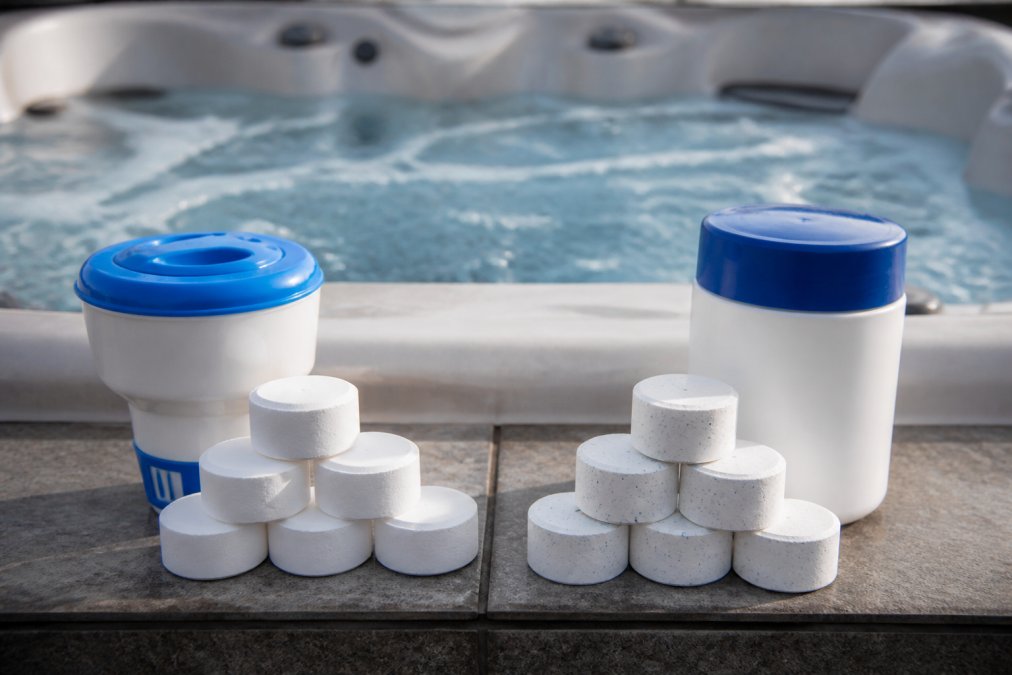
 comparison
Hot Tub Bromine vs Chlorine Comparison Guide
Table of Contents
- Bromine vs Chlorine: Quick Comparison Table
- How Chlorine Works in Hot Tub Water
- How Bromine Works in Hot Tub Water
- Hot Tub Water Chemistry Guide: pH, Alkalinity, and Sanitizer Levels
- How to Shock a Hot Tub With Bromine or Chlorine
- Skin Sensitivity, Indoor vs Outdoor Use, and Conversion Tips
- Frequently Asked Questions
Last Updated: September 26, 2026
Bromine vs Chlorine: Quick Comparison Table
Choosing between bromine vs chlorine is the biggest decision new hot tub owners face, and most guides make it harder than it needs to be. At allvalley, we've watched customers wrestle with this exact question for over 26 years, and the honest answer is that neither sanitizer wins outright. Each one suits a different owner, climate, and routine.
| Factor | Chlorine | Bromine |
|---|---|---|
| Dissolving rate | Fast-acting, needs frequent dosing | Slow-dissolving tablets, less frequent |
| Stability at high water temperature | Breaks down faster | More stable in warm water |
| Skin and eye irritation | Higher irritation risk | Generally gentler |
| Odor | Stronger chemical odor | Milder smell |
| Cost per pound | Lower upfront cost | Higher upfront cost |
| Best for | Budget-conscious, quick sanitizing | Sensitive skin, low-maintenance routines |
How Chlorine Works in Hot Tub Water
Chlorine is the faster, cheaper sanitizer, and it's the one most hot tub owners start with. When you add chlorine, it forms hypochlorous acid, the active compound that attacks bacteria, algae, and other contaminants in the water.
CDC guidance on recreational water illnesses
Pros and Cons of Chlorine
Pros:
- Lower upfront cost per pound
- Kills bacteria quickly
- Easy to find at any pool supply store
- Works well with standard floating dispensers
Cons:
- Breaks down faster in hot water
- Stronger odor and higher irritation risk
- Requires more frequent testing
- Produces chloramines that need regular shocking
How Bromine Works in Hot Tub Water
Bromine is the steadier, gentler sanitizer, and it's the one we usually recommend for hot tubs specifically. It works much like chlorine, but its active form, hypobromous acid, stays effective across a wider pH range and holds up better as water temperature climbs.
EPA information on water disinfection
Pros and Cons of Bromine
Pros:
- More stable in high-temperature water
- Gentler on skin and eyes
- Less frequent chemical adjustments
- Effective across a wider pH range
Cons:
- Higher cost per pound
- Slower to dissolve, so it takes longer to establish
- Harder to find in some stores
- Switching from chlorine takes a full drain and refill
Hot Tub Water Chemistry Guide: pH, Alkalinity, and Sanitizer Levels
Water chemistry is where sanitizer choice actually lives or dies. You can pick the "right" sanitizer and still fight cloudy water, scale, or irritation if pH, alkalinity, and calcium hardness drift out of range.
- pH: 7.4 to 7.6
- Total alkalinity: 80 to 120 ppm
- Calcium hardness: 150 to 250 ppm
- Sanitizer residual: 3 to 5 ppm for chlorine, 4 to 6 ppm for bromine
Pool and Hot Tub Alliance water quality standards
How to Shock a Hot Tub With Bromine or Chlorine
Shocking is the reset button for your water. It oxidizes the waste that builds up from sweat, lotions, and bacteria, clearing chloramines or bromamines and restoring clear water. The basic process is the same for both sanitizers, but the chemistry behind it, and the choice of shock product, differs in ways that matter.
The Universal Shock Routine
- Test the water and note pH and alkalinity first
- Balance pH to 7.4-7.6 before adding shock
- Run the jets with the cover open
- Add the shock dose per the label, based on your water volume
- Leave the cover off for at least 30 minutes
- Retest before anyone soaks
Shock once a week for regular maintenance, and after any heavy bather load. In a hot tub, bather-to-water ratio is far higher than in a pool, so a single long soak can consume a week's worth of sanitizer residual.
Shocking a Chlorine Tub
Chlorine shock is straightforward: you're adding more chlorine (usually calcium hypochlorite or a liquid sodium hypochlorite) to raise the free chlorine level high enough to burn off chloramines. The telltale sign you need to shock is that sharp "pool smell", that's chloramines, not chlorine, and adding more sanitizer without shocking just makes it worse.
Shocking a Bromine Tub: The Regeneration Cycle
Bromine shock works differently, and this is the part most guides skip. When bromine sanitizes, it converts to bromide, an inactive form. Shocking oxidizes that bromide back into active hypobromous acid. In other words, shocking a bromine tub doesn't just clear waste; it recharges your sanitizer reserve.
- Chlorine-based shock: Oxidizes bromide back into active bromine and also adds a chlorine residual. Many bromine users rotate this in weekly because it's effective and inexpensive.
- Non-chlorine oxidizer (MPS): Oxidizes waste and reactivates bromide without adding chlorine. Preferred by users who want to avoid chlorine entirely, but it costs more per dose.
How Often, and How Much
Shock dose depends on your water volume and bather load, so always follow the product label, but the frequency pattern is consistent:
- Weekly: One maintenance shock, whether you soaked heavily or not.
- After heavy use: Any time three or more people soak, or after a long session.
- After visible cloudiness: Cloudy water that won't clear with sanitizer alone usually means oxidizer demand has outrun your shock schedule.
Skin Sensitivity, Indoor vs Outdoor Use, and Conversion Tips
This is where the bromine-versus-chlorine decision stops being chemical and starts being personal. The right answer depends on your skin, where your spa sits, and whether you're willing to drain and refill to change your mind later.
Skin Sensitivity: A Quick Self-Check
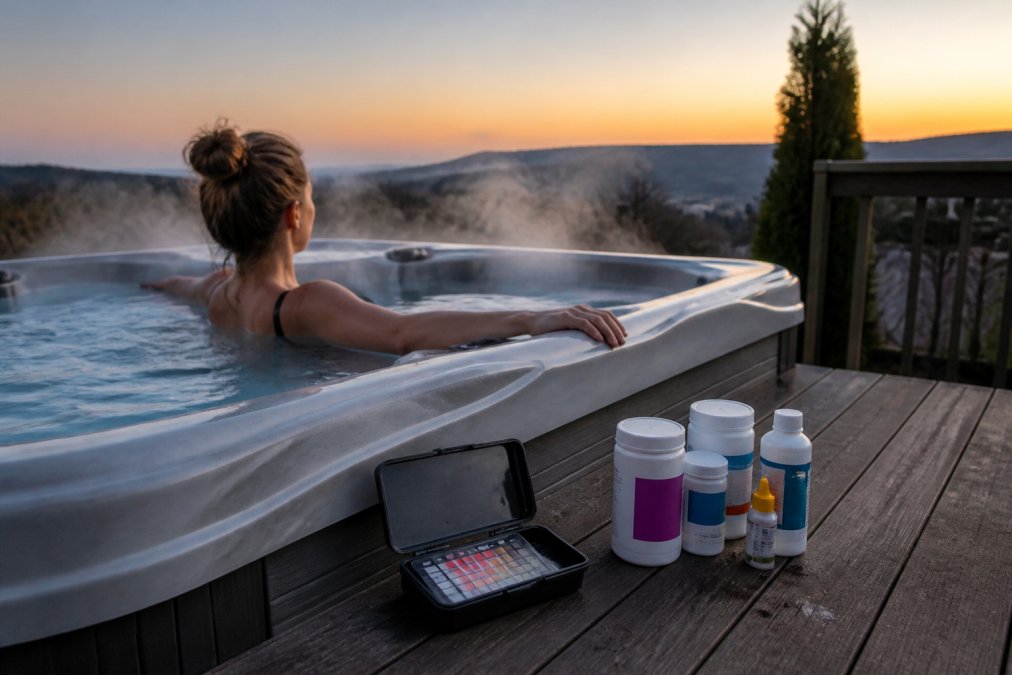
Most irritation complaints trace back to one of three causes, not to the sanitizer itself. Run through this before you blame the chemical:
- Is your pH in range? pH outside 7.4-7.6 is the single most common cause of red, itchy skin after a soak, regardless of sanitizer.
- Are you shocking often enough? Built-up chloramines (from chlorine) and bromamines (from bromine) are the actual irritants, not the parent sanitizer.
- Do you have a diagnosed skin condition? People with eczema or psoriasis often report that bromine's milder odor and lower volatility feel gentler, but the effect is individual, some sensitive users do better on a low-dose chlorine routine with a mineral cartridge.
Indoor vs Outdoor: How UV Changes the Math
Sunlight degrades both sanitizers through UV exposure, but not equally, and the difference matters most in an uncovered outdoor spa.
- Chlorine outdoors: UV breaks down free chlorine quickly. Cyanuric acid (stabilizer) slows that loss, but in a hot tub you want to keep cyanuric acid low, typically under 50 ppm, because high levels reduce chlorine's killing power. This is a real trade-off pool owners don't face.
- Bromine outdoors: Bromine has no effective stabilizer equivalent to cyanuric acid, so it degrades in direct sun too, but it regenerates. When bromine reacts with waste, it forms bromide, and a shock (chlorine or non-chlorine oxidizer) converts bromide back into active hypobromous acid. That regeneration cycle is why bromine often holds a residual longer in a hot, uncovered spa.
- Indoors: Ventilation is the deciding factor. Poor airflow traps fumes, and bromine's milder odor is a genuine advantage in an enclosed room. If your indoor spa has strong exhaust, the odor gap narrows.
How to Convert From Chlorine to Bromine (Step by Step)
- Shock heavily and run the jets for one full cycle to oxidize as much waste as possible.
- Drain the spa completely. Use a submersible pump if your tub lacks a gravity drain, it's faster and gets more water out.
- Clean the shell and plumbing. Wipe down surfaces, and consider a line flush product to clear biofilm from the jets before refilling.
- Replace the filter or give it a thorough chemical soak. A filter loaded with chlorine residue will skew your new bromine levels.
- Refill and balance. Bring pH to 7.4-7.6, alkalinity to 80-120 ppm, and calcium hardness to 150-250 ppm before adding anything else.
- Establish a bromide bank. Add sodium bromide per the label, this is the reserve that your oxidizer will convert into active bromine.
- Add your oxidizer. A chlorine-based shock or a non-chlorine oxidizer activates the bromide bank. From here, your floating bromine tablets maintain the residual.
- Test daily for the first week. Expect levels to swing while the system stabilizes. Once readings hold steady, drop back to your normal two-to-three-times-per-week schedule.
For new owners, a starter kit with test strips and balanced chemicals removes most of the guesswork. allvalley includes free starter kits and chemicals with every hot tub, so you begin with the right tools instead of a shopping list.
Frequently Asked Questions
What should you not mix bromine with?
Never mix bromine with chlorine-based shock or other sanitizers directly in the same container. Adding them separately to the water is fine, but combining them outside the tub can create dangerous fumes. Also avoid mixing bromine with ammonia-based cleaners or algaecides, as this produces toxic chloramines and bromamines. Always add chemicals to water, not water to chemicals, and wait at least 30 minutes between adding different products.
Is bromine or chlorine worse for you?
Bromine is generally gentler on skin and eyes because it works across a wider pH range and produces fewer irritating byproducts at high temperatures. Chlorine can cause more irritation, especially for sensitive skin, and forms chloramines that irritate eyes and lungs. However, both are safe when water chemistry is balanced. If you have sensitive skin, bromine is often the better choice. Always rinse after soaking and maintain proper pH between 7.4 and 7.6.
Do I need to shock my hot tub if I use bromine?
Yes, you still need to shock a bromine hot tub regularly, usually once a week or after heavy use. Shocking oxidizes bromamines (used bromine) back into active bromine, restoring sanitizing power. Use a non-chlorine shock like potassium monopersulfate to avoid mixing chlorine with your bromine system. Without shocking, bromamines build up and reduce water quality, even if your bromine levels read normal on test strips.
Can you switch from chlorine to bromine in a hot tub?
Switching from chlorine to bromine is possible but requires draining and refilling the tub first. You cannot simply add bromine to chlorine-treated water because the two chemicals interact and create unwanted byproducts. Drain the spa completely, clean the shell and filters, refill with fresh water, then start a bromine routine using a floating dispenser and bromine tablets. Expect the transition to take a full day, and test water chemistry before your first soak.
How often should I test my hot tub water?
Test your hot tub water at least three times per week using test strips, and daily during heavy use or hot weather. Check sanitizer levels (chlorine or bromine), pH, and alkalinity each time. Once a week, test calcium hardness and cyanuric acid if using chlorine. Regular testing prevents bacteria growth, algae, and skin irritation, and keeps your sanitizer working efficiently.