 ultimate-guide
What Are the Risks of Daily Hot Tub Use?
Table of Contents
- How Daily Hot Tub Use Affects Your Body
- Infectious Disease Risks: Legionnaires' Disease and Hot Tub Folliculitis
- How Long Should You Stay in a Hot Tub?
- Cardiovascular Strain and Heat Exhaustion
- Hot Tub Safety for Pregnant Women and Male Fertility
- Hot Tub Water Chemistry Maintenance: Your First Line of Defense
- Age-Specific Risks and Post-Soak Recovery
- Conclusion: Soaking Smart, Not Scared
- Frequently Asked Questions
Last Updated: October 2, 2026
How Daily Hot Tub Use Affects Your Body
Daily hot tub use is generally safe for healthy adults when the water is properly maintained and sessions are kept short, but soaking every day introduces cumulative risks that occasional use does not. This guide from allvalley covers the full picture: infection risks, cardiovascular strain, fertility concerns, water chemistry, and who needs to be most careful. Research from the Centers for Disease Control and Prevention on recreational water illnesses shows that most hot tub-related illnesses are preventable with correct sanitation and sensible soak times.
The core tension is simple. A hot tub delivers heat, buoyancy, and relaxation, and those same properties create thermal stress, chemical exposure, and a warm, wet environment where pathogens thrive. The risks of daily hot tub use are not about one soak; they are about what repeated exposure does over weeks and months.
Below, we break down each risk by body system and give you the maintenance and recovery habits that keep daily soaking in the safe zone.
Infectious Disease Risks: Legionnaires' Disease and Hot Tub Folliculitis
The two infections most associated with hot tubs are Legionnaires' disease and hot tub folliculitis, and both trace back to contaminated water rather than the tub itself. Legionnaires' disease is a severe form of pneumonia caused by inhaling Legionella bacteria in aerosolized droplets from contaminated water. Hot tub folliculitis is a skin infection caused by Pseudomonas aeruginosa, which produces an itchy, bumpy rash around hair follicles, often within a day or two of exposure.
The CDC's guidance on Legionella in hot tubs and spas notes that Legionella grows fastest in warm water with poor disinfectant levels, which is exactly the condition a neglected hot tub creates. Biofilm, the slimy layer that forms on pipes and surfaces, shelters both Legionella and Pseudomonas from sanitizers, so a tub can look clear and still harbor pathogens.
Inhalation risk is the one people underestimate. Splashing, jets, and bubbles create fine aerosolized droplets that carry bacteria deep into the lungs. Folliculitis, by contrast, is a contact problem: the longer you sit, the more your skin barrier is exposed.
How Long Should You Stay in a Hot Tub?
The short answer: 15 to 30 minutes per session for healthy adults, and shorter if the water is hot or you are sensitive to heat. How long should you stay in a hot tub depends on water temperature, your health status, and whether you are alone or with others. At typical spa temperatures, most people should cap a single soak at 15 to 20 minutes and step out before they feel lightheaded.
A practical framework for daily soakers:
- Water at 104°F (the common upper limit): 15 minutes maximum
- Water at 100-102°F: 20 to 30 minutes
- Water below 98°F: longer sessions are tolerable, but still take breaks
- Anyone pregnant, elderly, or on blood pressure medication: 10 to 15 minutes, and check with a doctor first
The reason for the cap is core body temperature. Immersion in hot water raises it, and prolonged elevation leads to vasodilation, dehydration, and dizziness. If you soak daily, treat the timer as non-negotiable, not a suggestion.
Cardiovascular Strain and Heat Exhaustion
Hot water immersion triggers a predictable cascade of cardiovascular changes, and understanding the mechanism explains why daily use compounds the risk.
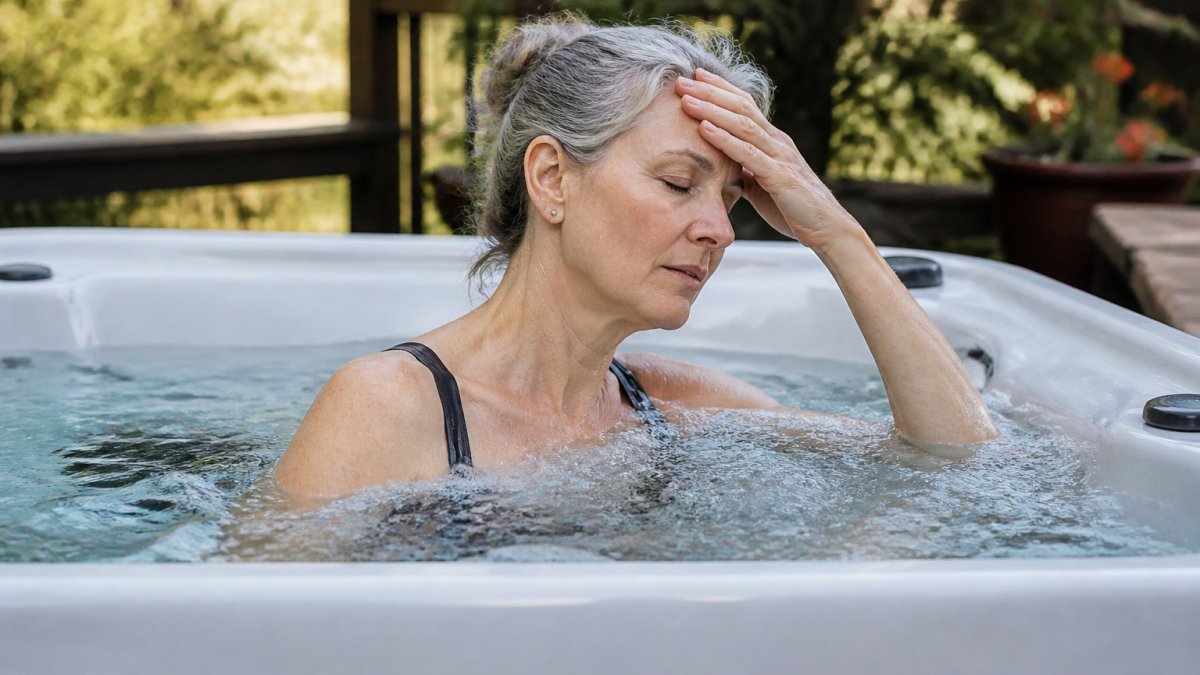
The heat exhaustion threshold is not a single number, but a combination of water temperature, immersion time, and individual tolerance. At 104°F, the common upper limit for spa water, core temperature can begin rising within 10 to 15 minutes. Prolonged elevation above normal core temperature leads to vasodilation, sweating, and fluid loss, which together produce the classic symptoms:
- Dizziness or lightheadedness
- Nausea
- Headache
- Rapid pulse or palpitations
- Weakness or confusion
- Cold, clammy skin (a late sign)
If any of these appear, get out, cool down, and drink water. Do not re-enter the same day.
Several factors amplify cardiovascular strain in daily soakers:
- Alcohol: Dilates blood vessels further, impairs judgment about when to exit, and increases dehydration risk. The American Heart Association's guidance on heat and cardiovascular health advises against combining alcohol with hot tubs, especially for anyone with a heart condition.
- Medications: Beta blockers blunt the heart-rate response, so you may not feel the warning signs of overheating. Diuretics increase dehydration risk. Nitrates and some blood pressure medications can cause sudden drops in blood pressure on standing.
- Dehydration: Sweating in hot water pulls fluid and electrolytes from your body even though you are surrounded by water. Daily soakers who do not replace that fluid tend to feel the effects cumulatively.
- Age: Thermoregulation efficiency declines with age, and the cardiovascular reserve to handle heat stress is lower.
The quiet contributor is cumulative dehydration. A single soak might cost you a few ounces of sweat; a daily habit over weeks can leave you chronically under-hydrated, which worsens every other risk on this list.
Hot Tub Safety for Pregnant Women and Male Fertility
Hot tub safety for pregnant women centers on core body temperature, not the water quality alone.
For men, the fertility concern is different but real. Sperm production depends on a testicular temperature slightly below core body temperature, and repeated heat exposure can temporarily reduce sperm count and motility. Research summarized by the National Institutes of Health on heat exposure and male fertility suggests that regular sauna or hot tub use may lower sperm quality, though effects are generally reversible once heat exposure stops.
The practical takeaway for couples trying to conceive: men who soak daily may want to cut back to a few times a week, keep sessions short, and avoid the hottest settings. Reproductive health effects from occasional use are unlikely to matter; daily use over months is where the concern sits.
Hot Tub Water Chemistry Maintenance: Your First Line of Defense
Hot tub water chemistry maintenance is the single most effective way to prevent the infections and skin reactions covered above. Water chemistry is the balance of sanitizer, pH, alkalinity, and other parameters that keep water safe and comfortable.
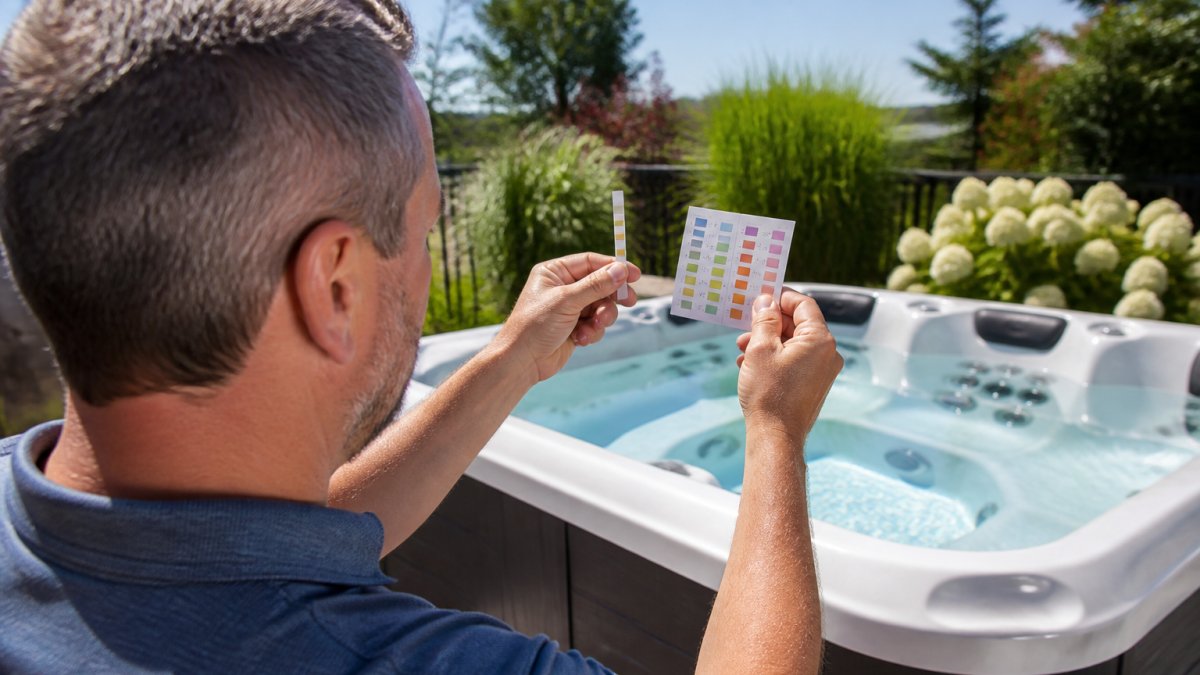
The core parameters to check regularly:
| Parameter | Target Range | Why It Matters |
|---|---|---|
| Free chlorine | 1-3 ppm | Kills bacteria and viruses |
| Bromine | 3-5 ppm | Alternative sanitizer, gentler on some skin |
| pH | 7.4-7.6 | Outside this range, sanitizer stops working well |
| Total alkalinity | 80-120 ppm | Stabilizes pH |
| Calcium hardness | 150-250 ppm | Prevents corrosion and scaling |
Chlorine exposure and bromine sensitivity are the two chemical reactions most often mistaken for infection. Chloramines, the byproduct of chlorine reacting with sweat and body oils, cause red eyes, coughing, and skin irritation.
Age-Specific Risks and Post-Soak Recovery
Children under 5: Should not use hot tubs at all.
Children 5-12: Short sessions only, supervised, at lower temperatures.
Teens and healthy adults: Standard 15-20 minute limits apply at 104°F.
Adults 65+: This is the group where the standard advice undersells the risk.
Anyone with chronic conditions: Diabetes, heart disease, and neuropathy all raise risk.
A simple post-soak routine:
- Rinse off with cool water to remove chlorine or bromine residue.
- Drink a full glass of water and replace electrolytes if you soaked long.
- Moisturize within a few minutes to support the skin barrier.
- Sit in a cool, shaded spot for 5-10 minutes before resuming activity.
- Skip the next soak if you felt dizzy or unusually fatigued.
Long-term dermatological impact is the risk daily soakers most often miss.
There is a psychological angle too.
Conclusion: Soaking Smart, Not Scared
The risks of daily hot tub use are real, but they are manageable, and they are almost entirely about habits rather than the tub itself. Keep sessions short, test and balance your water consistently, know your personal risk factors, and build a simple post-soak recovery routine.
If you are setting up a backyard retreat and want a spa that is genuinely easy to maintain, allvalley has spent 26 years helping homeowners get there.
Frequently Asked Questions
Is a hot tub every day bad for you?
Daily hot tub use isn't automatically harmful, but it does increase your exposure to risks like hot tub folliculitis, dehydration, and cardiovascular strain. The key factors are water chemistry, soak duration, and your individual health. Limiting soaks to 15-30 minutes, maintaining proper pH balance and sanitizer levels, and staying hydrated can make daily use much safer. If you have heart conditions, are pregnant, or are trying to conceive, talk to your doctor first.
Is using a hot tub every day bad for your skin?
Daily soaking can strip your skin barrier over time, especially if chlorine or bromine levels are too high or pH is off. This can lead to dryness, dermatitis, and increased sensitivity. Hot tub folliculitis, caused by Pseudomonas aeruginosa, is another concern when sanitization slips. Rinsing off after each soak, moisturizing, and keeping water chemistry balanced reduces the long-term dermatological impact.
How does daily hot tub use affect male fertility?
Frequent exposure to hot tub temperatures can raise scrotal temperature enough to impair sperm motility and production. Studies show that even short-term heat exposure can temporarily reduce sperm quality. If you're trying to conceive, limit soaks to 10-15 minutes and avoid daily use. The effects are usually reversible once heat exposure stops, but it can take weeks to months for sperm parameters to recover.
What are the signs of hot tub-related illness?
Watch for skin rashes or bumps (hot tub folliculitis), fever, cough, shortness of breath (possible Legionnaires' disease from aerosolized droplets), dizziness, nausea, or headache (heat exhaustion). Symptoms can appear hours to days after exposure. If you notice a rash that spreads or respiratory symptoms, see a doctor and mention your hot tub use. Keeping water chemistry in check and limiting soak time are your best prevention steps.