 ultimate-guide
Hot Tub Monthly Maintenance Cost Breakdown
Table of Contents
- What Goes Into Hot Tub Monthly Maintenance Costs
- Hot Tub Electricity Cost Per Month
- Hot Tub Chemical Cost Breakdown
- How to Clean Hot Tub Filters and Replacement Costs
- DIY Maintenance vs. Professional Service Costs
- Annual Maintenance Cost Projections and Budget Planning
- Ways to Reduce Your Hot Tub Operating Expenses
Last Updated: August 21, 2026
What Goes Into Hot Tub Monthly Maintenance Costs
Understanding your hot tub's operating expenses means breaking down every category that affects your wallet each month. The hot tub monthly maintenance cost isn't just about chemicals, it's electricity, filter replacements, water treatment supplies, and labor if you hire professionals. Most homeowners underestimate this when they first buy, then get surprised by the bill.
Here's what actually matters: the heating system runs continuously or semi-continuously depending on your usage pattern, water chemistry requires ongoing attention to prevent algae and bacterial growth, and filters accumulate debris that reduces circulation efficiency. Each of these elements carries a real monthly price tag.
At allvalley, we help homeowners understand these costs upfront so there are no surprises. Our hot tubs come with free starter kits and chemicals, which gives you a buffer in those first months while you establish your maintenance routine. But once that initial supply runs out, you'll need to budget for ongoing chemical purchases and electricity consumption.
The good news: unlike many outdoor investments, hot tub costs are predictable. You're not dealing with seasonal surprises or emergency repairs if you stay on top of preventative maintenance. The bad news: skipping maintenance creates much bigger problems later, and much bigger bills.
Hot Tub Electricity Cost Per Month
Electricity is typically your largest monthly operating expense, and it depends heavily on your climate, how often you use the hot tub, and how well your unit is insulated. The heater element and circulation pump run regularly to maintain water temperature and keep water moving through the filtration system.

Most hot tubs draw between 3-7 kilowatt-hours of electricity per day in moderate climates, though this varies significantly (energy.gov). A unit running in colder regions or used frequently will consume more. The circulation pump itself uses steady power, while the heater element demands the most energy when heating water from cold or maintaining temperature during winter months.
Your local electricity rate matters enormously. If you're paying 12 cents per kilowatt-hour, your monthly bill looks very different than someone paying 18 cents. Check your utility statement to find your actual rate, it's usually listed as cents per kWh.
Energy efficiency tips that actually reduce your bill: use a spa cover when not in use (this prevents heat loss and cuts heating demand significantly), lower your target temperature by just a few degrees, and run the circulation pump on a timer rather than 24/7. Many homeowners don't realize that a spa cover is one of the cheapest ways to reduce operating expenses, it pays for itself within a few months through energy savings alone.
Smart monitoring systems can help you track real-time energy consumption, though these represent an additional upfront investment. They're useful if you want detailed data, but they're not essential for basic cost management.
Hot Tub Chemical Cost Breakdown
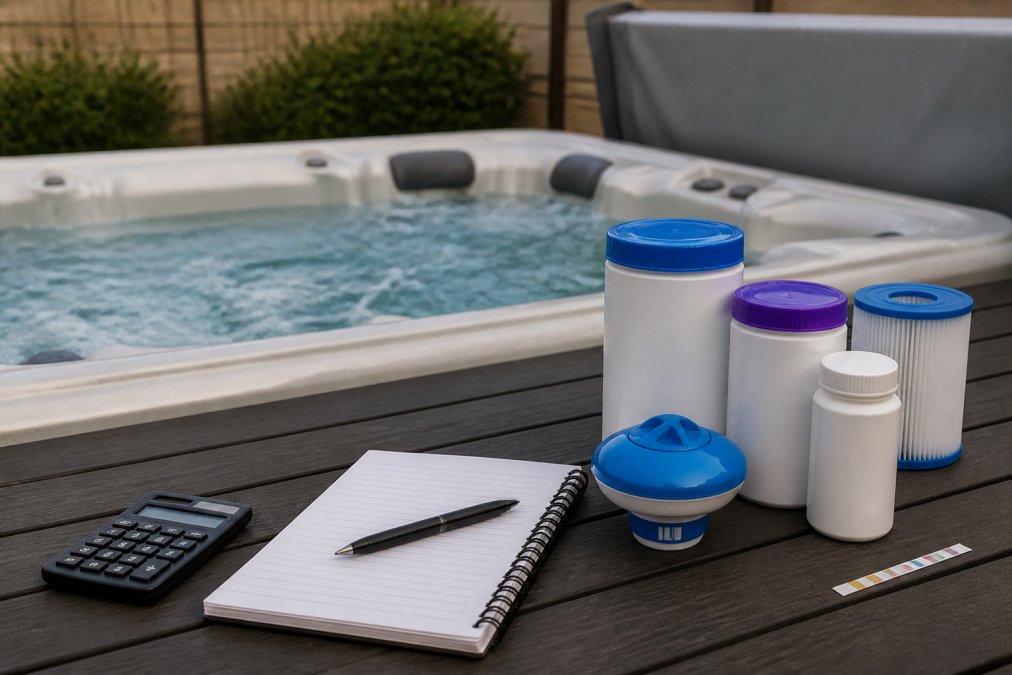
Water chemistry requires three main categories of chemicals: sanitizers to kill bacteria and algae, pH buffers to maintain proper alkalinity, and shock treatment to oxidize organic contaminants that accumulate over time.
Sanitizers (chlorine or bromine) are your ongoing expense. You'll add these weekly or more frequently depending on usage and water testing results. A typical household might spend $20-40 monthly on sanitizer, though this scales with how often the tub is used and how many people are using it (the CDC).
pH balancers and alkalinity adjusters keep your water chemistry stable. Total dissolved solids and calcium hardness need monitoring, and you'll occasionally need to add products to raise or lower pH. This category typically runs $10-20 monthly.
Shock treatment oxidizes contaminants and should be used weekly or after heavy use. One container usually treats multiple applications, so monthly costs here are modest, roughly $15-25 depending on the product and frequency.
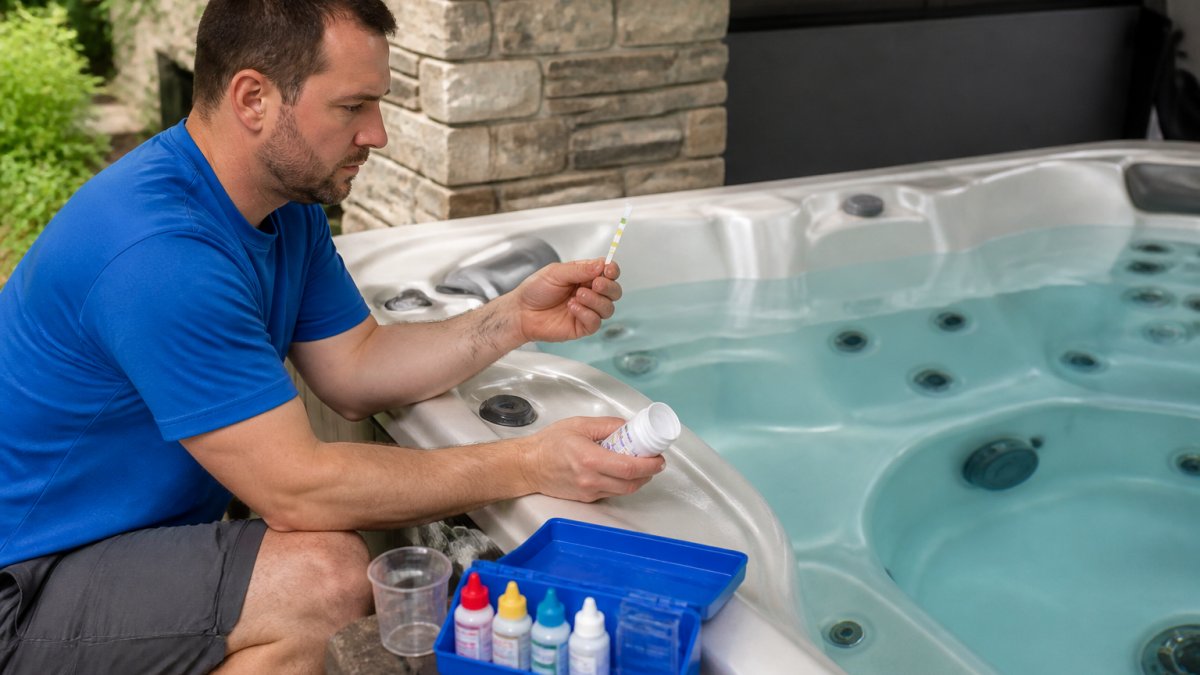
Water testing is essential, and test strips are inexpensive. You can test alkalinity, pH balance, and sanitizer levels with strips that cost just a few dollars for a pack. Some people prefer professional water testing services, which cost more but provide more detailed analysis of total dissolved solids and calcium hardness.
The real variable here is usage. A hot tub used three times a week needs more chemicals than one used once a week. Heavy usage, especially with multiple people, depletes sanitizer faster and creates more organic material that requires shock treatment.
One often-overlooked cost: water replacement. Depending on your water hardness and chemical balance, you may need to drain and refill partially or completely every few months. This isn't a chemical cost exactly, but it affects your overall water treatment budget and can impact your utility bill if you're on metered water.
How to Clean Hot Tub Filters and Replacement Costs
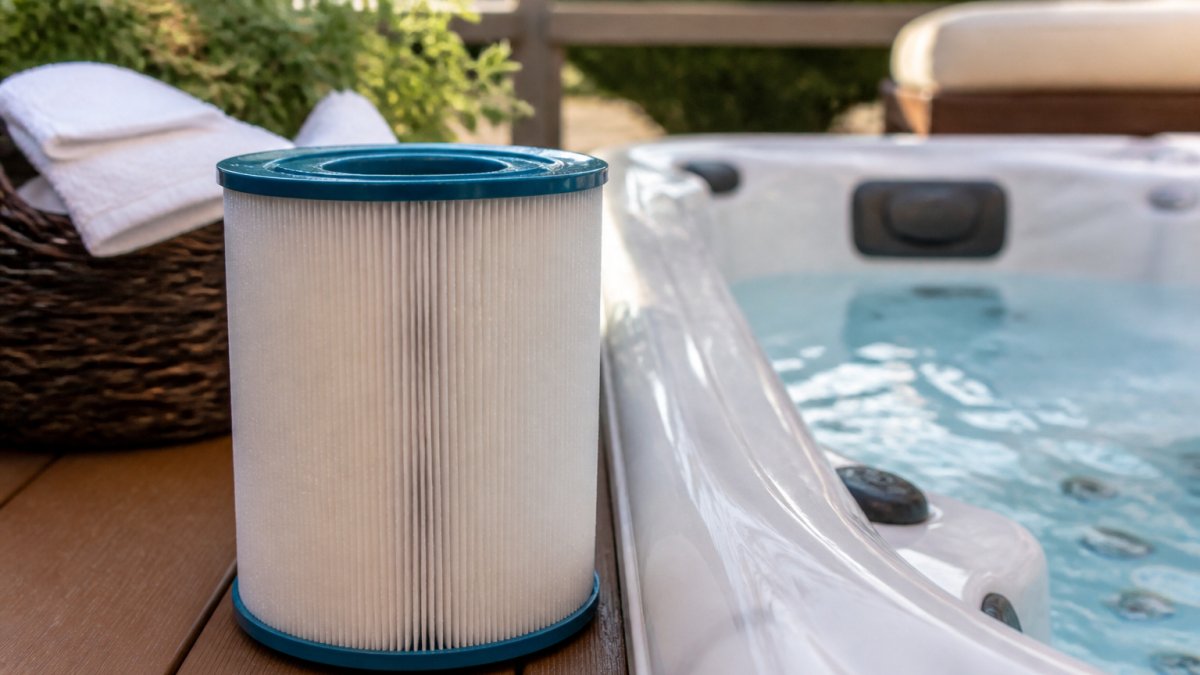
Filter cartridges are the lungs of your hot tub, they remove debris, dead skin cells, and particles that would otherwise cloud your water. Cleaning them regularly extends their life significantly.
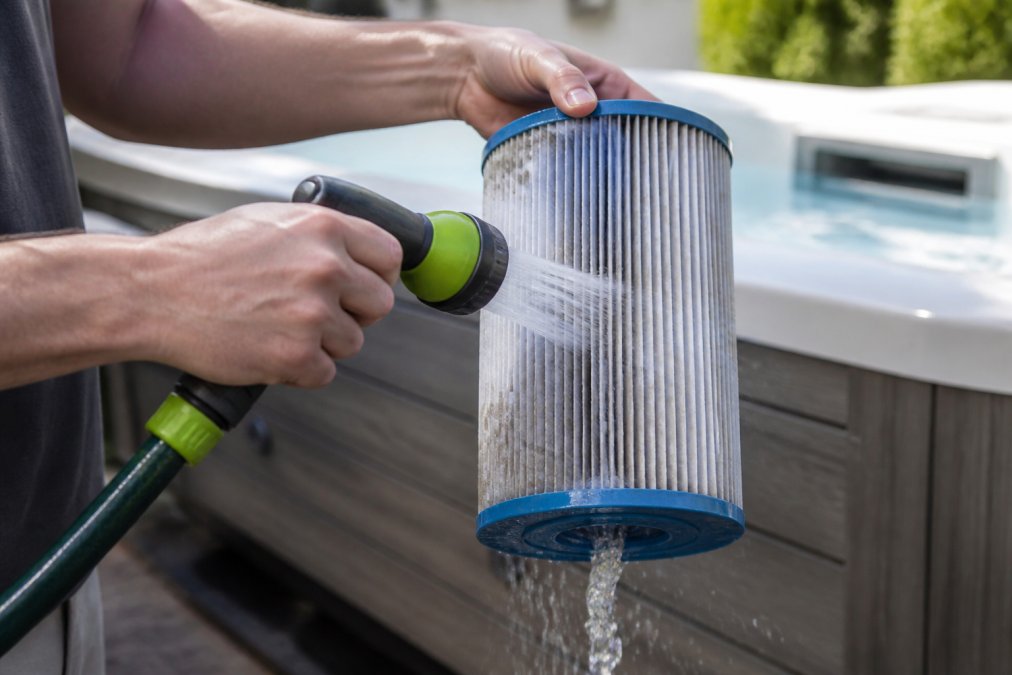
Monthly cleaning routine: Remove the cartridge and rinse it thoroughly with a garden hose, spraying water between the pleats to flush out trapped debris. This takes about 10 minutes and costs nothing. Do this weekly or biweekly depending on usage. Many people skip this step and wonder why their filters wear out fast, this is the most common mistake.
Deep cleaning: Every 3-4 months, soak the cartridge in a filter cleaning solution overnight, then rinse thoroughly. This removes oils and buildup that regular rinsing misses. Filter cleaning solution costs $15-25 per container and lasts through multiple cleaning cycles.
Replacement schedule: Filter cartridges typically last 1-2 years with proper maintenance, though heavy use shortens this (nsf.org). When a cartridge stops performing (water stays cloudy despite cleaning), it's time to replace it. A replacement cartridge costs anywhere from $40-150 depending on your hot tub model and brand.
The math: if you replace a cartridge every 18 months at an average cost of $80, that's roughly $53 per month in filter replacement costs. But this assumes proper cleaning, skipping maintenance cuts cartridge life in half, doubling your actual monthly expense.
Some people use multiple cartridges in rotation, cleaning one while another is in the tub. This extends cartridge life because each one gets proper drying time. It's a small investment upfront that saves money over time.
DIY Maintenance vs. Professional Service Costs
This is where the real decision point lies for most homeowners. You can handle hot tub maintenance yourself, or you can hire professionals to manage it for you, and the cost difference is substantial.
DIY maintenance requires your time and attention. You're responsible for weekly water testing, chemical balancing, filter cleaning, and monitoring the equipment. The financial cost is just chemicals and occasional parts, but the time commitment averages 2-4 hours per month depending on how methodical you are. Most homeowners find they can manage this without difficulty once they understand the basics.
The advantage of DIY: you control costs completely and catch problems early because you're regularly inspecting the equipment. The disadvantage: you need to learn the system, and mistakes (like adding too much chemical or letting pH drift) create bigger problems down the line.
Professional service contracts typically cost $100-300 per month depending on your location and the service level. A basic contract usually includes weekly water testing and chemical balancing, filter cleaning, and equipment inspection. Some premium contracts include parts and labor for repairs.
The advantage of professional service: you don't think about maintenance, it just happens. The disadvantage: you're paying for labor, which adds significant cost, and you lose direct control over your system.
For homeowners who use their hot tub frequently and value convenience, professional service makes sense. For those with budget constraints or who enjoy hands-on management, DIY is perfectly viable. Many homeowners start with DIY and switch to professional service later if life gets busier.
At allvalley, we work with homeowners on both sides of this decision. Our free starter kits and included chemicals give you a foundation for DIY maintenance, and our installation team can walk you through the basics during setup. If you later decide professional service is worth the cost, you'll have the knowledge to evaluate what a service provider is actually doing for you.
Annual Maintenance Cost Projections and Budget Planning
Let's project a realistic annual budget. These are qualified estimates based on typical usage patterns, your actual costs will vary based on climate, water hardness, usage frequency, and whether you choose DIY or professional service.
DIY maintenance scenario:
- Electricity: $1,200-2,400 annually (depending on climate and heater usage)
- Chemicals: $300-600 annually
- Filter replacement: $300-600 annually (assuming one cartridge per year)
- Miscellaneous supplies: $100-200 annually
- Total: $1,900-3,800 annually, or roughly $160-320 per month
Professional service scenario:
- Electricity: $1,200-2,400 annually
- Professional service contract: $1,200-3,600 annually
- Filter replacement: $300-600 annually (usually included in premium contracts)
- Total: $2,700-6,600 annually, or roughly $225-550 per month
The difference between these scenarios is significant, potentially $800-2,800 per year. This is why understanding your maintenance approach matters when you're budgeting for a hot tub purchase.
One planning tip: set aside a contingency fund for unexpected repairs. Even with preventative maintenance, equipment occasionally fails. A circulation pump or heater element replacement can cost $500-1,500. Having $100-150 monthly in savings prevents a surprise repair from derailing your budget.
Also account for seasonal variation. Winter months typically cost more because heating demands increase in cold climates. Summer usage might increase chemical consumption if more people are using the tub. Your monthly costs won't be perfectly flat, they'll fluctuate based on these factors.
Ways to Reduce Your Hot Tub Operating Expenses
The most effective cost-reduction strategy is preventative maintenance. A few dollars spent on filter cleaning and water testing prevents hundreds in equipment repair costs. This is where DIY maintenance really shines, you catch small problems before they become expensive ones.
Insulation improvements directly reduce heating costs. If your hot tub's cabinet or surrounding area has poor insulation, heat escapes continuously. Adding foam insulation around the equipment area or upgrading to a better spa cover can reduce electricity consumption by 15-30%. This is one of the highest-return investments you can make.
Optimize your heating schedule. Many homeowners heat their tub 24/7, which is unnecessary if you use it only a few times per week. Dropping the temperature by 5 degrees when you're not using it, or using a timer to heat only before typical usage times, reduces costs without sacrificing comfort.
Monitor water chemistry closely. Unbalanced water (wrong pH or alkalinity) causes equipment stress and requires more chemicals to correct. Spending five minutes weekly on water testing prevents expensive correction cycles. This is genuinely the cheapest maintenance task you can do.
Batch your chemical purchases. Buying in bulk when chemicals are on sale costs less than purchasing small quantities monthly. Store extra chemicals properly (cool, dry place) and you'll save money over time.
Consider energy-efficient upgrades. Newer heater elements and circulation pumps are more efficient than older models. If your tub is more than 10 years old, upgrading these components might reduce electricity consumption enough to pay for themselves within a few years.
Use ozone generators or UV sanitization systems as supplementary sanitization. These reduce your chemical consumption, which saves money monthly. They represent an upfront investment ($300-800), but for heavy users, they pay for themselves within a year or two through reduced chemical purchases.
The bottom line: your hot tub's operating costs are manageable and predictable if you stay on top of maintenance. Skipping maintenance doesn't save money, it just delays costs until something breaks. A small monthly investment in chemicals and your time prevents large, unexpected expenses.
Managing your hot tub's monthly maintenance cost doesn't have to be overwhelming. The key is understanding what drives your expenses and staying consistent with preventative care. Whether you choose DIY maintenance or professional service, having a clear budget prevents surprises and keeps your investment enjoyable for years to come.
If you're ready to invest in a hot tub that minimizes maintenance hassles, allvalley offers quality units backed by over 26 years of experience. Our hot tubs come with free starter kits and chemicals, professional installation and delivery services, and a reputation built on reliability. Call us at 760-342-5277 to discuss your hot tub needs and get a clear picture of what your monthly costs will actually be.
Frequently Asked Questions
Q: What is the average monthly electricity cost for a hot tub?
A: Monthly electricity costs typically range from $15 to $50, depending on your local utility rates, water temperature settings, and how often you use the hot tub. Energy efficiency improves with a quality spa cover, proper insulation, and regular maintenance of the heater element and circulation pump.
Q: How often do hot tub filters need to be replaced?
A: Filter cartridges typically last 12 to 18 months with proper maintenance. You should clean your filters monthly by rinsing them with fresh water to remove debris and maintain water flow. Regular cleaning extends cartridge life and keeps your water chemistry balanced. Replacement costs vary, but budgeting $100 to $300 annually for new cartridges is typical for most hot tub sizes.
Q: What is included in a hot tub chemical cost breakdown?
A: Monthly chemical costs usually range from $20 to $60 and include sanitizers (chlorine or bromine), pH adjusters, alkalinity boosters, shock treatment, and water testing supplies. Additional costs may include biocides, calcium hardness adjusters, and ozone generator maintenance if your system uses one. Water testing strips help you monitor total dissolved solids and other chemistry parameters to avoid expensive water replacement.
Q: Is it cheaper to run a 110v or 220v hot tub?
A: A 110-volt hot tub costs less to operate monthly but heats water slowly and has limited jet power. A 220-volt model heats faster and offers stronger circulation, but uses more kilowatt-hours per month. Over a year, 220-volt units may cost $100 to $200 more to run, but faster heating and better performance often justify the difference for regular users.
This article was written using GrandRanker