 how-to
How to Reduce Hot Tub Maintenance: 7 Smart Strategies
Table of Contents
- Why Hot Tub Maintenance Matters (But Doesn't Have to Be Hard)
- How to Clean Hot Tub Filters: The Foundation of Low-Maintenance Ownership
- Hot Tub Chemical Maintenance Schedule: Automate What You Can
- How to Prevent Hot Tub Cloudy Water Before It Starts
- Use Smart Technology to Cut Your Time in Half
- Drain, Refill, and Cover Strategies That Save Work
- Common Maintenance Mistakes That Create Extra Work
- Conclusion: Your Low-Maintenance Hot Tub Starts Here
Last Updated: August 17, 2026
Why Hot Tub Maintenance Matters (But Doesn't Have to Be Hard)
Owning a hot tub should be about relaxation, not endless maintenance chores. Yet many homeowners assume that how to reduce hot tub maintenance is an impossible goal, that you're stuck choosing between a pristine spa and your free time. That's the wrong trade-off entirely.
The truth is simpler: most people maintain their hot tubs the hard way because they don't know the shortcuts. They're testing water manually every few days, cleaning filters by hand, and treating problems after they happen instead of preventing them. These habits create the perception that hot tub ownership demands constant attention.
At allvalley, we've spent over 26 years helping homeowners transform their backyards into retreats they actually use and enjoy. Our hot tubs come with free starter kits and chemicals specifically designed to reduce the friction of ownership. But even the best equipment won't save you time if your approach is wrong.
This guide walks you through seven strategies to reduce hot tub maintenance without sacrificing water quality or safety. You'll learn how to automate what can be automated, clean more efficiently, prevent problems before they start, and reclaim the relaxation your spa is supposed to deliver.
How to Clean Hot Tub Filters: The Foundation of Low-Maintenance Ownership
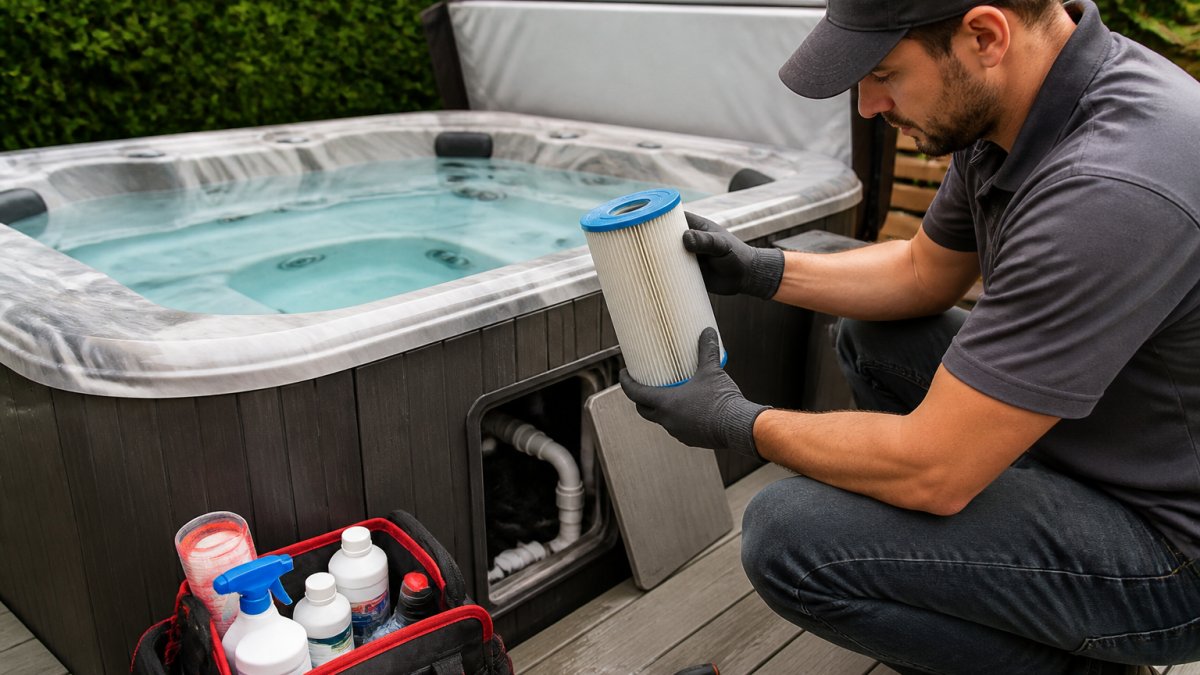
Your filter is the hardest working component in your hot tub. It traps debris, biofilm, and contaminants that would otherwise cloud your water and degrade your experience. A clogged filter doesn't just reduce water clarity, it forces your circulation pump to work harder, raising energy costs and shortening equipment life.
The foundation of low-maintenance ownership starts here: understand when to clean versus when to replace, and stick to a schedule that actually works.
Cleaning Schedule That Actually Sticks
Most people fail at filter maintenance because their schedule is either too aggressive or too vague. You don't need to rinse your filter daily, but you do need consistency.
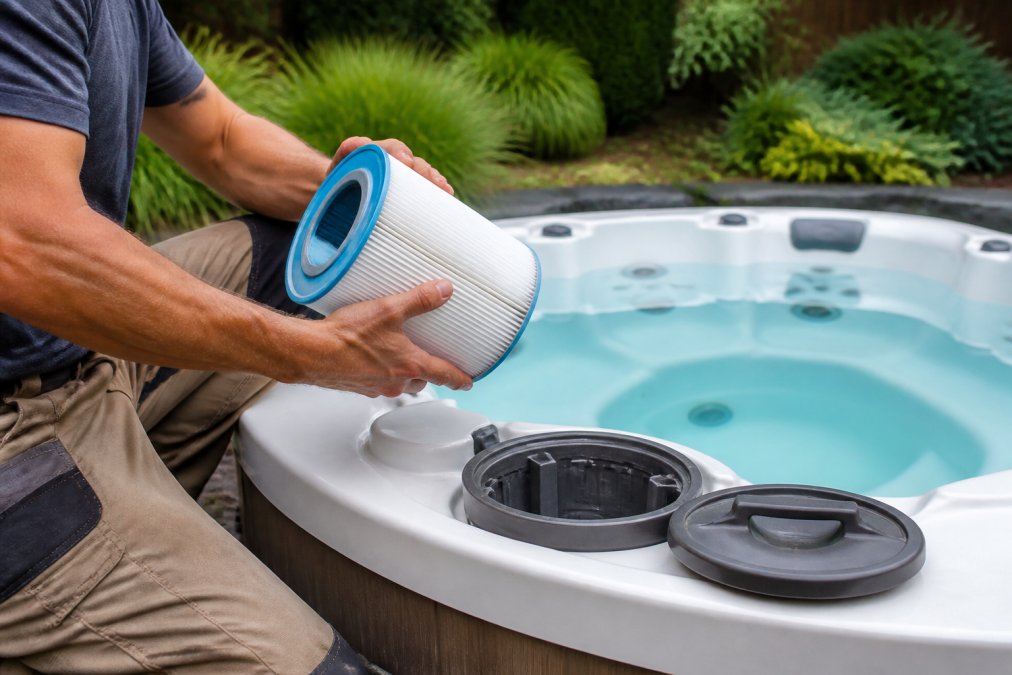
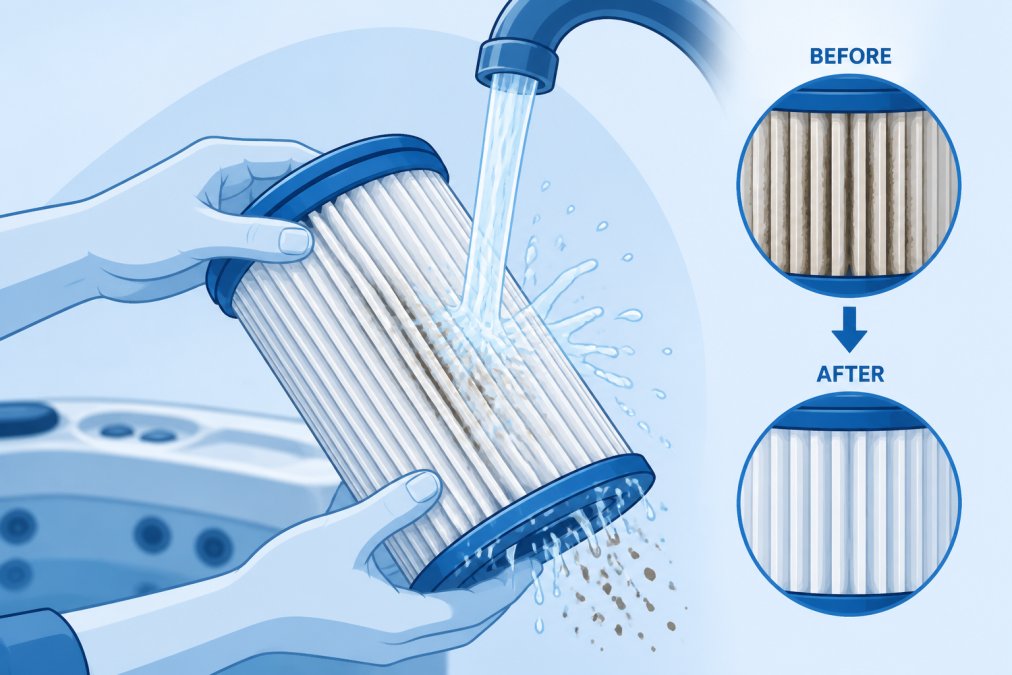
A practical schedule works like this: rinse your filter cartridge every two weeks using a standard garden hose with moderate water pressure. This removes accumulated debris and biofilm without damaging the pleats. A quick 10-minute rinse every 14 days beats a frantic deep clean once a month. The water clarity stays consistent, and you're not scrambling to fix cloudy water before guests arrive.
Mark it on your calendar or set a phone reminder. Consistency matters more than intensity. Teams and families that treat filter cleaning as a scheduled task, like taking out the trash, spend less total time on maintenance than those who clean reactively.
When to Replace vs. Clean
Cleaning extends filter life, but it doesn't last forever. A cartridge filter typically lasts 12 to 24 months depending on usage, water chemistry, and how often you clean it. Here's how to know when replacement is necessary.
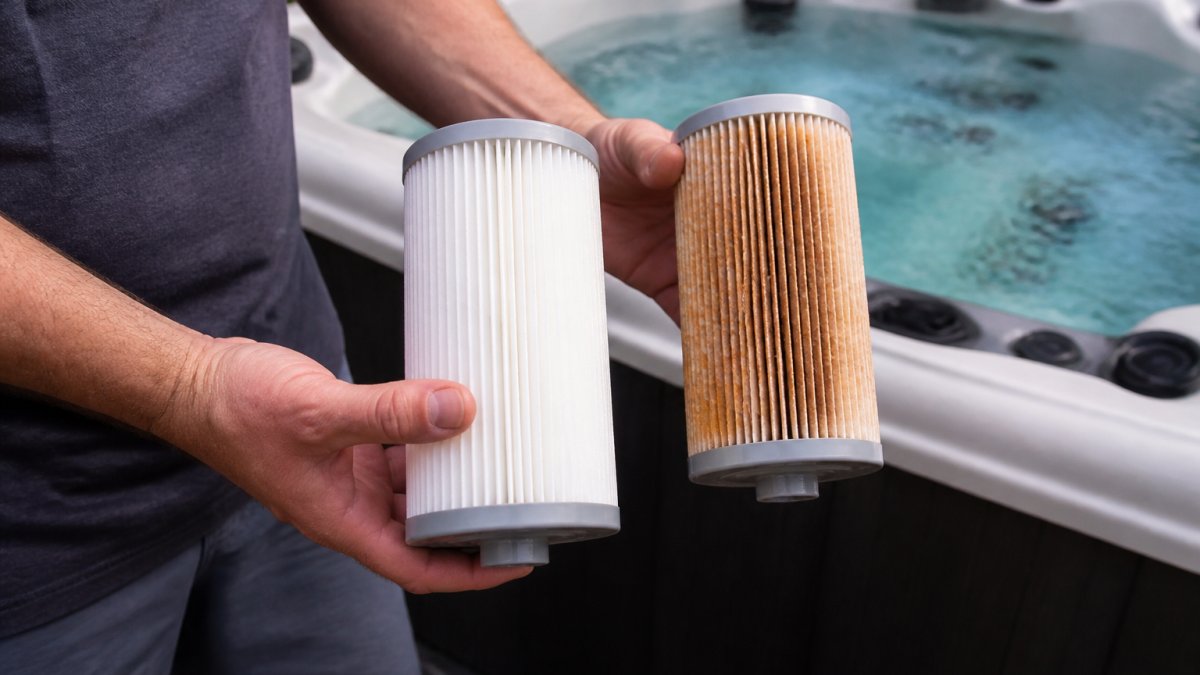
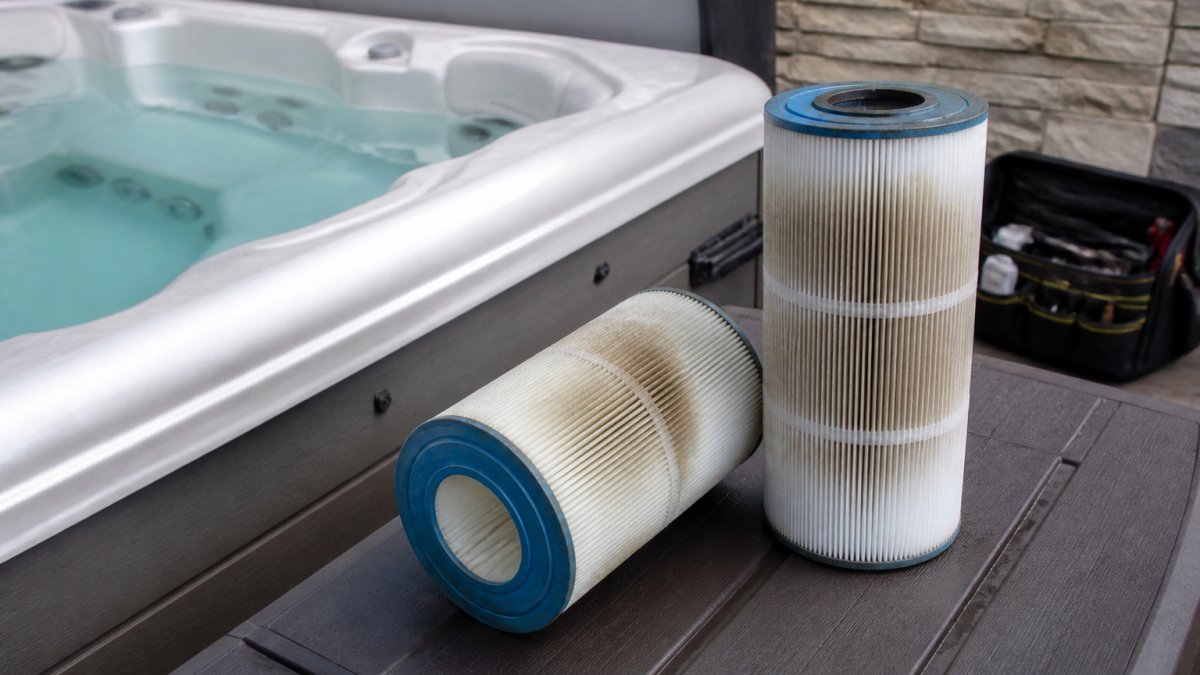
If your filter no longer responds to rinsing, meaning the water still looks cloudy or the pressure gauge reads high even after cleaning, replacement is overdue. You can't rinse out calcium deposits or permanent biofilm buildup. Trying to extend a dead filter costs you more in energy and water treatment chemicals than simply replacing it.
Keep the replacement schedule simple: mark your calendar for a cartridge replacement every 18 months as a baseline. If you use your hot tub heavily or have hard water, move that to 12 months. If you use it lightly and maintain water chemistry well, 20-24 months is reasonable.
Buying replacement cartridges in advance prevents the scramble when you finally need one. Store them in a cool, dry place. This small step eliminates the "my filter is shot and I can't use the tub for three days while I wait for delivery" scenario.
Hot Tub Chemical Maintenance Schedule: Automate What You Can
Water chemistry is the second pillar of reduced maintenance. Many people think balancing pH, alkalinity, and sanitizer levels requires a chemistry degree. It doesn't. What it requires is a repeatable process and the right tools.
The goal is simple: test regularly, adjust small amounts, and prevent drift. Dramatic swings in water chemistry create the problems that demand emergency intervention.
Weekly Testing and Balancing
Every seven days, test your water using test strips or a basic test kit. You're checking three things: pH balance, alkalinity, and sanitizer levels (chlorine or bromine). This takes five minutes.
The test strips show you whether your water is drifting out of range. If pH is creeping up, add a small amount of sodium bisulfate to bring it down. If alkalinity is low, sodium bicarbonate adjusts it upward. If sanitizer is dropping, add chlorine or bromine according to your system type. These adjustments are small, usually just a few ounces, and prevent the major imbalances that create cloudy water or require shock treatment.
Record your results in a simple notebook or phone note. This log shows you patterns. If pH drifts up every week, you know your water chemistry is naturally alkaline and you'll need regular pH adjustment. If sanitizer drops quickly, you're using the tub heavily or your system isn't feeding sanitizer properly. The pattern tells you what to expect.
Monthly and Seasonal Adjustments
Once a month, do a deeper test. Check calcium hardness and total dissolved solids (TDS) if your test kit includes those measurements. These don't change as quickly as pH or sanitizer, but they matter for long-term water quality and equipment protection.
Seasonal adjustments are minimal if you're maintaining consistently. In summer, when usage spikes and water temperature climbs, sanitizer demand increases, you'll refill the feeder more often. In winter, demand drops. That's the main seasonal shift.
Some regions have harder water than others. If your tap water has high calcium content, you'll see scale buildup faster. A water softener or conditioner can reduce that problem, but consistent testing catches the issue early so you can address it before scale damages your jets or shell.
How to Prevent Hot Tub Cloudy Water Before It Starts
Cloudy water is the most visible maintenance failure. It signals that something in your water chemistry or filtration has broken down. The good news: cloudy water is almost always preventable.
The three causes are insufficient filtration, unbalanced pH or alkalinity, and inadequate sanitizer. If you're cleaning your filter on schedule, testing weekly, and maintaining proper chemical levels, cloudy water simply won't happen.
When it does appear, the fix depends on the cause. If your filter is clean and chemistry is balanced, the cloudiness is usually a temporary biofilm bloom that a shock treatment resolves within 24 hours. Shock treatment, a concentrated dose of oxidizer, burns through organic matter and clarifies the water quickly.
Prevention beats cure every time. A consistent maintenance routine prevents 95 percent of cloudy water episodes. The rare cases that slip through are easy fixes because you caught them early.
Use Smart Technology to Cut Your Time in Half
This is where modern hot tub ownership diverges from the old model. Automation doesn't eliminate testing and balancing, it removes the repetitive labor and lets you focus on the actual decisions.
Automated Chlorine and Bromine Feeders
An automated feeder monitors sanitizer levels continuously and dispenses chlorine or bromine as needed. Instead of manually adding sanitizer every few days, the feeder handles it. You refill the chemical reservoir when it runs low, typically every 2-4 weeks depending on usage.
The time savings are real. Manual sanitizer dosing takes 10 minutes per application. If you're treating a hot tub three times weekly, that's 30 minutes per week. An automated feeder eliminates that task entirely. You spend five minutes every few weeks refilling the reservoir instead.
More importantly, the feeder maintains more consistent sanitizer levels. Manual dosing creates peaks and valleys, you add too much one day, it drops too low by day three, and you chase the target. A feeder keeps levels steady, which means better water quality and fewer corrections needed.
Connected Monitoring Systems
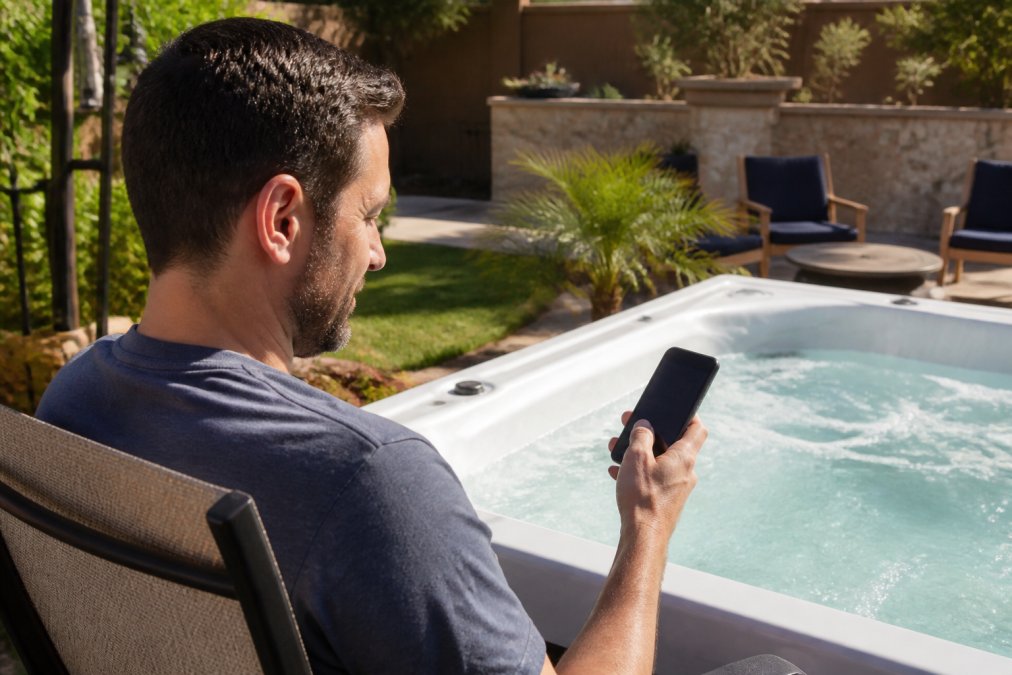
Modern hot tub systems can include WiFi-enabled monitoring that sends you alerts when chemical levels drift out of range or when your filter needs cleaning. You get a notification on your phone instead of discovering a problem when you go to use the tub.
These systems vary in sophistication. Basic monitors track temperature and system status. Advanced systems measure pH, sanitizer, and even predict when maintenance is due based on usage patterns. The data lives in an app you check when convenient, not a chore you schedule around.
The real value isn't the technology itself. It's the elimination of guesswork. You know exactly what your water chemistry is without opening the test kit. You know when your filter is actually dirty instead of guessing based on how long it's been. That certainty reduces the anxiety around hot tub ownership and prevents over-maintenance.
Drain, Refill, and Cover Strategies That Save Work
Draining and refilling your hot tub is necessary maintenance, but the frequency depends on water quality and usage. Many people drain too often, which wastes water and chemicals. Others wait too long and end up with water quality problems they can't fix.
A practical approach: drain and refill every 3-4 months for regular use. If you use your hot tub heavily, multiple times weekly with guests, move that to every 8-12 weeks. If you use it lightly, every 4-6 months is fine. The goal is before total dissolved solids (TDS) climb so high that chemical balancing becomes impossible.
When you do drain, use that opportunity to deep clean the shell and jets. This takes 2-3 hours total if you're thorough. Schedule it when you don't mind the tub being offline. Many people drain in late fall or early spring when usage naturally dips.
A cover is non-negotiable for reducing maintenance. Without one, leaves, debris, and sunlight degrade your water quality constantly. A cover keeps debris out, reduces evaporation (which concentrates chemicals and TDS), and protects your water from UV damage. A quality cover pays for itself in reduced chemical usage and fewer cleaning cycles.
Use the cover when the tub isn't in active use. This simple habit cuts maintenance time by 20-30 percent because you're not fighting constant debris intrusion and water loss.
Common Maintenance Mistakes That Create Extra Work
Most people don't fail at hot tub maintenance because the tasks are hard. They fail because they approach maintenance reactively instead of proactively, or they skip steps that seem optional.
The biggest mistake is ignoring filter cleaning. People see a slight cloudiness and assume the filter is fine because it's "only been two weeks." They keep using the tub, the filter clogs further, and suddenly the water is opaque and the filter pressure is dangerously high. A simple two-week cleaning schedule prevents this entirely.
Another common error is testing water inconsistently. You test one week, skip the next, then test again three weeks later. By then, your pH or alkalinity has drifted so far that a small adjustment won't fix it. You end up needing shock treatment or a partial drain. Consistency beats intensity, weekly testing prevents this.
People also underestimate how much water chemistry matters. They think "close enough" on pH or alkalinity is acceptable. It's not. Even small drifts accumulate. Your sanitizer becomes less effective as pH rises. Calcium deposits form faster in hard water. Scale buildup happens silently until you suddenly can't clean it. Regular, precise testing catches drift before it becomes a problem.
Finally, many people wait too long to replace filters or drain water. They're trying to squeeze extra life out of a dying filter or stretch the time between drains to save money. This always costs more in the end, either in chemical usage, energy costs, or emergency maintenance.
Reducing hot tub maintenance comes down to three principles: automate the tasks that can be automated, maintain a consistent schedule for everything else, and prevent problems instead of fixing them after they happen. When you own a hot tub from allvalley, you get the equipment foundation to make this work, our hot tubs come with free starter kits and chemicals designed for easy maintenance, plus professional installation that ensures everything is set up correctly from day one.
The time you save isn't just about convenience. It's about actually using your spa instead of avoiding it because maintenance feels overwhelming. A hot tub that takes 30 minutes per month to maintain is one you'll use consistently. One that demands hours of attention becomes a burden.
Ready to transform your backyard into a low-maintenance retreat? Call us at 760-342-5277 to discuss how allvalley's hot tubs and installation services can simplify your ownership experience. Let's get you relaxing, not working.
Frequently Asked Questions
What is the easiest way to keep a hot tub clean?
Combine consistent filter maintenance with automated chemical feeders. Clean or rinse your filter cartridge every 2-4 weeks depending on usage, and install an automated chlorine or bromine feeder to handle sanitization. Test water chemistry weekly using test strips to catch imbalances early. A spa cover when not in use prevents debris buildup and reduces evaporation. These three habits, filter care, automation, and weekly testing, eliminate 80% of the work most owners struggle with.
How often should you really shock your hot tub?
Shock your hot tub weekly during regular use, or every 2-3 weeks if usage is light. Shock treatment oxidizes contaminants and restores sanitizer effectiveness. More frequent shocking is needed after heavy use (parties, multiple guests) or if water turns cloudy or smells like chemicals. Follow your test strip results, if free chlorine drops below 1-2 ppm, it's time to shock. Using a consistent schedule prevents the buildup that leads to cloudy water and biofilm.
Do salt water hot tubs require less maintenance than chlorine systems?
Salt systems reduce chemical handling but don't eliminate maintenance. You still need to test alkalinity, pH balance, and calcium hardness regularly, drain and refill periodically, and clean filters. Salt systems do lower chlorine costs and reduce the smell of traditional chlorine. However, the salt cell requires cleaning every 3-6 months and eventual replacement (typically $500-$1,500 depending on the system). Choose based on your comfort with handling chemicals versus the cost of salt cell maintenance.
How can I keep my hot tub water clear without chemicals?
You cannot maintain safe, clear water without any sanitizer, bacteria and algae will grow. However, you can minimize chemical work by using ozone or UV systems alongside lower chlorine doses, or by switching to bromine (gentler on skin). Eco-friendly alternatives like mineral cartridges reduce chemical volume but still require a base sanitizer. The most practical approach is automation: let a feeder dispense chlorine or bromine steadily, then test weekly instead of adding chemicals manually. This cuts your hands-on time while keeping water safe and clear.
This article was written using GrandRanker