 how-to
Benefits of Regular Hot Tub Maintenance
Table of Contents
- Why Hot Tub Maintenance Matters
- Health and Wellness Benefits of Hot Tub Use
- How a Hot Tub Maintenance Schedule Prevents Costly Repairs
- Hot Tub Water Care Fundamentals
- Your Hot Tub Maintenance Checklist
- When to Call Professional Hot Tub Maintenance
- Extending Your Hot Tub's Lifespan
- Frequently Asked Questions
Last Updated: October 12, 2026
Why Hot Tub Maintenance Matters
A neglected hot tub becomes a liability fast: cloudy water, broken equipment, and an expensive problem where a backyard retreat should be. Regular hot tub maintenance keeps your water safe, your equipment running, and your investment protected.
At allvalley, we've spent over 26 years helping homeowners understand that maintenance isn't optional, it's the foundation of enjoyable hot tub ownership. Skip it and you're looking at costly repairs; stay consistent and your hot tub becomes the centerpiece of family memories.
The stakes are real: poor water quality creates health risks, broken equipment means downtime in peak season, and neglected filters and pumps fail prematurely. The good news is that regular hot tub maintenance is straightforward, it requires routine, not expertise.
This guide covers what you need to know about hot tub maintenance and why it matters far beyond keeping things clean.
Health and Wellness Benefits of Hot Tub Use
Hot tubs deliver real wellness benefits, but only when water quality stays high. This is where maintenance becomes health care, not just equipment care.
Stress relief and relaxation happen when you sink into warm water: the heat loosens tight muscles and your nervous system shifts into rest mode.
Muscle relaxation and recovery is one reason people install hot tubs: heat plus jet massage eases tension, and athletes use them to recover faster.
Pain relief from arthritis, sore joints, and muscle soreness improves with regular hot tub use, since warm water increases blood flow and jets provide targeted massage, again requiring clean, properly balanced water.
Better sleep comes from the relaxation response. Your body temperature rises in the hot tub, then drops afterward, the same signal your body uses to fall asleep.
Improved circulation happens because heat dilates blood vessels, making your heart pump more blood throughout your body, genuinely beneficial, if the water is safe and clean.
The connection is simple: wellness benefits depend on water quality, and water quality depends on maintenance. Skip it and you lose the health benefits that justify owning a hot tub.
How a Hot Tub Maintenance Schedule Prevents Costly Repairs
A maintenance schedule works because most hot tub failures are cumulative, not sudden. A pump fails after months of strain from a clogged filter, low water flow, or corrosive chemistry, and each scheduled task interrupts one of those failure chains before it reaches the point of no return. Applying this same proactive philosophy to water feature pump maintenance ensures that the mechanical components of your broader landscape remain as reliable and long-lived as your spa.
Daily tasks (2-3 minutes) interrupt the fastest failure chains:
- Check water temperature against your set point. A heater that runs continuously without reaching temperature is often fighting a flow problem, not a heating problem.
- Skim surface debris before it sinks and dissolves. Leaves and sunscreen residue consume sanitizer, which forces your system to work harder.
- Confirm the circulation pump is running. Standing water is where biofilm and algae establish a foothold.
Weekly tasks (15-20 minutes) catch developing problems while they are still cheap to fix:
- Test pH, alkalinity, and sanitizer. Drift outside target ranges is the most common cause of cloudy water and premature equipment wear.
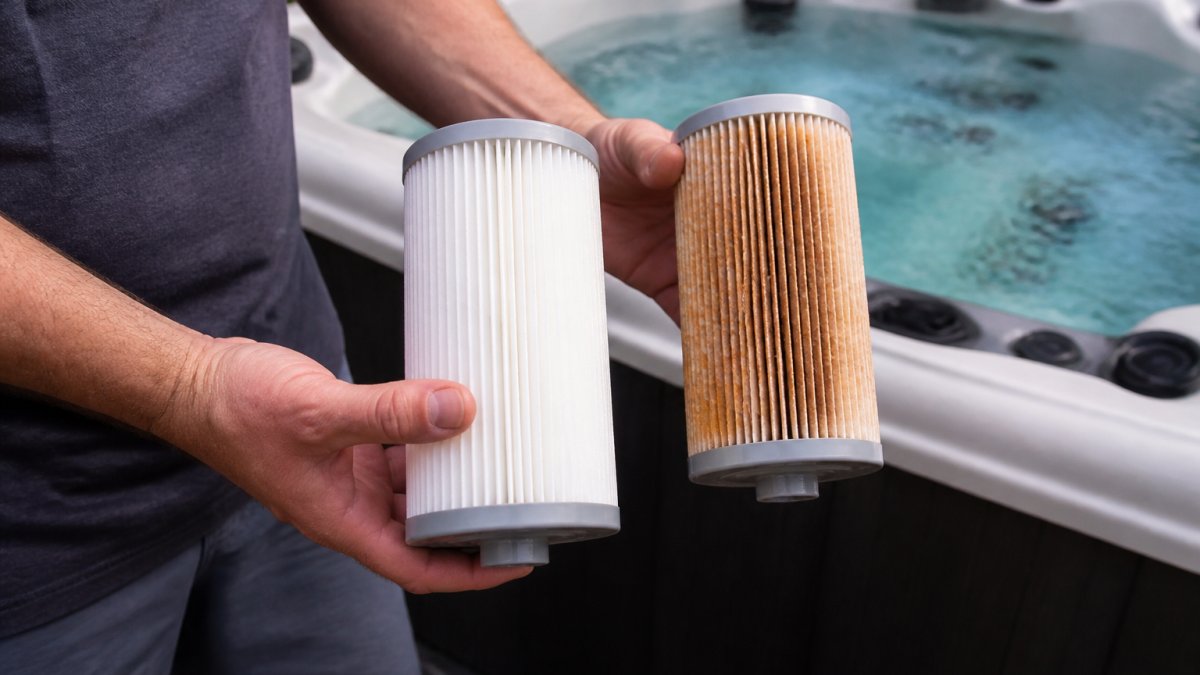
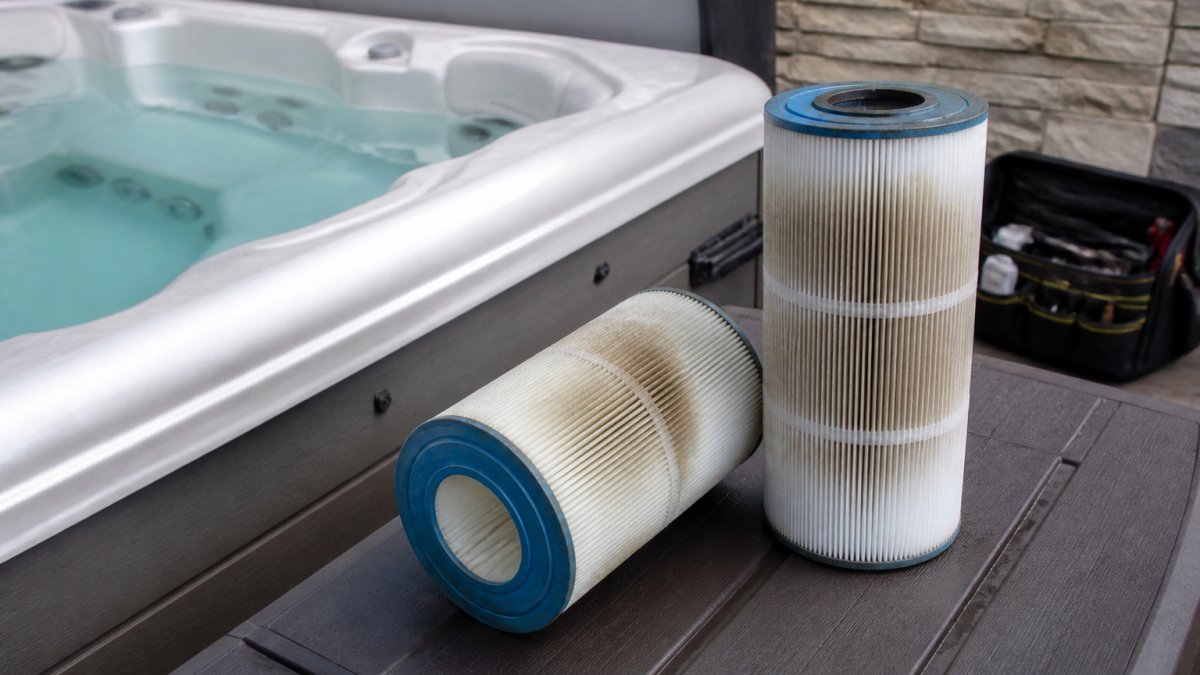
- Rinse the filter cartridge with a garden hose; a partially clogged filter raises pump pressure and reduces heater efficiency.
- Walk the equipment area for moisture, drips, or unusual sounds. A slow leak caught this week is a seal replacement; caught in three months, it's often a pump or heater replacement.
Monthly tasks (30-45 minutes) address slower degradation:
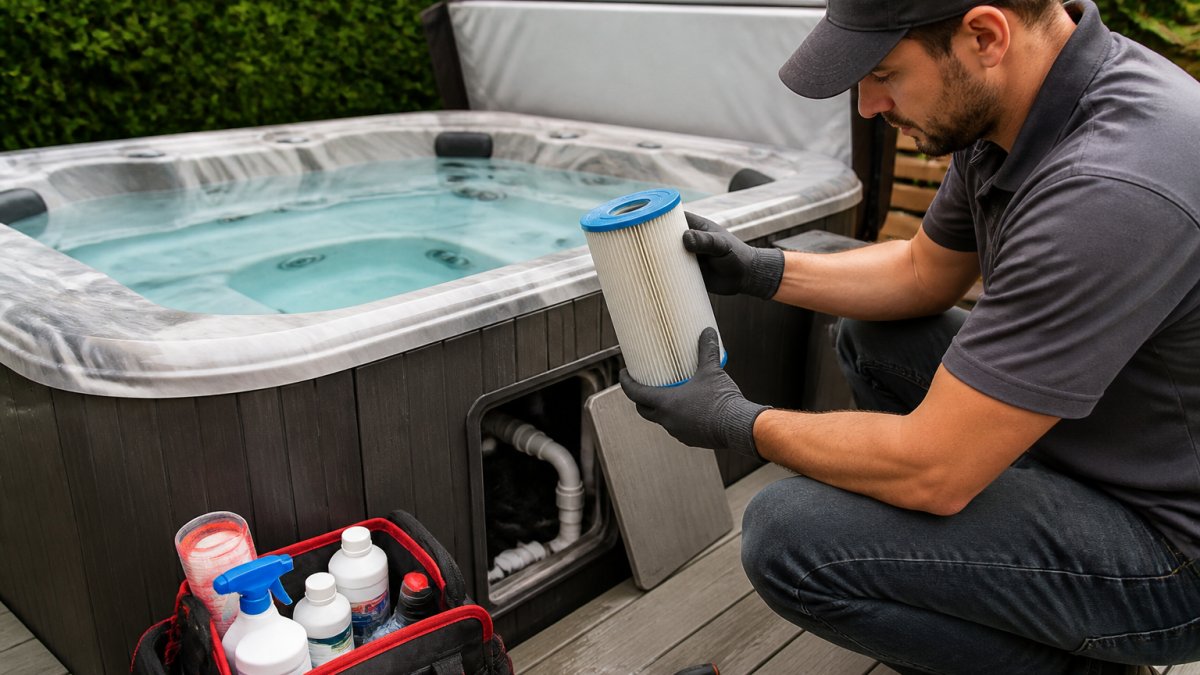
- Deep clean the filter with a cartridge cleaner to strip oils and minerals rinsing leaves behind.
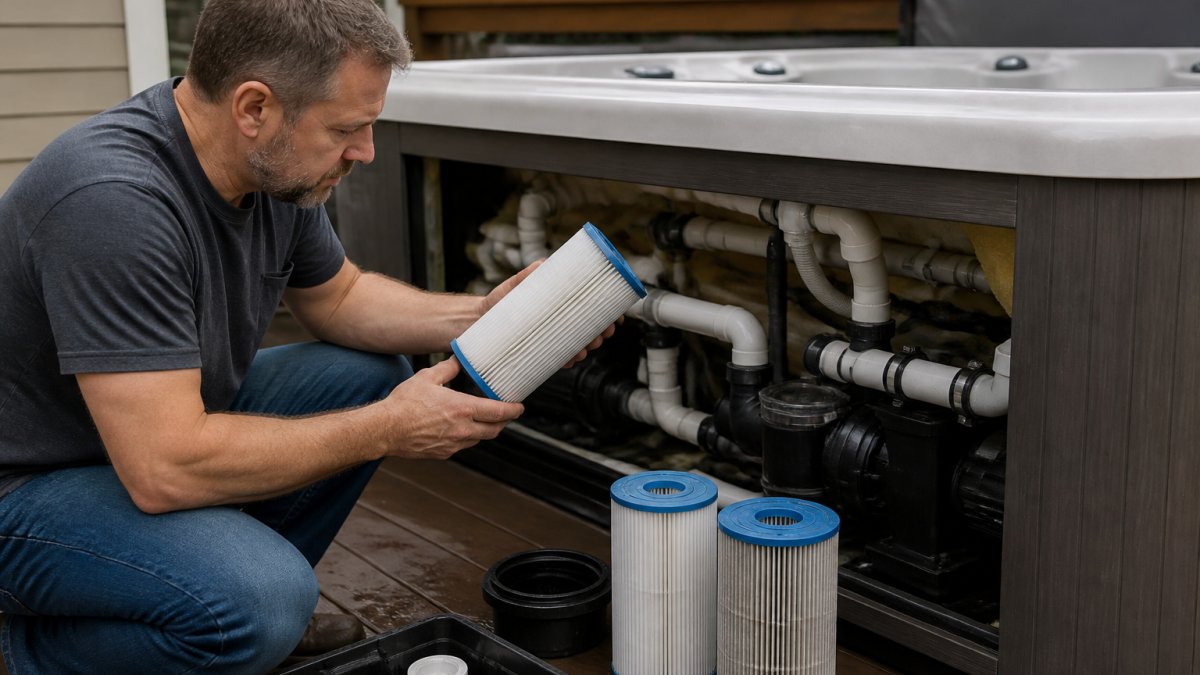
- Inspect plumbing unions, heater fittings, and jet internals for early scale or cracking.
- Review your maintenance log for trends, rising chemical demand, longer heat-up times, or recurring pH drift are early warnings.
Quarterly and seasonal tasks reset the system:
- Drain and refill every 3-4 months under typical residential use. Water absorbs dissolved solids over time, and no chemical adjustment reverses that; refilling is cheaper than fighting chemistry that can no longer be balanced.
- Before winter, verify heater performance and inspect the cover for cracks or sagging. Before peak summer, check that the pump and jets move water at full flow.
What the schedule actually prevents, in measurable terms:
- Energy use: A clean filter and balanced chemistry let the heater and pump run at designed efficiency. A clogged filter or scaled element forces longer run times, which shows up on your utility bill before it shows up as a repair.
- Repair frequency: Most service calls trace back to poor water chemistry, restricted flow, or ignored leaks. A consistent schedule addresses all three before they compound.
- Water replacement intervals: Well-maintained water holds its balance longer, so you can stretch refills toward the longer end of the 3-4 month window instead of draining early.
- Equipment lifespan: Pumps, heaters, and covers are rated for a range of years under normal conditions. Neglect pushes equipment toward the low end; consistent care pushes it toward the high end.
Professional maintenance complements the schedule rather than replacing it: a technician can measure what test strips miss, spot wear invisible from the deck, and confirm your chemistry is doing what you think. One annual inspection is a reasonable baseline; heavier or year-round use may justify semi-annual visits.
The point of a schedule isn't bureaucracy: small, boring tasks done on time are dramatically cheaper than the failures they prevent.
Hot Tub Water Care Fundamentals
Water chemistry isn't complicated once you understand the basics. Three factors matter most: pH, alkalinity, and sanitizer.
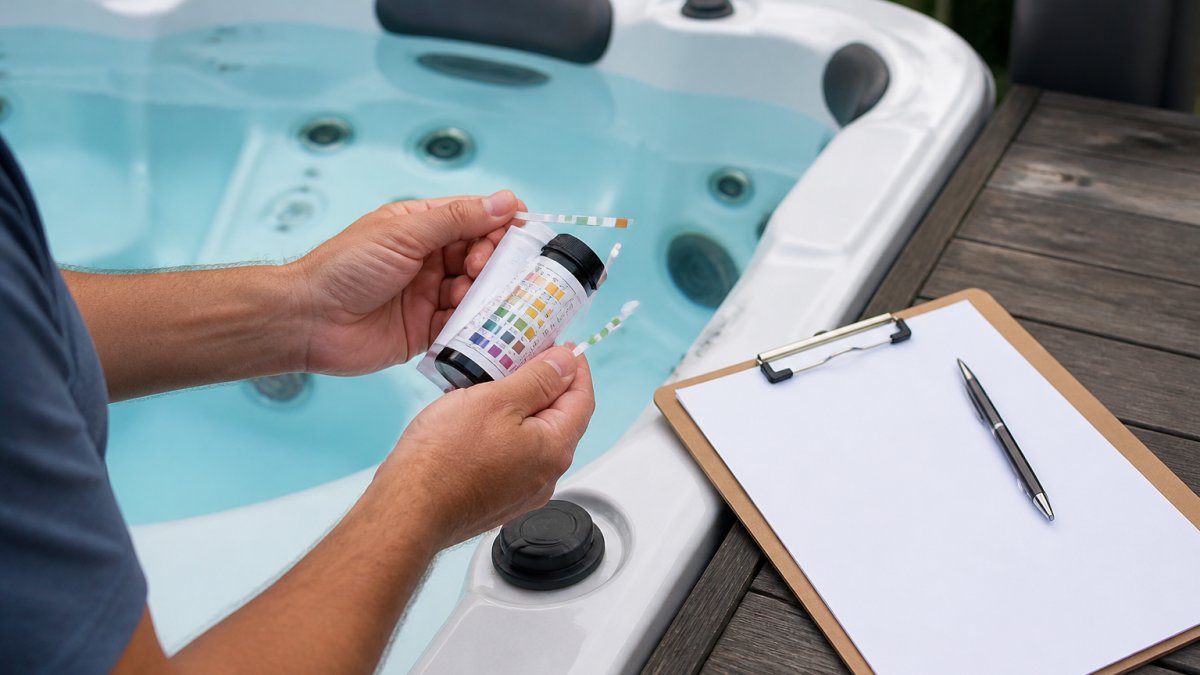
pH measures how acidic or basic your water is. Target 7.2 to 7.8; outside that range causes skin irritation and equipment damage. Test at least twice weekly with strips or a kit.
Alkalinity is your pH buffer, absorbing small changes so pH stays stable. Target 80 to 120 parts per million.
Sanitizer kills bacteria and algae. Chlorine works faster but breaks down in sunlight; bromine lasts longer but costs more. Test daily, generally 2-4 parts per million for chlorine.
Water circulation matters as much as chemistry. Your pump and filter move water through the heater and filter system, distributing chemicals evenly and removing debris.
Filter care is critical. Filters trap debris and clog over time, reducing circulation and forcing your pump to work harder.
Mineral buildup and scale form when water chemistry drifts, and hard water accelerates it. Regular testing prevents it; if it forms, drain and refill your hot tub.
| Maintenance Task | Frequency | Why It Matters |
|---|---|---|
| Check temperature and skim debris | Daily | Prevents algae and maintains comfort |
| Test water chemistry | 2-3 times weekly | Keeps water safe and equipment protected |
| Clean filter | Weekly | Maintains circulation and water clarity |
| Professional inspection | Annually | Catches hidden problems early |
| Drain and refill | Every 3-4 months | Removes accumulated minerals and chemicals |
Your Hot Tub Maintenance Checklist
Use this checklist to stay on track. Print it or save it on your phone.
Daily:
- Check water temperature (should be your set temperature, typically 98-104°F)
- Skim leaves and debris from surface
- Visually inspect for leaks or unusual sounds
- Confirm circulation system is running
2-3 Times Weekly:
- Test pH (target: 7.2-7.8)
- Test alkalinity (target: 80-120 ppm)
- Test sanitizer level (target: 2-4 ppm for chlorine)
- Add chemicals as needed
Weekly:
- Rinse filter with fresh water
- Check pump and heater for leaks
- Inspect jets for blockages
- Review maintenance log for trends
Monthly:
- Deep clean filter (soak if needed)
- Test water with a comprehensive kit
- Inspect plumbing connections
- Check cover for damage
Quarterly:
- Drain and refill water
- Inspect heating element
- Check electrical connections
- Professional water analysis (optional)
When to Call Professional Hot Tub Maintenance
Some jobs belong in professional hands. Knowing when to call saves money and prevents damage.
Call a professional if:
- Water stays cloudy after multiple chemical adjustments
- You notice leaks that don't stop after tightening connections
- Equipment makes grinding, squealing, or unusual sounds
- Water temperature won't reach your set point
- Sanitizer levels won't hold steady despite adding chemicals
- You see mineral scale buildup on surfaces
- Jets have weak flow or don't work at all
- You're unsure about water chemistry readings
What professionals do that homeowners can't:
- Diagnose equipment problems with specialized tools
- Adjust complex plumbing and circulation systems
- Perform deep cleaning that removes mineral buildup
- Test water chemistry with laboratory-grade equipment
- Identify safety issues before they become problems
- Replace worn parts and seals
Professional maintenance visits typically happen annually or semi-annually, depending on use. At allvalley, we recommend at least one professional inspection per year to catch issues early, our team has installed and serviced hot tubs for over 26 years and knows what to look for.
A professional visit costs far less than emergency repairs and can extend your equipment's life by years.
Extending Your Hot Tub's Lifespan
Lifespan isn't a single number, it's the sum of how well each major component is treated. Knowing which parts drive replacement cost, and what wears them out, turns "maintain your hot tub" from advice into a plan.
The heater. Heating elements scale when chemistry drifts, especially in hard water. Scale insulates the element, forcing it to run longer and hotter for the same temperature, which shortens its life and raises energy use.
The cover. A cover keeps debris out, holds heat in, and protects water from UV.
The shell and cabinet. The most visible and expensive to replace, they're damaged primarily by chemistry and moisture: persistent low pH etches surfaces, high pH encourages scale, and trapped water accelerates rot or corrosion.
The plumbing and jets. Jets clog with scale and debris; plumbing leaks at unions and fittings.
What consistency actually buys you, in practical terms:
- Fewer emergency service calls, because problems are caught at inspection rather than failure.
- Lower energy use, because the heater and pump aren't fighting scale, clogged filters, or heat loss through a bad cover.
- Longer intervals between major replacements, because each component operates within its designed conditions.
- Predictable water behavior, because you know how your water responds to use and can anticipate refills instead of reacting to them.
A simple way to track it. Keep a short log: date, chemistry readings, filter cleaning, anything unusual. Over a few months, patterns emerge, rising sanitizer demand, slower heat-up, more frequent pH drift.
Frequently Asked Questions
What regular maintenance does a hot tub need?
Daily maintenance includes testing and balancing water chemistry and checking sanitizer levels. Weekly tasks involve cleaning the filter and removing surface debris. Monthly maintenance includes deeper filter cleaning and equipment inspection. Seasonal tasks include draining and refilling the water, inspecting plumbing connections, and servicing the pump and heater. Consistent hot tub maintenance prevents water quality issues and extends equipment life significantly.
How often should you clean and maintain a hot tub?
Daily water testing and sanitizer checks are essential. Filter cleaning happens weekly, with more thorough filter backwashing monthly. Complete water replacement typically occurs every 3 to 4 months, depending on usage and bather load. A hot tub maintenance schedule tailored to your usage patterns ensures balanced water chemistry and prevents mineral buildup and scale formation that damages jets and plumbing.
Can regular hot tub maintenance extend its lifespan?
Yes. Consistent water care prevents corrosion of metal components and reduces strain on the pump and heater. Regular filter maintenance improves water circulation and reduces equipment workload. Professional hot tub maintenance inspections catch small issues before they become expensive repairs.
What happens if you don't maintain a hot tub?
Neglected hot tubs develop cloudy water, algae growth, and imbalanced chemistry that creates unsafe conditions. Mineral buildup and scale accumulate on jets, plumbing, and heating elements, reducing efficiency and causing blockages. The pump and heater work harder and fail prematurely. Repair costs escalate quickly, and the hot tub may become unusable within months. Starting with a free starter kit and chemicals helps, but ongoing maintenance is critical.