 how-to
How to Prevent Hot Tub Filter Clogging: 7 Easy Steps
Table of Contents
- Why Hot Tub Filter Clogging Happens So Fast
- Hot Tub Filter Clogging Causes: What's Actually Getting Trapped
- How Often to Clean a Hot Tub Filter Based on Your Usage
- How to Clean a Hot Tub Filter: Rinse, Deep Clean, Repeat
- Hot Tub Filter Cleaning Tools Worth Keeping on Hand
- Prevention Habits That Cut Clogging: Water Chemistry, Covers, and Showering Off
- When Cleaning Isn't Enough: Filter Replacement and Equipment Checks
- Conclusion: A Simple Routine Keeps Water Flowing
- Frequently Asked Questions
Last Updated: October 9, 2026
Why Hot Tub Filter Clogging Happens So Fast
Hot tub filter clogging happens fast because a spa filter is doing a big job in a small space. Every body in the water sheds oils, sweat, and lotion.
That cartridge has a fixed amount of surface area. Once the pleats load up, water can't pass through.
At allvalley, we've helped Coachella Valley homeowners set up spas for over 26 years.
Hot Tub Filter Clogging Causes: What's Actually Getting Trapped
Most clogged filters trap the same short list of things. The trick is figuring out which one is filling your cartridge, because oils, scale, biofilm, fibers, and debris each need a different fix. Treating every clog as a routine rinse-and-soak is why so many spas end up with a filter that looks clean but still chokes flow.
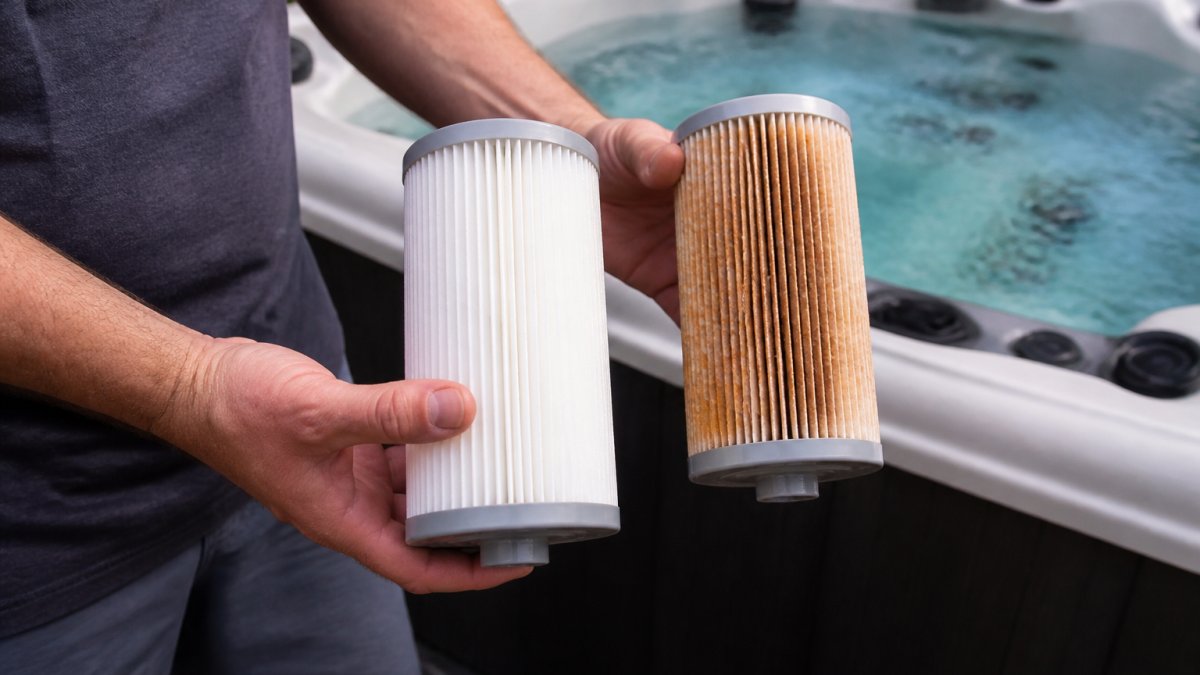
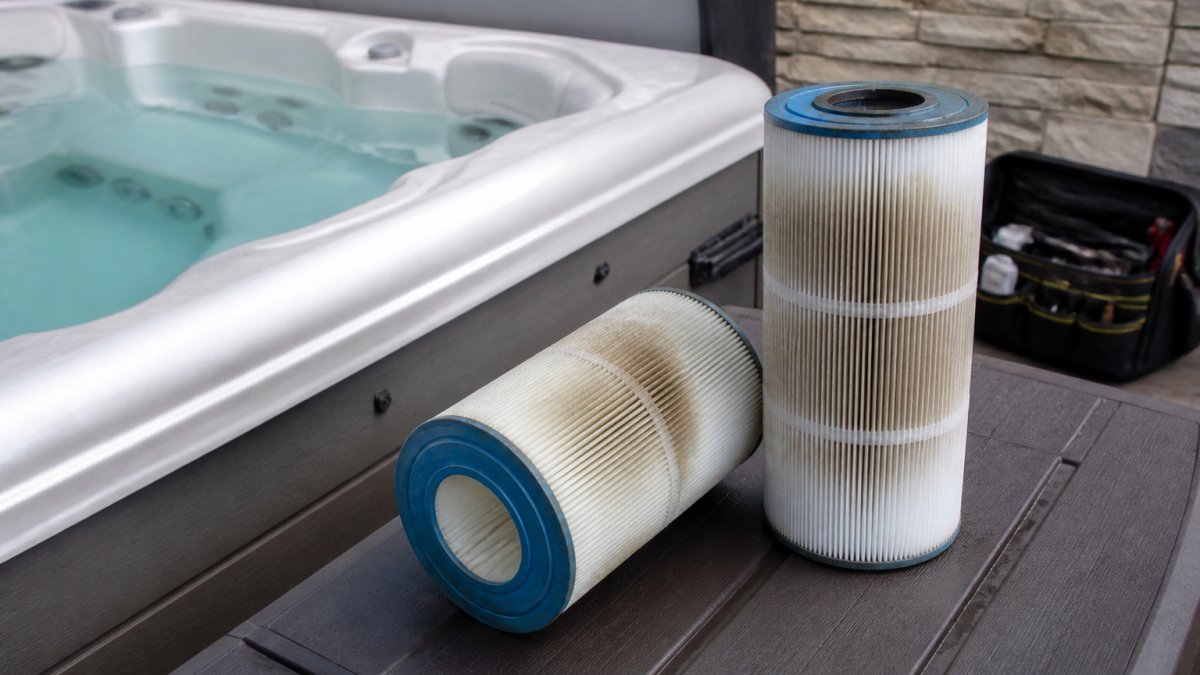
Use this quick diagnostic before you clean. Pull the cartridge, look at the pleats in daylight, and feel them.
- Greasy, slick, dark film that smears when you rub it. That's body oils, lotion, and sunscreen. Rinsing alone won't touch it, you need a degreasing filter cleaner.
- Chalky white or crusty gray buildup, often at the top or bottom of the pleats. That's scale from hard water and high calcium hardness. A standard cleaner won't dissolve it; you need a scale-removing soak or a diluted white-vinegar soak, then a full rinse.
- Slimy, musty-smelling coating that comes back within days of cleaning. That's biofilm, usually from low sanitizer. Cleaning the filter without fixing the water means it recolonizes immediately.
Body Oils, Lotions, and Cosmetics
Body oils, lotions, and cosmetics are the leading cause of greasy, fast-clogging filters. These products don't dissolve in water.
Sunscreen is the worst offender. It's designed to stay on skin, so it stays on your filter too.
The fix is simple. Ask everyone to shower before use. A quick rinse removes most surface oils before they ever reach the water.
Debris, Dust, and Pollen in Outdoor Spas
Outdoor spas collect debris constantly, especially in a desert climate. Wind carries dust and pollen straight into the water. Leaves and grass clippings follow.
A quality hot tub cover does most of the work here. Keep it on when the spa isn't in use, and you block the majority of airborne debris before it lands.
Skim the surface with a skimmer net before each soak. It takes a minute and keeps that debris out of the circulation system.
Water Chemistry: The Hidden Driver of Recurring Clogs
If your filter clogs again within a week of a deep clean, chemistry is usually the reason. Water that's out of balance either drops minerals out of solution onto the pleats or lets organics glom together instead of staying suspended.
- pH above 7.8 encourages scale to form on the filter and heater. High pH also weakens sanitizer efficiency, so organics linger.
- pH below 7.2 makes water aggressive, which can degrade filter media over time and corrode metal components.
- Total alkalinity outside roughly 80-120 ppm lets pH swing wildly, which means deposits form unpredictably.
Test pH, alkalinity, calcium hardness, and sanitizer weekly with a drop-test kit or test strips, and correct in this order: alkalinity first, then pH, then sanitizer. Correcting pH before alkalinity just means you'll be correcting it again tomorrow.
Running low sanitizer doesn't just cloud the water. It lets oils and bacteria coat the filter, and that film is much harder to remove than a fresh load of debris.
How Often to Clean a Hot Tub Filter Based on Your Usage
How often you clean a hot tub filter depends on how much you use the spa. There's no single schedule that fits every household. Use these ranges as a starting point.
| Usage Level | Weekly Rinse | Monthly Deep Clean | Replacement |
|---|---|---|---|
| Light (1-2 soaks/week) | Every 7-10 days | Every 4-6 weeks | Every 12-18 months |
| Average (3-4 soaks/week) | Every 5-7 days | Every 3-4 weeks | Every 9-12 months |
| Heavy (daily or parties) | Every 2-3 days | Every 2 weeks | Every 6-9 months |
Heavier use and more bathers mean more frequent cleaning. If your spa runs cloudy or the jets feel weak, clean the filter sooner than the schedule says.
How to Clean a Hot Tub Filter: Rinse, Deep Clean, Repeat
Cleaning a hot tub filter takes two forms: a quick weekly rinse and a deeper monthly clean. Together they keep water flow strong and protect your pump.
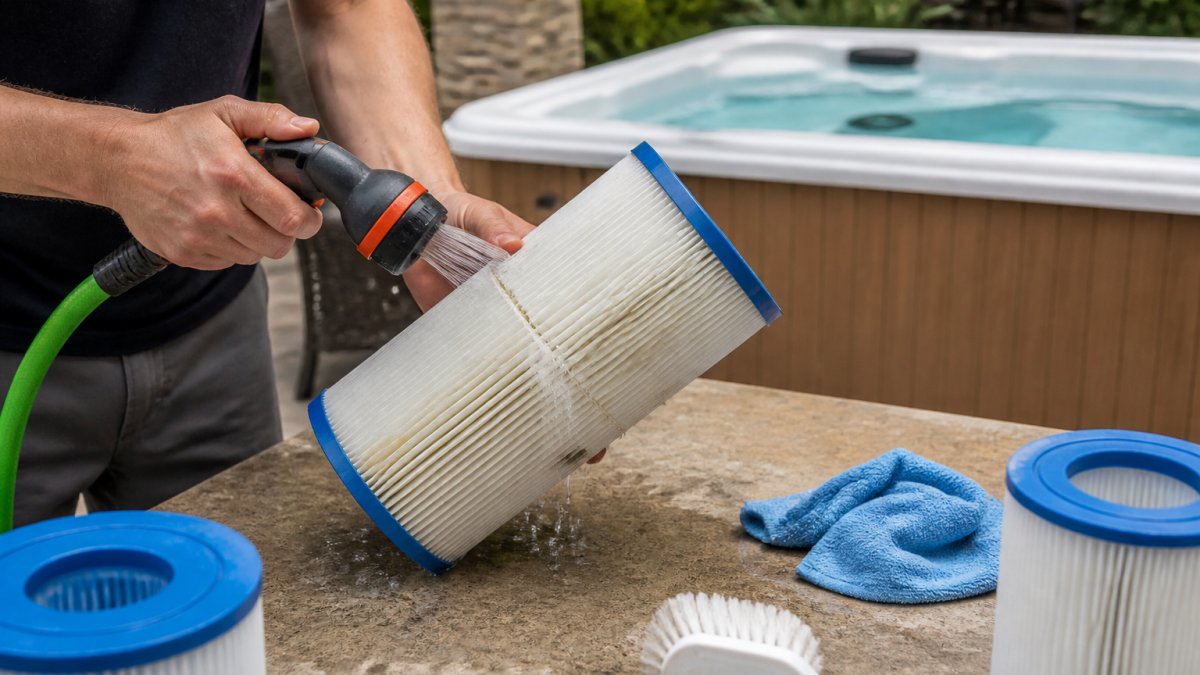
Always check your spa maker's manual first. Filter type and cleaning method vary by model, so follow the instructions that came with your tub.
Weekly Rinse in Five Minutes
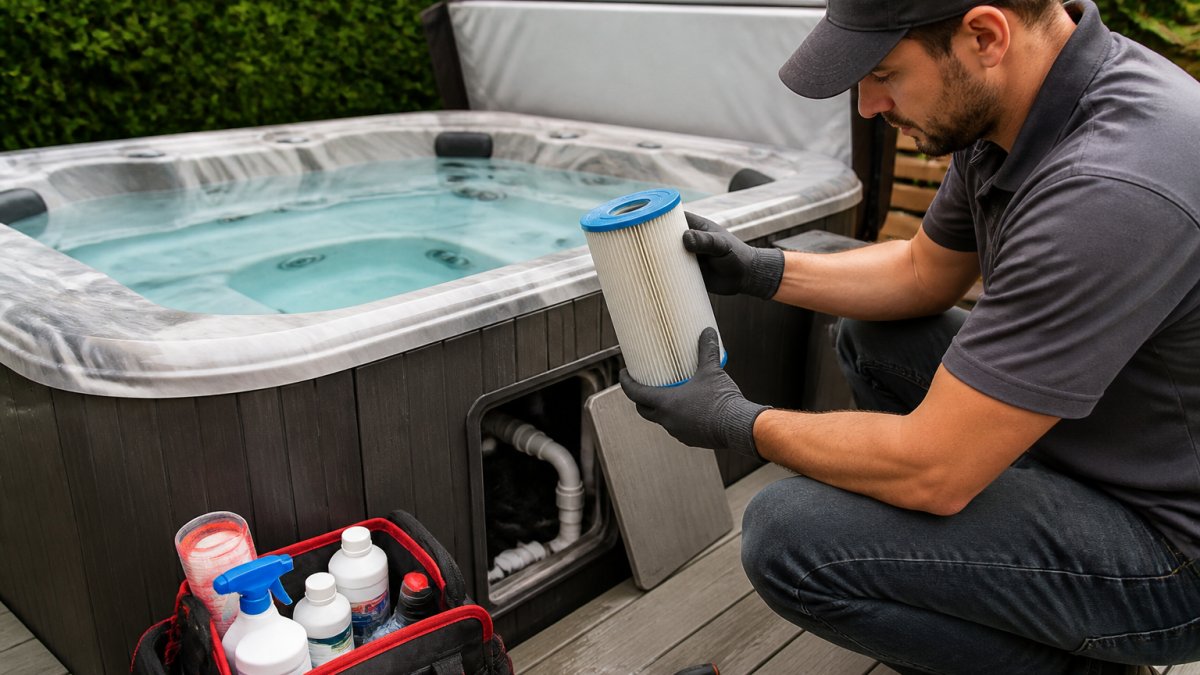
A weekly rinse removes loose debris before it works into the pleats. Here's how:
- Turn off the spa and remove the filter cartridge.
- Rinse every pleat with a garden hose, top to bottom.
- Work between the folds, not just across the surface.
- Never use a pressure washer. It tears the filter media.
- Let the cartridge air dry, then put it back.
Rinsing takes about five minutes. That small habit is the core of how to prevent hot tub filter clogging.
Monthly Deep Clean with Filter Cleaner
A monthly deep clean strips the oils and film that rinsing can't remove. Soak the cartridge in a spa filter cleaner mixed to the label's directions.
Let it soak for the time the product recommends, usually several hours or overnight. Rinse thoroughly until the water runs clear.
Never use bleach or harsh household chemicals. They break down the filter media and void most warranties.
Hot Tub Filter Cleaning Tools Worth Keeping on Hand
A few basic tools make filter maintenance quick and easy. You don't need much.
- A dedicated filter cleaning wand that sprays between pleats
- A filter cleaner solution made for spa cartridges
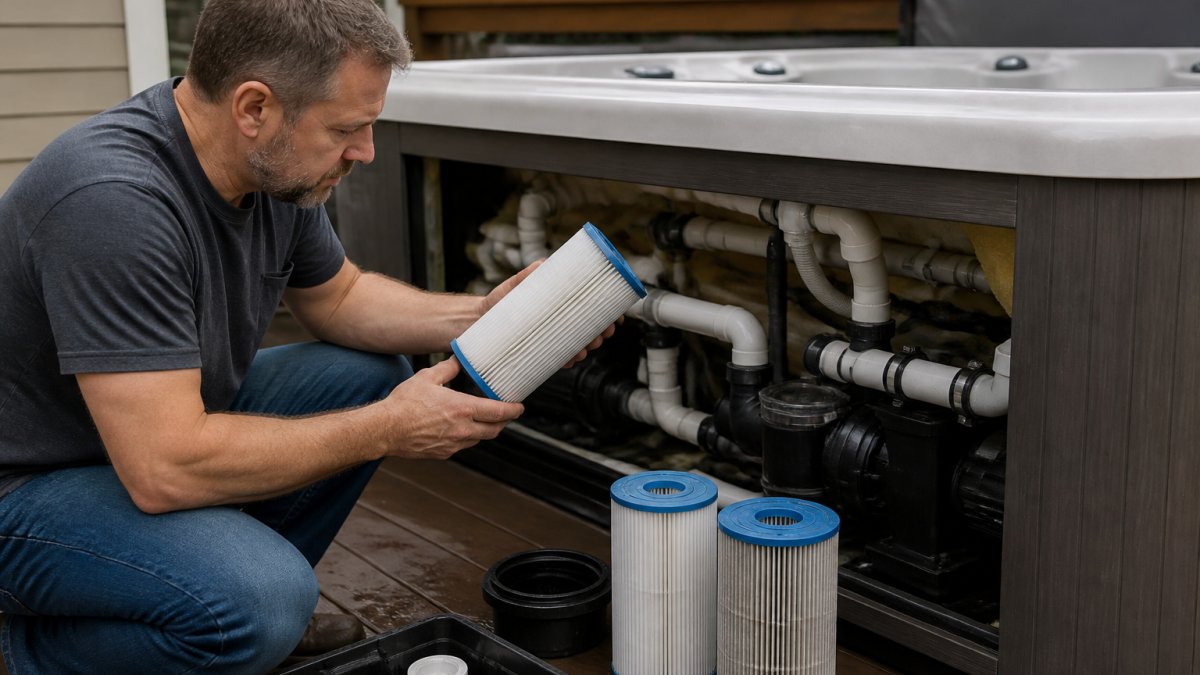
- A spare filter cartridge for rotation
- A skimmer net for surface debris
Skip the pressure washer and the bleach. Both cause more harm than good. This short list covers everything a homeowner needs for routine filter cleaning.
Prevention Habits That Cut Clogging: Water Chemistry, Covers, and Showering Off
The best filter cleaning is the kind you rarely have to do. A few habits cut clogging dramatically, but only if you know the numbers to hit and the order to fix them in.
Balance the Water Before You Blame the Filter
Balanced water keeps oils and minerals in suspension so the filter can catch them instead of gluing them to the pleats. When water drifts out of range, deposits form on the media and the cartridge clogs faster than any bather load would cause.
Test pH, total alkalinity, calcium hardness, and sanitizer weekly. Correct in this order:
- Total alkalinity first. Target roughly 80-120 ppm. Alkalinity is the buffer that holds pH steady. If it's low, pH will bounce every time you add sanitizer or shock.
- pH second. Target 7.4-7.6. High pH drives scale onto the filter and heater; low pH degrades media and metal parts.
- Calcium hardness third. Target roughly 150-250 ppm for most spas, though your source water and manufacturer guidance may call for a different range. Too high and you get scale; too low and water pulls minerals from surfaces.
- Sanitizer last. Keep free chlorine around 1-3 ppm or bromine around 3-5 ppm, per your spa maker's recommendation. Steady sanitizer oxidizes oils and sweat before they ever reach the filter.
Shock the spa on schedule, typically weekly for a residential spa, or after heavy use. Shock oxidizes the organics that sanitizer alone can't break down, which keeps the filter from becoming the place they accumulate.
Keep Contaminants Out of the Water
Chemistry handles what's already in the water. These habits stop contaminants from getting in at all:
- Rinse off before use. A 60-second shower removes most surface oils, sweat, and lotion.
- Keep the cover on whenever the spa isn't in use. This is the single highest-return habit for outdoor spas.
- Skim the surface with a net before each soak to catch leaves, pollen, and pet hair.
- Double-rinse swimwear after washing. Detergent residue foams and loads the filter.
Match the Schedule to Your Conditions
A one-size-fits-all interval doesn't work. Bather load, outdoor exposure, and water conditions all shift how fast a filter loads up. If your spa runs cloudy, the jets feel weak, or you see a flow error, clean the filter sooner than the calendar says, the filter is telling you something the schedule can't.
When Cleaning Isn't Enough: Filter Replacement and Equipment Checks
Sometimes a filter is past saving. If the pleats are torn, matted, or permanently stained, cleaning won't restore flow.
A good sign it's time: the filter looks clean but water flow stays weak.
Check the rest of the system too. Look at the skimmer basket, pump basket, and intake for blockages.
If flow stays low after a new filter, the issue may be the pump or the heater.
Conclusion: A Simple Routine Keeps Water Flowing
Filter clogging is a maintenance problem, and maintenance solves it. Rinse weekly, deep clean monthly, and replace the cartridge when it wears out.
That routine is exactly what we build our spas around at allvalley. Every hot tub we sell comes with a free starter kit and chemicals, plus professional delivery and installation.
Call us at 760-342-5277 and let our team help you set up a low-maintenance retreat that stays clear all season.
Frequently Asked Questions
Why does my hot tub filter keep clogging so quickly?
Filters clog fast when contaminants enter the water faster than the filter can handle them. Common culprits include body oils, lotions, sunscreen, hair, and lint from swimwear, plus outdoor debris like dust and pollen. Low sanitizer levels make it worse because organics and algae build up in the water and load the filter media. If your filter alert triggers within days of a cleaning, check your water chemistry and bather habits before blaming the cartridge.
How often should I clean my hot tub filter?
Rinse the cartridge every week with a garden hose, and give it a full deep clean with a filter cleaner once a month. Heavy-use spas, those with several bathers or frequent guests, may need rinsing twice a week. If you notice reduced circulation, a filter alert, or a heater dry error, clean the filter immediately regardless of schedule. A spare filter cartridge lets you swap one in while the other soaks, so your spa never sits idle.
Can body oils and lotions clog a hot tub filter?
Yes. Body oils, moisturizers, sunscreen, and cosmetics wash off in the water and bind to the filter media, forming a sticky film that traps debris and resists simple rinsing. That film also feeds bacteria and throws off water chemistry. The fix is simple: shower before use. A quick rinse removes most surface oils before they ever reach the spa, which extends filter life and keeps sanitizer working properly.
What is the lifespan of a hot tub filter?
Most filter cartridges last one to three years with proper care. Weekly rinsing, monthly deep cleaning, and keeping water chemistry balanced all stretch that window. Signs it's time to replace include crushed or matted pleats, torn fabric, persistent odors after cleaning, and water that stays cloudy even with correct sanitizer levels. Keeping a spare filter on hand makes replacement easy and keeps your circulation system running without downtime.