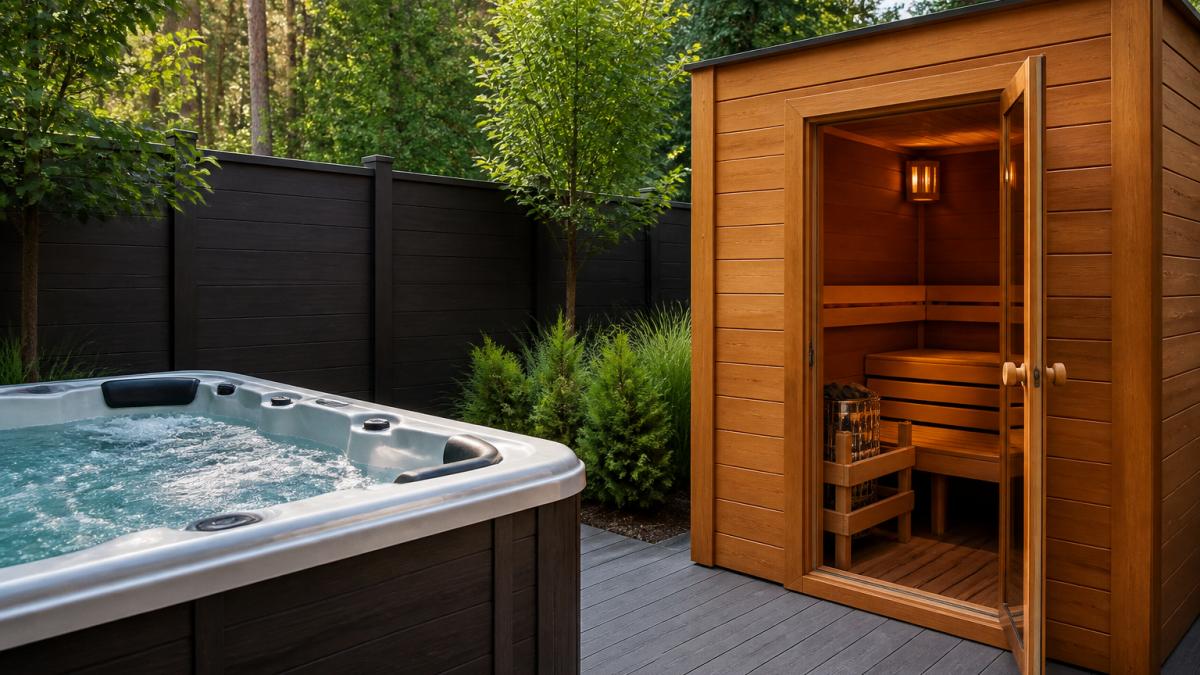
 comparison
Hot Tub vs Sauna for Relaxation: Which Wins in 2026?
Table of Contents
- Hot Tub vs Sauna: Quick Comparison Table
- Health Benefits of Hot Tubs: Hydrotherapy and Beyond
- Sauna vs Hot Tub for Muscle Recovery
- How Long to Stay in a Hot Tub (and Sauna Safety)
- Energy Costs and Maintenance: What You'll Actually Pay
- Installation and Space Requirements for Your Backyard
- Contraindications and Safety Warnings
- Environmental Impact and Hybrid Usage
- Frequently Asked Questions
Last Updated: October 1, 2026
Hot Tub vs Sauna: Quick Comparison Table
Choosing between a hot tub and a sauna for relaxation comes down to one question: do you want to soak or sweat? Hydrotherapy and dry heat deliver different benefits, and the right pick depends on your goals, your space, and how much upkeep you'll tolerate. This comparison from allvalley breaks down the hot tub vs sauna for relaxation debate so you can decide with confidence.
| Factor | Hot Tub | Sauna |
|---|---|---|
| Heat type | Warm water immersion | Dry or infrared heat |
| Typical session | 15-30 minutes | 10-20 minutes |
| Muscle recovery | Buoyancy plus jet massage | Heat and circulation boost |
| Maintenance | Chemicals and filtration | Minimal |
| Energy use | Higher, continuous heating | Lower, heats on demand |
| Space needed | Larger footprint | Compact |
| Best for | Social soaking, joint relief | Quiet sweating, detoxification |
Hot tubs and saunas both promote relaxation, but they work in opposite ways: hot tubs use buoyancy and warm water to ease muscle tension, while saunas use dry heat to raise your heart rate and trigger a deep sweat. The right choice depends on whether you want water-based therapy or heat-based recovery.
Health Benefits of Hot Tubs: Hydrotherapy and Beyond
Hot tubs deliver hydrotherapy, and that's the core of their appeal. Warm water immersion promotes vasodilation, which improves blood flow and helps release muscle tension. The buoyancy of water also reduces pressure on joints, making soaking a common recommendation for people managing joint inflammation or post-workout soreness.
The mental health angle matters just as much. Many users find that a 20-minute soak lowers cortisol levels and quiets a busy mind. Heat stress from warm water triggers endorphin release, which is part of why people step out feeling calmer than when they stepped in.

Regular soaking can support better sleep hygiene when timed an hour or two before bed. The drop in core body temperature after you exit helps signal your body that it's time to wind down.
Sauna vs Hot Tub for Muscle Recovery
For muscle recovery, the sauna vs hot tub comparison hinges on what kind of relief you need, and the two work through different physiological mechanisms. Hot tubs win for direct muscle tension and joint relief because water supports your body while jets massage tight areas. Saunas win for cardiovascular conditioning and post-workout recovery through heat stress, which raises your heart rate and boosts circulation without added weight on your joints.
The mechanism matters. In a hot tub, buoyancy offloads roughly most of your body weight, which is why people with knee, hip, or lower-back issues can move and stretch in water they couldn't on land. The jets add mechanical pressure that increases local blood flow to a specific area, similar in principle to a massage gun but spread over a wider surface. In a sauna, the mechanism is systemic: dry heat raises your core temperature, dilates blood vessels, and increases heart rate in a way that mimics light cardiovascular exercise. That's why sauna sessions are often framed as cardiovascular conditioning rather than targeted tissue work.
A common mistake is treating them as interchangeable. They aren't. If you finished a long run and your knees ache, the buoyancy of a hot tub is hard to beat. If you want to boost your metabolic rate and sweat out tension after a lighter workout, a sauna session does the job in less time.
Timing changes the outcome. Many practitioners find that a sauna session 30 to 60 minutes after a workout supports circulation and a sense of recovery, while a hot tub soak works well in the evening when the goal is muscle relaxation and better sleep. Doing a sauna immediately before a hot tub is a common hybrid pattern: the sauna raises circulation, then the soak relaxes the tissue that's now warmed up.
Many athletes use both: a sauna for cardiovascular and endurance benefits, then a hot tub for targeted muscle recovery. That hybrid approach is where the two really complement each other. If you're choosing only one, match it to the problem: joint pain and stiffness point to a hot tub, while general fatigue and cardiovascular conditioning point to a sauna.
How Long to Stay in a Hot Tub (and Sauna Safety)
How long to stay in a hot tub is a question worth answering precisely: 15 to 30 minutes is the sweet spot for most adults. Longer sessions raise your risk of overheating and dehydration. Start with 15 minutes and see how your body responds.
Sauna sessions run shorter. Traditional sauna bathing typically lasts 10 to 20 minutes, and infrared sessions often run a bit longer since the heat is gentler. In both cases, the rule is the same: leave when you feel lightheaded, and never push through discomfort.
Hydrate before and after, and keep a towel and water within reach. If you have a heart condition or are pregnant, talk to your doctor first.
Energy Costs and Maintenance: What You'll Actually Pay
Energy efficiency is where the two options diverge sharply, and the reason comes down to how each one heats. A hot tub runs a heater, pump, and filtration system continuously to hold water at temperature, so its operating cost is driven by three things: the temperature you set, how well the shell and cover insulate, and how often the pump runs. A sauna heats up on demand and cools down when you're done, so its energy use is tied to session length and how often you use it, not to holding a temperature 24 hours a day.
The practical takeaway: a hot tub's cost is mostly fixed and ongoing, while a sauna's cost is mostly variable and tied to use. That's why a lightly used sauna can be cheaper to run than a hot tub, but a heavily used sauna can close the gap. Insulation quality is the single biggest lever on a hot tub's bill. A well-insulated shell with a fitted, insulated cover holds heat between sessions, which means the heater runs less and the pump cycles less. A poorly insulated tub with a loose cover loses heat constantly and pays for it every month.
Maintenance costs tell a similar story, but the tasks are different in kind.
Installation and Space Requirements for Your Backyard
Installation and space are the practical hurdles most guides skip. Hot tubs need a level, reinforced pad or deck, a dedicated power supply, and enough clearance for access panels and service. Saunas need far less room and often fit indoors or in a compact backyard corner.
| Requirement | Hot Tub | Sauna |
|---|---|---|
| Base | Reinforced pad or deck | Level floor or platform |
| Power | Dedicated circuit | Standard outlet or dedicated line |
| Clearance | Access panels plus service space | Minimal |
| Placement | Outdoors or covered patio | Indoors or outdoors |
Contraindications and Safety Warnings
Both options carry real contraindications. Skip hot tubs and saunas if you're pregnant, have unstable heart conditions, low blood pressure, or are recovering from recent surgery, unless your doctor clears you. The heat stress from either can be dangerous for people with certain medical conditions.
- Dizziness or lightheadedness
- Nausea
- Rapid heartbeat that won't slow down
- Headache or confusion
Environmental Impact and Hybrid Usage
A hybrid setup lets you get the best of both worlds: a sauna for quick cardiovascular and detoxification sessions, and a hot tub for social soaking and joint relief. Homeowners with the space often run a sauna on weekdays and a hot tub on weekends.
Frequently Asked Questions
Which is better for muscle recovery: a hot tub or a sauna?
Hot tubs use hydrotherapy and buoyancy to reduce joint pressure and improve circulation, making them ideal for post-workout recovery. Saunas use dry heat to raise your metabolic rate and release endorphins. For targeted muscle tension, a hot tub wins; for full-body detoxification and endurance training, a sauna works better. Many athletes use both.
How long should you stay in a hot tub for relaxation?
Most guidelines recommend 15 to 30 minutes per session at 100 to 104 degrees Fahrenheit. Start with 15 minutes and see how your body responds. If you feel lightheaded or overheated, get out and cool down. Staying longer can raise your core temperature too high, especially after alcohol or exercise.
What is the 200 rule for sauna use?
The 200 rule suggests limiting sauna sessions to 20 minutes at 200 degrees Fahrenheit. This simple guideline helps prevent heat stress and dehydration. Traditional saunas typically run between 150 and 195 degrees Fahrenheit, so 20 minutes is a safe ceiling for most healthy adults. Always listen to your body and exit if you feel dizzy.
Do hot tubs or saunas cost more to run each month?
Hot tubs generally cost more to operate because they maintain heated water 24/7. Energy-efficient hot tub models with quality insulation reduce monthly utility bills, but water heating and chemical care still add up.
Can I use a hot tub and sauna together for better relaxation?
Yes, hybrid usage is a popular strategy. Start in a sauna for 10 to 15 minutes to warm your muscles, then move to a hot tub for 15 minutes of hydrotherapy. This combination boosts circulation and stress reduction. Always hydrate between sessions and avoid alcohol. If you have cardiovascular conditions, consult your doctor before combining heat therapies.