 how-to
Troubleshooting Hot Tub Water Flow Issues Fast
Table of Contents
- Start Here: A Safe, Ordered Diagnostic for Hot Tub Water Flow Issues
- Hot Tub Filter Causing Low Flow: Check This First
- Hot Tub Airlock Symptoms and How to Clear One Safely
- Hot Tub Circulation Pump Troubleshooting: Noise, Cycling, and No Movement
- Hot Tub Flow Error Codes and What Your Sensor Is Telling You
- Water Level, Valves, and Plumbing: The Blockages You Can See
- Preventive Maintenance That Keeps Water Moving
- Frequently Asked Questions
Last Updated: October 8, 2026
Start Here: A Safe, Ordered Diagnostic for Hot Tub Water Flow Issues
Weak jets, a humming pump, or a flow error on the display all point to the same thing: something is blocking water movement. Troubleshooting hot tub water flow issues works best when you follow a set order instead of guessing.
Most people start by draining the spa or calling a tech. Both are overkill. The real cause is usually simple, and you can find it in under an hour.
Water flow problems almost always trace back to one of five things: a dirty filter, low water, trapped air, a pump fault, or a blockage. Work through them in that order.
Power Down Before You Touch Anything
Shut off power at the breaker before you open any panel or touch the pump. Water and live electrical parts don't mix.
Once power is off, you can safely inspect, clean, and reset. The Consumer Product Safety Commission pool and spa safety guidance notes that electrical hazards around water are a leading risk, so treat this step as non-negotiable.
Match Your Symptom to the Right Fix
Use this table to jump straight to the likely cause.
| Symptom | Likely Cause | First Fix |
|---|---|---|
| Weak jets, normal pump sound | Clogged filter | Clean or replace filter |
| No water movement, pump quiet | Airlock | Bleed trapped air |
| Flow error on display | Sensor or low flow | Check filter, then sensor |
| Pump hums but won't spin | Pump or impeller fault | Inspect impeller |
| Intermittent flow | Low water level | Top off the spa |
Hot Tub Filter Causing Low Flow: Check This First
A dirty filter is the number one cause of low water flow in a hot tub. It's also the easiest to rule out.
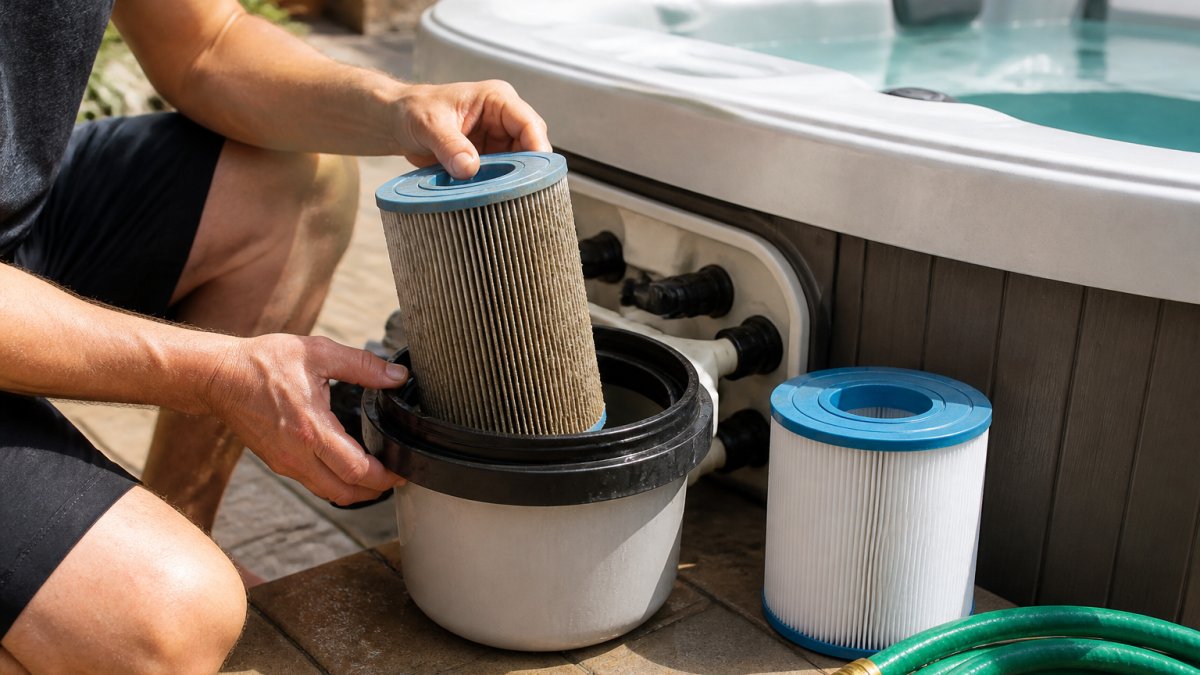
When the filter clogs, the pump can't pull enough water. Jets weaken. The heater may shut down.
Here's how to check it:
- Power down at the breaker.
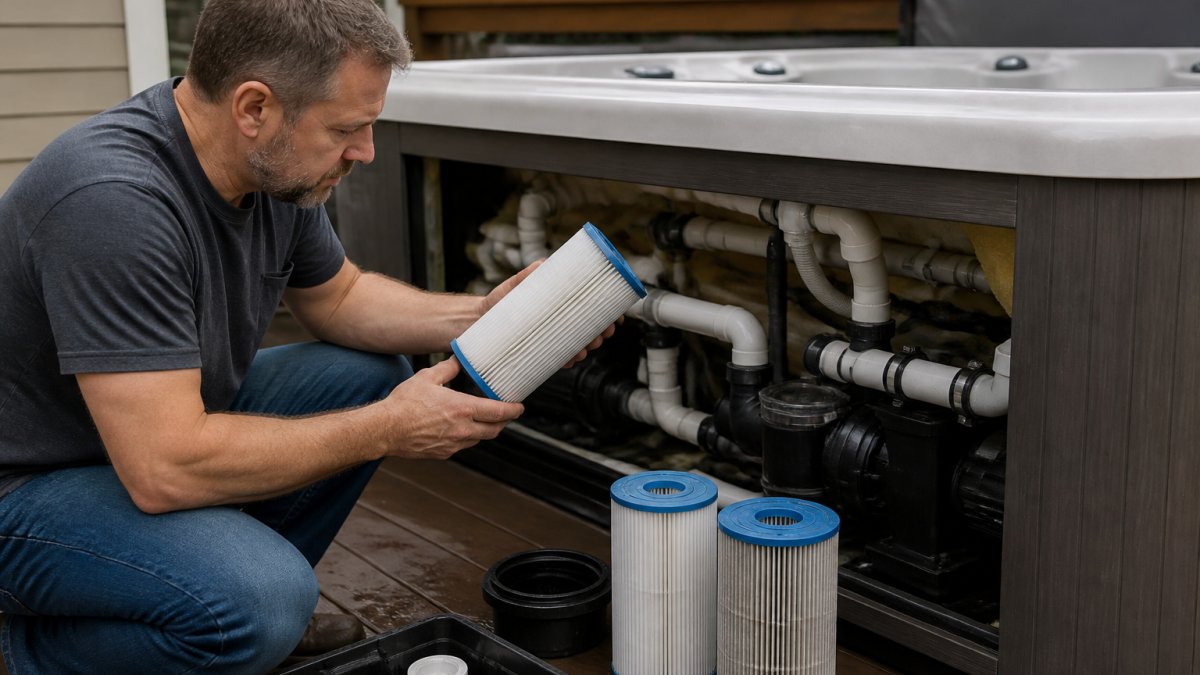
- Pull the filter cartridge out of its housing.
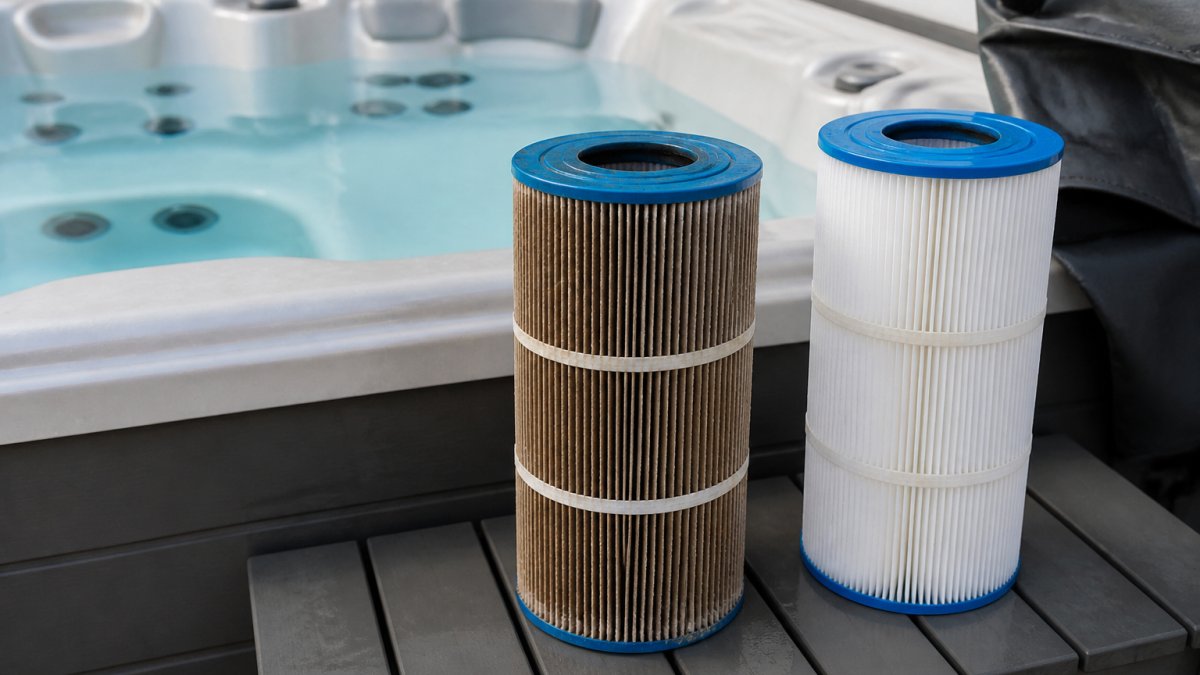
- Hold it up to light. If you can't see through it, it's clogged.
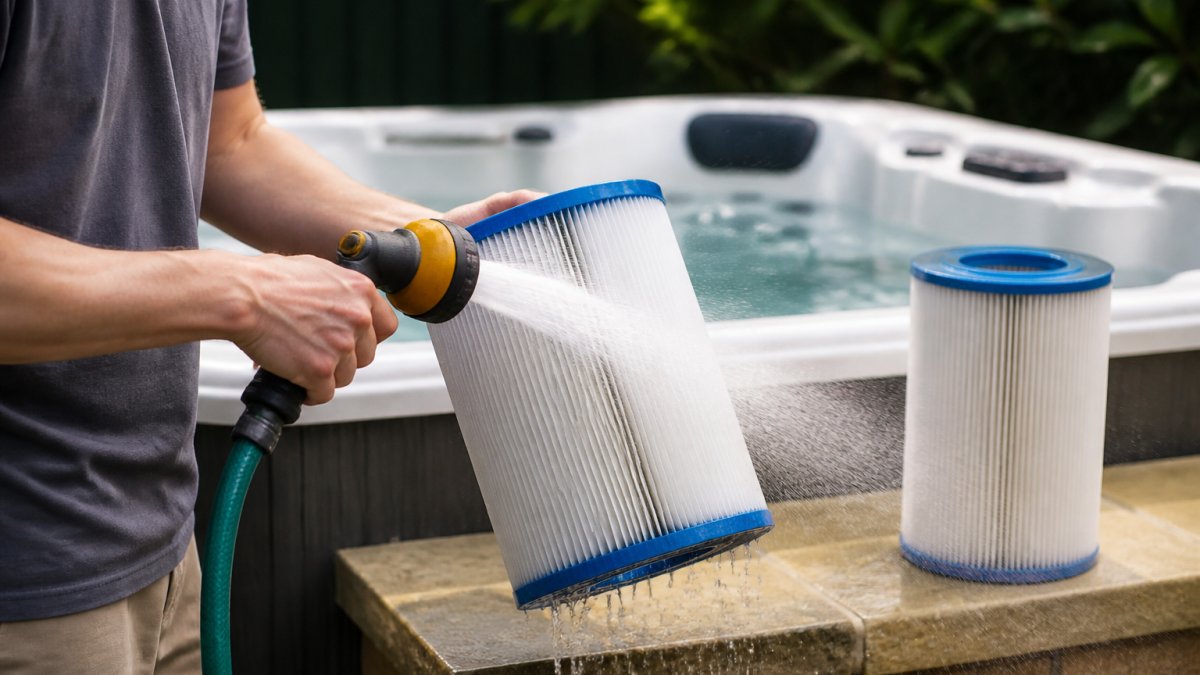
- Rinse with a hose, spraying between the pleats.
- For deep cleaning, soak in a filter cleaner, then rinse again.
A common mistake is rinsing only the outside. Debris packs into the pleats, so spray from the top down and work around the whole cartridge.
If the filter looks fine but flow is still weak, move to the next check.
Hot Tub Airlock Symptoms and How to Clear One Safely
An airlock happens when trapped air blocks water from reaching the pump. The pump runs, but no water moves. You'll often hear it humming with nothing happening.
Hot tub airlock symptoms are easy to spot:
- Jets are dead, but the pump sounds normal
- The pump runs hot or shuts off on its own
- Flow drops right after a drain and refill
Airlocks show up most often after you drain and refill the spa. Air gets trapped in the plumbing and won't clear on its own.
How to Safely Clear an Airlock
Never run the pump dry to push air out. That can burn out the motor.
- Power down at the breaker.
- Loosen the pump union slightly to let air escape.
- Wait for a steady trickle of water, then tighten the union.
- Restore power and run the pump on low.
- If flow is still weak, repeat once.
If the airlock won't clear after two tries, check the filter and water level before trying again.
Hot Tub Circulation Pump Troubleshooting: Noise, Cycling, and No Movement
Pump symptoms point in different directions, and the order you check them matters. Work from the cheapest, safest cause to the most involved, and stop when the symptom changes.
First, Know Which Pump You Are Hearing
Many spas have two pumps: a small circulation pump that runs continuously to filter and heat, and one or more larger jet pumps that run on demand. A dead circulation pump kills heating and filtration but leaves jet buttons working. A dead jet pump leaves jets weak while the spa still heats. Confirming which pump is affected narrows the fault before you open anything.
Symptom-to-Cause Order
| Symptom | Likely Cause | First Check |
|---|---|---|
| Pump hums, no water moves | Airlock or seized impeller | Bleed air, then inspect impeller |
| Pump runs, weak jets | Clogged filter or closed valve | Clean filter, open valves |
| Rapid on/off cycling | Low water or flow device | Water level, then flow switch |
| Grinding or rattling | Worn bearing | Schedule service |
| Pump quiet, no movement | No power or tripped breaker | Breaker and GFCI |
| Intermittent flow | Low water or debris | Water level, skimmer, impeller |
Work the Order
- Power down at the breaker. Confirm the GFCI has not tripped; a tripped GFCI is a common 'dead pump' that is actually an electrical fault.
- Confirm water level and filter. A pump starved by low water or a clogged filter will hum, cycle, or run hot. Fix these before touching the pump.
- Bleed any airlock. Loosen the pump union until a steady trickle of water appears, then tighten. Never run the pump dry to push air out.
- Check valves and the impeller. Confirm every suction and return valve is open, then power down and remove the pump housing to look for debris wrapped around the impeller. Hair, leaves, and plastic wrap are common.
- Listen and feel. A grinding or rattling pump points to a failing bearing and is a service item, not a cleaning fix. A pump that runs hot or shuts off on its own points to low water, a blockage, or a failing motor.
What You Can Fix vs. What Needs a Technician
Cleaning a filter, topping off water, bleeding an airlock, opening a valve, and clearing debris from an impeller are owner-level tasks. Bearing replacement, motor rewinding, seal replacement, and any diagnosis involving line voltage are technician work.
Escalate When
Call a qualified technician if the pump trips the GFCI, if you smell burning or see scorched wiring, if the pump is noisy after debris is cleared, if the motor runs hot or shuts off repeatedly, or if you are not trained to work around line voltage. Electrical faults near water are a shock and fire hazard and are not a do-it-yourself repair.
Hot Tub Flow Error Codes and What Your Sensor Is Telling You
A flow error is a protective warning, not a diagnosis. The controller has decided it cannot confirm water is moving, so it locks out the heater to keep the element from overheating. Understanding which device reported the fault is the difference between a five-minute fix and an unnecessary service call. Pinpointing the source of the restriction often requires a systematic approach to fixing low water pressure before concluding that the internal sensors have failed.
Two Devices, Two Failure Modes
Most spas use one of two flow-sensing designs, and they fail differently:
- Pressure switch (mechanical). A diaphragm or piston moves against spring pressure as water flows. When flow drops, the switch opens and the heater shuts off. These fail from debris, scale, or a stiff diaphragm, and they can stick open or closed.
- Flow sensor (electronic). A paddle, turbine, or thermal probe reports flow to the circuit board. These fail from debris on the paddle, a worn turbine, a cracked housing, or a failed probe. They often throw a specific code rather than a generic one.
A mechanical switch usually gives you an on/off fault. An electronic sensor can give you a graduated or intermittent reading, which is why the same weak-flow symptom produces different behavior on different spas.
Why the Same Symptom Gives Different Codes
There is no universal flow-error code. Manufacturers assign their own numbers and abbreviations, and the same number can mean different things across brands and even across model years.
Because of that, the code alone will not tell you whether to clean a filter or replace a sensor. Treat the code as a pointer to the flow circuit, then confirm the actual cause with the checks below.
Test the Flow Circuit in Order
- Power down at the breaker before touching any sensor, switch, or wiring.
- Rule out the simple causes first. Clean or swap the filter, confirm the water level is midway up the skimmer opening, and verify every suction and return valve is open. A large share of flow errors clear here.
- Locate the device. The pressure switch or flow sensor sits in the plumbing near the heater. Note whether it is a mechanical switch or an electronic sensor, that determines your test.
- Inspect for debris and scale. Pull the sensor or switch and look for hair, leaves, or mineral buildup on the paddle, turbine, or diaphragm. Clean gently; do not bend or scratch the sensing surface.
- Check the connector and wiring. A loose or corroded plug at the board mimics a failed sensor. Reseat it and look for green or burnt pins.
- Test electrically only if you are qualified. A mechanical switch can be checked for continuity with a multimeter while the pump runs; an electronic sensor is tested per the manufacturer's resistance or voltage spec. If you are not comfortable working around live equipment, stop here.
- Restore power and watch. If the code clears with a clean filter and full water, the device was doing its job. If it returns immediately with confirmed flow, the switch or sensor is the likely fault.
Read Your Manual, Not a Generic Chart
Because codes are model-specific, the authoritative source is your spa's own manual or the control-pack documentation. Look for the code table, the flow-device part number, and any resistance or voltage spec the manufacturer publishes. If you cannot find the manual, the control-pack maker (not the spa brand) usually publishes the code list.
Do not bypass, jumper, or permanently defeat a flow switch or sensor to keep the heater running. These devices exist to prevent dry-fire damage and are a safety component. Defeating one can destroy the heater and create a shock or fire risk.
When to Stop and Call a Technician
Call a qualified technician if the code persists with a clean filter, correct water level, and open valves; if you find damaged wiring or a burnt board connector; if the sensor tests outside the manufacturer's spec; or if you are not trained to work around line voltage. Electrical diagnosis near water is not a do-it-yourself task for most owners.
Water Level, Valves, and Plumbing: The Blockages You Can See
Some flow problems are purely mechanical, and you can spot them by eye. Start with the water level.
If the water sits below the skimmer, the pump pulls air instead of water.
Next, check the valves. A valve left closed after service will block flow completely. Trace the plumbing and confirm every valve is open.
Then look for visible blockages:
- Kinked or crushed plumbing lines
- Debris in the skimmer basket
- A blocked intake or suction line
If you find a leak, fix it before chasing other causes.
Preventive Maintenance That Keeps Water Moving
Most flow problems are preventable with a simple routine. Skip it, and you'll be back to troubleshooting within weeks.
Follow this schedule:
- Weekly: Rinse the filter cartridge and skim debris
- Monthly: Deep clean the filter and check the water level
- Quarterly: Inspect the pump, valves, and plumbing for wear
Keep a log of your filter cleanings and water levels. Patterns show up fast, and you'll catch a slow decline before it becomes a flow error.
The filter is the cause of most flow issues. Clean it weekly, keep a spare on hand, and you'll avoid the majority of problems before they start.
At allvalley, every hot tub we sell comes with a free starter kit and chemicals, so you can set up a maintenance routine from day one. Our team has spent 26 years helping homeowners keep their spas running with less hassle.
Frequently Asked Questions
Why does my hot tub indicate water flow has failed?
A flow error usually means the flow sensor or flow switch isn't detecting enough water moving through the heater. The most common causes are a clogged or dirty filter, low water level, an airlock in the plumbing, or a failing circulation pump. Start by checking and cleaning the filter, confirm the water level is above the skimmer, then inspect for trapped air. If those check out, test the flow switch and pump.
How do I know if I have an airlock in my hot tub?
Hot tub airlock symptoms include weak or sputtering jets, pump noise that sounds like it's running dry, a flow error shortly after a drain and refill, and no water movement despite the pump running. Airlocks happen when air gets trapped in the plumbing lines, often after refilling. You can often clear one by removing the filter, setting the jets to high, and running the pump briefly, or by loosening a union fitting to let air escape.
Can a dirty filter cause a hot tub flow error?
Yes. A dirty or clogged filter cartridge restricts water flow, which drops pressure at the flow sensor and can trigger a flow error. It's the most common and easiest fix. Pull the cartridge, rinse it with a garden hose, and soak it in filter cleaner if it's heavily soiled. For hot tub filter causing low flow problems, replace the cartridge every 12 to 18 months depending on use.
Why is my hot tub pump running but water not circulating?
If the pump runs but water isn't moving, check for a clogged filter, a closed valve on the suction or return line, a kinked or blocked plumbing line, or a broken pump impeller. An airlock can also stop circulation even with the pump running. Start by cleaning the filter and opening all valves, then inspect for debris at the intake. If the pump hums without moving water, the impeller may be jammed or the pump may need service.
A flow problem that keeps coming back after you've cleaned the filter, cleared the airlock, and checked the valves usually points to a failing pump or sensor. That's the point to stop guessing and get eyes on it.
If you'd rather skip the trial and error, allvalley can help. We offer professional delivery and installation, hot tubs built to run with less maintenance, and free starter kits and chemicals with every purchase. Call us at 760-342-5277 and we'll get your spa moving again.