 how-to
How to Deep Clean Pleated Spa Filters
Table of Contents
- Why Pleated Spa Filters Need a Deep Clean (Not Just a Rinse)
- Step-by-Step: How to Deep Clean Pleated Spa Filters
- Step 1: Power Down and Remove the Filter Cartridge
- Step 2: Pre-Rinse with a Garden Hose and Filter Sprayer
- Step 3: Dilute a Cartridge-Safe Cleaner to the Right Ratio
- Step 4: Soak for 8 to 12 Hours (Up to 24 for Heavy Soil)
- Step 5: Final Rinse Until the Runoff Runs Clear
- Step 6: Air-Dry Completely Before Reinstalling
- Step 7: Clean the Housing and Reinstall
- Choosing a Hot Tub Filter Cleaner That Won't Damage Pleats
- How Long to Soak a Hot Tub Filter (and What Happens If You Don't)
- How Often to Clean Hot Tub Filters: A Quick-Reference Schedule
- When to Replace a Hot Tub Filter Instead of Cleaning It Again
- Common Cleaning Mistakes That Shorten Filter Lifespan
- Conclusion
- Frequently Asked Questions
Last Updated: October 6, 2026
Why Pleated Spa Filters Need a Deep Clean (Not Just a Rinse)
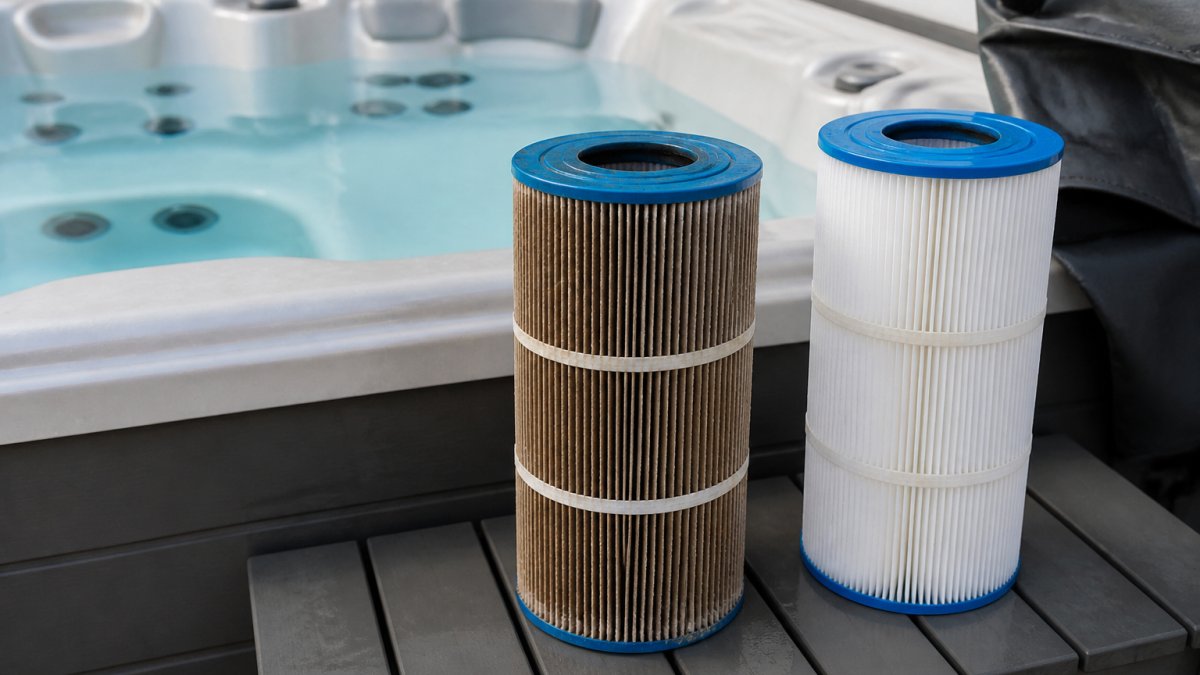
A quick hose-down removes leaves and hair. It does not remove the oils, lotions, and body fats that soak into the fabric of a pleated spa filter.
Learning how to deep clean pleated spa filters is the difference between a spa that stays clear and one you keep fighting.
Here's the key point most guides skip: a rinse handles debris, but only a soak breaks down the oils. You need both.
CDC guidance on healthy swimming and pool water
Step-by-Step: How to Deep Clean Pleated Spa Filters
Deep cleaning a pleated spa filter takes about 30 minutes of hands-on work, plus an overnight soak. The sequence matters: pre-rinse, dilute, soak, final rinse, dry, reinstall.
Step 1: Power Down and Remove the Filter Cartridge
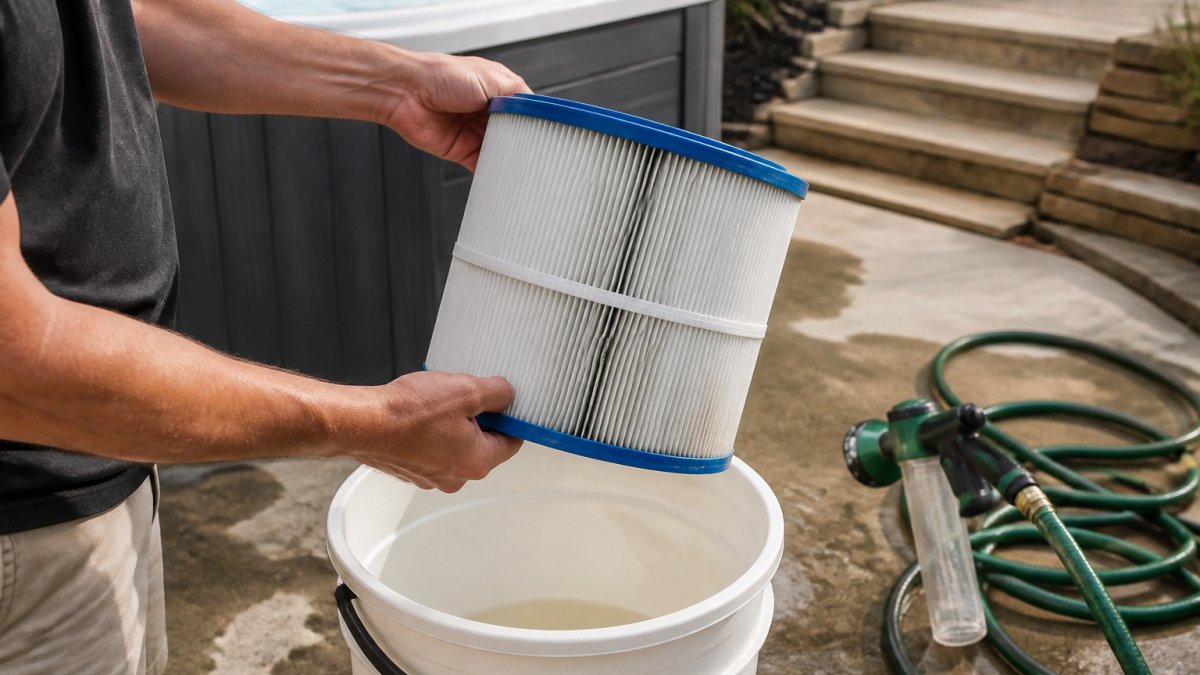
Turn off the spa at the breaker first. This stops the pump and prevents it from running dry.
Next, open the skimmer lid or equipment access panel. Some filters sit behind a weir door in the skimmer; others live in a housing near the pump.
Expect some water. Set the cartridge in a bucket or on a towel. While the cartridge is out, note the manufacturer and model stamped on the end cap, you will need it in Step 3 to confirm cleaner compatibility.
Step 2: Pre-Rinse with a Garden Hose and Filter Sprayer
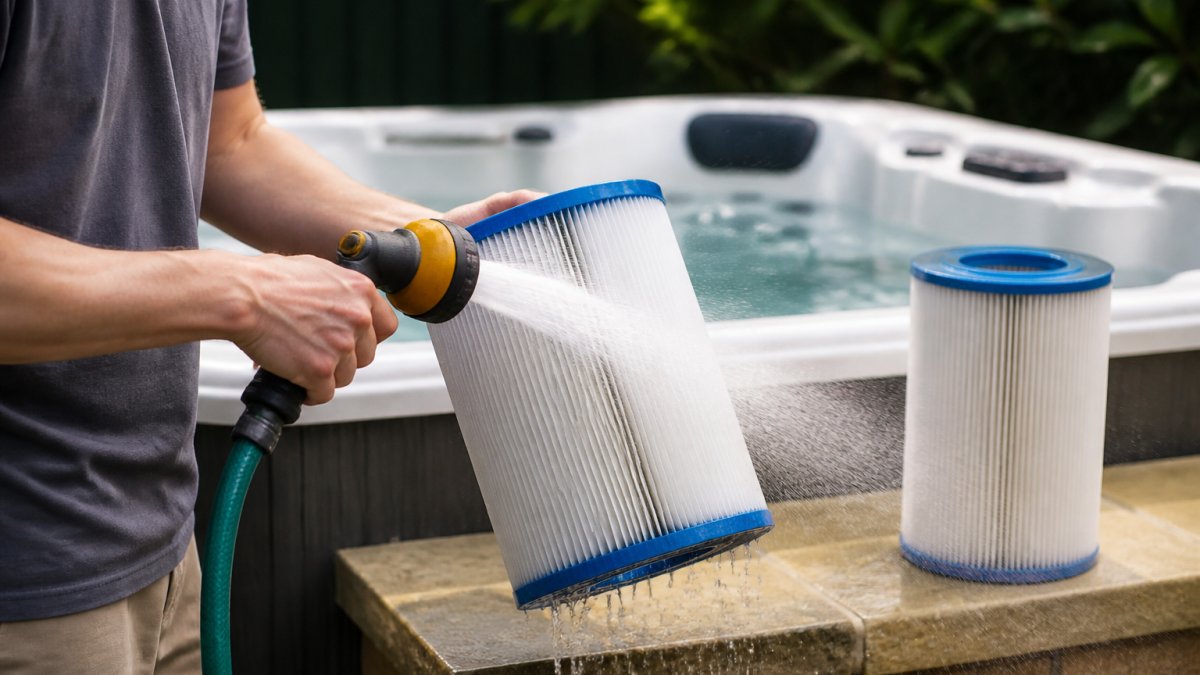
Use a garden hose with a filter sprayer or a hose nozzle set to a firm, wide spray. Work from the top of the cartridge downward, between each pleat.
- Hold the spray at a 45-degree angle
- Push water down the length of the pleats, not across them
- Rotate the cartridge as you go
Rinse until the runoff runs clear. This flushes out dirt, debris, and loose oils. Do not skip this step and go straight to the soak, heavy debris left in the pleats consumes the cleaner and leaves less of it to break down oils.
Step 3: Dilute a Cartridge-Safe Cleaner to the Right Ratio
Fill a clean bucket or filter-cleaning tube with water, then add the cleaner at the ratio printed on the label. Most cartridge cleaners are concentrates, and common dilution ratios run anywhere from 1 ounce per gallon up to 8 ounces per gallon depending on the product and how soiled the filter is.
Use enough solution to fully submerge the cartridge. A tall filter-cleaning tube uses less solution than a wide bucket and keeps the pleats from pressing against each other.
Step 4: Soak for 8 to 12 Hours (Up to 24 for Heavy Soil)
Submerge the cartridge completely and let it soak overnight, or at least 8 to 12 hours. A 24-hour soak is fine for a heavily soiled filter, and some owners do it quarterly as part of a full deep clean. Do not leave a cartridge soaking for days, prolonged exposure to any solution, even a mild one, can soften pleat media and degrade the end-cap adhesive.
If the solution turns dark quickly, that is normal, it is the oils and lotions coming out of the pleats.
Step 5: Final Rinse Until the Runoff Runs Clear
Pull the cartridge out and rinse it again with the hose, top to bottom, between every pleat. Residual cleaner left in the media will foam in the spa, throw off water chemistry, and irritate bathers.
A useful check: rinse until the runoff no longer feels slippery between your fingers and no longer smells like the cleaner. If it still suds, keep rinsing.
Step 6: Air-Dry Completely Before Reinstalling
Stand the cartridge on its end in a shaded, well-ventilated spot and let it air-dry. Depending on humidity, that is typically several hours to overnight. Do not use a hair dryer, oven, or direct sun to speed it up, heat warps pleats and UV degrades the media.
Reinstalling a wet filter traps moisture and debris against the pleats and shortens life. Dry first, then reinstall.
Step 7: Clean the Housing and Reinstall
While the cartridge dries, wipe out the filter housing or skimmer well. Dirt and biofilm left in the well get pulled straight back into the freshly cleaned cartridge.
Seat the cartridge, thread it clockwise by hand until snug, and hand-tighten only, forcing it cracks the threads. Restore power at the breaker and confirm normal flow at the returns before you walk away.
Choosing a Hot Tub Filter Cleaner That Won't Damage Pleats
Not every cleaner is safe for a pleated filter cartridge. A hot tub filter cleaner needs to break down oils without eating the fabric, the pleat binding, or the end caps. The problem is that "filter cleaner" on a label does not guarantee compatibility with your specific cartridge.
How to Verify Compatibility Before You Soak
Check three things before the cartridge goes in the bucket:
- The cartridge manufacturer's instructions. Most cartridge makers publish a care sheet or a note on the end cap specifying approved cleaners and maximum soak times. If the maker says "rinse only" or lists a maximum soak, follow it, some media and adhesives are not rated for prolonged chemical exposure.
- The cleaner label's material claims. Look for wording like "safe for pleated polyester and Dacron media" or "cartridge-safe." If the label only says "pool filter cleaner" with no material language, treat it as unverified.
- The end-cap construction. Cartridges with glued or potted end caps are more sensitive to harsh solvents than cartridges with mechanically crimped caps. If you can see exposed adhesive, be conservative with soak time and concentration.
When in doubt, test on a small, less visible section of pleat first, or shorten the soak and repeat rather than soaking longer.
What to Look For in a Cleaner
- Cartridge-safe formula: Made for pleated filter media, not just general-purpose degreaser
- No bleach or harsh acids: These break down the pleats and shorten filter life
- No dish soap: It leaves a film that clogs the fabric
Are Household Alternatives Safe?
A common question is whether vinegar or a mild detergent can substitute for a commercial cleaner.
- White vinegar: A diluted vinegar soak can loosen light mineral film, but it does not break down body oils and lotions the way a surfactant cleaner does. It is a reasonable occasional descaler, not a replacement for a deep-clean soak.
- Dish soap: Skip it. It leaves a surfactant film in the pleats that foams in the spa and throws off water chemistry.
- Laundry detergent or degreaser: Skip it. These are formulated for fabric and hard surfaces, not filter media, and residue is hard to rinse out.
If you use vinegar, dilute it and follow with a thorough rinse, and do not combine it with a commercial cleaner in the same soak.
Why Residue Causes Foaming and Water Problems
Any cleaner left in the media gets released into the spa water. Surfactant residue foams at the waterline, interferes with sanitizer demand, and can irritate skin and eyes.
A common pattern is a spa that foams after a filter cleaning even though the water was clear before. Nine times out of ten, the cause is incomplete rinsing, not the cleaner itself.
How Long to Soak a Hot Tub Filter (and What Happens If You Don't)
The answer to how long to soak a hot tub filter is simple: overnight, or 8 to 12 hours.
A 24-hour soak is fine for a heavily soiled filter, and some homeowners do it quarterly as part of a full deep clean.
What happens if you skip the soak? The oils stay put. Water circulation drops, the pump strains, and water clarity suffers.
How Often to Clean Hot Tub Filters: A Quick-Reference Schedule
How often to clean hot tub filters depends on use. A busy spa needs more attention than one used on weekends.
| Task | How Often | Time Needed |
|---|---|---|
| Quick rinse | Every 1-2 weeks | 5-10 minutes |
| Deep clean (soak) | Every 4-6 weeks | 30 min + overnight soak |
| Full inspection | Quarterly | 10 minutes |
| Replace filter | Every 12-24 months | Varies |
Heavy use, lots of lotions, or a spa that runs daily all push you toward the shorter end of those ranges. If the water looks dull between cleanings, clean more often.
When to Replace a Hot Tub Filter Instead of Cleaning It Again
Sometimes cleaning isn't the answer. A filter that's past its useful life won't perform no matter how well you clean it.
Replace the filter when you notice:
- Torn or flattened pleats that no longer hold their shape
- Crushed or broken end caps
- Persistent cloudy water even after a deep clean
Filters are wear items. Cleaning extends their life, but it can't make them last forever. Keeping a spare cartridge on hand means you're never stuck waiting on a replacement.
Common Cleaning Mistakes That Shorten Filter Lifespan
Most filter damage comes from a handful of habits that seem harmless.
- Blasting pleats with a pressure washer: It tears the fabric and flattens the pleats
- Using the wrong cleaner: Bleach, acid, and dish soap all damage the media
- Skipping the soak: Rinsing alone leaves oils behind
Clean the filter housing while the cartridge soaks. A quick wipe saves you from re-dirtying a freshly cleaned filter.
Conclusion
A cloudy spa usually traces back to one thing: a filter that needs more than a rinse. Deep cleaning takes a little patience, but it keeps your water clear and your equipment running longer. If your spa is due for an upgrade, allvalley has spent 26 years helping homeowners find low-maintenance hot tubs and spas, backed by free starter kits and chemicals, professional delivery and installation, and overstock pricing that keeps quality within reach.
Get started with allvalley and keep your backyard retreat ready for fun, call 760-342-5277.
Frequently Asked Questions
Can I soak my hot tub filter in bleach or vinegar instead of a filter cleaner?
Bleach can degrade the pleated media and break down the end caps over time, and vinegar only tackles light scale without removing oils. A cartridge-safe hot tub filter cleaner is formulated to lift both oils and minerals without damaging the pleats. If you want a gentler option between deep cleans, a dedicated spa filter cleaner used at the label's dilution is the safest choice for keeping your pleated spa filters intact.
How long should you soak a hot tub filter in cleaner?
Most cartridge-safe cleaners call for a 1-hour soak for routine maintenance and up to 24 hours (often overnight) for a full deep clean on a heavily soiled filter. Check your cleaner's label, since concentrations vary. After soaking, rinse thoroughly from the top down until the water runs clear and no suds remain before reinstalling the cartridge.
How often should I deep clean a pleated spa filter versus just rinsing it?
Rinse the cartridge every 1 to 2 weeks with a garden hose to knock off loose debris, and plan a full deep clean with a filter cleaner every 4 to 6 weeks depending on use. Heavy bather loads, high oils, or visible scale call for more frequent deep cleans. A quarterly replacement review keeps performance from slipping even with a solid cleaning routine.
When should I replace a spa filter instead of cleaning it again?
Replace the cartridge when pleats stay matted or crushed after a deep clean, when the bands or end caps are cracked, or when water clarity drops even with correct chemistry and a clean filter. Most spa filters last about 12 to 18 months with regular maintenance. If a deep clean no longer restores flow or clarity, replacement is the better move than another soak.