 comparison
Ozone vs Salt Water Spas: Pros and Cons
Table of Contents
- How Ozone Systems Work in Hot Tubs
- How Saltwater Chlorination Systems Work
- Sanitizer Residual: Do You Still Need Chlorine or Bromine?
- Salt Water Hot Tub Maintenance Requirements
- Hot Tub Ozonator Cost and System Expenses
- Hot Tub Water Chemistry: Ozone vs Salt Systems
- Which System Is Right for Your Household?
- Frequently Asked Questions
Last Updated: October 20, 2026
How Ozone Systems Work in Hot Tubs
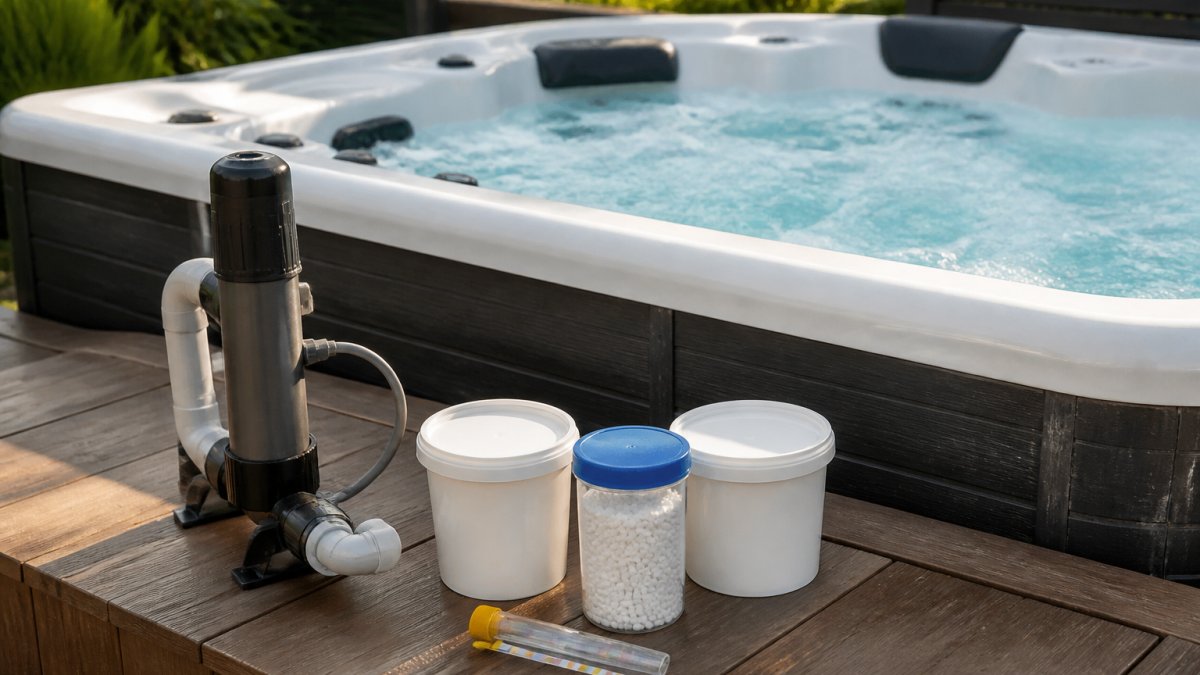
An ozone system for hot tubs uses ultraviolet light or corona discharge to convert oxygen into ozone gas, injected into the spa water through the circulation system. Ozone is a powerful oxidizer that breaks down organic contaminants like sweat, body oils, and lotion residue.
Ozone injection happens continuously as water circulates. Once ozone molecules contact contaminants, they oxidize them into smaller, harmless compounds. Unlike chlorine or bromine, ozone doesn't remain as a residual sanitizer, dissipating within 15-20 minutes.
This rapid breakdown is both an advantage and a limitation. The upside: no chlorine smell or harsh chemical feel. The downside: you still need a secondary sanitizer between circulation cycles, so most ozone owners pair it with a low dose of chlorine or bromine.
How Saltwater Chlorination Systems Work
A saltwater system for hot tubs uses a salt chlorine generator to convert dissolved salt into chlorine through electrolysis. You add salt to the water, and the generator produces chlorine on demand as water flows through the cell, using lower salt concentrations and smaller cells than saltwater pools.
Salt levels typically range from 1,500 to 3,000 ppm, far below ocean water's 35,000 ppm (Saline Water and Salinity). This feels gentler on skin and eyes than traditional chlorine spas, though still saltier than fresh water.
The chlorine produced by the salt cell provides residual sanitizer 24/7. Unlike ozone, it stays in the water between circulation cycles. You still monitor chlorine levels and adjust generator output, but the system handles much of the work automatically.
Salt cells require periodic cleaning and replacement every 3-7 years depending on water chemistry and usage, so budget for this maintenance when choosing a saltwater system.
Sanitizer Residual: Do You Still Need Chlorine or Bromine?
Yes, both ozone and saltwater systems still require a residual sanitizer, though the approach differs between them.
With an ozone system, you add a secondary sanitizer (usually chlorine at 0.5-2 ppm or bromine) for protection when the ozonator isn't running. Ozone works only while water circulates, so the residual keeps bacteria in check during idle hours.
With a saltwater system, the chlorine generated by the salt cell IS your residual sanitizer, produced continuously. You still need to maintain proper chlorine levels (typically 2-4 ppm) and test regularly to ensure the cell produces enough.
The key difference: ozone systems use a helper sanitizer; saltwater systems generate their own. Neither eliminates residual protection, and claims otherwise are misleading. Water clarity and safety depend on consistent residual levels regardless of system.
Salt Water Hot Tub Maintenance Requirements
Saltwater systems require consistent but manageable maintenance. Test water chemistry at least twice weekly for chlorine, pH, alkalinity, and salt concentration. Most owners find the routine simpler than traditional chlorine because the generator handles much of the chlorine production.
Salt cell cleaning is the biggest task. Mineral and calcium buildup reduces effectiveness, so most manufacturers recommend cleaning every 3-6 months depending on water hardness and usage. A diluted muriatic acid wash takes 20-30 minutes and restores function.
Water balance remains critical: keep pH between 7.2 and 7.8 and alkalinity between 80 and 120 ppm. In hard water, manage calcium buildup more aggressively; some owners add a sequestrant to prevent mineral precipitation.
Salt consumption is predictable. Depending on spa size and usage, you'll add salt every few months. Unlike chlorine tablets, salt remains in the water until you drain and refill, typically every 1-2 years.
Hot Tub Ozonator Cost and System Expenses
Most shoppers compare sticker prices, but the two systems spend money on very different schedules. Ozone front-loads equipment then runs cheap; saltwater starts cheaper then pays through salt, cell replacement, and electricity. Compare them over a five-year window, not the installation invoice.
Ozone system costs. A retrofit ozonator runs from roughly $150 for a basic UV unit to $600+ for a corona discharge (CD) unit with injector and check valve. Many new spas ship with one plumbed in, baking the cost into the tub price. Professional installation typically adds a service call in the low hundreds. UV lamps need replacement every 1-2 years; CD cells last 3-5 years. Parts run about $50-$250. Electricity is a few dollars a month since the ozonator only runs with the circulation pump.
Saltwater system costs. A salt chlorine generator typically costs $300-$800 for cell and controller, plus a compatible control pack on some spas. Initial salt runs 2-4 bags at roughly $10-$20 per 40-pound bag for a 5- to 7-foot spa, topped up a few times a year. The big recurring item is the salt cell: 3-5 years of life and $200-$500 to replace. Cells also draw electricity whenever the pump runs.
The sanitizer line item. Ozone doesn't replace chlorine or bromine, so you still buy a secondary sanitizer, just less. Salt systems generate their own chlorine, so sanitizer purchases drop sharply after startup, but you pay for salt and cell replacement instead. Neither system is chemical-free.
A realistic five-year view. For a typical 6-person spa used several times a week, an ozone setup might total roughly $400-$900 in equipment and installation plus $150-$400 in replacements plus modest electricity and a reduced chemical budget. A salt setup might total roughly $400-$1,000 in equipment plus $100-$250 in salt plus $200-$500 in cell replacement plus electricity, with a much smaller sanitizer bill.
At allvalley, we work with homeowners to map out the true cost of ownership for any system they choose, including the replacement schedule for lamps, cells, and sanitizer. Our free starter kits and included chemicals with hot tub purchases help you get through the first season without surprise expenses, and our team can quote current part prices so the comparison is grounded in real numbers rather than guesswork.
Hot Tub Water Chemistry: Ozone vs Salt Systems
Water chemistry management differs meaningfully between the two approaches.
Ozone systems simplify oxidation but complicate sanitizer management. Ozone breaks down organics so effectively that water stays clearer longer and resists odor. But you're juggling two processes: ozone oxidation plus chlorine or bromine residual, so test chlorine regularly. pH and alkalinity still matter, though ozone systems are more forgiving of minor imbalances.
Saltwater systems consolidate sanitizer and oxidation into one process, but require closer attention to salt levels and cell function. The salt cell's chlorine handles both oxidation and residual protection, so you manage one process instead of two. Water hardness matters more: hard water causes mineral buildup on the cell and plumbing, so you'll spend more time on deposits and may need softening chemicals.
Both systems require consistent pH management. Ozone tolerates pH between 7.0 and 7.8; saltwater prefers 7.2 to 7.8 for cell efficiency. Alkalinity should stay between 80 and 120 ppm in either. The chemistry is the same; the difference is how aggressively each tolerates drift.
Water clarity is excellent in both when properly maintained. Ozone excels at breaking down the invisible organics behind cloudy water and odor; saltwater produces consistent chlorine that prevents bacterial growth. Neither guarantees clear water if you neglect testing, but both beat traditional chlorine when managed well.
Which System Is Right for Your Household?

Choosing between ozone vs salt water spas comes down to how often you use the tub, how long it sits idle, who is soaking, and how much hands-on maintenance you actually want. The table below is a starting point; the notes after it explain the trade-offs behind each row.
| Your situation | Better fit | Why |
|---|---|---|
| Soak most days, want the clearest water and least chemical smell | Ozone + low-dose chlorine or bromine | Ozone oxidizes sweat, oils, and lotion continuously while the pump runs, so the residual sanitizer has less to fight |
| Tub sits idle for days or weeks between uses | Saltwater | The salt cell keeps producing a chlorine residual even when nobody is in the water; ozone provides no protection during idle periods |
| Sensitive skin or chlorine sensitivity | Ozone with a minimal residual, or saltwater run at low output | Both reduce the harsh feel of a traditional chlorine spa, but neither is chemical-free; saltwater still produces chlorine |
| Want a 'set it and mostly forget it' routine | Saltwater | The generator handles most chlorine production automatically; you mainly test and adjust output |
| Hard water (high calcium) | Ozone | Salt cells scale up faster in hard water and need more frequent acid cleaning |
| Soft water | Saltwater | Less mineral buildup on the cell means longer cell life and less cleaning |
| Frequent entertaining with heavy bather loads | Ozone + residual sanitizer | Ozone handles the organic load from many bathers; you still shock and maintain residual |
| Retrofitting an older spa | Ozone | Ozonators are simpler to add to an existing circulation system than a salt cell and controller |
| Buying a new spa | Either, check factory support | Many manufacturers offer both options; confirm the model supports the system you want before ordering |
Usage pattern is the biggest fork. If your circulation pump runs several hours a day and you soak often, ozone earns its keep by continuously oxidizing organics. If your spa sits quiet for long stretches, ozone does nothing during those hours, and a salt cell's steady residual is the more reliable safety net.
Skin and respiratory comfort. Ozone paired with a low chlorine or bromine residual is often described as gentler because there's less combined chlorine. Saltwater spas feel softer than traditional chlorine spas but still contain chlorine, and some bathers notice the salt.
Maintenance personality. Saltwater suits owners who prefer testing and adjusting output to adding chemicals by hand. Ozone suits owners who don't mind adding a small sanitizer dose and replacing a lamp or cell on schedule.
Compatibility and retrofit. Not every spa is plumbed or wired for salt, and adding one may require a compatible control pack. Ozonators are easier to retrofit since they tap the existing circulation line. Before committing, confirm the manufacturer supports the system, check whether the warranty covers saltwater corrosion, and ask what circulation runtime it needs.
Budget and payment schedule. Ozone is a larger upfront purchase with smaller ongoing costs; saltwater spreads cost across salt, electricity, and periodic cell replacement. Over five years the totals often land in a similar range, so the decision comes down to which schedule and maintenance style fits your household rather than which is cheaper on paper.
At allvalley, we have helped families choose between these systems based on their specific situation for over 26 years. Our professional installation and free starter kits mean you start your spa season with the right setup, and our team can walk you through the chemistry, replacement schedule, and compatibility questions from day one. Call us at 760-342-5277 to discuss which system fits your household.
Frequently Asked Questions
Does an ozone system replace chlorine in a hot tub?
No. Ozone systems break down contaminants like sweat, oils, and lotion, but they don't provide residual sanitizer protection. You still need chlorine or bromine to maintain a sanitizer residual that protects water between filtration cycles. Ozone works best as a supplement, not a replacement.
Is a salt water hot tub easier to maintain?
Salt systems reduce chlorine handling because the salt chlorine generator produces chlorine on demand. However, you still test water chemistry regularly, monitor salt levels, and clean the replacement cell periodically. They're easier than manual chlorine dosing, but not maintenance-free.
How much does a hot tub ozonator cost?
Ozonator pricing depends on the system type and spa size. Installation and replacement cells add to the total cost. For exact pricing and recommendations for your spa, contact allvalley at 760-342-5277 for a quote tailored to your setup.
Do salt water hot tubs still need sanitizer?
Yes. Salt water systems generate chlorine, but they still require you to maintain a chlorine residual (typically 1-3 ppm) to keep water safe. Salt levels also need monitoring to ensure the chlorine generator works efficiently. Regular water testing is essential.