 how-to
Best Maintenance Tips for Spa Ozone Systems
Table of Contents
- Understanding Your Spa Ozone System
- Weekly Water Care and Filter Maintenance
- How to Clean a Hot Tub Ozonator
- How to Tell If a Hot Tub Ozonator Is Working
- How Long Should a Hot Tub Ozone System Run Daily
- Managing Hot Tub Sanitizer Levels With Ozone
- Seasonal and Long-Term System Care
- Frequently Asked Questions
Last Updated: October 15, 2026
Understanding Your Spa Ozone System
Spa ozone systems use ozone gas to break down contaminants and reduce chlorine demand.
Ozone systems work best when they run consistently. They're not "set it and forget it", your water still needs monitoring and your equipment regular attention.
For over 26 years, allvalley has been transforming backyards into ultimate retreats.
Ozone sanitizes water through oxidation: your ozonator creates ozone, which circulates through the spa and kills bacteria, viruses, and algae.
Proper maintenance keeps your system efficient and extends its lifespan; neglect it and you'll face costly repairs or early replacement.
Weekly Water Care and Filter Maintenance
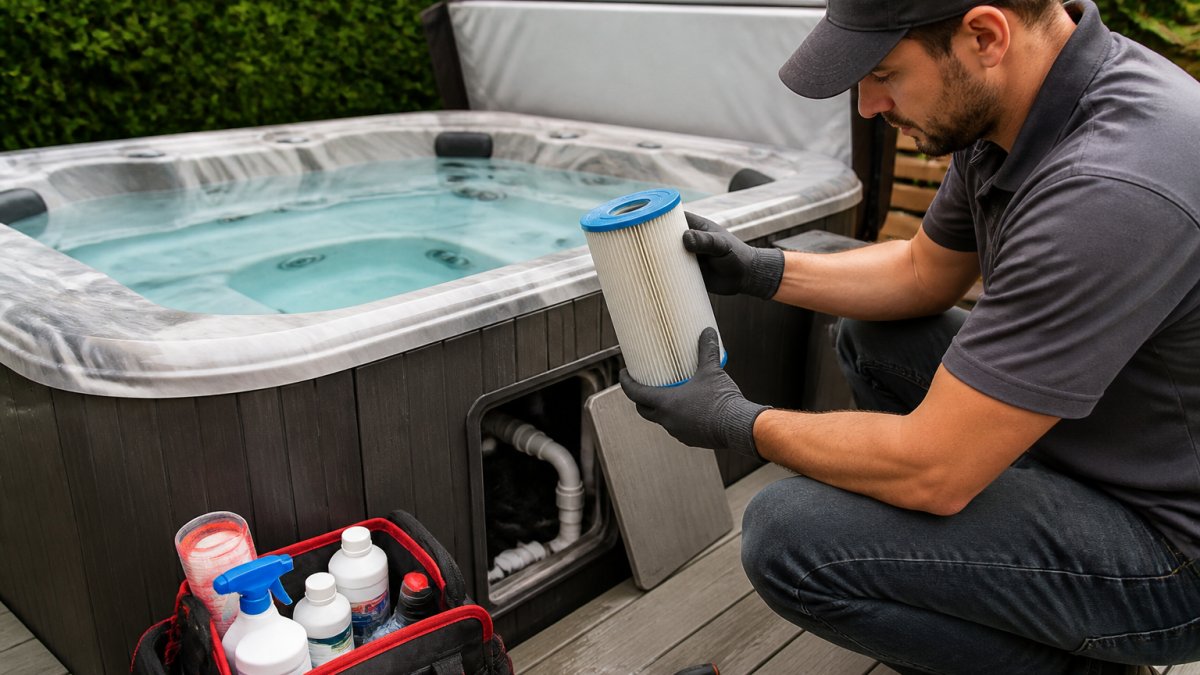
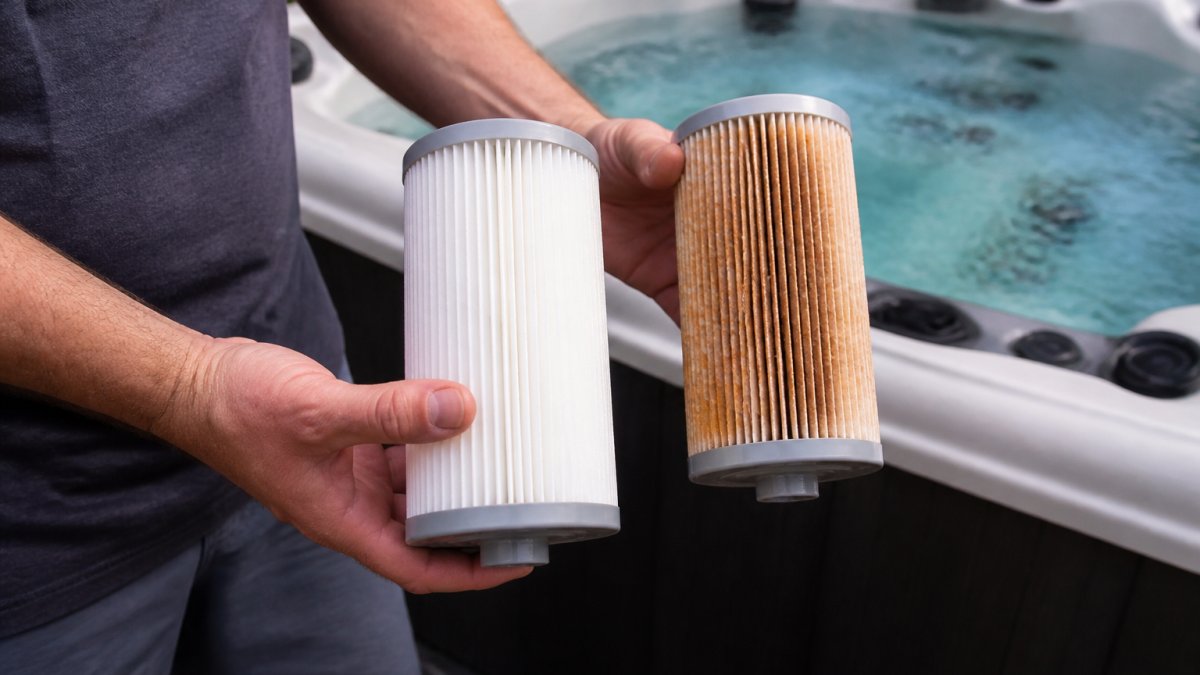
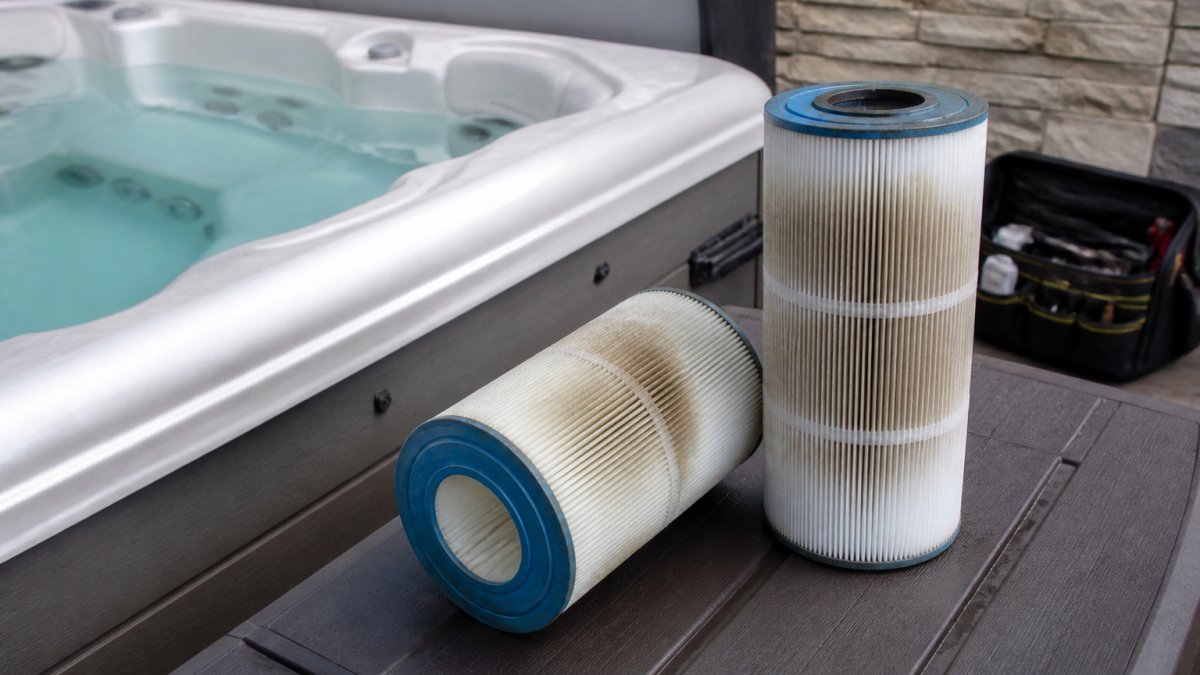
Your filter is the first line of defense against debris. A clogged filter forces your pump to work harder and reduces ozone circulation.
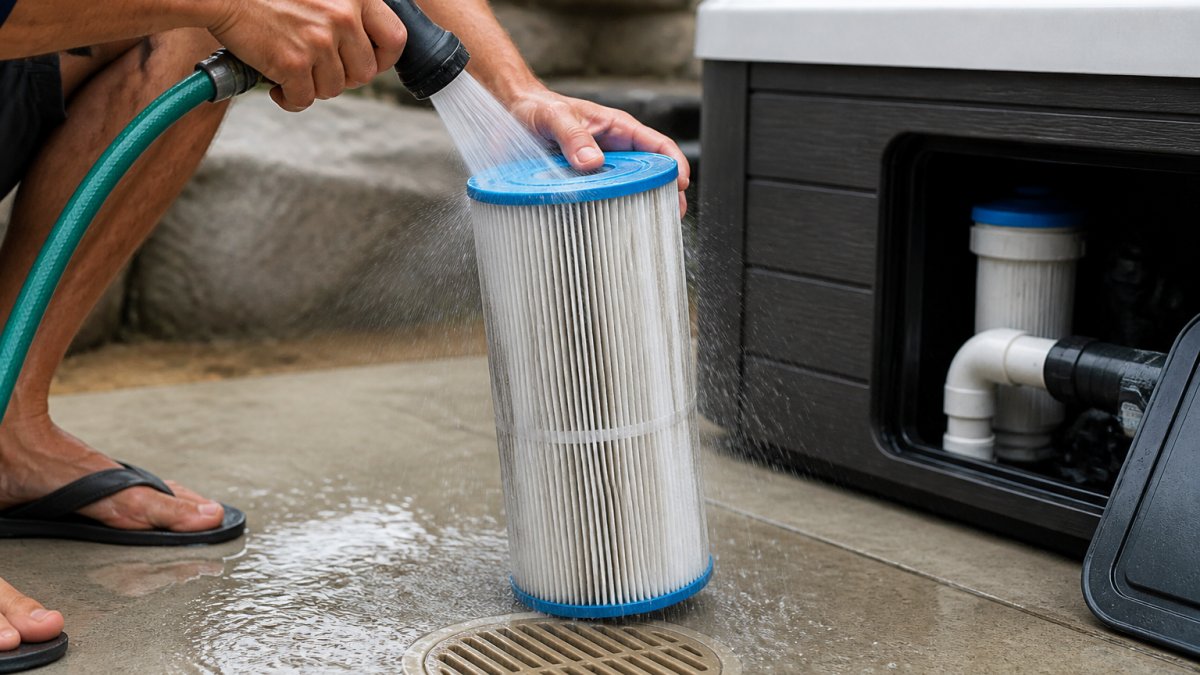
Weekly filter rinsing keeps water flowing freely:
- Rinse the cartridge with warm water from a hose
- Spray top to bottom to push debris out of the pleats
- Five minutes every seven days prevents bigger problems
Hot Spring's maintenance guide recommends this routine as foundational to any spa care system.
Beyond the filter, test your water weekly for:
- pH level, between 7.2 and 7.8
- Alkalinity, 80 to 120 parts per million
- Sanitizer level, ozone systems typically need less chlorine than traditional spas
Use test strips or a digital tester, strips are cheaper, digital testers faster and often more accurate.
If pH drifts high, add a decreaser; if low, add an increaser. Small adjustments prevent big problems.
Your ozone system reduces chlorine demand but doesn't eliminate it.
How to Clean a Hot Tub Ozonator
Monthly deep cleaning keeps your ozonator working at full capacity. This is where most owners fall short.
Step 1: Turn off the system
Power down the spa completely and wait five minutes.
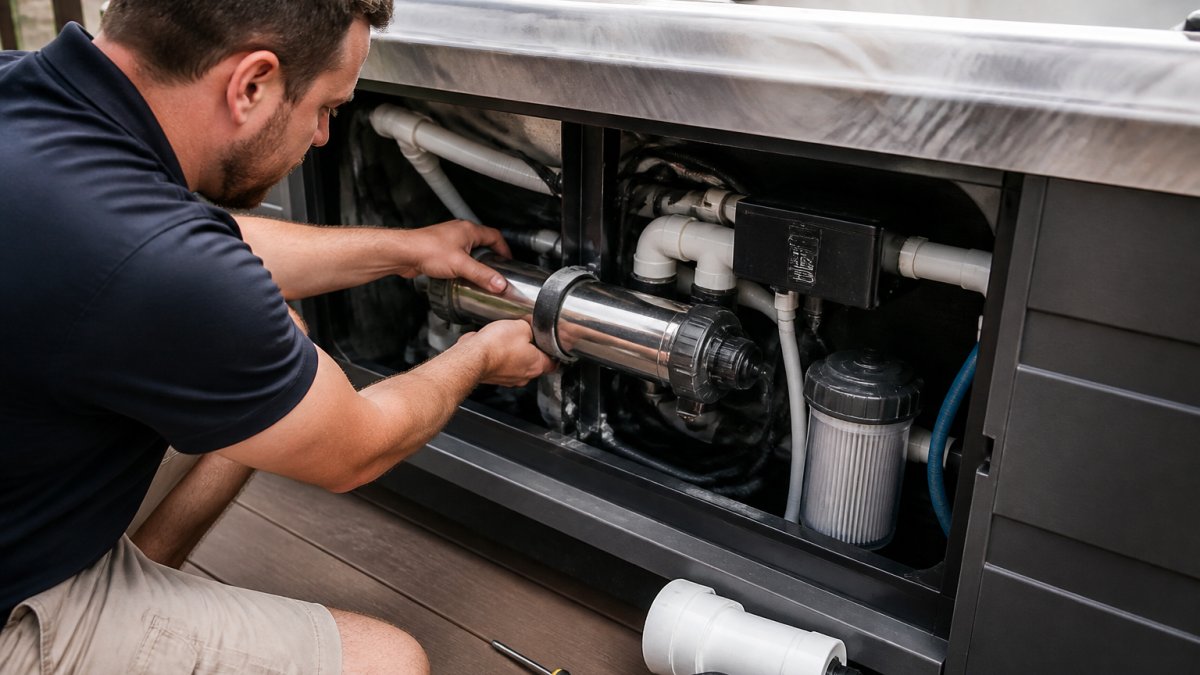
Step 2: Locate the ozonator
It's usually mounted near the pump or heater, check your manual if unsure.
Step 3: Inspect the exterior
Step 4: Check the air intake
Most ozonators pull air through a filter or intake port that can clog with dust.
Step 5: Examine the ports
Check where water enters and exits. Wipe any mineral deposits with a cloth soaked in white vinegar.
Step 6: Power back on and test
Turn the system back on and listen, the ozonator should produce a faint hum or clicking sound.
Mainely Tubs' ozone system maintenance guide covers these inspection steps as part of routine upkeep.
How to Tell If a Hot Tub Ozonator Is Working
An ozonator that powers on, hums, and looks clean can still produce little or no ozone.
Confirm the generator is producing
- Sound: A corona-discharge (CD) unit produces a steady hum or buzz with a faint crackle. A UV unit is nearly silent, so silence is not proof of failure on a UV system.
- Smell: Ozone has a sharp, slightly metallic scent, like air after a lightning strike. Sniff near the injector outlet, not directly over the generator. A strong smell with cloudy water usually means ozone is being produced but not dissolving, pointing to a plumbing or injector problem, not a dead generator.
- Visual output test: With the spa off and the generator accessible, many CD units show a faint purple or blue glow at the discharge cell through a viewing window or by removing the air line. No glow on a CD unit that is powered usually means a failed cell or power supply.
Trace the ozone path
Ozone travels from the generator through tubing, past a check valve, into an injector (venturi) that pulls it into the water stream, then into a contact chamber or the circulation line.
- Tubing: Inspect for kinks, cracks, brittle sections, or a disconnected end. Ozone degrades many flexible tubings over time, so a line that was fine two seasons ago may now be porous and leaking ozone before it reaches the water.
- Check valve: This one-way valve stops water from backing up into the generator. A stuck-open valve lets water reach the cell and destroy it; a stuck-closed valve blocks ozone entirely. Disconnect the line at the generator and look for moisture. Any water in the ozone line means the check valve has failed and needs replacement.
- Injector / venturi: Mineral scale narrows the injector throat and kills suction. If you see white crust, soak or replace it per the manufacturer's instructions. A weak venturi is one of the most common causes of "the ozonator runs but the water stays cloudy."
- Contact chamber: Some systems use a mixing chamber or Mazzei-style injector to give ozone time to dissolve. A cracked or clogged chamber reduces contact time and output.
Symptom-to-cause quick reference
| Symptom | Likely cause | First check |
|---|---|---|
| No sound, no smell, no glow | Failed generator, blown fuse, or no power | Power supply and fuse |
| Hum but no ozone smell | Failed CD cell or UV lamp past life | Cell glow / lamp hours |
| Ozone smell but cloudy water | Injector clogged or check valve stuck closed | Injector scale, valve |
| Water in the ozone tubing | Check valve failed open | Replace check valve immediately |
| Intermittent output | Loose electrical connection or failing power supply | Wiring and connections |
| Weak output after years of service | Normal component end-of-life | Compare to rated lamp/cell hours |
Confirm with water behavior
Ozone reduces chlorine demand but does not replace residual sanitizer. If free chlorine keeps crashing despite a clean filter and balanced water, suspect weak ozone output.
If the generator shows no output after you've confirmed power, cleared the tubing, replaced a failed check valve, and cleaned the injector, it has likely reached end of life. Contact the manufacturer or a qualified spa technician with your model number and symptoms.
How Long Should a Hot Tub Ozone System Run Daily
Ozone systems need continuous or near-continuous operation, unlike chlorine alone, which maintains residual levels with intermittent circulation.
Minimum runtime: 8 hours per day
Many owners run their ozone systems 12 to 24 hours daily. Longer runtime means cleaner water but faster ozonator wear.
Optimal approach: 12 to 18 hours daily
This balances water cleanliness with equipment lifespan.
Circulation requirements
The pump must run whenever the ozonator is on, ozone doesn't generate without water flowing through it.
Seasonal adjustments
In summer, run it longer since more bathers mean more contamination.
Spa Stores' ozone system comparison notes that ozone generators typically have a lifespan of about five years with regular daily operation.
Track your runtime. If you're running 24 hours daily and your ozonator fails after two years, you've pushed it too hard.
Managing Hot Tub Sanitizer Levels With Ozone
Ozone handles the heavy lifting of sanitation, but it doesn't replace chlorine entirely.
Target chlorine levels with ozone: 0.5 to 1.5 ppm
Without ozone, spas typically need 2 to 4 ppm. Ozone lets you run lower levels, meaning less irritation and lower chemical costs.
Why you still need chlorine
Ozone is generated on-site and dissipates quickly, it sanitizes as water circulates through the ozonator but doesn't persist.
Testing and adjusting
Test weekly.
Add chlorine in small increments, one-half ounce of granules typically raises levels 0.5 to 1 ppm depending on spa size.
Alkalinity and pH still matter
Ozone doesn't affect water chemistry balance. You still need to:
- Keep pH between 7.2 and 7.8
- Maintain alkalinity between 80 and 120 ppm
- Adjust these before adding sanitizer
Balanced water holds sanitizer levels more stable.
Common mistake: skipping chlorine entirely
Some owners think ozone eliminates the need for any chlorine. It doesn't. You'll end up with algae, bacteria, or cloudy water.
Seasonal and Long-Term System Care
General seasonal checklists cover the spa; this section covers the ozone system specifically, since its failing components, wearing parts, and inspection intervals differ from the rest of the tub. Use the schedule below as a baseline and defer to your manufacturer's manual where more specific.
Ozone-system maintenance schedule
| Interval | Task |
|---|---|
| Daily | Confirm the circulation pump is running so ozone has water to treat |
| Weekly | Rinse the filter; test pH, alkalinity, and sanitizer |
| Monthly | Inspect the air intake for dust; check tubing for kinks or cracks; verify the check valve is dry |
| Quarterly | Deep-clean or replace the filter; inspect the injector for scale; check electrical connections for corrosion |
| Annually | Full generator inspection; replace the UV lamp or evaluate the CD cell; replace the check valve and any brittle tubing |
| End of life | Replace the generator when output no longer meets demand despite clean components |
Component life and replacement criteria
- UV lamps: Most UV ozone lamps are rated for roughly 9,000 hours, about one year of near-continuous use. The lamp still glows as it ages but produces less ozone, so replace it on the rated interval rather than waiting for failure. This is the single most common reason a UV system underperforms.
- Corona-discharge cells: CD cells typically last longer than UV lamps, often several years, but degrade with moisture and dust. Replace the cell when output drops after you've cleaned the intake, dried the line, and confirmed the power supply is good.
- Check valve: Treat this as a wear item. Replace it at least annually and immediately any time you find water in the ozone line.
- Tubing: Ozone attacks many flexible tubings. Replace any line that is brittle, cracked, discolored, or kinked.
- Power supply: Fails less often than the cell or lamp but is a common culprit when a generator shows no output at all.
Spring startup
- Drain and refill with fresh water.
- Deep-clean or replace the filter cartridge.
- Inspect the ozone tubing, check valve, and injector for cracks, scale, and moisture.
- Confirm the generator powers on and, on a CD unit, shows output.
- Balance chemistry before relying on the ozonator.
Summer (high use)
- Increase runtime to match bather load and circulation.
- Rinse the filter weekly and test water twice weekly.
- Check the air intake monthly; dust and lint build up faster in heavy-use months.
Fall preparation
- Deep-clean the filter and inspect the ozone path before cold weather.
- Replace the check valve if it has been in service a year or more.
- Balance chemistry carefully going into lower-use months.
Winter (spa running)
- Keep runtime matched to manufacturer guidance; do not drop below the minimum your system needs to maintain sanitizer residual.
- Inspect monthly for mineral deposits on the injector and housing.
Winter storage (spa drained)
- Drain completely and dry the ozone line so no residual water sits against the check valve or cell.
- Wipe the generator exterior and store the spa covered.
When to replace the whole generator
A well-maintained ozone generator commonly lasts about five years, and some reach seven or eight with clean components and correct runtime.
Frequently Asked Questions
How often should you clean a hot tub ozonator?
Inspect your ozonator monthly and clean it every three to four months as part of routine maintenance. More frequent cleaning may be needed if you notice reduced performance or visible buildup. Regular inspection helps catch issues early and extends the lifespan of your spa ozone system. Check your ozonator's manual for model-specific recommendations, as some systems may require different intervals based on water hardness and usage.
Does an ozone system replace hot tub sanitizer completely?
No. Ozone systems work alongside sanitizer, not instead of it. Ozone generators reduce the amount of chlorine or other sanitizers you need, but most spa ozone systems still require a small residual sanitizer level to protect the water between ozone treatments. Typically, you'll use slightly less chlorine with ozone than traditional systems, but you cannot eliminate sanitizer entirely. Always test and maintain proper sanitizer levels as part of your water care routine.
When should a hot tub ozonator be replaced?
Most ozonators last approximately five years with proper maintenance. Replace your ozonator if it stops producing visible ozone, fails performance tests, or shows signs of damage. You may also need replacement if the generator no longer reduces sanitizer demand or if water quality declines despite proper chemical balance. Watch for cracks, corrosion, or buildup that cleaning cannot remove.
What do I need to maintain my spa ozone system?
You'll need test strips or a digital water tester, a soft brush or cloth for cleaning components, filter cartridges, sanitizer (chlorine or bromine), a filter cleaning solution or mild soaking agent, and basic tools like a wrench if your system requires component removal. Many spa packages include starter kits with initial chemicals and supplies. Keep a maintenance log to track filter cleaning, water changes, and ozonator inspections. Replace test strips regularly to ensure accurate readings of pH and sanitizer levels.