 comparison
Premium Kamado Grill Features Comparison: 2026 Guide
Table of Contents
- Premium Kamado Grill Features Comparison: What Actually Matters
- Kamado Grill Comparison Chart: Specs Side by Side
- Kamado Joe vs Big Green Egg: Head-to-Head
- Kamado Grill Warranty Comparison: What's Covered
- Kamado Grill for Smoking and Grilling: Versatility Test
- Long-Term Ownership Costs and Everyday Usability
- Which Premium Kamado Grill Fits Your Backyard?
- Frequently Asked Questions
Last Updated: October 12, 2026
Premium Kamado Grill Features Comparison: What Actually Matters
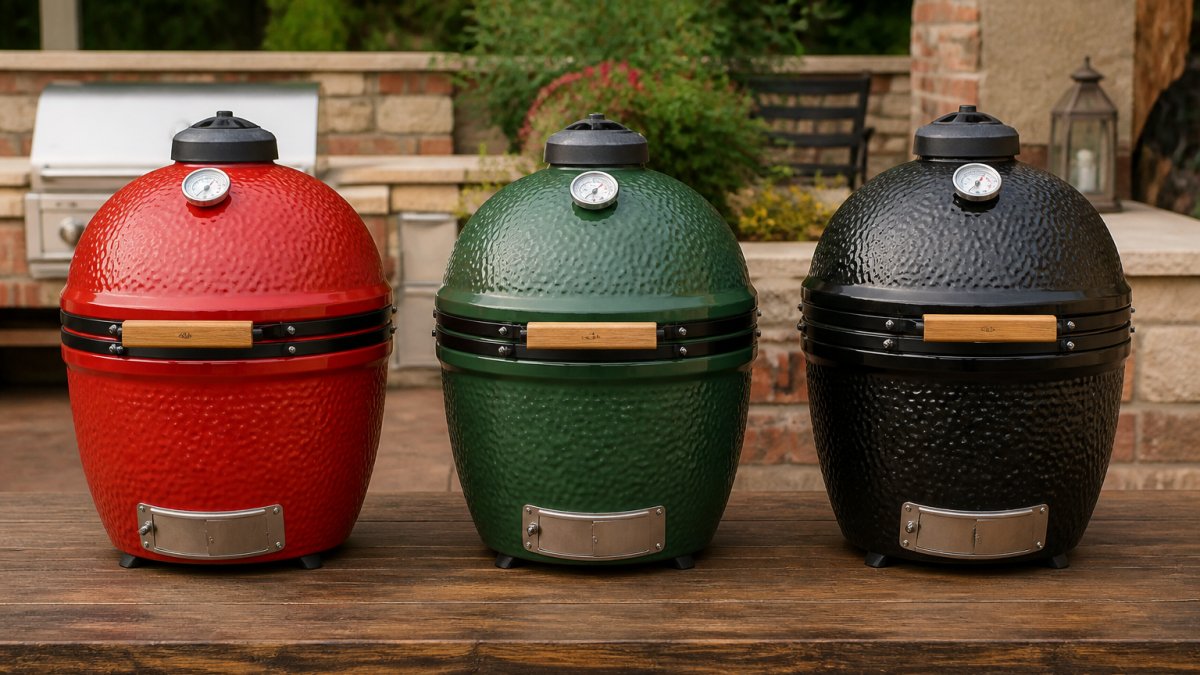
A premium kamado grill is a heavy ceramic cooker that holds heat for hours, runs on lump charcoal, and adjusts temperature through top and bottom vents, giving you grilling, smoking, searing, and baking from one unit.
Here is the part most buyers get wrong: the price gap almost never comes down to cooking quality. It comes down to hinge hardware, gasket material, ash systems, and warranty length. Below: a spec-by-spec kamado grill comparison chart, a head-to-head between the two best-known names, and the ownership costs nobody mentions at the register.
Kamado Grill Comparison Chart: Specs Side by Side
Most kamado comparison charts fail because they compare specs with different definitions.
Every spec below is scored on the same scale, using manufacturer-published figures where available and labeled estimates where they are not.
Scoring key (1 = basic, 5 = best-in-class):
- Heat retention: thickness and mass of ceramic walls, plus how long the cooker holds a set temperature without vent adjustment.
- Airflow control: precision of the top and bottom vents, and how small a temperature change a quarter-turn produces.
- Hinge and band quality: counterbalance, lid-hold at any position, and stainless versus painted hardware.
- Ash management: whether ash drops into a removable pan or must be scooped from the firebox.
- Cooking area: usable grate area with the heat deflector installed, not the bare grate diameter.
- Warranty depth: length of ceramic coverage and, separately, length of metal and gasket coverage.
- Accessory ecosystem: number of first-party accessories available and whether they are included or sold separately.
| Model | Body | Usable Cooking Area | Heat Retention | Airflow Control | Hinge/Band | Ash System | Warranty (Ceramic / Metal) | Best For |
|---|---|---|---|---|---|---|---|---|
| Kamado Joe Classic II | Ceramic | ~250 sq in with deflector | 5 | 4 | 4 (counterbalanced, stainless) | 5 (slide-out ash drawer) | Long-term ceramic / shorter metal | Versatile ceramic cooking with easy cleanup |
| Kamado Joe Classic III | Ceramic | ~250 sq in with deflector | 5 | 4 | 4 (counterbalanced, stainless) | 5 (slide-out ash drawer) | Long-term ceramic / shorter metal | Buyers wanting the higher tier and SloRoller-style airflow |
| Big Green Egg Large | Ceramic | ~262 sq in | 5 | 4 | 4 (spring-assisted band) | 3 (scoop from firebox) | Long-term ceramic / shorter metal | Space and steady temps |
| NewAge Platinum | Ceramic | Not published | 4 | 4 | 4 | 4 | Not published | Premium alternative to the big names |
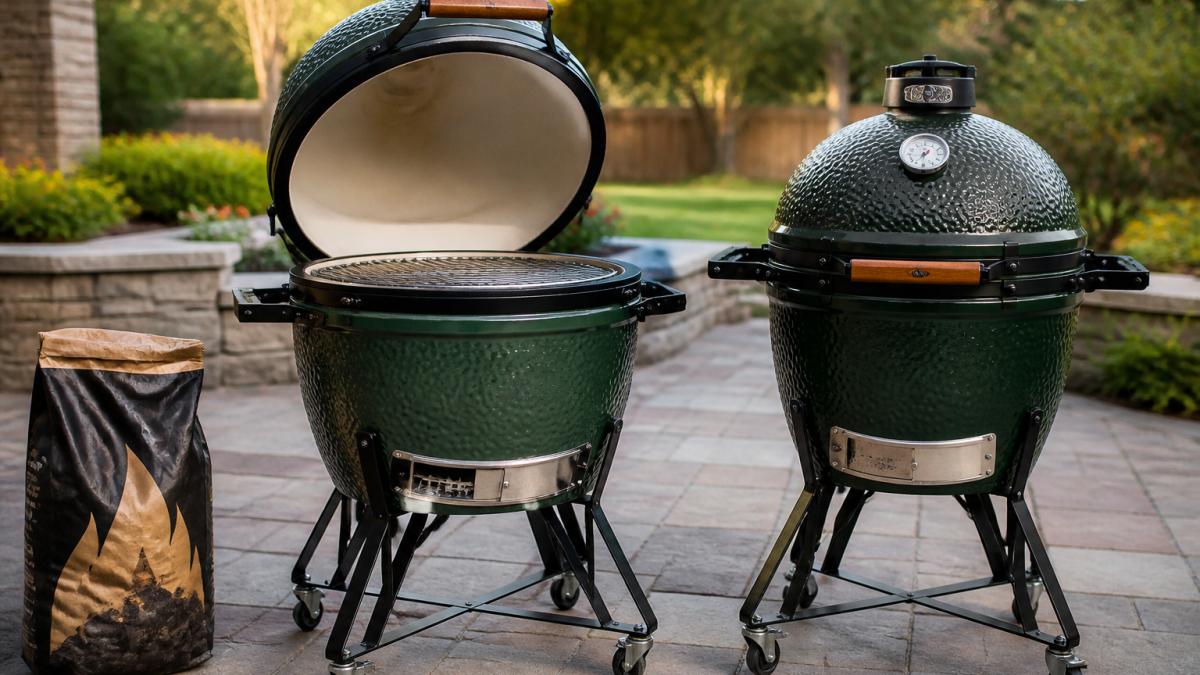
What the chart makes obvious once criteria are standardized:
- Cooking area is the most overrated spec. A large ceramic grill with a divider lets you run direct heat on one side and indirect heat on the other, and that flexibility beats a few extra square inches. The Big Green Egg Large wins on raw area; the Kamado Joe models win on how that area is used.
- Ash management is the biggest everyday gap. A slide-out ash drawer turns a messy 15-minute chore into a two-minute job. Scooping from the firebox is the most common complaint among long-term kamado owners.
- Hinge and band quality is where the price gap actually lives. A counterbalanced hinge that holds the lid at any position costs real money to build. A cheap hinge sags within a few seasons, the lid stops sealing, and temperature control goes with it.
- Warranty depth is not one number. Every brand here covers the ceramic shell far longer than the metal components and gaskets. Comparing only the headline ceramic term hides the parts that fail first.
One caveat: the heat-retention column is our qualitative rating based on ceramic wall thickness and owner-reported hold times, not a lab measurement. Any comparison that claims otherwise is guessing.
Kamado Joe vs Big Green Egg: Head-to-Head
This matchup decides most purchases. Kamado Joe wins on convenience features, while Big Green Egg wins on cooking space and a decades-long accessory ecosystem. Both are ceramic kamados with the same basic airflow design, so the real differences sit in the details below.
Temperature Control and Airflow
Temperature control on a kamado comes down to two vents: a top vent and a bottom vent. Open both wider and the fire breathes; close them down and the fire starves. Ceramic walls hold that heat so steadily that a dialed-in grill can run for hours without adjustment.
CNET noted accurate temperature readings on the Big Green Egg Large, which matters more than a wide temperature range on paper. A grill that holds 250°F for eight hours beats one that spikes to 700°F and drifts.
Build Quality, Hinge, and Gasket
The band and hinge assembly is where premium grills earn their price. A cheap hinge sags, the lid stops sealing, and your temperature control is gone. Look for a counterbalanced hinge that holds the lid at any position, and a felt or mesh gasket that seals without crushing.
Stainless steel hardware on the bands resists rust far better than painted steel in humid or coastal air. That is not cosmetic, it is the difference between a lid that still lines up in year ten and one that does not.
Kamado Grill Warranty Comparison: What's Covered
Warranty is the spec buyers read last and rely on most. A kamado warranty is not one term but a stack of terms, and the parts that fail first are almost always covered for the shortest time.
A typical premium kamado warranty, from longest coverage to shortest:
| Component | Typical Coverage | Why It Matters |
|---|---|---|
| Ceramic shell (body, firebox, fire ring) | Long-term, often lifetime to the original owner | The most expensive part to replace, and the least likely to fail if the grill is not dropped or over-tightened |
| Metal bands, hinge, and hardware | Several years, sometimes stepped down by year | The hinge and band assembly is the most common failure point on any kamado |
| Gaskets and seals | 1-3 years, sometimes excluded | Gaskets wear out from heat cycles and are a routine replacement regardless of brand |
| Temperature gauge and thermometer | 1-3 years | Cheap to replace, but a failed gauge makes temperature control guesswork |
| Cooking grates and deflectors | Often excluded or short-term | Considered wear items by most brands |
Read the exclusions before you buy. Most kamado warranties void coverage for:
- Cracks caused by dropping the lid or over-tightening the band bolts
- Damage from using lighter fluid or non-approved fuel
- Rust on components not made from stainless steel
- Cosmetic fading or minor glaze cracks, which are usually considered normal
- Commercial use, even if you only cook for a crowd a few times a year
Since manufacturers change terms between model years, check the current warranty document on the brand's site before you commit. The warranty is only as good as the company behind it, so buy from a dealer who will still be there when you file a claim.
Long-Term Ownership Costs: The Warranty's Real Job
The warranty matters because of what it protects you from, and the biggest unprotected costs are routine ones. Over a decade, plan for:
- Gasket replacement every few years. Felt and mesh gaskets compress and harden from heat cycles. Kits are inexpensive, but labor adds up if you pay someone.
- Band and hinge touch-up. If your bands are painted, expect to touch them up or replace them before the ceramic ever fails.
- Ash system maintenance. A slide-out drawer needs occasional cleaning and, on some models, a replacement gasket to keep it sealing.
- Weather protection. A ceramic kamado left uncovered in freeze-thaw cycles risks hairline cracks. A fitted cover is the cheapest insurance you can buy.
- Fuel. A ceramic grill holds heat so well that it burns far less lump charcoal per cook than a metal kettle or offset smoker. Over several seasons, that gap can offset a meaningful share of the purchase price.
Kamado Grill for Smoking and Grilling: Versatility Test
A kamado grill for smoking and grilling is the whole point of the design. The same ceramic body that holds 225°F for a pork shoulder will hit 600°F for a reverse sear when you open the vents.
Here is how the four core cooking modes map to the hardware:
- Smoking: indirect heat, heat deflector in place, vents nearly closed
- Grilling: direct heat over coals, deflector removed
- Searing: vents wide open, grate positioned close to the fire
- Baking: indirect heat with a pizza stone, lid closed, steady 400-500°F
Accessories drive most of that versatility. A heat deflector, a cast-iron grate, and a pizza stone cover nearly everything a backyard cook needs. Buy those before a rotisserie you will use twice.
Long-Term Ownership Costs and Everyday Usability
Fuel efficiency is the kamado's quiet advantage. A ceramic grill holds heat so well that it burns far less lump charcoal per cook than a metal kettle or offset smoker. Over several seasons, that gap adds up.
Maintenance is modest but real: replace the gasket every few years, touch up the bands if they show rust, and clear ash regularly.
Then there is assembly and accessibility. A large ceramic grill can weigh over 200 pounds, so plan for two people and a level surface, or pay for professional delivery and setup.
Which Premium Kamado Grill Fits Your Backyard?
Match the grill to how you actually cook, not to the spec sheet. If you smoke low and slow most weekends, prioritize heat stability and an ash system. If you grill hot and fast for a family, prioritize cooking surface area and a responsive top vent.
Here is the decision framework we use with customers:
| If you... | Prioritize | Likely pick |
|---|---|---|
| Smoke often, want easy cleanup | Ash system, gasket quality | Kamado Joe Classic II |
| Cook for a crowd | Cooking surface area | Big Green Egg Large |
| Want the newest tier features | Higher-end model | Kamado Joe Classic III |
| Want an alternative to the big names | Premium build, dealer support | NewAge Platinum |
Buy from a dealer who handles delivery, assembly, and warranty claims. A grill is a long-term purchase, and the company you buy it from is part of the product.
Frequently Asked Questions
What features should you compare when buying a premium kamado grill?
Focus on construction (ceramic vs insulated metal), cooking surface area, heat retention, and temperature control via top and bottom vents. Check the band and hinge assembly, gasket quality, and ash removal system. Warranty length and what it covers matters too. A kamado grill comparison chart that lines up these specs side by side makes the trade-offs clear before you commit.
Is Kamado Joe better than Big Green Egg?
It depends on what you value. Kamado Joe's Classic II and Classic III models are noted for responsive temperature control, fuel efficiency, and convenient ash management. The Big Green Egg Large is highlighted for generous cooking space and accurate temperature readings. Neither wins across the board; match the strengths to how you actually cook.
Which kamado grill is best for smoking and grilling?
Any well-built kamado grill handles both because ceramic construction holds heat and stabilizes temperature for long cooks. For smoking, prioritize heat retention and a tight gasket seal. For grilling, look at cooking surface area and how quickly the grill reaches searing temperatures. A kamado grill for smoking and grilling should offer multi-zone cooking and reliable airflow control.
Are premium kamado grills worth the price?
Premium kamado grills cost more upfront, but ceramic construction and quality hardware extend their lifespan. Long-term ownership costs stay lower when the warranty covers major components and the grill holds heat with less charcoal. If you grill year-round or smoke frequently, the fuel efficiency and durability can justify the investment over a decade or more of use.
How long do ceramic kamado grills last?
With proper care, a ceramic kamado grill can last 20 years or more. The ceramic body resists rust and weather damage, but the gasket, hinge, and band assembly may need replacement over time. A strong warranty comparison helps here: brands that cover ceramic parts for a long period signal confidence in their build quality.