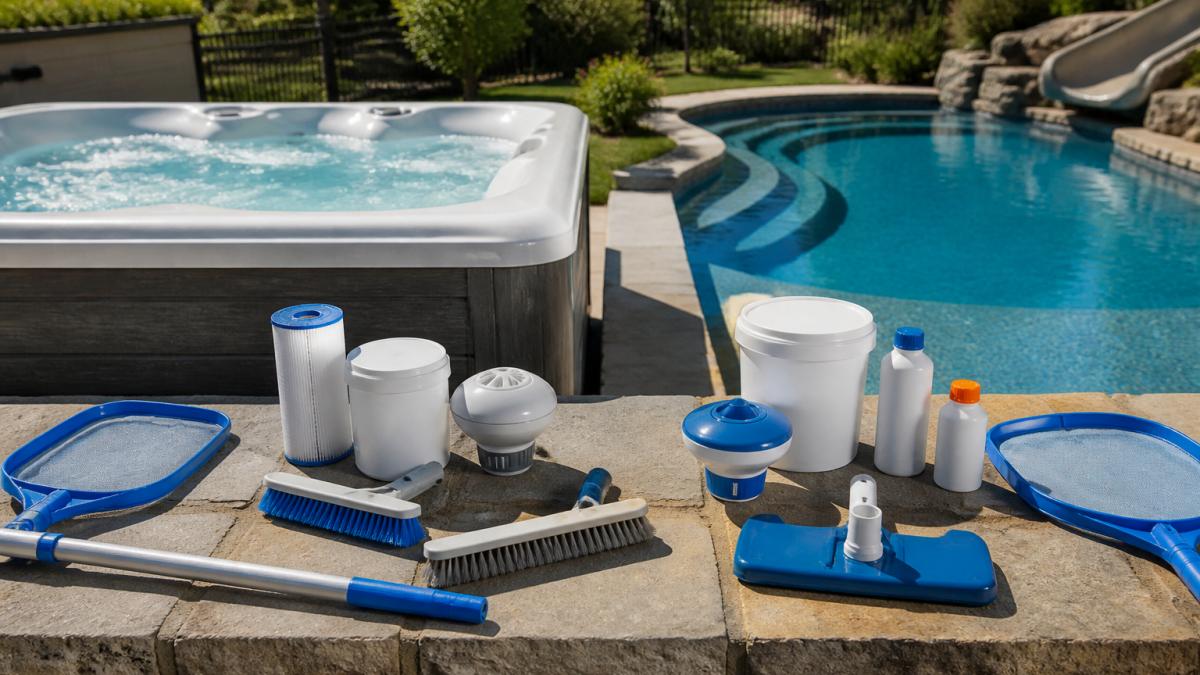
 comparison
Hot Tub vs Pool Maintenance Requirements: 2026 Guide
Table of Contents
- Hot Tub vs Pool Maintenance Requirements: Side-by-Side Comparison
- Water Volume Drives Chemical Use and Cost
- Weekly Hot Tub Maintenance Checklist
- How Often to Drain and Refill a Hot Tub
- How to Clean Hot Tub Filters
- Energy Consumption and Operating Costs
- Common Maintenance Mistakes That Cost You Money
- Frequently Asked Questions
Last Updated: October 1, 2026
Hot Tub vs Pool Maintenance Requirements: Side-by-Side Comparison
The hot tub vs pool maintenance comparison usually comes down to one number: water volume. A typical hot tub holds a few hundred gallons, while a pool holds tens of thousands. That gap shapes everything else, from how often you test the water to what you spend each month. At allvalley, we've spent 26 years helping homeowners across the Coachella Valley and Riverside County choose and maintain backyard retreats.
Hot tub vs pool maintenance is the practice of managing water chemistry, filtration, cleaning, and refills for each type of water feature, and the requirements differ mainly because of volume, heat, and bather load. A hot tub's small, hot, heavily used water needs more frequent testing and draining. A pool's large, cooler water needs less frequent chemical adjustment but more physical cleaning and higher energy use.
Here's the short version of how they stack up:
| Factor | Hot Tub | Pool |
|---|---|---|
| Water volume | A few hundred gallons | Tens of thousands of gallons |
| Testing frequency | Every 2-3 days | 1-2 times per week |
| Drain and refill | Every 3-4 months | Every 1-3 years |
| Typical task | Chemical balance, filter rinse | Skimming, vacuuming, pump care |
| Heated year-round | Yes | Usually seasonal |
The takeaway: hot tubs ask for more frequent small tasks, while pools ask for fewer but bigger ones.
Water Volume Drives Chemical Use and Cost
Water volume is the single biggest reason hot tub and pool care diverge. A smaller body of water responds faster to everything you add, so a small dose of sanitizer or pH balancer goes a long way in a spa but barely registers in a pool.
That cuts both ways. In a hot tub, one heavy bather load can swing pH levels and chlorine demand within hours. In a pool, the same crowd barely moves the needle. The trade-off is that pools need larger quantities of chemicals per treatment, even if you treat them less often.
Heat matters too. A hot tub runs warm, and warm water burns through sanitizer faster while encouraging biofilm if circulation drops. Pools usually sit cooler, which slows that process. For a full breakdown of how each system handles sanitization, see the CDC's guidance on residential water systems.
Weekly Hot Tub Maintenance Checklist
A weekly hot tub maintenance checklist keeps a spa clear without turning into a second job. Most of the work takes minutes, not hours, as long as you stay consistent.
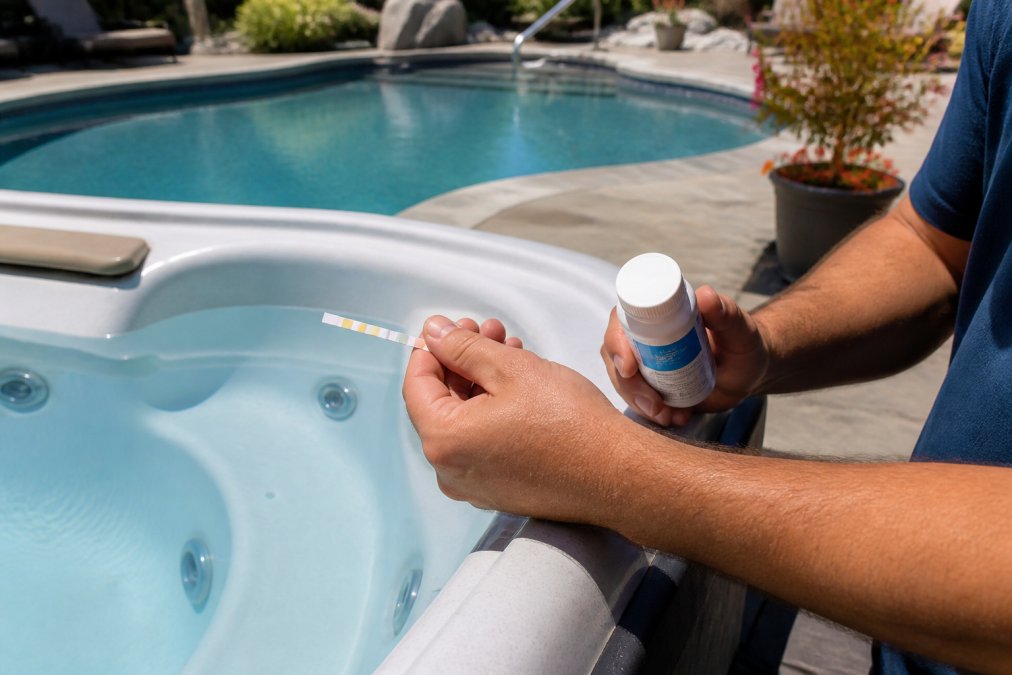
Here's a practical routine:
- Test pH, alkalinity, and sanitizer with a water testing kit or test strips
- Adjust chemical balance based on the readings
- Rinse the filter cartridge and check for debris
- Skim the surface and wipe the waterline
- Check water clarity and top off the water level
- Run a shock treatment if the spa saw heavy use
The one mistake we see most often is skipping the waterline wipe. Oils and lotions build a ring that feeds biofilm, and once it takes hold, cleaning gets much harder.
How Often to Drain and Refill a Hot Tub
Most hot tubs need a drain and refill every three to four months, but that range is a default, not a rule. The real driver is total dissolved solids (TDS), and the fastest way to know your spa is overdue is a TDS reading rather than a calendar date.
Here's the mechanism. Every bather introduces sweat, body oils, lotions, and urine.
A common bather-load formula estimates the interval in days:
Spa water volume (gallons) ÷ average daily bathers ÷ 3 = days between refills
- Cloudy water that clears after shocking but returns within a day or two
- Chlorine demand that keeps rising even when bather load is steady
- Persistent odor or foaming that a defoamer only temporarily fixes
- A TDS meter reading at or above roughly 1,500 ppm over your source-water baseline
One more trade-off worth knowing: draining more often costs you water and a fresh chemical startup each time, while draining too rarely costs you sanitizer efficiency and, eventually, a heater or pump damaged by scale and corrosion. The formula above is the middle path, frequent enough to protect equipment, spaced enough to avoid waste.
How to Clean Hot Tub Filters
How to clean hot tub filters comes down to three steps: rinse, soak, and rotate. Filters are the workhorse of your filtration system, and skipping this task is the fastest way to cloudy water and pump strain.
- Remove the cartridge and rinse it with a garden hose, working between the pleats.
- Soak it in a filter cleaning solution to break down oils and scale.
- Rinse again and let it dry fully before reinstalling.
- Rotate a spare cartridge so your spa is never running without filtration.
Energy Consumption and Operating Costs
Energy consumption is where the hot tub vs pool maintenance comparison flips, and the flip is worth understanding in numbers rather than adjectives.
| Cost Factor | Hot Tub | Pool |
|---|---|---|
| Heater load | Small volume, year-round | Large volume, often seasonal |
| Pump pattern | Low power, near-continuous circulation | Higher power, several hours daily |
| Chemical spend | Small doses, frequent | Larger doses, less frequent |
| Seasonal swing | Fairly flat across the year | Sharp drop when heating stops |
- Insulation and a fitted cover. Most heat loss in a spa happens at the water surface and through the shell. A tight, thick cover and full foam insulation cut standby heat loss more than any control setting.
- A programmable circulation schedule. Running filtration during off-peak hours and matching runtime to actual bather load avoids paying to heat and move water you are not using.
- Efficient pumps and heaters. Variable-speed pumps and modern heater controls let the system ramp down instead of running flat out.
Common Maintenance Mistakes That Cost You Money
The most expensive maintenance mistakes are the ones that look harmless at first. Ignoring a rising pH reading or a dirty filter today becomes a heater repair or a full drain tomorrow.
Watch for these:
- Chasing pH with sanitizer. Adding chlorine to fix pH throws off chemical balance. Adjust alkalinity and pH first.
- Skipping shock treatment. Without periodic shocking, chloramines build up and water smells harsh.
- Letting total dissolved solids creep. Once TDS climbs, no amount of chemical fixes clarity. Drain and refill.
- Neglecting the waterline. Oils and scale harden into biofilm that resists normal cleaning.
- Overlooking winterization. Even in mild climates, an unused spa or pool needs proper care to protect plumbing.
Frequently Asked Questions
How much time does weekly hot tub maintenance take compared to a pool?
Weekly hot tub maintenance typically takes 20 to 30 minutes: testing water, adjusting chemicals, and skimming. A pool takes about 1 to 2 hours weekly for skimming, vacuuming, testing, and balancing. Hot tubs also need water changes every 3 to 4 months. Overall, hot tubs demand less total weekly time but more frequent water replacement, making the hot tub vs pool maintenance comparison closer than most people expect.
What are the primary chemical differences between pool and hot tub water care?
Hot tubs hold 300 to 500 gallons, so a small chemical addition shifts pH and alkalinity fast. Pools hold 15,000 to 20,000 gallons, which buffers changes but requires larger doses. Hot tubs run at 100 to 104 degrees Fahrenheit, accelerating chlorine demand and evaporation. Pools sit near 78 to 82 degrees, slowing chemical consumption. This is why hot tubs need testing every 2 to 3 days and pools only once or twice a week.
Do hot tubs require more frequent filter cleaning than swimming pools?
Yes. Hot tub filters should be rinsed every 2 to 4 weeks and deep-cleaned monthly because the small water volume concentrates oils, lotions, and debris. Pools typically get filter cleaning every 1 to 3 months depending on use and system type. For hot tubs, keep a spare filter on hand so you can swap, clean, and dry the dirty one without downtime.
Is it more expensive to maintain a hot tub or a pool annually?
Pools usually cost more per year because of electricity for the pump, higher chemical volumes, and potential service calls. Hot tubs use less total chemical but run a heater year-round, which can push monthly electricity costs higher. Exact figures depend on local rates, usage, and equipment efficiency. allvalley's hot tubs include a free starter kit and chemicals, which offsets some of the first-year chemical cost.
How does water volume affect chemical balancing in pools versus spas?
Water volume determines how forgiving the water is. A pool's 15,000-plus gallons dilute contaminants and resist sudden pH swings. A 400-gallon hot tub responds to one tablespoon of sanitizer almost immediately, and bather load can throw off pH and alkalinity within hours. That sensitivity means hot tub owners test more often and correct in small increments rather than large doses.