 how-to
How to Start a Hot Tub for Beginners
Table of Contents
- What You'll Need Before Starting Your Hot Tub
- Step 1: Clean and Drain the Shell
- Step 2: Fill Your Hot Tub With Water
- Step 3: Prime the Pump and Check for Air Locks
- Step 4: How Long to Heat Your Hot Tub the First Time
- Step 5: Hot Tub Chemical Startup Guide
- Step 6: Balancing Alkalinity and pH in Hot Tubs
- Step 7: Filter Maintenance and Your First Filtration Cycle
- Frequently Asked Questions
Last Updated: September 24, 2026
When you start hot tub beginners setup, it doesn't have to feel overwhelming. With the right steps and preparation, you can have your hot tub running safely and enjoyably within a day. At allvalley, we've helped homeowners get their hot tubs up and running smoothly.
This guide walks you through every stage of how to start hot tub for beginners, from cleaning the shell to balancing chemicals.
What You'll Need Before Starting Your Hot Tub
Before you begin, gather these essentials:
- Garden hose with water source
- Test strips for water chemistry
- Chlorine or bromine sanitizer
- Shock treatment (oxidizer)
- pH increaser and decreaser
- Alkalinity increaser
- Clean microfiber cloth
- Soft brush for the shell
- Bucket for measuring chemicals
- Thermometer (optional, but helpful)
Most hot tubs come with a starter kit that includes basic chemicals. Check what's included so you don't buy duplicates.
Step 1: Clean and Drain the Shell
Your hot tub shell needs to be clean before you fill it. Even new tubs can have dust, debris, or manufacturing residue inside.
Wipe down the entire acrylic shell with a damp microfiber cloth, paying special attention to corners and seams. Use a soft brush on stubborn spots, but avoid anything abrasive.
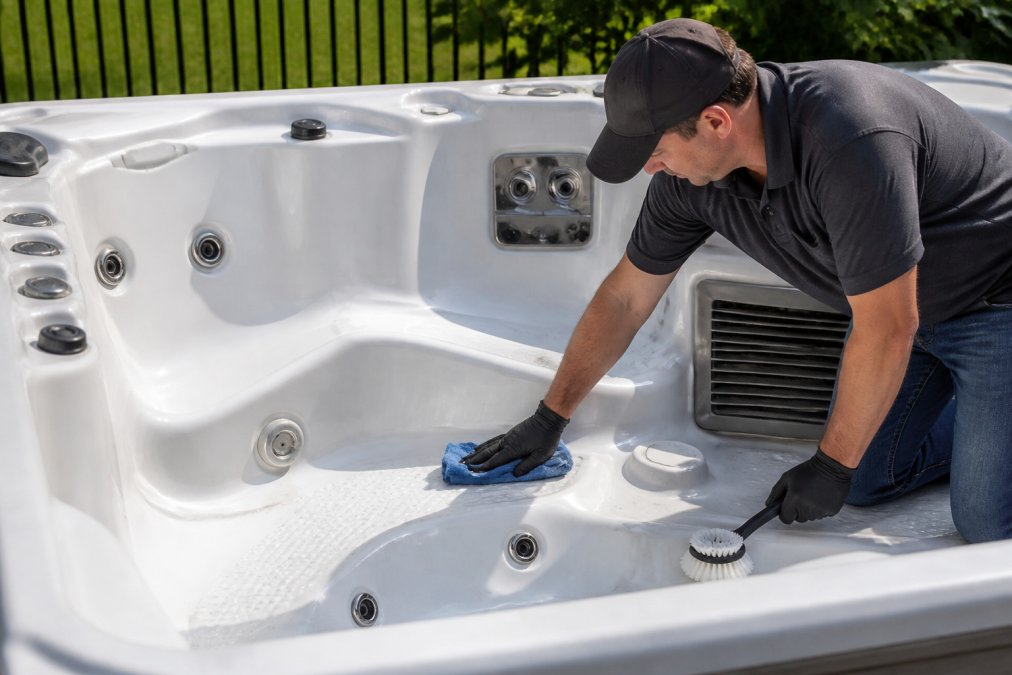
If you find algae or biofilm buildup, mix equal parts white vinegar and water, apply it, wipe clean, and rinse thoroughly.
Check the drain plug at the bottom of the shell and ensure it's closed before filling, a loose plug will drain your entire tub.
Step 2: Fill Your Hot Tub With Water
Connect your garden hose to a clean water source and test it if you're using well water or uncertain about quality.
Testing Your Water Source
Use test strips to check the pH, alkalinity, and chlorine levels of your source water to establish a baseline.
High mineral content or unusual pH means you'll need to adjust chemicals more aggressively during startup.
Fill slowly to watch for leaks, stopping at the center of the skimmer opening. Don't overfill, water needs room to circulate.
Filling typically takes 2-4 hours. While it fills, prepare your chemical kit and review the dosing instructions.
Step 3: Prime the Pump and Check for Air Locks
Before turning on the pump, verify electrical safety, this is non-negotiable.
Electrical Safety and GFCI Testing
Your hot tub should be connected to a dedicated 240-volt circuit with a Ground Fault Circuit Interrupter (GFCI) breaker or outlet, which cuts power instantly if it detects a ground fault.
Test your GFCI before powering on the pump:
- Locate your hot tub's GFCI breaker in your home's electrical panel, or the GFCI outlet if your tub plugs into one.
- Press the "Test" button on the GFCI. The breaker should trip (switch off) immediately. If it doesn't, contact a licensed electrician before proceeding.
- Press the "Reset" button to restore power.
- Repeat this test every month to ensure the GFCI is functioning correctly.
If your hot tub is hardwired, the GFCI breaker should be in your electrical panel. If unsure, consult your manual or call a licensed electrician.
Priming the Pump and Clearing Air Locks
Once you've confirmed electrical safety, start the circulation pump. Running it without water causes damage, and air in the lines creates an air lock.
Turn on the pump and listen for water moving through the lines. Grinding, sputtering, or silence indicates an air lock.
To clear an air lock, turn off the pump, locate the air relief valve (usually on top of the filter housing), and open it slowly until water flows steadily, then close it and restart.
Air locks are normal on first startup and usually clear within 5-10 minutes. If they persist, check that your water level is at the center of the skimmer opening.
Step 4: How Long to Heat Your Hot Tub the First Time
Most residential tubs take 8-24 hours to reach 104°F from a cold start. A 400-gallon tub in 70°F weather typically heats at 6°F per hour.
Set your target temperature to 98-102°F for your first session. This is safer than maximum heat while you're learning the system. You can always increase it later.
The Break-In Period: What to Expect
The 24-48 hours after you first heat your tub is called the break-in period. During this time, several things happen that beginners often misinterpret as problems:
Initial Cloudiness and Haze
Your water may appear cloudy, milky, or hazy during the first 12-36 hours. This is normal and happens for several reasons: fine particles from the initial fill are still circulating, your filter is trapping debris, and chemical reactions are occurring as sanitizers activate. This cloudiness typically clears on its own as your filter runs continuously and chemicals distribute.
Run your filter 24 hours a day during the break-in period. If cloudiness persists beyond 36 hours, test your chlorine or bromine levels (1-3 ppm chlorine or 2-4 ppm bromine). If low, add more sanitizer and retest after 4 hours.
Temperature Fluctuations
Temperature rises quickly at first, then slows as it approaches your target. Subsequent heating cycles are often faster than the initial startup.
Monitor the water temperature every 2-3 hours during the first 24 hours to understand your tub's heating efficiency.
When Is It Safe to Soak?
Do not add anyone to the tub during the break-in period, not even for a quick test. Wait until:
- Water has reached your target temperature (98-102°F minimum)
- Sanitizer levels are in the correct range (1-3 ppm chlorine or 2-4 ppm bromine)
- pH is between 7.2-7.8
- Alkalinity is between 80-120 ppm
- Cloudiness has cleared (usually 24-36 hours)
If all four chemical parameters are balanced and water is clear, your tub is ready for its first use.
Step 5: Hot Tub Chemical Startup Guide
Once your water reaches 100°F, it's time to add chemicals. This is where many beginners get nervous, but the process is straightforward if you follow the instructions.
Adding Chlorine or Bromine
Chlorine and bromine are sanitizers that kill bacteria and algae. Choose based on your preference:
- Chlorine: Faster acting, cheaper, works well in hot climates
- Bromine: More stable at high temperatures, gentler on skin, lasts longer
Shocking Your Hot Tub Before First Use
Shock treatment (oxidizer) removes organic contaminants and activates chlorine, and is different from your regular sanitizer.
Step 6: Balancing Alkalinity and pH in Hot Tubs
pH measures how acidic or basic your water is. The ideal range is 7.2-7.8 for hot tub water. Outside this range, chemicals don't work efficiently and your water can damage the shell or irritate skin.
Test and adjust in this order:
- Alkalinity first
- pH second
- Sanitizer (chlorine or bromine) third
- Calcium hardness last (if needed)
| Chemical | Target Range | Test Frequency |
|---|---|---|
| Alkalinity | 80-120 ppm | Weekly |
| pH | 7.2-7.8 | Weekly |
| Chlorine | 1-3 ppm | 2-3 times weekly |
| Bromine | 2-4 ppm | 2-3 times weekly |
| Calcium Hardness | 150-250 ppm | Monthly |
Step 7: Filter Maintenance and Your First Filtration Cycle
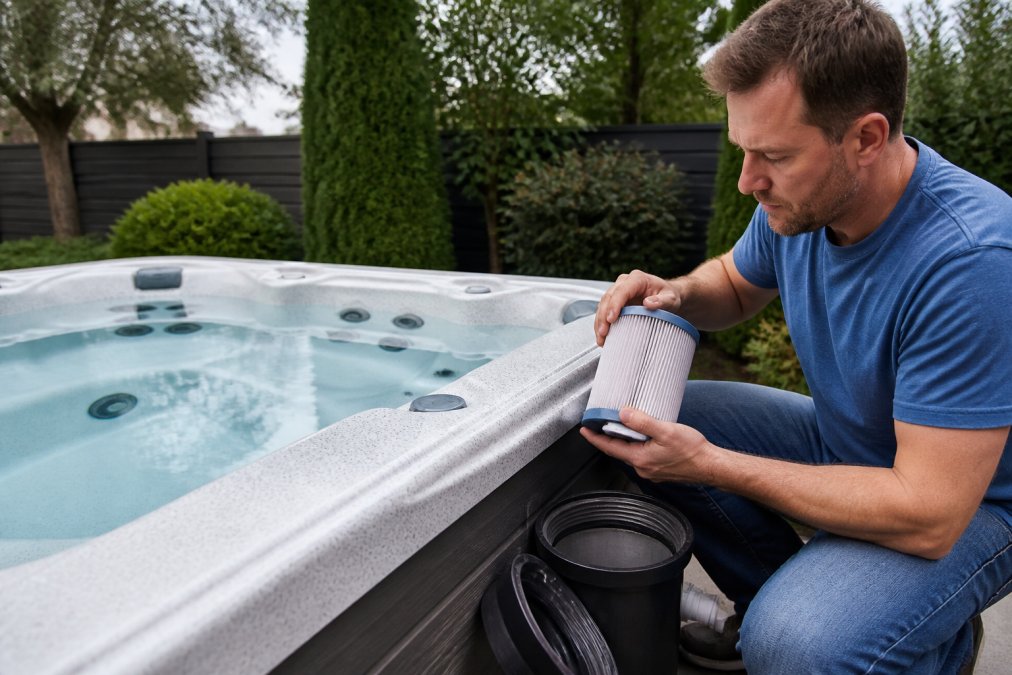
Your filter cartridge traps particles and keeps water clear, an essential part of learning to start hot tub beginners properly. During startup, run your filter continuously for the first 48 hours. This helps remove debris from the initial fill and distributes chemicals evenly.
Frequently Asked Questions
What chemicals do I put in my hot tub for the first time?
Start with alkalinity increaser to establish a baseline (typically 80-120 ppm), then add pH increaser or decreaser to reach 7.2-7.8. Next, add your chosen sanitizer: chlorine or bromine. Finally, shock the water with a hot tub shock treatment. Many hot tubs come with free starter kits that include these chemicals, check your documentation for exact dosages based on your tub's volume.
How long does it take to heat a hot tub for the first time?
Heating time depends on your tub's size, heater capacity, and starting water temperature. Heating time depends on your tub's size, heater capacity, and starting water temperature. Larger tubs or those in cooler climates may take longer. Keep the cover off during the heating process to allow gas to escape, and monitor the temperature gauge regularly.
Do you have to shock a hot tub before first use?
Yes, shocking your hot tub before first use is essential. Shock treatment oxidizes organic matter and contaminants introduced during filling and initial circulation. Use a non-chlorine shock or chlorine shock based on your sanitizer choice. Wait 15-30 minutes after shocking before testing water chemistry, and follow your shock product's instructions for the correct dosage.
Can I use my hot tub immediately after filling and balancing it?
Not immediately. After filling and adding chemicals, run the circulation pump for at least 2-4 hours to distribute chemicals evenly. Test the water again before entering to ensure pH, alkalinity, and sanitizer levels are safe. Some manufacturers recommend waiting overnight for the first use, especially for the break-in period when the acrylic shell and plumbing lines are settling.