 how-to
Hot Tub Hydrotherapy for Osteoarthritis: What Helps
Last Updated: November 10, 2026
Quick Summary
Hot tub hydrotherapy may ease osteoarthritis stiffness through warmth and buoyancy, which take weight off stiff joints while you move. The relief is usually temporary, so start with short sessions, keep the water moderate, and stop if pain or swelling increases.
- Start with 10 to 15 minutes and keep the jets on a low setting.
- Water above 104°F raises core body temperature quickly, so avoid the hottest setting.
- Watch for swelling or increased pain the next morning and adjust accordingly.
- Rheumatoid arthritis flares call for a doctor's advice before using a hot tub.
- Passive soaking eases symptoms, while guided aquatic exercise builds strength over weeks.
Table of Contents
- How Warm-Water Immersion May Ease Osteoarthritis Symptoms
- Osteoarthritis Versus Rheumatoid Arthritis: Why the Difference Matters for Soaking
- Hot Tub Temperature for Joint Pain: Finding a Safe, Comfortable Range
- Hot Tub for Arthritic Knees: Joint-Specific Entry, Positioning, and Modifications
- Hot Tub Safety for Older Adults: Medication, Comorbidity, and Mobility Precautions
- Hot Tub Immersion Versus Warm-Water Exercise for Osteoarthritis
- Start Your Soaking Routine Safely and Track Whether It Helps
- Frequently Asked Questions
How Warm-Water Immersion May Ease Osteoarthritis Symptoms
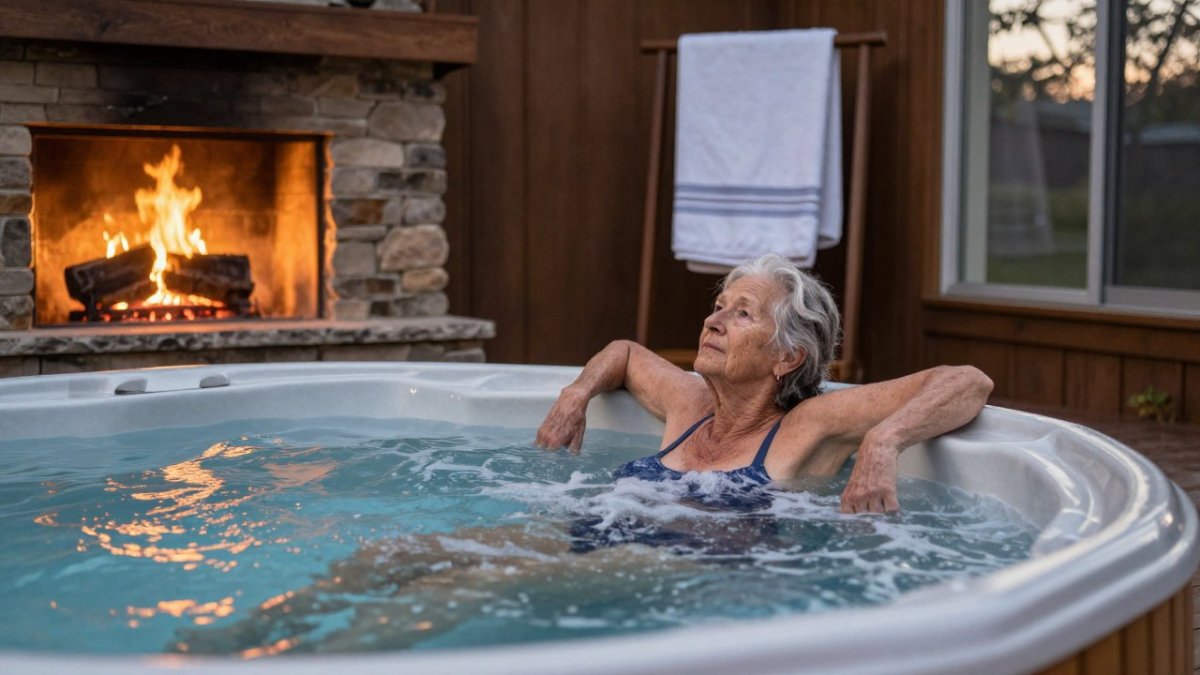
Warm water can make joint pain feel easier to manage, and a hot tub is one of the simplest ways to get that warmth through hot tub hydrotherapy. Warm water is often used to ease joint stiffness, and the relief is usually temporary.
Several things happen when your body sits in warm water. Warmth can help relax tight muscles, and buoyancy reduces the load on weight-bearing joints while you move.
Buoyancy is a big part of the appeal of hot tub hydrotherapy. Water can take some of the weight off stiff joints, making movement feel easier.
Watch out: Heat feels soothing, but it can also mask how hard you are pushing a joint. Stop if pain rises or swelling increases after a soak.
Osteoarthritis Versus Rheumatoid Arthritis: Why the Difference Matters for Soaking
Osteoarthritis and rheumatoid arthritis are different conditions, and they call for different soaking habits. Osteoarthritis is mainly a wear-and-tear condition where cartilage breaks down over time. Rheumatoid arthritis is an autoimmune disease where the immune system attacks the joint lining.
A flare of rheumatoid arthritis often brings warmth, redness and swelling in several joints at once. Heat that feels good in osteoarthritis may make an active inflammatory flare feel worse. If you have rheumatoid arthritis, check with your doctor before using a hot tub.
For osteoarthritis, the question is usually how much heat your joints tolerate, not whether heat is allowed at all. Pay attention to how your joints feel the next morning.
Hot Tub Temperature for Joint Pain: Finding a Safe, Comfortable Range
Many people find a moderate water temperature more comfortable than the hottest setting. Check the display before you get in and lower the setting if it reads higher than you expect, and consider starting cooler and increasing gradually over several sessions.
A step-by-step routine helps keep sessions safe and predictable:
- Before you soak: Drink a full glass of water, and remove any jewelry that could make it hard to grip the rails. Set a timer on your phone so you do not lose track of time.
- Entering: Hold a sturdy handrail, step in with your stronger leg first, and lower yourself onto a seat or ledge so your knees bend as little as possible.
- During the soak: Start with 10 to 15 minutes. Keep your knees slightly bent and supported by the water, and use the jets on a low setting to start.
- Exiting: Get out slowly, pausing at the edge until you feel steady. Dry off and sit for a few minutes before standing up quickly.
- After the soak: Drink more water. Note how your joints feel that evening and the next morning before deciding whether to repeat the session or adjust the time.
Watch out: Water above 104°F raises core body temperature quickly, and dizziness or lightheadedness is a sign you should leave the tub immediately, sit down somewhere cool, and drink water.
Stop the session and get out if pain increases during the soak, if a joint becomes hot or swollen afterward, or if you feel faint, nauseous, or unusually tired. A session that leaves your joints more painful the next day is a sign to shorten the time or lower the temperature, not to push through.
Most people who use a hot tub for osteoarthritis relief soak once or twice a week. Frequency should follow your body's response rather than a fixed schedule, so keep a short log of each session.
Here is a quick reference for the routine steps and the safety thresholds covered in this section.
| Step | What to do | Time or limit |
|---|---|---|
| Before you soak | Drink a full glass of water, remove jewelry | Set a timer |
| Entering | Hold a sturdy handrail, step in stronger leg first | Lower yourself slowly |
| During the soak | Keep knees slightly bent, jets on low | 10 to 15 minutes to start |
| Exiting | Get out slowly, pause at the edge | Sit a few minutes before standing |
| After the soak | Drink more water, note joint feel | Check that evening and next morning |
| Water temperature | Avoid overheating | Above 104°F raises core temperature quickly |
| Frequency | Follow your body's response | Once or twice a week for many people |
Hot Tub for Arthritic Knees: Joint-Specific Entry, Positioning, and Modifications
Getting in and out of a hot tub is often the hardest part for people with arthritic knees. Use a handrail or grab bar, and step in with your stronger leg first. Sit on a built-in ledge when possible, so your knees bend less.
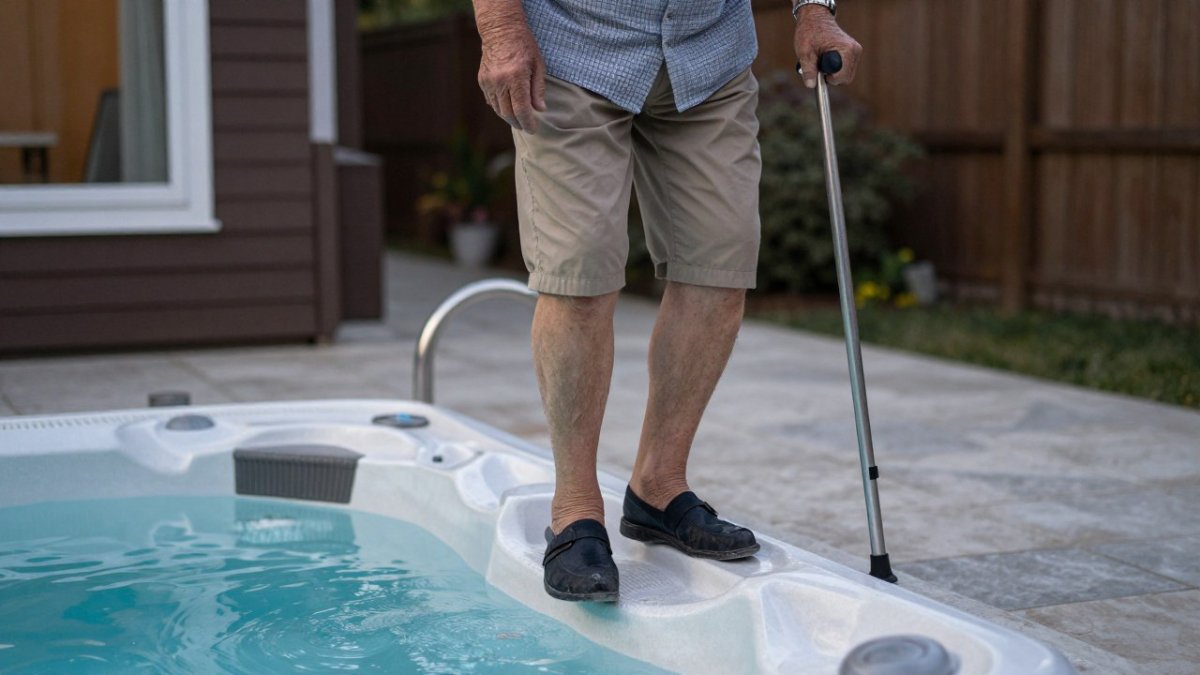
Positioning matters too. Keep your knees slightly bent and supported by the water, not locked straight. A small foam pillow behind your neck or lower back can help you stay relaxed.
Simple modifications help:
- Install a non-slip mat outside the tub
- Add a sturdy handrail on both sides of the steps
- Use a bench seat instead of a deep lounge position
- Keep a towel and a cane within reach
Skip if: Your knees are too unstable to step in safely without help.
Hot Tub Safety for Older Adults: Medication, Comorbidity, and Mobility Precautions
Older adults face higher risks in hot water. Heat can lower blood pressure, and some medications make that effect stronger. Diuretics, blood pressure drugs and some sedatives are common examples.
Heat exhaustion is a real concern. Watch for dizziness, nausea, headache, unusual tiredness or a racing heartbeat. If any of these appear, get out, cool down and drink water. Call for help if symptoms do not ease quickly.
Drink water before and after each soak, since heat can cause dehydration. Never soak alone if your balance is poor, and keep a phone within reach. Talk to your doctor before starting a routine if you have heart disease, diabetes or other health conditions.
Hot Tub Immersion Versus Warm-Water Exercise for Osteoarthritis
Passive soaking and supervised aquatic exercise are often grouped together, but they serve different purposes and should not be treated as interchangeable.
Passive soaking means sitting or lying in warm water with little or no movement. Its main effects are heat, buoyancy, and relaxation. The relief is usually temporary and does not, by itself, build strength or improve range of motion.
Warm-water exercise, often called aquatic therapy or hydrotherapy when it is delivered in a clinical setting, involves structured movements performed in water that is typically kept warm but not hot. A physical therapist or trained instructor may guide the session, adjust resistance, and modify movements for specific joints. The goal is to improve strength, balance, and function over several weeks.
Here is how they compare in practice:
- Purpose: Soaking is for symptom comfort. Aquatic exercise is for building capacity and mobility.
- Supervision: Soaking is usually self-directed. Aquatic exercise is often supervised, especially early on.
- Water temperature: Hot tubs generally run hotter than therapy pools, so heat tolerance matters for soaking.
- Likely benefit: Soaking may reduce stiffness temporarily. Consistent aquatic exercise is more likely to improve function over time.
Many people get the most from both. Soak briefly to loosen up, then do the movements a therapist has shown you. If you have not done aquatic exercise before, ask a physical therapist to assess your joints first so the program fits your knees, hips, hands, or spine.
A hot tub is a useful tool for comfort, but it does not replace guided movement if your goal is stronger, more mobile joints.
Start Your Soaking Routine Safely and Track Whether It Helps
Begin with one short session a week and see how your joints respond over the next few days. Keep a simple log of water temperature, session length, pain level and stiffness the next morning. After a few weeks, you will have a clear picture of what works for you.
If your joints feel better and you can move more easily, keep the routine. If pain increases or the relief fades quickly, adjust the temperature or time, or talk with your doctor.
At allvalley, our hot tubs come with free starter kits and chemicals, so the water care part is simpler. A hot tub is a practical way to make soaking part of your week, and our team can help you pick a setup that fits your space. Call 760-342-5277 to talk through your options.
Frequently Asked Questions
Are hot tubs good for people with osteoarthritis?
Many people with osteoarthritis find warm water soothing. Warm-water immersion may ease stiffness and muscle tension, and buoyancy reduces the load on weight-bearing joints while you sit or float. The benefit is usually temporary and symptomatic rather than a change to the disease itself. Hot tubs are a complementary option, not a replacement for medical treatment. Check with your doctor first, especially if you have heart disease, diabetes, or skin sensitivity, and keep sessions short and at a moderate temperature.
What temperature should a hot tub be for joint pain?
Most people with joint pain do well with water in a moderate, comfortable range rather than the hottest setting. Hot water raises your heart rate and can cause overheating or dizziness, so start cooler and increase gradually only if it feels good. Many spas allow temperature adjustment, and a simple rule is to stop if you feel lightheaded, flushed, or unwell. Confirm your specific limits with your healthcare provider, particularly if you take medications that affect circulation or blood pressure.
How long should you stay in a hot tub if you have osteoarthritis?
Shorter sessions are generally safer. A common approach is 10 to 15 minutes per soak, followed by a break out of the water, and no more than a few sessions per day. Stay hydrated before and after soaking, because heat increases fluid loss. Avoid soaking alone when possible, and never sit in very hot water for long periods. If stiffness or pain increases after soaking, shorten your next session and talk with your healthcare professional.
Is a hot tub or warm-water exercise better for osteoarthritis?
They serve different purposes. A hot tub mainly provides heat, buoyancy, and relaxation, which can ease stiffness in the moment. Warm-water exercise, often called aquatic exercise, builds strength and range of motion over time, and clinical hydrotherapy is guided by a trained therapist. Many people benefit from combining approaches: soak to loosen up, then do gentle water-based movement. Discuss which mix suits your joints with your doctor or physical therapist.