 listicle
5 Best Hot Tubs for Chronic Pain 2026: Buyer's Guide
Table of Contents
- Why Hydrotherapy Works for Chronic Pain
- Quick Comparison: 5 Best Hot Tubs for Chronic Pain in 2026
- 1. allvalley: Best Overall for Chronic Pain Relief
- 2. Michael Phelps LSX 900: Best for Intensive Hydrotherapy
- 3. Lifesmart LS550 Plus: Best Value for Full-Body Relief
- 4. Dr. Wellness G-3: Best for Arthritis and Joint Pain
- 5. Catalina Carlton: Best for Deep-Tissue Back Pain Relief
- 6. Hudson Bay X-3: Best Entry-Level Therapeutic Spa
- Hot Tub Jet Types for Back Pain: What to Look For
- What to Know Before You Buy: Installation, Temperature, and Cost
- Frequently Asked Questions
Last Updated: September 12, 2026
Why Hydrotherapy Works for Chronic Pain
Hot tubs for chronic pain use warm water and directed pressure to reduce pain, stiffness, and inflammation. For chronic joint or muscle conditions, a hot tub delivers three benefits at once: heat relaxes tissue, buoyancy unloads joints, and jets massage target areas.
Heat raises blood flow to sore areas, which helps clear metabolic waste and reduce the stiffness that builds overnight (peer-reviewed research). Buoyancy is the quieter hero. When you're submerged to chest depth, the water supports most of your body weight, so hips, knees, and the lower spine move with far less compression (arthritis.org). That combination is why the Arthritis Foundation's guidance on heat therapy lists warm-water soaking among the most reliable non-drug options for joint pain relief.
Chronic pain relief isn't about one soak. It's about consistency, and a spa you'll actually use daily.
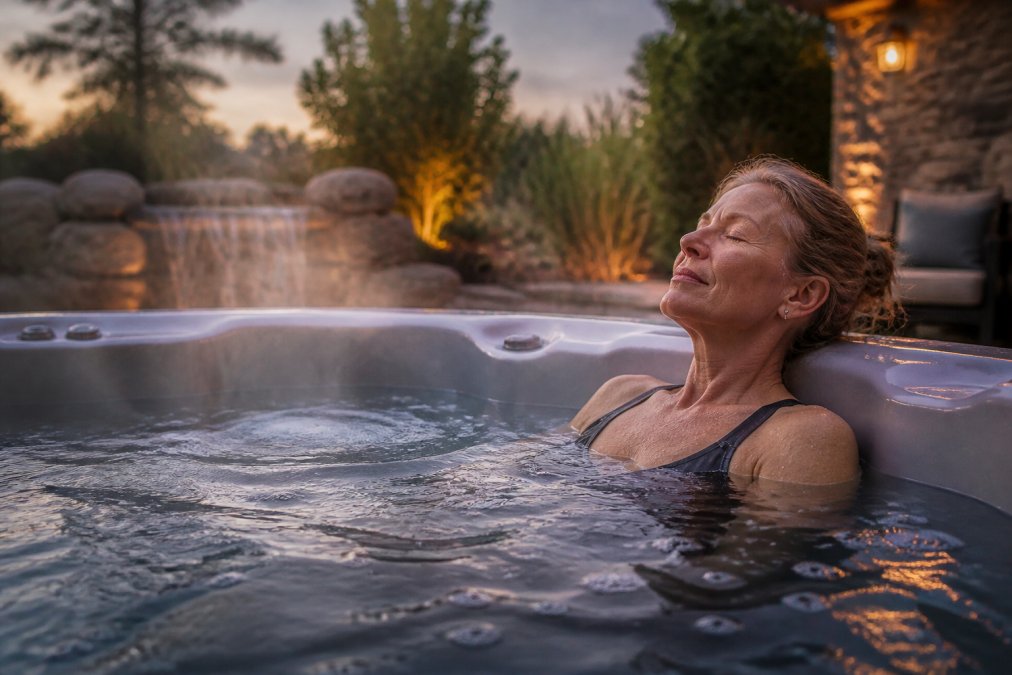
How Heat and Buoyancy Reduce Inflammation and Joint Stiffness
Warm water dilates blood vessels and improves circulation, supporting muscle recovery and easing joint stiffness. Temperature control matters more than most buyers realize: too hot cuts the session short, too cool loses the therapeutic effect.
Most hydrotherapy guidance points to a moderate range for inflammation reduction, though tolerance, condition, and medication shift that number. Ask your physician before soaking, especially with cardiovascular conditions or pregnancy.
Quick Comparison: 5 Best Hot Tubs for Chronic Pain in 2026
| Model | Best For | Jets | Seating | Pricing |
|---|---|---|---|---|
| allvalley | Overall value + install | Varies by model | Varies by model | Contact for pricing |
| Michael Phelps LSX 900 | Intensive hydrotherapy | High-count configuration | Ergonomic therapy seating | Contact for pricing |
| Lifesmart LS550 Plus | Full-body relief on a budget | 65 | 5-person | $4,099 |
| Dr. Wellness G-3 | Arthritis and mobility | Targeted placement | Compact | Contact for pricing |
| Catalina Carlton | Deep-tissue back pain | High-pressure | Contoured | Contact for pricing |
1. allvalley: Best Overall for Chronic Pain Relief
Our top pick is allvalley, and not because of a spec sheet. After 26 years in business, the company knows the hot tub you use daily beats the one with the longest feature list. Every purchase includes a free starter kit and chemicals, so water chemistry isn't a mystery in week one.
The practical advantages matter for pain management: professional delivery and installation, low-maintenance spa systems, and reduced prices on overstock items. If you're in the Coachella Valley or Riverside County and want a spa that's ready to soak without a maintenance headache, start here. Call 760-342-5277 for current pricing.
2. Michael Phelps LSX 900: Best for Intensive Hydrotherapy
Built for advanced recovery, the LSX 900 pairs a high-performance jet configuration with ergonomic therapy seating and advanced water purification. The Master Blaster foot massage jets stand out for anyone whose pain runs from the lower back into the feet.
The trade-off is honest: it's a premium unit at a premium price, and you'll need to contact the dealer for a quote. For buyers who want maximum therapy density, it earns its place.

3. Lifesmart LS550 Plus: Best Value for Full-Body Relief
At $4,099, the LS550 Plus is the only model here with a published price, and it's a strong one. You get 65 therapeutic jets across a 5-person layout, energy-efficient insulation, and a simple digital control panel.
Where it falls short: fewer luxury customization options than premium brands. If you want a jet configuration tailored to one problem area, look elsewhere. For broad, effective coverage without overspending, this is the value pick.

4. Dr. Wellness G-3: Best for Arthritis and Joint Pain
The G-3 is engineered around joint pain relief, with targeted hydrotherapy jet placement and a compact footprint for smaller patios. The user-friendly interface benefits anyone managing arthritis who doesn't want to fight a control panel. Integrating this heat-based relief with the physiological cold plunge therapy benefits can further reduce systemic inflammation and accelerate recovery for those dealing with persistent discomfort.
Limited seating is the honest drawback: this is a personal therapy spa, not a family entertainer. For arthritis management and daily mobility work, that focus is the point.
5. Catalina Carlton: Best for Deep-Tissue Back Pain Relief
High-pressure therapy jets and contoured seating for spinal support make the Carlton the pick for deep-tissue back pain. The durable acrylic shell holds up to years of daily use, and the ergonomic support keeps your lumbar region aligned.
One caveat: it requires professional installation, so factor that into your plan. For concentrated lower-back relief, the jet pressure is hard to match.

6. Hudson Bay X-3: Best Entry-Level Therapeutic Spa
If you're testing whether hydrotherapy fits your routine, the X-3 keeps the barrier low. Adjustable jet pressure, plug-and-play capability, and an included insulated cover mean you can soak quickly with affordable maintenance.
The feature set is basic by design: no premium jet density or advanced purification, but for beginners managing daily pain, it delivers the essentials without overcommitting.

Hot Tub Jet Types for Back Pain: What to Look For
The best hot tub jet types for back pain are rotating jets for broad muscle relief and deep-tissue jets for concentrated knots along the spine. But jet type is only half the equation, the other half is whether you can get into the spa, stay comfortable, and reach the controls without aggravating the joints you're trying to soothe. Here's how the main jet configurations compare, plus the accessibility features that matter for anyone with severe arthritis or limited mobility.
Jet configurations, ranked by what they do
- Rotating jets: Wide, circular massage. Best for general muscle recovery and circulation across the lower back and hips.
- Deep-tissue jets: High pressure, narrow focus. Best for stubborn knots and lumbar tension that doesn't release with lighter massage.
- Neck and shoulder therapy jets: Angled upward. Best for desk-related tension and cervical stiffness.
- Foot massage jets: High-pressure floor jets. Best for plantar and lower-leg relief, and often the only jets that reach the feet without shifting position.
- Pulsating and combination jets: Alternate between steady and oscillating pressure. Useful for varying intensity mid-soak without changing seats.
When you shop, test the seating. Ergonomic seating with lumbar support and adjustable pressure matters more than raw jet count: a 40-jet spa with proper configuration beats an 80-jet spa with poor placement. Adjustable diverter valves and air controls let you dial pressure down on a flare day and up on a good one, a fixed-pressure spa can't.
Accessibility features most guides ignore
If you live with severe arthritis, a replaced hip or knee, or general mobility limits, entry and seating design decides whether you use the spa daily or abandon it by month three. Look for these specifics:
- Entry steps with a non-slip texture and a handrail. A two- or three-step entry with grab rails on both sides is far safer than a single high step. Some manufacturers offer a step-and-rail accessory that bolts to the cabinet.
- Seat heights that let you sit without dropping. A seat that's too low forces you to push up with your arms and knees on exit. Higher, contoured seats with a footwell ledge are easier to rise from.
- A cool-down or transfer seat. A bench at or near water level lets you sit, swing your legs in, and stabilize before moving to a therapy seat.
- Controls reachable from the seated position. Topside controls you can operate without standing up matter more than a touchscreen you have to lean over to use.
- A cover lifter. Lifting a heavy insulated cover by hand is one of the most common reasons people stop using a spa. A lever-assist lifter removes that barrier.
A common pattern among buyers with arthritis: prioritize a compact, single-therapy-seat spa with a low entry and strong handrail over a large family model with more jets. Fewer seats and easier access beat more seats and a harder climb.
Matching jets to your pain pattern
- Lower back and sciatica: deep-tissue jets at lumbar height, plus foot jets for referred pain down the leg.
- Fibromyalgia (widespread, variable): rotating jets and lower pressure, since high-pressure jets can aggravate tender points.
- Arthritic hands and wrists: wrist and forearm jets at seat level, with pressure turned down.
- Neck and upper back: upward-angled neck jets and a contoured headrest.
What to Know Before You Buy: Installation, Temperature, and Cost
Hot tub installation requirements vary by model and site. Most need a level, reinforced pad, a dedicated power source, and clearance for the cover and service access. Larger units may require a 240V circuit; plug-and-play models run on standard power. Permits and code vary by jurisdiction, so confirm with your installer before delivery. allvalley handles professional delivery and installation, removing most of that coordination burden.
Temperature protocols by condition
The right soak temperature depends on what you're treating, not just preference. Most practitioners find a moderate warm range, comfortably warm, not the hottest setting, works best for inflammatory and joint conditions, while very hot water feels good briefly and then drives you out. A few condition-specific patterns:
- Osteoarthritis and joint stiffness: moderate warm water for 15-20 minutes, often in the morning when stiffness peaks.
- Fibromyalgia: slightly cooler than the arthritis range, with lower jet pressure. Overheating can trigger a flare in some people.
- Lower back injury or muscle spasm: moderate warmth with deep-tissue jets, and shorter sessions more often rather than one long soak.
- Post-exercise or rehabilitation recovery: moderate warmth, then a gradual cool-down rather than a cold plunge.
These are starting points, not prescriptions. Tolerance, medications, and cardiovascular health all shift the safe range. Ask your physician before soaking, especially with heart conditions, blood-pressure medication, or pregnancy. A common rule of thumb: start cooler than you think you want, soak 15-20 minutes, and adjust.
Long-term cost of ownership vs. medical savings
Operating costs depend on insulation quality, filtration, local energy rates, and how often you soak. Well-insulated spas with quality covers cost significantly less to run, and a full-foam-insulated cabinet with a tapered cover is the biggest single lever on your monthly bill. Beyond utilities, budget for chemicals, filter cleaning or replacement, and occasional service.
The ROI question most guides skip: how does that annual cost compare to what you already spend on pain management? If you pay for recurring physical therapy, massage, or over-the-counter pain relief, a spa you use several times a week can be a valuable addition to your routine. The math depends on your insurance coverage, copays, and how consistently you soak. Run your own numbers rather than trusting a generic payback estimate.
Smart home health tracking
Some newer spas connect to apps that log soak duration, water temperature, and usage patterns. For chronic pain management, that data is more useful than it sounds: you and your physician can review which temperature and duration combinations line up with better or worse days, then adjust your routine. If you already track symptoms in a health app, a spa that exports or syncs that data saves a separate log. Ask your dealer which models support app connectivity and whether the data is exportable.
Frequently Asked Questions
Will insurance pay for a hot tub if you have arthritis?
Most health insurance plans in the U.S. do not cover hot tubs because they are classified as recreational equipment, not durable medical equipment. However, some flexible spending accounts (FSAs) or health savings accounts (HSAs) may allow reimbursement if a doctor provides a letter of medical necessity. Check with your plan administrator and keep detailed records if you pursue this route.
What features should I look for in a hot tub for chronic pain?
Prioritize adjustable jet pressure, ergonomic seating with lumbar support, and a variety of hot tub jet types for back pain such as deep-tissue and rotating jets. Look for models with programmable temperature control, good insulation for energy efficiency, and easy-to-reach controls. A therapy seat with targeted neck and shoulder jets also helps. Finally, consider user capacity and whether the layout lets you access your preferred seat without climbing over others.
What is the recommended water temperature for pain relief?
The best hot tub temperature for arthritis and chronic pain typically falls between 98°F and 102°F. Temperatures above 104°F can increase inflammation and strain the cardiovascular system, especially for people with heart conditions or high blood pressure. Start at 98°F to 100°F for 15 to 20 minutes and adjust gradually. Always consult your doctor before starting hydrotherapy, particularly if you take blood thinners or have neuropathy.
How often should you use a hot tub for chronic pain management?
Most people with chronic pain benefit from soaking 15 to 20 minutes per session, three to five times per week. Daily use is fine if your doctor approves and you stay hydrated. Consistency matters more than duration. Pairing a soak with gentle stretching afterward can extend joint pain relief. If you have arthritis, shorter, more frequent sessions often work better than one long soak.
Can hot tubs help with nerve pain?
Hydrotherapy can ease some nerve pain by improving circulation, reducing muscle tension, and promoting relaxation, which may lower pain perception. Warm water and buoyancy take pressure off compressed nerves and joints. However, hot water can worsen certain neuropathies, especially those involving loss of sensation, because you may not feel burns. Talk to your doctor first and start with lower temperatures and shorter sessions.