 listicle
Energy Efficient Hot Tubs for Cold Climates: Buyer's Guide
Quick Summary
The most energy efficient hot tubs for cold climates have full-foam insulation around the shell and base, a thick, tightly sealed cover, and a well-sealed cabinet. Insulation type matters more than heater wattage because the heater mostly works to replace heat lost through the shell and cover. Ask each dealer for the insulation and cover specs in writing before you compare models.
- Full-foam insulation around the shell and base holds heat longer than partial coverage.
- A cover with thick, dense foam and a tight edge seal prevents much of the winter heat loss.
- Cabinet sealing protects the equipment bay from wind and cold drafts.
- Keep filters clean, since a clogged filter forces the pump to work harder.
- Request insulation R-value and cover foam density, then compare models on those numbers.
Table of Contents
- Why Cold Climates Make Hot Tub Energy Use Hard to Control
- How Insulation Affects Heat Retention: Hot Tub Insulation Types Compared
- Covers, Cabinets and Freeze Protection: What Actually Keeps Heat In
- Energy Efficient Hot Tub Models Worth Evaluating for Cold Weather
- Average Monthly Cost to Run a Hot Tub in Winter
- Retrofitting an Older Hot Tub for Cold Climates
- Choosing Your Cold-Climate Hot Tub Setup With allvalley
- Frequently Asked Questions
Energy efficient hot tubs for cold climates matter most when the winter bill starts to climb, and in the Coachella Valley that can feel like a contradiction. Desert nights drop hard from October through February, and a tub sitting uncovered on a cold patio loses heat fast. This guide from allvalley walks through how insulation, covers and cabinet construction decide how much energy a tub uses, and which models deserve a closer look.
Two details matter from the start. First, the heater does the bulk of the work, so the question is less about peak wattage and more about how well the shell and cover hold heat once the water is up to temperature. Second, a tub that holds temperature through a cold night costs far less to run than one that cycles its heater all evening. Keep those two points in mind as you read.
Why Cold Climates Make Hot Tub Energy Use Hard to Control
Cold weather pushes energy use up in a few predictable ways. The temperature gap between the water and the air widens, so heat escapes through the shell, the cover and any exposed plumbing. The heater runs longer to recover after each use, and the circulation pump may run more often to prevent freezing.
Desert winters add a twist. Days can feel mild while nights drop sharply, so a tub that looks efficient at noon can still lose a lot of heat overnight. Wind is the other factor. A breezy patio strips heat from the cover edges and the cabinet seams faster than most buyers expect.
A common mistake is judging a model on its brochure alone. Ask how the tub holds heat during a cold, windy night, not only how fast it heats up.
How Insulation Affects Heat Retention: Hot Tub Insulation Types Compared
Insulation is the most important factor in winter running cost, and the type matters. Foam insulation packed around the shell and under the base slows heat transfer far better than a thin layer or open cavities. Full-foam insulation, which fills the cabinet and base, generally holds heat longer than partial coverage.
When comparing models, look for these specifics:
- Full-foam insulation around the shell and base, not just the sides
- A thermal cover with thick, dense foam and a tight seal at the edges
- A sealed cabinet that limits air leaks around the plumbing and equipment bay
- Weather-resistant materials that keep their insulating value after years outdoors
When comparing brands, ask each manufacturer for its insulation specifications in writing before you buy.
Covers, Cabinets and Freeze Protection: What Actually Keeps Heat In
The cover does more to keep heat in than most buyers realize. A cover with thin foam, a warped lid or gaps at the edges can undo the benefit of good shell insulation. Check that the cover seals fully and that the latches pull it down tight.
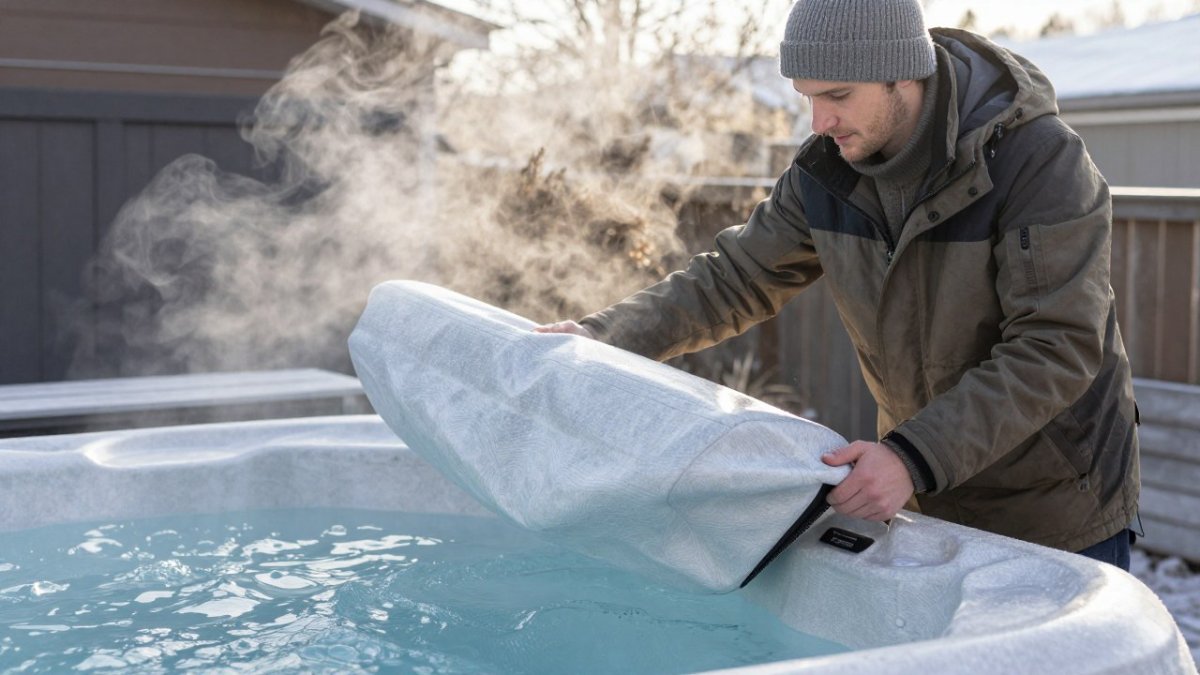
The cabinet matters too. A solid, well-sealed cabinet protects the equipment bay from wind and keeps the heater and pump from working against a cold draft. Freeze protection is the other half of the picture. Most modern tubs run the pump on a schedule to keep water moving through the plumbing, and that circulation costs some energy. A pipe that freezes can cause expensive damage, so the protection is worth the small running cost.
Keeping a filter clean also supports efficiency. A clogged filter forces the pump to work harder, and that extra load adds to the energy bill over a long winter.
Energy Efficient Hot Tub Models Worth Evaluating for Cold Weather
A cold-climate short list is only useful if you know what to compare on each model. The brands below publish cold-weather features, but the specifications that actually predict winter performance are insulation type and thickness, cabinet sealing, cover foam density and heater wattage. Ask every dealer for those four numbers in writing before you shortlist.
- Arctic Spas builds its cold-climate positioning around full-foam insulation and a heat-recovery system it markets as FreeHeat, paired with a thick Mylovac cover. The brand is the most explicit about cold-weather construction of the group, which makes it a reasonable benchmark even if you buy elsewhere.
- Sundance Spas 880, 780 and 680 Series appear in the brand's own cold-climate guidance. The 880 Series includes the Capri and the 780 Series includes the Bristol. Sundance publishes insulation and cover details per model, so request the spec sheet rather than relying on series-level marketing.
- Caldera Spas markets winter heat retention and pipe-freeze protection. Caldera and Sundance share a parent company, so their insulation approaches overlap; compare the specific model specs side by side rather than the brand stories.
- Bullfrog Spas uses its JetPak Therapy System, which consolidates plumbing behind the jet packs. Fewer plumbing runs can mean less exposed surface area for heat loss, but the brand does not publish a cold-weather R-value, so treat the plumbing claim as a design advantage, not a measured efficiency number.
- Dr. Wellness G-6, G-7 and Catalina Carlton appear in a 2026 energy-efficiency ranking, with the G-6 first and the G-7 second. Rankings like these rarely disclose the test methodology, so use them as a starting point and verify the underlying specs.
A practical comparison method: put each candidate's insulation type, cabinet seal, cover thickness and heater wattage into a four-column table. Models that disclose all four are usually the ones built for cold weather; models that disclose none are usually marketed on jet count instead.
Watch out: a brand that leads with jet count or lighting in its cold-climate copy is often compensating for thin insulation specs. Ask for the R-value or foam thickness before you assume the tub is winter-ready.
Best for: buyers who want a short list of cold-climate brands to compare on specs. Skip if: you need third-party verified energy-use numbers, since most of these listings do not publish them.
The table below lists the cold-climate brands the article mentions and the specs worth requesting from each.
| Brand | Cold-weather feature stated | Spec to request |
|---|---|---|
| Arctic Spas | Full-foam insulation, FreeHeat, Mylovac cover | Insulation type and cover thickness |
| Sundance Spas | Cold-climate guidance, 880/780/680 Series | Per-model insulation and cover details |
| Caldera Spas | Winter heat retention, pipe-freeze protection | Model-level insulation specs |
| Bullfrog Spas | JetPak Therapy System, consolidated plumbing | Cold-weather R-value (not published) |
| Dr. Wellness | G-6, G-7 and Catalina Carlton in 2026 ranking | Underlying specs and test method |
Average Monthly Cost to Run a Hot Tub in Winter
A more useful approach is a simple total-cost-of-ownership framework you can fill in with your own numbers.
The monthly cost is driven by four inputs:
- Heat loss rate of the shell, cabinet and cover, which is where insulation R-value and cover foam thickness show up.
- Temperature setpoint versus outdoor air temperature, since a wider gap means more heat loss.
- Electricity rate in dollars per kilowatt-hour from your utility bill.
- Heater and pump runtime, which rises with use, cold snaps and poor sealing.
A worked example using placeholder numbers shows the math: if a tub's heater and circulation pump draw an average of 1.5 kW while maintaining temperature, and they run 6 hours per day in cold weather, that is 9 kWh per day. At a residential rate of $0.15 per kWh, the daily cost is about $1.35, or roughly $40 per month before accounting for extra recovery heating after soaks. A poorly insulated tub might run the heater twice as long, doubling that figure; a well-insulated tub with a tight cover might run half as long. Replace the 1.5 kW, 6 hours and $0.15 with your model's actual draw, your climate's runtime and your utility's rate to get a real estimate. Because recovery heating can add to the tub’s daily load, comparing its energy use with other outdoor heating solutions can help clarify where your cold-weather energy budget is going.
Insulation R-value is the lever most buyers overlook. Higher R-value in the shell and cover slows heat transfer, which directly cuts heater runtime. Ask the dealer for the R-value of the shell and the cover foam density, then compare those numbers across models rather than comparing brand claims.
Watch out: a dealer quote of "about $30 a month" is meaningless without the electricity rate, setpoint and outdoor temperature it assumes. Ask what assumptions sit behind any monthly figure you are given.
To estimate your own cost, pull the model's kilowatt-hour consumption or energy rating from the dealer, multiply by your local rate, and adjust for how often you soak. That beats any generic average.
Retrofitting an Older Hot Tub for Cold Climates
An older tub does not have to be replaced to run more efficiently. Many of the biggest gains come from upgrades: a new, thicker cover, resealing the cabinet, replacing a worn gasket, or adding insulation panels where the shell is exposed. Each change reduces heat loss without touching the core equipment.
Regular upkeep is the cheapest efficiency measure. Clean or replace filters on schedule, check the cover seals each season, and look for water or air leaks around the plumbing.
Choosing Your Cold-Climate Hot Tub Setup With allvalley
The right setup depends on how you plan to use the tub. A family that soaks several evenings a week will feel the running cost more than someone who uses it on weekends. Decide how often you will use it, what water temperature you want, and whether the cover and cabinet will sit exposed to wind.
allvalley has been in business for over 26 years, selling hot tubs, BBQ equipment and fireplaces with delivery and installation services. Its hot tubs include free starter kits and chemicals with purchase. Pricing depends on the model, quantity, delivery and installation, so contact allvalley directly for a current quote. To talk through cold-climate options for your yard, call allvalley at 760-342-5277.
Frequently Asked Questions
Which hot tub is the most efficient for cold weather?
The most efficient cold-weather hot tubs combine full-foam insulation, a thick insulated cover, and a weather-resistant cabinet. Because the research did not verify model-level energy-use figures, compare insulation specifications and ask allvalley for current models and quotes before deciding.
What hot tub uses the least amount of electricity?
Electricity use depends on insulation quality, cover condition, heater wattage, and how often the tub is used. Verified kilowatt-hour figures were not available in the research. Ask for each model's energy specifications in writing and compare them under the same climate conditions.
What is the difference between full-foam and perimeter insulation in cold climates?
Full-foam insulation fills the cabinet and shell cavity, which generally reduces heat loss more than perimeter insulation that covers only the outer edges. Full-foam designs usually hold water temperature longer during freezing weather. Ask any seller to confirm which insulation method a specific model uses before you compare prices or operating costs.
Do insulated covers significantly reduce hot tub energy consumption?
A well-fitted insulated cover is one of the most direct ways to limit heat loss from the water surface, and covers should be kept closed when the tub is not in use. The research did not provide measured savings, so treat the benefit as a practical habit rather than a fixed percentage. Check the cover's seal and thickness regularly, since a worn cover loses heat quickly.