 ultimate-guide
How to Maintain a Backyard Spa: The 2026 Guide
Table of Contents
- Why Your Backyard Spa Needs a Weekly Maintenance Routine
- Step 1: Test and Balance Your Water Chemistry Weekly
- Step 2: Follow This Hot Tub Chemical Balance Guide
- Step 3: Keep Your Spa Water Sanitized and Clear
- Step 4: How Often to Shock a Hot Tub
- Step 5: How to Clean Hot Tub Filters for Maximum Lifespan
- Step 6: Drain and Refill Your Spa on Schedule
- Step 7: Maintain the Shell, Cover, and Equipment for the Long Haul
- Frequently Asked Questions
Last Updated: September 6, 2026
Owning a hot tub should be about relaxation, not chores. The secret isn't buying more expensive products; it's building a simple, consistent routine that prevents problems before they start. In this guide from allvalley, we break down the weekly, monthly, and seasonal tasks that keep your water clear, your equipment running longer, and your spa ready whenever you are.
Why Your Backyard Spa Needs a Weekly Maintenance Routine
A backyard spa is a closed water system, so everything that enters it, body oils, sunscreen, dust, and debris, stays in the water until you remove it. Without a consistent schedule, contaminants build up, sanitizer becomes less effective, and you end up chasing problems instead of preventing them.
Most maintenance issues trace back to irregular testing, inconsistent sanitizer levels, and neglecting the filter. Dedicating about 15 minutes a week to water care helps you avoid draining and deep-cleaning a neglected spa, and it extends the lifespan of pumps, heaters, and covers.
Step 1: Test and Balance Your Water Chemistry Weekly
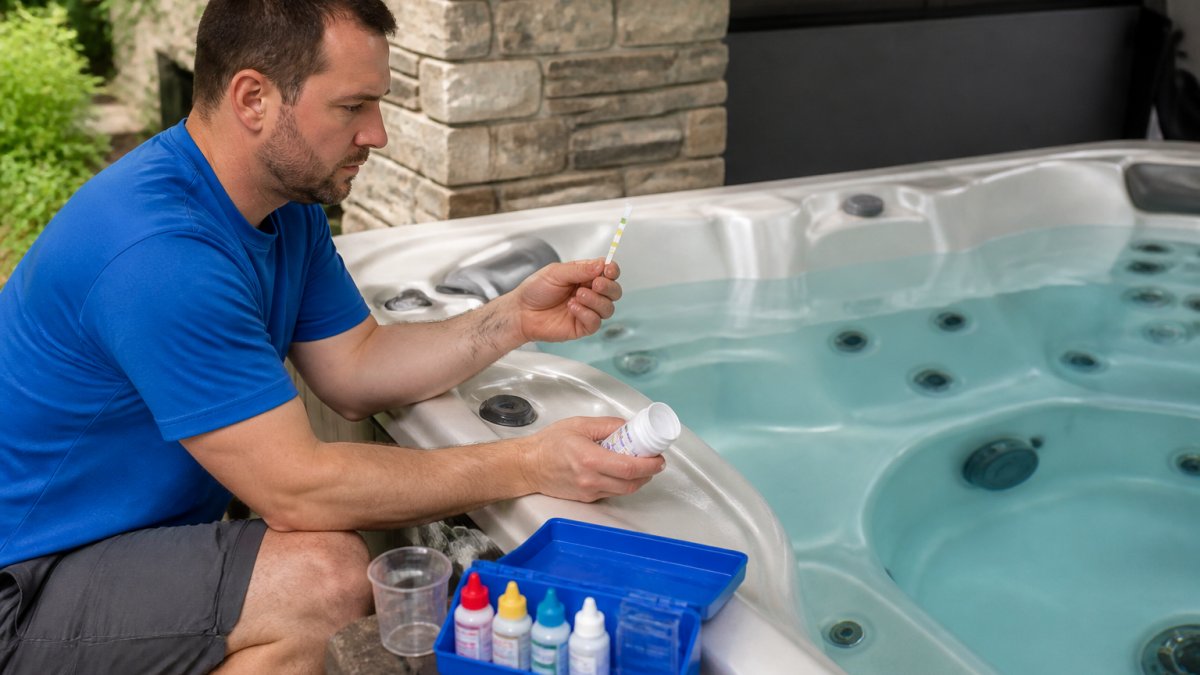
Testing your water at least twice a week is the foundation of every other maintenance task. You are checking three core measurements: pH levels, total alkalinity, and sanitizer levels. Reliable test strips or a digital tester give you a clear picture of your water balance, so you can make precise adjustments rather than guessing.
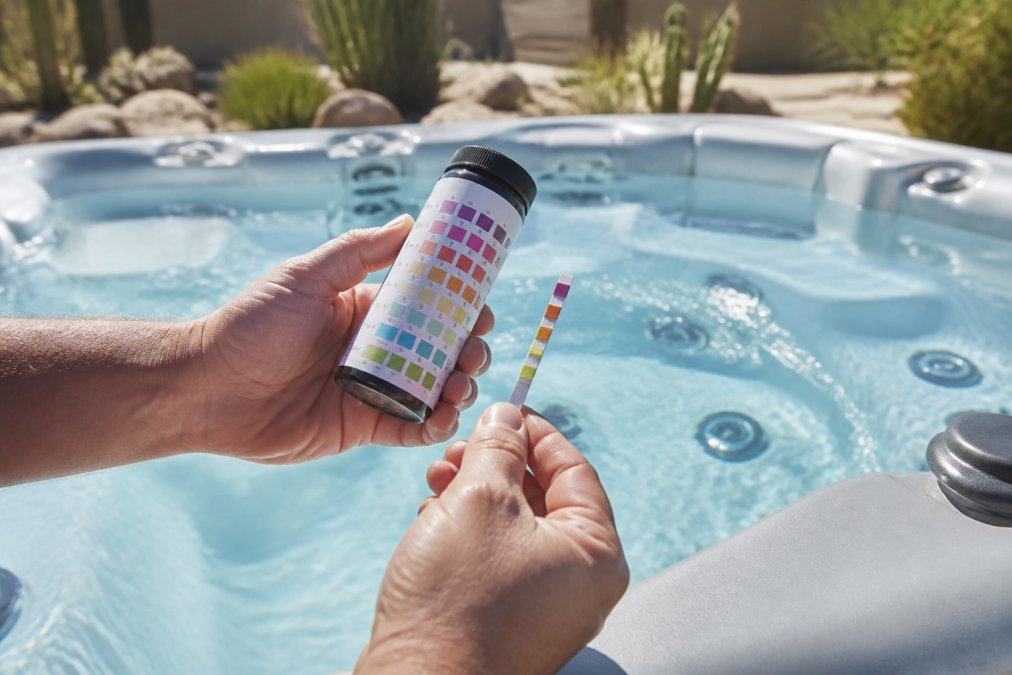
When you dip a strip and compare colors, you are looking for specific ranges that keep your water comfortable and your equipment safe. Adjusting the balance is a simple matter of adding small doses of the appropriate chemicals, waiting, and retesting.
Understanding pH, Total Alkalinity, and Calcium Hardness
Total alkalinity is the buffer that keeps your pH stable, and it should be addressed first because it prevents wild pH swings. pH levels measure how acidic or basic the water is, directly affecting sanitizer effectiveness and comfort. Calcium hardness measures dissolved minerals; too low and the water becomes corrosive to your spa shell and heater, too high and you will see scale deposits.
Alkalinity protects your pH, and pH protects your sanitizer. If you struggle to keep chlorine or bromine levels up, the root cause is often an unbalanced pH.
Step 2: Follow This Hot Tub Chemical Balance Guide
A hot tub chemical balance guide is only useful if it tells you what to do with the numbers you read. The general sequence is to test, then adjust total alkalinity first, followed by pH, and finally your sanitizer. Adding chemicals directly to the water stream while the jets run helps them dissolve and distribute evenly.
Here is a quick reference for the ideal ranges most spa owners should target:
| Water Parameter | Ideal Range | What Happens if It's Off |
|---|---|---|
| Total Alkalinity | 80-120 ppm | Low causes pH swings; high causes cloudy water (the CDC) |
| pH Level | 7.2-7.6 | Low is corrosive; high reduces sanitizer power (the CDC) |
| Calcium Hardness | 150-250 ppm | Low damages equipment; high causes scaling (the CDC) |
| Sanitizer (Chlorine) | 3-5 ppm | Low allows bacteria growth; high irritates skin |
Always follow the dosage instructions on your specific chemical products, and add them slowly. After adjusting, wait about 30 minutes with the jets running, then retest to confirm the levels are holding.
Step 3: Keep Your Spa Water Sanitized and Clear
Sanitization is the active defense that kills bacteria and breaks down contaminants introduced by bathers. Your sanitizer works continuously but gets depleted every time someone uses the spa. Maintaining a consistent residual level between soaks is the most critical part of keeping your water clear and hygienic.
Check your sanitizer level before and after each use, especially with multiple bathers. If it drops to zero, bacteria can multiply quickly, leading to cloudy water and biofilm formation.
Chlorine vs. Bromine: Which Sanitizer is Right for You?
The choice between chlorine and bromine comes down to personal preference and how you use your spa. Chlorine is a powerful, fast-acting oxidizer that kills contaminants quickly, but it has a stronger odor and can be harder on skin and eyes for some. Bromine is a gentler alternative, more stable at higher water temperatures, making it a popular choice for hot tubs, and it tends to have a less noticeable smell.
Bromine is often favored by those with sensitive skin, while chlorine is praised for its affordability and effectiveness at shocking. Whichever you choose, consistency is key; a spa with a steady, appropriate sanitizer level will always be clearer and safer than one that fluctuates.
Step 4: How Often to Shock a Hot Tub
Shocking, or oxidizing, is adding a strong dose of sanitizer to destroy organic contaminants and chloramines, the compounds that cause the classic "chlorine smell" and eye irritation. A good rule of thumb is to shock once a week, or more frequently with heavy use. This treatment gives the water a fresh start and keeps it sparkling.
The best time to shock is in the evening after the last soak, with the cover off, allowing fumes to dissipate and UV rays to assist in breaking down the oxidizer. After shocking, wait until the sanitizer level returns to its normal range before using the spa again.
Step 5: How to Clean Hot Tub Filters for Maximum Lifespan
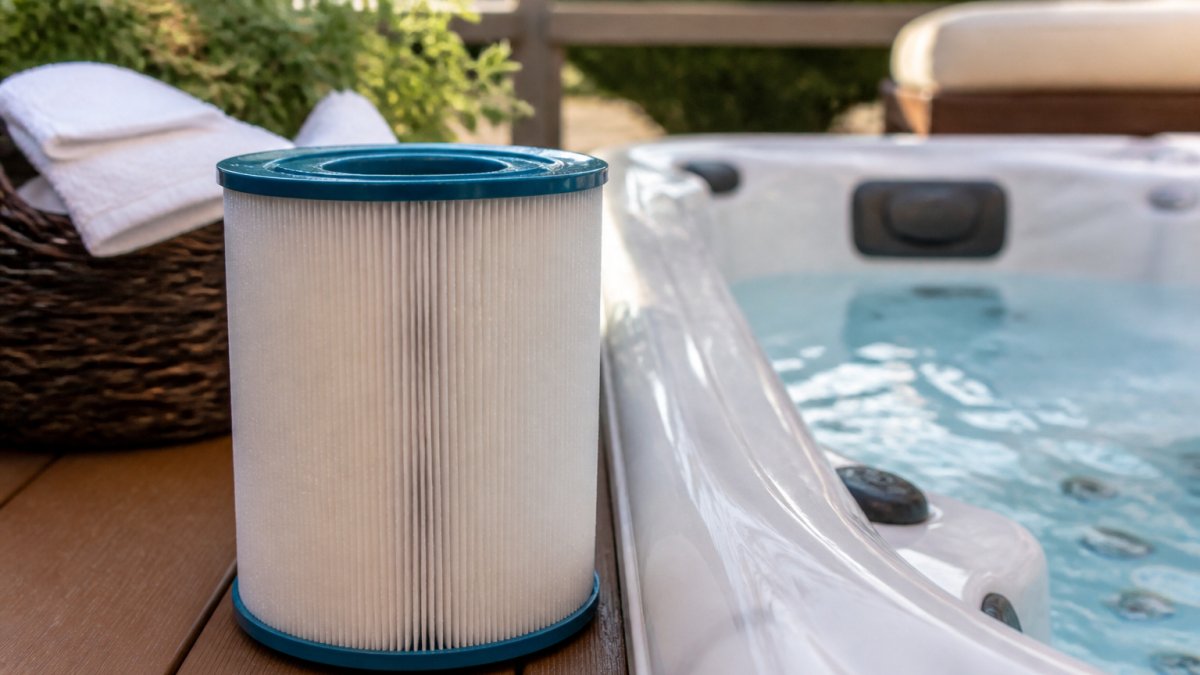
Your filter cartridge is the workhorse of your spa's circulation system, trapping debris, hair, and oils that would otherwise cloud the water. A dirty filter restricts flow, making your pump work harder and reducing sanitizer effectiveness. Here is the specific schedule and process most practitioners recommend.
The 3-Tier Filter Cleaning Schedule
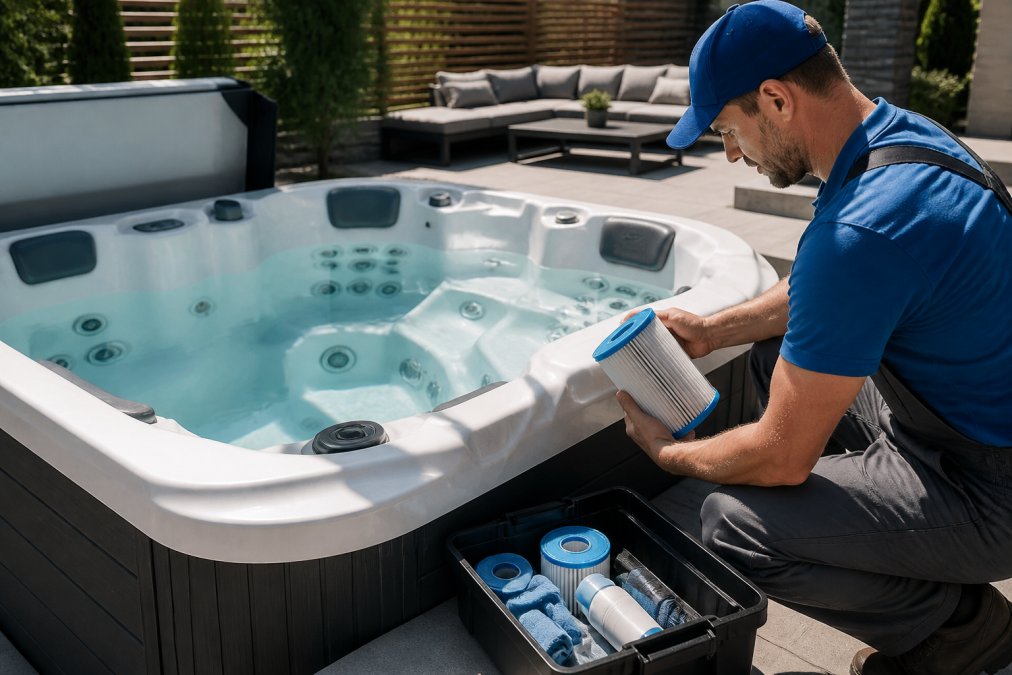
1. Weekly Rinse (Every 1-2 Weeks): Remove the filter cartridge and rinse it thoroughly with a garden hose, using a straight, high-pressure stream to blast debris from between the pleats. Spray from the inside out to push particles free. This takes 5 minutes and prevents large debris from embedding deeper into the media.
2. Monthly Chemical Soak (Every 4-6 Weeks): A hose rinse only removes loose debris; it does not break down body oils, lotions, and mineral scale that cling to the fibers. Once a month, soak the cartridge in a dedicated filter cleaning solution, such as Natural Chemistry's Filter Clean or Leisure Time's Filter Clean. These alkaline-based cleaners dissolve oils and organic buildup. Soak for the time specified on the label (typically 1-12 hours), then rinse thoroughly until the water runs clear.
3. Quarterly Deep Clean (Every 3-4 Months): For a deeper clean, use a chemical that targets scale and metal buildup, such as a citric-acid-based cleaner, especially if you have hard water. Soak the filter to dissolve calcium deposits that can clog pores and reduce flow. This is best done right before you drain and refill your spa, as it also helps remove lingering contaminants from the system. maintaining wood pergolas.
The 'Two-Filter' Strategy
Troubleshooting Filter-Related Water Issues
A dirty filter is often the root cause of problems that appear chemical. If you see any of the following, check your filter first:
- Low Water Flow: If the jets feel weak, a clogged filter is the most common culprit. The pump is struggling to pull water through the cartridge.
- Persistent Cloudy Water: If your water is cloudy even after shocking and balancing, a dirty filter is not effectively trapping the fine particles. The water is circulating but not being filtered.
- Foaming Water: Body oils and lotions that are not trapped by the filter will break down and cause foam. A clean filter is your first line of defense against foam.
- Heater Issues: A restricted filter can cause the pump to overheat and trip a thermal cutoff, which may present as a heater error code on your control panel.
When to Replace, Not Just Clean
Even with diligent cleaning, filter cartridges have a finite lifespan. Most manufacturers recommend replacing yours every 12-18 months, depending on usage. Signs it is time to replace include:
- The pleats are frayed, torn, or permanently misshapen.
- The cartridge does not rinse clean, even after a chemical soak.
- The spa's water pressure remains low even with a freshly cleaned filter.
A new filter cartridge typically costs between $30 and $80, a small price compared to a pump repair caused by a chronically restricted filter. Mark your calendar for a replacement every year during your spring maintenance routine to keep your system running at peak efficiency.
Step 6: Drain and Refill Your Spa on Schedule
No matter how diligent you are with chemicals, the water will eventually reach a point where it can no longer be balanced effectively. Dissolved solids (TDS) build up over time, making it impossible to maintain clear water. The only solution is a complete drain and refill.
The frequency depends on usage, but a common schedule is every three to four months. When you drain the spa, take the opportunity to clean the empty shell thoroughly and remove any biofilm that may have formed in the plumbing. Refilling with fresh water resets your water balance and gives you a clean slate.
Step 7: Maintain the Shell, Cover, and Equipment for the Long Haul
Weekly water care is only part of the picture; the physical components of your spa also need attention. This section goes beyond the standard 'wipe down the shell' advice to focus on the mechanical heart of your spa, the pump, heater, and plumbing, because that is where costly failures originate.
Shell and Waterline Care
Wiping down the spa shell and waterline after each use prevents scum lines. For a deeper clean, use a non-abrasive spa shell cleaner or a mild solution of white vinegar and water. Avoid harsh household cleaners, as they can strip the acrylic's protective gloss and leave a residue that interferes with water chemistry.
Cover Maintenance and Winterization
Your spa cover is an essential insulator and safety device. Clean it monthly with a gentle vinyl cleaner and treat it with a 303 Aerospace Protectant or similar UV protectant to prevent cracking and drying. Check for waterlogging, which adds weight and strains the lift mechanism. Lift the cover from the center; if it feels heavy or sags, the foam core is saturated and its insulating value is compromised. Most covers last 5-7 years; if yours is saturated, replacement is more cost-effective than repairing a strained lift system.
Pump and Heater Preventative Care
The pump and heater are the most expensive components to replace. A common cause of premature failure is running the pump with a dirty filter, which restricts flow and causes overheating. Always ensure your filter is clean before troubleshooting any flow or heating issue. Listen for unusual noises from the pump area, such as whining or grinding, which can indicate a failing bearing or clogged impeller.
For the heater, the most common issue is scale buildup on the heating element, which acts as an insulator and reduces efficiency. Maintaining calcium hardness in the 150-250 ppm range is the best defense. If your spa takes longer to heat, a descaling flush can help remove mineral deposits from the heater and pipes.
Plumbing and Jet Maintenance
Biofilm, a slimy layer of bacteria, can build up inside plumbing lines over time, even with proper sanitization. This is a primary cause of persistent odors and foamy water that resists chemical treatment. A quarterly plumbing flush is a proactive step most guides overlook. Use a plumbing line cleaner, circulate it through the jets for the recommended time, then drain and refill the spa.
For the jets themselves, remove and inspect the jet inserts periodically. They can become clogged with debris or scale, reducing water pressure. Most jet inserts twist out for easy cleaning. Soak them in a mild vinegar solution to dissolve mineral buildup, then rinse and reinstall.
By adopting this 'equipment-first' mindset, you are not just cleaning a tub; you are maintaining a system. A few minutes of inspection and proactive care each month can prevent costly repairs, making your spa a source of relaxation, not financial stress.
Frequently Asked Questions
How often should you drain and refill a backyard spa?
Plan to drain and refill your spa every three to four months. A simple rule is to replace the water based on usage: divide the spa's gallon capacity by the number of daily users, then divide by three. If the water is foamy, cloudy after shocking, or the total dissolved solids are high, it is time for a change regardless of the calendar.
Do I need to put chlorine in my hot tub every day?
You should check your sanitizer levels daily if the spa is in regular use, but you may not need to add chlorine every single day. A consistent daily dose of granular chlorine or a weekly dose of dichlor helps maintain a free chlorine residual between 3 and 5 parts per million. Test strips are the fastest way to confirm if a top-up is needed.
Why is there a 15-minute hot tub rule?
The 15-minute rule is a safety guideline, not a maintenance tip. It refers to limiting a soak to 15 minutes at a time, especially at temperatures above 104°F. Prolonged exposure can lead to dizziness, overheating, or lethargy. It is best to alternate between soaking and cooling off, and to stay hydrated.
What is the average lifespan of an outdoor hot tub?
With consistent care, a quality outdoor spa can last 15 to 20 years. The key to longevity is preventative maintenance: keeping chemicals balanced, cleaning filters monthly, protecting the cover, and ensuring proper water flow. Equipment like pumps and heaters typically last a decade or more if the water chemistry is never neglected.