 how-to
7 Steps to Balance Pool Water Chemistry Safely
Last Updated: October 24, 2026
Quick Summary
To balance pool water chemistry, test all four parameters, adjust alkalinity first to 80-120 ppm, then pH to 7.2-7.6, chlorine to 1-3 ppm, and calcium hardness to 200-400 ppm, waiting 4-6 hours between adjustments with the pump running.
- Test pool water at least weekly during swimming season, collecting samples 12-18 inches below the surface away from return jets.
- Adjust alkalinity first because it stabilizes pH; then adjust pH, chlorine, and calcium hardness in that order.
- Never mix pool chemicals together in any container; add each product separately to the pool with the pump running.
- Wait 4-6 hours after adding alkalinity or pH adjusters, 8-24 hours after chlorine shock, and retest before swimming.
- Keep cyanuric acid at 30-50 ppm to shield chlorine from sunlight and maintain sanitizing effectiveness.
Table of Contents
- Why Water Balance Matters for Pool Safety
- How to Test Pool Water: Choosing and Using the Right Kit
- Understanding Your Target Ranges: pH, Alkalinity, Chlorine, and Hardness
- How to Raise Pool Alkalinity Safely
- Pool Chemical Balancing Order: The Right Sequence
- How Long to Wait to Swim After Adding Pool Chemicals
- Common Mistakes and Troubleshooting
- Start Your Pool Maintenance with Confidence
- Frequently Asked Questions
Why Water Balance Matters for Pool Safety
Learning to balance pool water chemistry is the foundation of a safe, clean swimming environment.
Proper balance prevents corrosion of pumps and filters, protects pool walls and floors, and ensures chlorine kills harmful bacteria and viruses.
Mastering balance pool water chemistry comes down to testing, knowing target ranges, and making small adjustments in the right order. Most problems stem from neglecting one parameter or adjusting chemicals out of sequence.
How to Test Pool Water: Choosing and Using the Right Kit
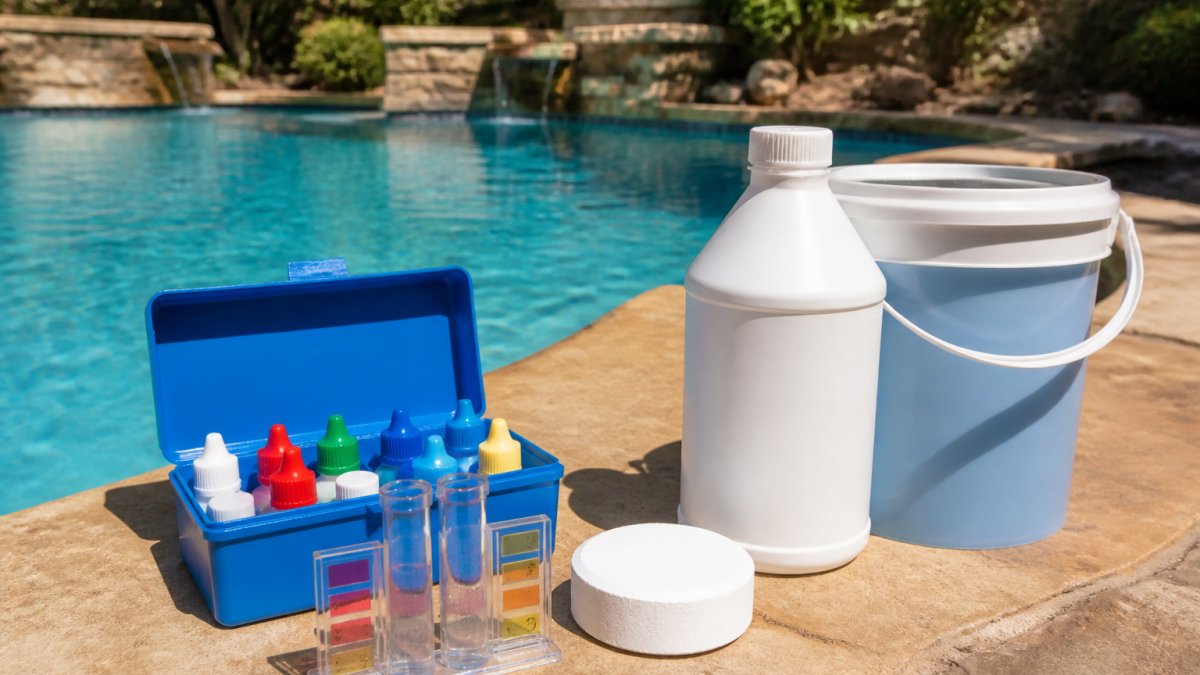
Testing is the critical first step, you can't balance what you don't measure. Test strips are fast; liquid kits take longer but are often more accurate.
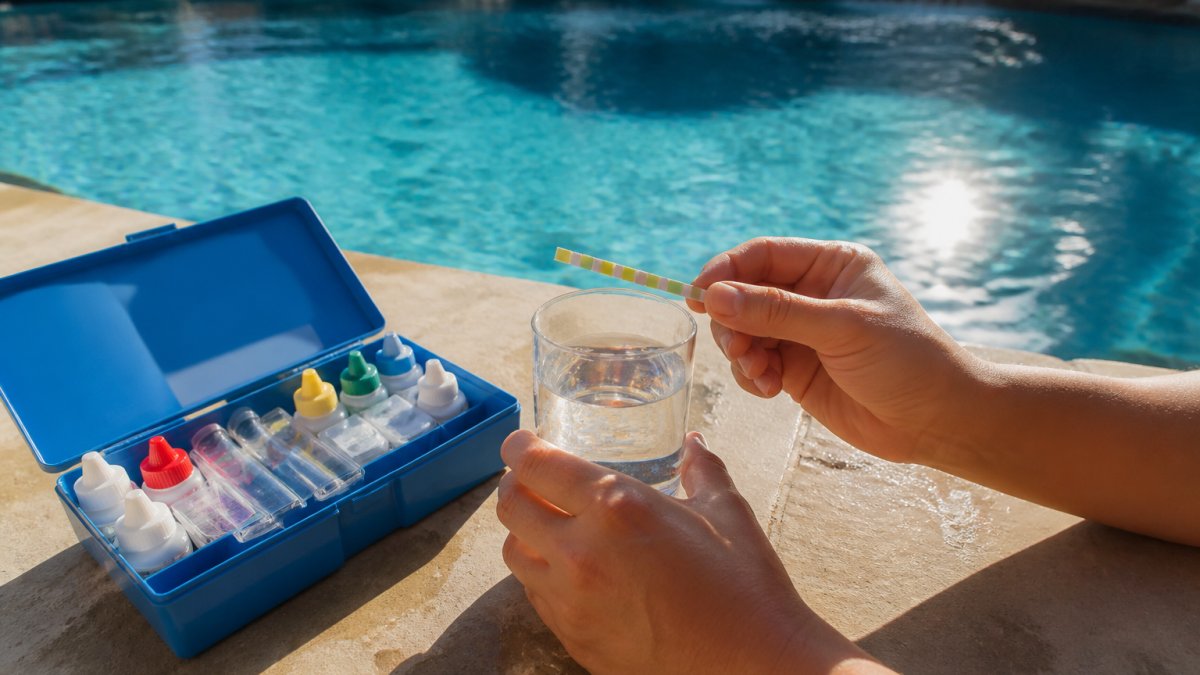
You can explore 5 best hot tub water testing kits for 2026 to see options that work well for pools too.
Record results each time to spot trends, does pH always drift up? Does alkalinity drop faster than expected? These patterns guide your adjustments.
Understanding Your Target Ranges: pH, Alkalinity, Chlorine, and Hardness
Your pool has four core parameters, plus a stabilizer reading that changes how you interpret chlorine. Each affects the others, which is why adjustment order matters. Use the chart below, then read the notes before dosing anything.
| Parameter | Target range | Unit | What it controls | Common symptom when off |
|---|---|---|---|---|
| pH | 7.2-7.6 | pH scale | Comfort, chlorine effectiveness, surface and equipment protection | Low: corrosion, stinging eyes. High: scaling, cloudy water, weak chlorine |
| Total alkalinity | 80-120 | ppm (mg/L) | Buffers pH so it stays stable | Low: pH bounces. High: pH locked high, hard to lower |
| Free chlorine | 1-3 | ppm | Active sanitizing of bacteria and viruses | Low: algae, cloudy water. High: irritation, faded liners |
| Cyanuric acid (stabilizer) | 30-50 | ppm | Shields chlorine from sunlight | Low: chlorine burns off fast. High: chlorine becomes sluggish |
| Calcium hardness | 200-400 | ppm | Protects plaster, concrete, and metal from corrosion or scale | Low: etching, corrosion. High: scale, cloudy water |
Notes the chart won't tell you:
- Free chlorine is a moving target when cyanuric acid is high. Many practitioners treat the free-chlorine minimum as roughly 5% of the cyanuric acid reading, so at 50 ppm cyanuric acid, keep free chlorine at or above about 2.5 ppm rather than the bare 1 ppm floor. At 30 ppm cyanuric acid, 1-3 ppm is workable. This is why testing stabilizer matters, not just chlorine.
- Total alkalinity targets shift with sanitizer type. For pools using stabilized chlorine tablets (trichlor) or dichlor, a lower alkalinity in the 80-100 ppm range helps offset the pH drift those products cause. For pools using liquid chlorine or a saltwater chlorine generator, 100-120 ppm is often easier to hold. Spas typically run lower total alkalinity, commonly 80-120 ppm, but always follow the manufacturer's spec for your unit.
- Calcium hardness depends on surface. Plaster and concrete pools need the full 200-400 ppm to avoid etching. Vinyl-liner pools can run lower, often 150-250 ppm, because there's no plaster to protect, but too low still corrodes metal fittings. Fiberglass is similar to vinyl. Follow the surface manufacturer's recommendation when it conflicts with general guidance.
Total Alkalinity and pH: The Foundation
Total alkalinity and pH work together. Alkalinity is the water's buffering capacity, dissolved bicarbonate that absorbs acid and base before pH moves.
Adjust alkalinity first, it stabilizes everything else. Below 80 ppm, add sodium bicarbonate; above 120 ppm, lower it with muriatic acid or dry acid per the label.
Then adjust pH. Below 7.2, add pH increaser (sodium carbonate, sold as soda ash); above 7.6, add acid.
Free Chlorine and Sanitizer Levels
Free chlorine is the active sanitizer killing bacteria and viruses. Test kits measure it separately from combined chlorine (used-up chloramines that no longer sanitize).
If free chlorine is low, add chlorine shock per the label, a high dose that oxidizes contaminants and restores sanitizing power.
Cyanuric acid (chlorine stabilizer) shields chlorine from UV rays; without it, sunlight breaks chlorine down quickly. Keep it at 30-50 ppm.
Calcium Hardness and Cyanuric Acid
Calcium hardness measures dissolved minerals. Too little corrodes metal and concrete; too much causes scaling, white crusty buildup on walls, tile lines, and equipment. Target 200-400 ppm for plaster, lower for vinyl.
If hardness is low, add calcium chloride. If it's high, the only practical fix is partial water dilution, drain some and refill with fresh water, which is why many owners do a partial drain and refill once or twice yearly.
High cyanuric acid (above 100 ppm) makes chlorine less effective and pH harder to adjust; dilute by draining and refilling.
How to Raise Pool Alkalinity Safely
Low alkalinity is one of the most common pool chemistry problems, it causes wild pH swings, uncomfortable water, and equipment corrosion. Raising it is simple: add sodium bicarbonate.
Calculate pool volume first, it determines the dose. Multiply length × width × average depth × 7.5 for gallons; a 20×10 foot pool at 5-foot average depth holds 7,500 gallons.
Follow the label for dosage, typically 1.5 pounds of sodium bicarbonate per 10,000 gallons raises alkalinity about 10 ppm. Add slowly with the pump circulating, and never dump chemicals in directly or add multiple at once.
Wait 4-6 hours with the pump running, then retest and adjust again if needed. Small increments prevent overcorrecting.
Pool Chemical Balancing Order: The Right Sequence
This is where most mistakes happen. Follow this sequence:
- Test all four parameters (alkalinity, pH, free chlorine, calcium hardness)
- Adjust alkalinity first, raise or lower to 80-120 ppm range
- Wait 4-6 hours, then retest alkalinity and pH
- Adjust pH second, raise or lower to 7.2-7.6 range
- Wait 4-6 hours, then retest
- Adjust chlorine third, raise to 1-3 ppm if needed
- Adjust calcium hardness last, only if it's outside 200-400 ppm range
- Retest the next day to confirm all parameters are stable
Why this order? Alkalinity affects pH, so adjusting pH first means the alkalinity change shifts it again. Chlorine comes later because it doesn't affect other parameters, and calcium hardness is last because dilution affects everything else.
Never mix chemicals in the pool or a bucket, and always follow the product label. Wear goggles, gloves, and a mask when handling dry chemicals, and store all chemicals in a cool, dry place away from children and pets.
How Long to Wait to Swim After Adding Pool Chemicals
This depends on what you added. After adding alkalinity increaser or pH adjusters, wait 4-6 hours before swimming.
After chlorine shock, wait 8-24 hours before swimming.
After calcium chloride or other hardness adjusters, wait 2-4 hours. These dissolve quickly but still need circulation time.
The key rule: always retest before swimming. If chlorine is still above 3 ppm, wait longer.
Common Mistakes and Troubleshooting
Most pool chemistry problems trace back to a handful of causes.
Cloudy water: Usually low chlorine, high pH, or low alkalinity. Test all three.
Green water: This is algae.
Water tastes or smells like chlorine: This is combined chlorine (chloramines), not free chlorine.
pH won't stay in range: Low alkalinity is the usual culprit.
Scaling on walls: High calcium hardness.
Equipment corrosion: Low pH or low alkalinity. Raise both to proper ranges.
Chemical Incompatibilities: What Must Never Be Combined
This is the part most guides skip, and it's the part that causes injuries. The rule is simple: never mix two pool chemicals together, in any container, ever. Add each product separately to the pool water, with the pump running, and wait between additions.
Specific combinations to avoid:
- Chlorine and acid. Mixing chlorine shock with muriatic acid or dry acid, even in small amounts, can release chlorine gas. Add them at different times, never in the same bucket, and never pour one into a skimmer while the other is still dissolving.
- Chlorine and alkalinity increaser or pH increaser. These can react violently and produce heat or fumes. Dose alkalinity and pH first, circulate, then add chlorine later.
- Chlorine and calcium chloride. Combining dry chlorine with calcium chloride can generate heat and dangerous fumes. Add calcium separately and only after chlorine has circulated.
Safe Storage, Ventilation, and Spill Response
- Store dry chemicals in a cool, dry, well-ventilated area away from sunlight, moisture, and any ignition source. Moisture is the enemy, a damp container of chlorine can degrade and release gas.
- Keep chlorine and acid physically separated, different shelves, ideally different cabinets. Never store them side by side, and never store them in the same bin.
- Keep all chemicals out of reach of children and pets, and store them in their original labeled containers. Never transfer chemicals into unmarked bottles or food containers.
The Most Common Mistake: Adjusting Too Much at Once
The single most common error is adjusting multiple parameters in one session. Change one thing, wait 4-6 hours with the pump running, retest, then adjust again. This prevents overcorrecting, wasted chemicals, and the temptation to "fix" a reading by dumping in more product. Small, sequenced adjustments are slower on paper but faster in practice, because you stop chasing your own corrections.
Start Your Pool Maintenance with Confidence
Balancing pool water chemistry safely isn't complicated once you understand the sequence. Test regularly, adjust in the right order, and wait between changes. Your pool will stay clear, safe, and comfortable for your family all season.
allvalley has been helping homeowners maintain pools and spas for over 26 years.
If you're setting up a new pool or upgrading your backyard with a spa, we handle professional delivery and installation so everything starts right. For questions about maintaining your pool or hot tub water chemistry, call us at 760-342-5277.
Frequently Asked Questions
What's the correct order to add chemicals when balancing pool water?
Always start with alkalinity increaser (sodium bicarbonate), then pH adjusters, then sanitizer. Wait 4-6 hours between each major adjustment and retest. Never mix chemicals directly in the pool or combine them in a bucket, add each separately according to product label instructions. This sequence prevents chemical reactions that can reduce effectiveness and create safety hazards.
How long should you wait to swim after adding pool chemicals?
Wait at least 24 hours after adding shock treatment before swimming. For routine chemical additions like alkalinity increaser or pH adjusters, wait 4-6 hours and retest before allowing swimmers back in. Always verify free chlorine levels are in the safe range (1-3 ppm for pools, 2-4 ppm for spas) and the water is clear before reopening. Product labels specify wait times, follow those guidelines exactly.
How often should you test pool water chemistry?
Test at least 2-3 times per week during swimming season, and weekly during off-season. Test more frequently (daily) if you've added chemicals, experienced heavy rainfall, or have high bather load. Use test strips or a liquid test kit to check free chlorine, pH, and total alkalinity. Calcium hardness and cyanuric acid need testing only monthly or when you suspect an imbalance.
What should you do if your pool water stays cloudy after balancing chemicals?
Cloudy water often means free chlorine is too low, filtration is poor, or pH is out of range. Retest all parameters, pH should be 7.2-7.6, free chlorine 1-3 ppm. Run your pool pump and filter continuously for 24 hours. If alkalinity is high (above 120 ppm), it can cause cloudiness even with correct chlorine; lower it by diluting pool water or using pH decreaser. If the problem persists after 48 hours of filtration, consider a clarifier product per label instructions.
Maintaining balanced pool water chemistry protects your family and your equipment. The routine is simple: test, adjust in sequence, wait, and retest. Start this week with a fresh water test, follow the steps above, and you'll notice the difference immediately. Your pool will stay crystal clear, safe, and ready for every swim.