 how-to
Signs of Hot Tub Heat Exhaustion: Recognize & Respond
Last Updated: October 22, 2026
Quick Summary
Hot tub heat exhaustion is a condition where your body temperature rises dangerously due to prolonged exposure to hot water, typically occurring within 15 to 30 minutes in water heated to 104°F or higher. Early signs include heavy sweating, pale clammy skin, dizziness, and intense thirst, which progress to confusion, nausea, and rapid pulse if you remain in the tub.
- Early heat exhaustion symptoms appear within 15 to 30 minutes in very hot water and include heavy sweating, pale clammy skin, and dizziness.
- Heatstroke differs from heat exhaustion by altered mental status, hot dry skin, and core temperature exceeding 104°F; call 911 immediately if suspected.
- Healthy adults should limit continuous hot tub time to 15 to 30 minutes at 104°F and take breaks every 15 to 20 minutes.
- First aid for heat exhaustion includes exiting the tub, lying down with elevated legs, cooling with wet cloths, and drinking water if conscious.
- Higher-risk groups include children under 4, adults over 65, people with heart conditions, and those taking certain medications or alcohol.
Table of Contents
- Understanding Hot Tub Heat Exhaustion
- Heat Exhaustion Symptoms in a Hot Tub
- Heatstroke Symptoms and How They Differ
- Heat Exhaustion vs. Heatstroke: Key Differences
- How Long to Stay in a Hot Tub Safely
- Heat-Related Illness First Aid in the Hot Tub
- Prevention: Who's at Higher Risk and How to Stay Safe
- Frequently Asked Questions
Understanding Hot Tub Heat Exhaustion
Hot tub heat exhaustion is a condition where your body temperature rises dangerously due to prolonged exposure to hot water.
Your body normally cools itself through sweating and blood flow to the skin, but in a hot tub, the surrounding heat prevents this.
Heat exhaustion is your body's cry for help. It's serious but reversible if you act fast. Heatstroke, which we'll cover next, is a medical emergency.
Heat Exhaustion Symptoms in a Hot Tub
Early Warning Signs
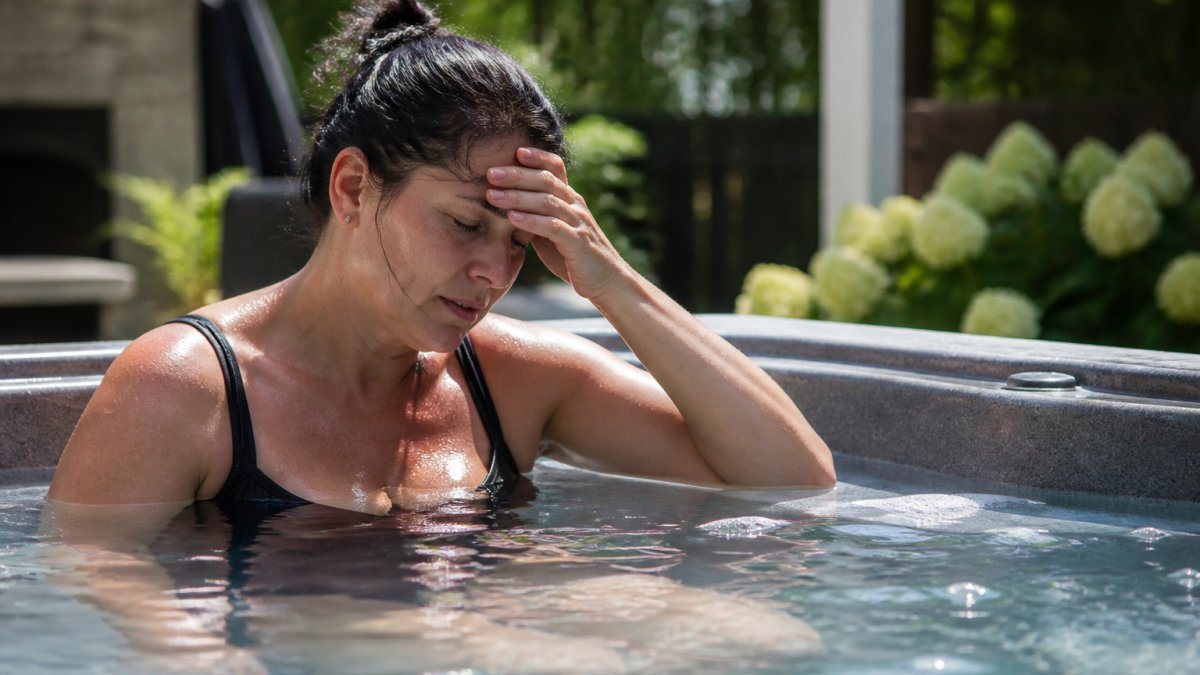
The first signals of heat exhaustion often feel mild: heavy sweating that seems excessive even in hot water, pale and clammy skin, and thirst despite being surrounded by water.
Early symptoms include:
- Heavy or profuse sweating
- Pale, cold, clammy skin
- Intense thirst
These signs typically appear within 15 to 30 minutes in very hot water. Don't ignore them, they mean your body is struggling to regulate temperature.
Progressive Symptoms to Watch
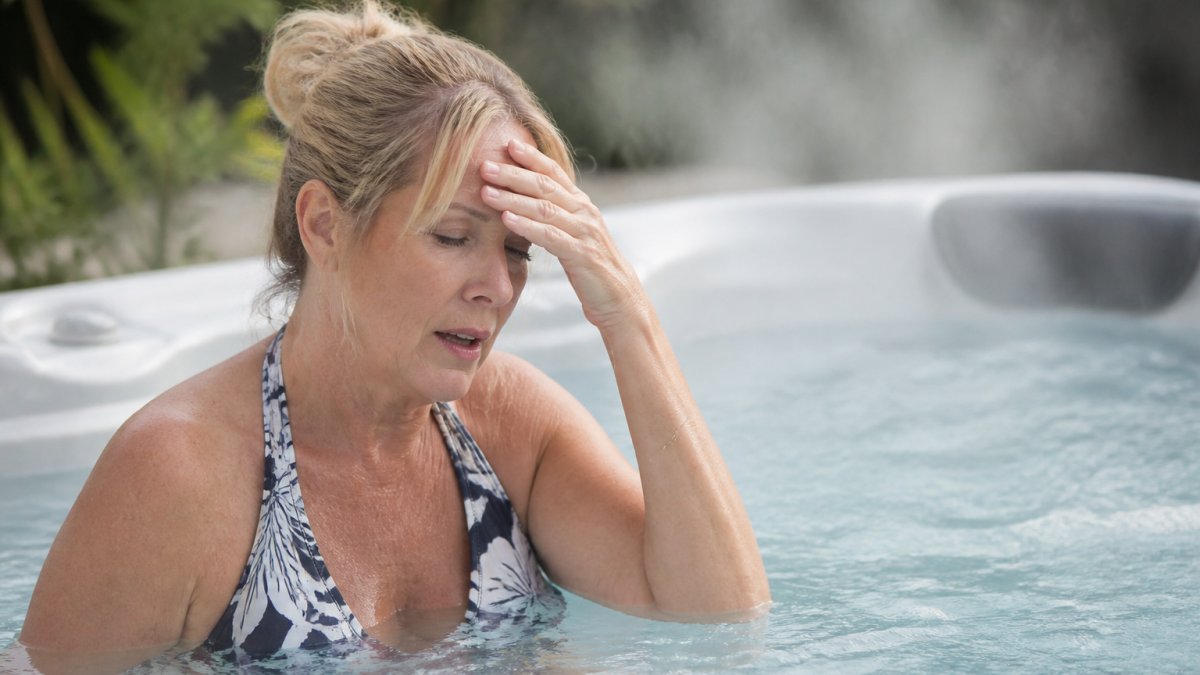
If you stay in and ignore early warnings, symptoms worsen: dizziness becomes more pronounced, confusion or irritability sets in, nausea and vomiting can start, and your heart rate climbs noticeably.
Progressive heat exhaustion symptoms include:
- Increased dizziness and disorientation
- Nausea or vomiting
- Rapid or weak pulse
At this stage, exit the hot tub immediately. Your body is losing its ability to cool itself, and the next phase, heatstroke, is life-threatening.
Heatstroke Symptoms and How They Differ
Heatstroke is when your core body temperature exceeds 104°F and your body can no longer cool itself. Unlike heat exhaustion, it involves altered mental status and can cause organ damage within minutes, a medical emergency.
Heatstroke symptoms are unmistakable:
- Hot, dry skin (or paradoxically, profuse sweating that suddenly stops)
- Confusion, slurred speech, or loss of consciousness
- Rapid, strong pulse
If someone shows these signs in or near a hot tub, call 911 immediately. Do not wait. Do not assume they'll recover on their own. Heatstroke causes brain damage and organ failure within minutes.
Heat Exhaustion vs. Heatstroke: Key Differences
The line between heat exhaustion and heatstroke is the most important distinction here. Heat exhaustion is reversible with prompt cooling; heatstroke is a medical emergency that can cause organ damage and death. The difference is not how hot the person feels, it is whether their central nervous system is still working.
| Feature | Heat Exhaustion | Heatstroke |
|---|---|---|
| Core temperature | Usually below 104°F | 104°F or higher |
| Skin | Pale, cool, clammy, often sweating heavily | Hot and dry, or sweating that suddenly stops |
| Mental status | Alert but may feel anxious, irritable, or mildly confused | Confused, agitated, slurred speech, drowsy, or unconscious |
| Pulse | Rapid and weak | Rapid and strong, then may become weak |
| Other signs | Headache, nausea, dizziness, muscle cramps, intense thirst | Seizures, vomiting, loss of coordination, fainting |
| What it means | Body is overheating but still trying to cool itself | Body's temperature-control system has failed |
| Action | Exit tub, cool down, sip water if alert, monitor | Call 911 immediately; begin cooling while waiting |
The mental-status test
The most reliable way to tell them apart is mental status. Ask a simple question: their name, where they are, what day it is. A person with heat exhaustion may be uncomfortable and irritable but answers correctly and stays oriented. Any new confusion, slurred speech, or unusual behavior in a hot tub is a heatstroke red flag until proven otherwise.
The sweating signal
Heavy sweating is a heat-exhaustion sign. Paradoxically, the shift toward heatstroke looks like the opposite: skin becomes hot and dry because the body has stopped producing sweat. In a hot tub this is hard to notice because the person is already wet, look for skin that feels hot to the touch and someone who has stopped sweating despite the heat.
Why the distinction matters in a hot tub
Hot water speeds up the progression. At 104°F, core temperature can rise faster than in most outdoor settings because water conducts heat efficiently and sweat cannot evaporate, so the window between "uncomfortable" and "emergency" is shorter than people expect. Do not wait for a full set of symptoms. If someone in the tub is confused, has hot dry skin, or has fainted, treat it as heatstroke and call 911.
What heatstroke does to the body
Heatstroke is not just severe heat exhaustion. Above 104°F, proteins begin to denature, cells in the brain, liver, kidneys, and muscles are injured, and the body can develop a systemic inflammatory response, which is why it can cause permanent organ damage or death within minutes to hours. Begin cooling before emergency responders arrive; do not wait for the ambulance.
A quick decision sequence
- Is the person confused, unresponsive, seizing, or unable to stand? Call 911 and treat as heatstroke.
- Is their skin hot and dry, or did sweating suddenly stop? Call 911 and treat as heatstroke.
- Are they alert, sweating heavily, and complaining of headache, nausea, or dizziness? Treat as heat exhaustion: exit the tub, cool them, and monitor closely.
- If symptoms do not improve within 30 minutes of cooling, or if any red flag appears, escalate to emergency care.
How Long to Stay in a Hot Tub Safely
Most health guidance suggests limiting continuous hot tub time to 15 to 30 minutes for healthy adults.
Safe exposure depends on water temperature:
- 104°F: 15-30 minutes for healthy adults
- 102°F: 30-45 minutes for healthy adults
- 100°F or lower: Up to 1 hour, with breaks
These are guidelines, not guarantees. Individual tolerance varies, so listen to your body.
Take breaks every 15 to 20 minutes: exit the tub, cool down with a cold shower or drink, and rest at least 15 minutes before returning.
Pregnant women should keep water temperature below 101°F and limit exposure to 10 minutes. High temperatures in early pregnancy are linked to birth defects.
Heat-Related Illness First Aid in the Hot Tub
Immediate Steps to Take
If someone shows signs of heat exhaustion while in the hot tub, act immediately.
Step 1: Get them out of the hot tub now.
Step 2: Have them lie down and elevate their legs slightly.
Step 3: Cool their body with cool (not ice-cold) water.
Step 4: Give them water to drink if they're conscious and able to swallow.
Step 5: Monitor them closely for the next 30 minutes.
Most people recover within 30 minutes of cooling.
When to Call for Emergency Care
Call 911 immediately if:
- The person loses consciousness or becomes unresponsive
- They show signs of heatstroke (hot, dry skin; altered mental status; seizures)
- Symptoms don't improve within 30 minutes of cooling
Don't assume they're fine because they regained consciousness. Heatstroke can develop suddenly. When in doubt, call for help. It's better to be cautious with heat-related illness.
Prevention: Who's at Higher Risk and How to Stay Safe
Most heat-illness prevention advice is written for outdoor heat. A hot tub is different: water conducts heat far more efficiently than air, sweat cannot evaporate, and the exposure is often voluntary and social, so hot-tub-specific guidance beats generic "stay cool and hydrated" advice.
How water temperature and time interact
Risk rises with both water temperature and soak duration, and the two multiply each other. A tub at 104°F produces noticeable strain in 15 to 20 minutes for many healthy adults, while 100°F to 102°F may feel comfortable for 30 to 45 minutes. These are not guarantees, tolerance varies with age, fitness, hydration, medication, and alcohol. Set a timer before you get in, because time perception fades in hot water.
Hot-tub-specific prevention checklist
- Check the water temperature with a thermometer before soaking. Keep it at 104°F or lower. Many public-health guidelines use 104°F as the upper limit for adult recreational use.
- Limit continuous soak time. For healthy adults, 15 to 30 minutes is a common guideline at 104°F. Shorter sessions are safer for anyone in a higher-risk group.
- Take a break every 15 to 20 minutes. Step out, sit in cooler air, and let your body temperature settle before returning.
Who is at higher risk
- Children under age 4. Their body-temperature regulation is not fully developed, and they may not recognize or report symptoms.
- Adults over age 65. The sweating response weakens with age, and medications for heart conditions or blood pressure can affect fluid balance.
- People with cardiovascular conditions. Hot water dilates blood vessels and increases heart rate, which can strain the heart.
What recovery should look like
Prevention does not end when the person leaves the tub. After a suspected heat-exhaustion episode, recovery should be visible within about 30 minutes of cooling: more alertness, normal skin color and temperature, and easing nausea or dizziness. If symptoms persist, worsen, or return after apparent improvement, seek medical assessment, persistent confusion, vomiting, or weakness warrants a health-care provider or 911 rather than assuming the episode has passed.
A note on medications and alcohol
If you take prescription medication, ask your pharmacist or health-care provider whether it affects sweating, hydration, or heart rate in heat, a short conversation that can meaningfully change your risk profile.
At allvalley, we emphasize that hot tubs are meant for relaxation and enjoyment. With proper precautions, they are safe. Understanding your body's limits and recognizing warning signs keeps everyone protected.
Frequently Asked Questions
What are the first signs of heat exhaustion in a hot tub?
Early signs of hot tub heat exhaustion include heavy sweating, dizziness, weakness, and a headache. You may also feel nauseous or notice your skin becoming pale and clammy. Thirst and fatigue are common early warnings that your body is struggling to regulate its temperature. If you notice these symptoms developing while soaking, exit the hot tub immediately, move to a cooler area, and drink water. These initial signs are your body's signal to cool down before the condition worsens.
How can you tell heat exhaustion from heatstroke?
Heat exhaustion involves heavy sweating, weakness, dizziness, and nausea, your body is still trying to cool itself. Heatstroke is more severe: sweating may stop, skin becomes hot and dry or flushed, confusion sets in, and you may lose consciousness or experience seizures. Heatstroke is a medical emergency requiring immediate emergency care. If someone shows confusion, stops sweating despite high body temperature, or loses consciousness, call 911 immediately. Heat exhaustion can progress to heatstroke, so don't wait to get help if symptoms worsen rapidly.
How long is it safe to stay in a hot tub?
Most health guidelines recommend limiting hot tub sessions to 15-30 minutes for most adults, depending on water temperature and individual tolerance. Vulnerable groups like children, older adults, and people with heart conditions should limit time to 10-15 minutes. The hotter the water, the shorter your safe soaking time. Always take breaks, cool down, and rehydrate between sessions. Monitor yourself for signs of heat stress like dizziness or excessive fatigue, and exit if you feel uncomfortable or unwell.
What should you do if someone shows signs of heat exhaustion in a hot tub?
Help them exit the hot tub immediately and move to a cooler area, preferably indoors or in shade. Have them lie down with legs elevated and drink cool water if they're conscious and able to swallow. Apply cool, wet cloths to their skin, particularly on the neck, armpits, and groin where blood vessels are close to the surface. Monitor their symptoms closely. If confusion, loss of consciousness, or severe symptoms develop, or if they don't improve within 30 minutes, call 911. Never leave them alone during recovery.