 how-to
What to Look for in a High-Quality Outdoor Kitchen Sink
Table of Contents
- Why Material Quality Makes or Breaks an Outdoor Kitchen Sink
- Best Outdoor Kitchen Sink Material: Stainless Steel Grades and Alternatives
- Outdoor Kitchen Sink Installation Requirements You Can't Skip
- Sink Size, Mounting Style, and Faucet Compatibility
- How to Winterize an Outdoor Kitchen Sink Before the First Freeze
- Local Code, Permits, and Ergonomics: What Most Buyers Overlook
- Frequently Asked Questions
Last Updated: September 19, 2026
Why Material Quality Makes or Breaks an Outdoor Kitchen Sink
The outdoor kitchen sink is the hardest-working piece of an al fresco setup, and it lives outside all year. At allvalley, we've spent 26 years helping homeowners build backyard retreats, and we've seen the same story: a sink that looks fine on day one can be rusting from the inside by year two. This guide covers what to look for in a high-quality outdoor kitchen sink, from steel grade to winterization.
Outdoor sinks face sun, rain, and temperature swings indoor sinks never see, which is why material choice matters more than any other factor.
The Problem With Indoor Sinks Outside
An indoor sink is built for a climate-controlled room. Outside, the math changes fast.
- UV exposure fades finishes and dries out sealants
- Moisture sits in crevices that never fully dry
- Temperature swings stress metal and cause expansion cracks
- Pests and debris clog drains that aren't screened
The result is early failure. Choose a unit built for the outdoors and you skip that cycle.
Best Outdoor Kitchen Sink Material: Stainless Steel Grades and Alternatives
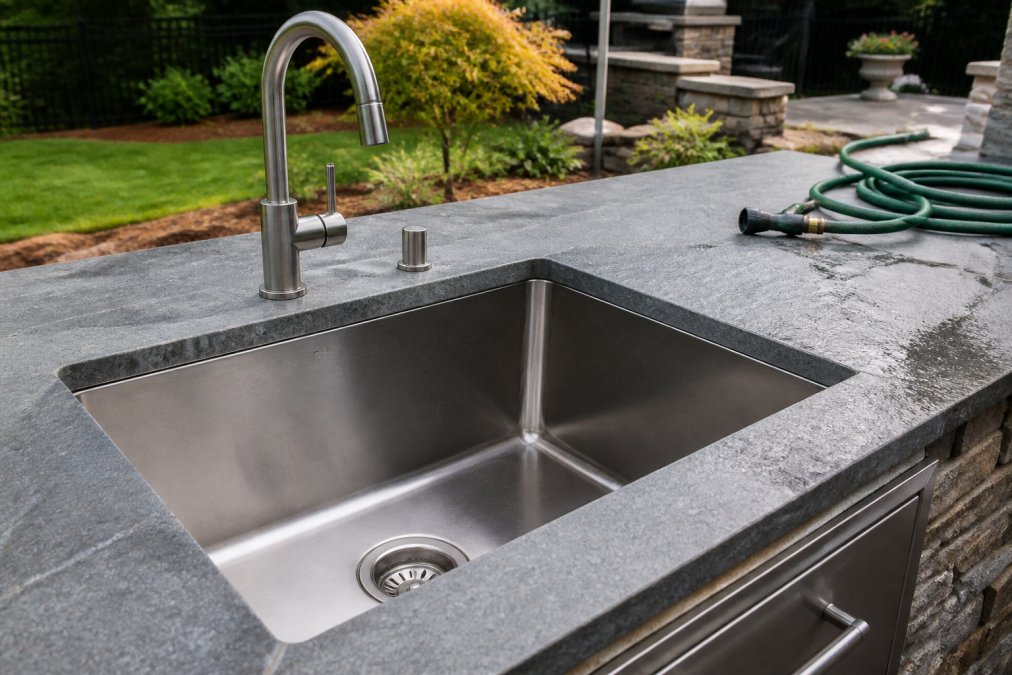
Stainless steel is the best outdoor kitchen sink material for most homeowners: it resists corrosion, handles heat, and holds up to heavy use. But not all stainless is equal, and the grade decides how long the sink lasts.
304 vs 316 Stainless Steel: What the Numbers Mean
304 stainless steel is the standard for outdoor kitchens. It resists rust, handles food prep, and costs less than marine grade. For most backyards, it's the right call.
316 stainless steel, often called marine grade or T-316, adds molybdenum, which blocks corrosion from salt and harsh air. Near the coast or with heavy pool chemicals, 316 is worth the upgrade.
| Grade | Best For | Corrosion Resistance | Cost |
|---|---|---|---|
| 304 | Inland backyards, general use | Strong | Lower |
| 316 (marine grade) | Coastal areas, salt exposure | Strongest | Higher |
Gauge thickness matters too: a lower number means thicker steel, which resists dents and holds its shape over years of use.
Granite Composite, Copper, and Cast Iron in an Outdoor Setting
Stainless isn't your only option, but the others come with trade-offs.
- Granite composite: Resists scratches and heat, but can fade under constant UV exposure
- Copper: Ages into a patina many homeowners love, but needs sealing and costs more
- Cast iron: Heavy and tough, but rusts fast unless it's fully enameled
For low-maintenance outdoor use, stainless steel still wins; the others work only if you're ready to keep up with them.
Outdoor Kitchen Sink Installation Requirements You Can't Skip
Outdoor kitchen sink installation requirements come down to three things: water in, water out, and a solid base. Get one wrong and you'll be tearing into the counter later, the difference between a sink that lasts twenty years and one that backs up in year two is almost always in the plumbing, not the basin.
Plumbing, Drainage, and Water Supply Logistics
Water supply and drainage are where most DIY builds stall. An outdoor sink needs a dedicated line with freeze protection.
Supply line sizing. A typical outdoor kitchen sink runs fine on a 1/2-inch supply line, matching the standard residential branch.
Three ways to get water out there.
- Tied into the home's drain system: The most durable option. You run a drain line back to a stack or a utility sink, and the sink behaves like an indoor fixture. This requires slope, a vent, and usually a permit.
- Garden hose feed and drain to grade: The cheapest and most common DIY route. A hose feeds the faucet, and the drain empties to a dry well, a French drain, or a planted area. Simple, but the drain line can freeze solid in winter and the hose is a trip hazard.
- Greywater or holding tank: Where code allows, sink water drains into a small tank or a gravel-and-perforated-pipe field. This is the option most guides skip entirely, and it's often the only legal path when tying into the main line would mean cutting through a slab or a finished patio.
Local Code and Permit Compliance for Outdoor Plumbing
Most plumbing work needs a permit, and outdoor sinks are no exception. Rules vary by city, so confirm what applies before you dig, skipping this can mean fines or a teardown later.
A few things inspectors commonly look for:
- Backflow protection. Any hose bibb or outdoor faucet that could sit in standing water needs a vacuum breaker or backflow preventer so dirty water can't siphon back into the home's drinking supply.
- Proper materials. Drain lines exposed to sunlight should be rated for UV exposure; PVC degrades in direct sun over time.
- Greywater rules. Some areas allow sink water to irrigate landscaping, others prohibit it outright, and many cap how much you can discharge. Confirm before you trench.
- Setbacks. Drain fields and dry wells often have minimum distances from property lines, wells, and foundations.
Sink Size, Mounting Style, and Faucet Compatibility
Size and mounting style decide how your sink works day to day. Match both to how you actually cook outside.
- Basin size: A deep single basin handles pots and coolers better than a split double
- Prep station: A bar center with a built-in cutting board adds real workflow value
- Apron front: A farmhouse-style front adds style but limits cabinet layout
How to Winterize an Outdoor Kitchen Sink Before the First Freeze
To winterize an outdoor kitchen sink, shut off the water, drain every line, and protect the trap. Water left in pipes freezes, expands, and splits metal, the step most buyers forget, and the one that saves the sink.
- Close the supply shut-off valve
- Open the faucet to release pressure
- Disconnect and drain the supply line
- Clear the P-trap and drain fittings
- Cover the sink to block debris and moisture
Local Code, Permits, and Ergonomics: What Most Buyers Overlook
Two things trip up outdoor kitchen builds more than anything else: permits and comfort. Most guides cover the first in a sentence and skip the second entirely.
Ergonomics and Workflow: Building the Outdoor Kitchen Triangle
Indoor kitchens are designed around the work triangle, the path between sink, stove, and refrigerator. Outdoor kitchens follow the same logic with different pieces: the sink, the grill, and the prep or landing area. Get the spacing right and cooking outside feels effortless; get it wrong and you'll walk laps around your own patio. Integrating a central gathering point like a fire feature requires similar attention to flow, so consider these outdoor design tips to ensure your seating area complements the efficiency of your cooking zone.
The triangle distances. Aim for these ranges:
- Sink to grill: 4 to 9 feet. Close enough to move a hot pan or a platter without a long walk, far enough that grease splatter and grill heat don't reach the sink area.
- Sink to prep space: 2 to 3 feet of landing counter on at least one side of the sink. This is where you set down a cutting board, a colander, or a tray of food headed for the grill.
- Total triangle perimeter: Keep the three points within about 22 feet combined. Beyond that, the workflow breaks down and you start making extra trips.
Frequently Asked Questions
What material is best for an outdoor kitchen sink?
304 stainless steel is the most practical choice for an outdoor kitchen sink. It resists rust, handles UV exposure, and stands up to temperature swings better than most alternatives. If you live near saltwater or in a highly humid area, step up to 316 marine grade stainless steel for extra corrosion resistance. Granite composite and copper can work, but they need more care and cost more upfront.
Do outdoor kitchen sinks need to be covered?
A cover is not required, but it extends the life of your sink significantly. UV exposure, leaf debris, and standing water all speed up wear on finishes and drain fittings. A simple fitted cover or a built-in countertop lid keeps the basin clean and reduces moisture sitting in the bowl between uses. If your sink is fully exposed to sun and rain, covering it is worth the small investment.
Should I get an undermount or drop-in sink for my outdoor kitchen?
Undermount sinks give a cleaner look and make wiping crumbs into the basin easier, but they require a solid, sealed countertop cut and professional installation. Drop-in (self-rimming) sinks sit on top of the counter and are simpler to install, which helps if you are retrofitting an existing outdoor bar center. For most outdoor setups in windy, dusty areas, a drop-in sink with a tight rim seal is the more forgiving choice.
How do you winterize an outdoor kitchen sink?
Start by shutting off the water supply and draining both the supply lines and the drain trap. Pour RV antifreeze into the P-trap and drain to prevent freezing, then cover the basin to block debris and moisture. If your sink has a hot water line, drain that too. In areas where hard freezes are rare but possible, disconnecting the supply line and blowing it out with air is the safest approach.
A great outdoor sink comes down to material, plumbing, and planning, and getting all three right takes experience. allvalley has spent 26 years helping homeowners build backyards that hold up, with quality products and professional delivery and installation services. Our team handles the heavy lifting so your outdoor retreat works from day one. Call us at 760-342-5277 to get started.