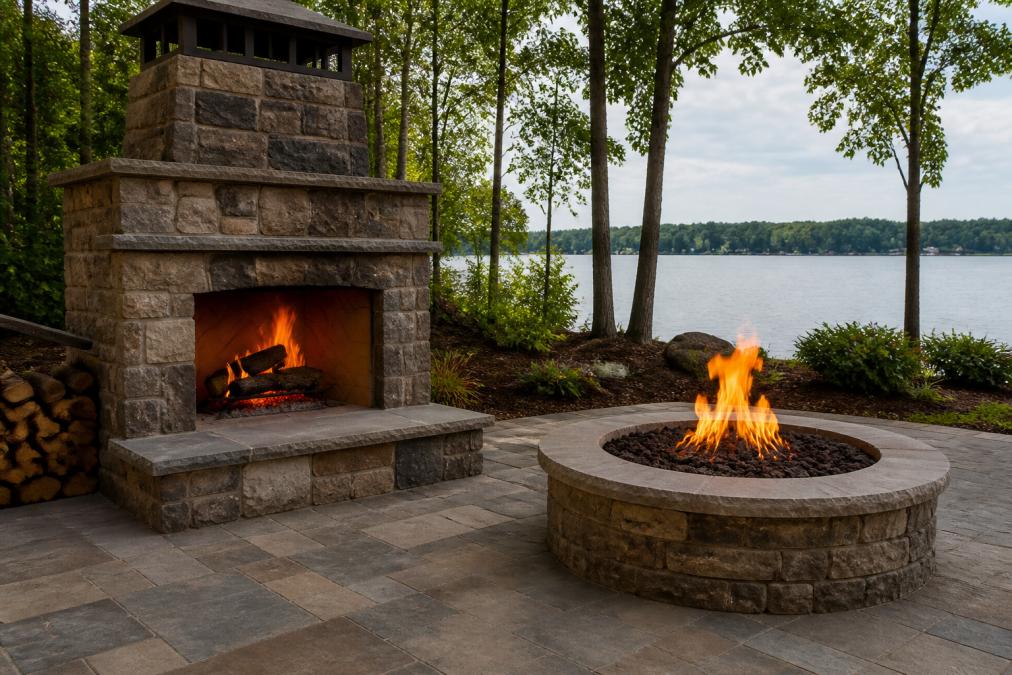
 comparison
Outdoor Fireplace vs Fire Pit: How to Choose in 2026
Table of Contents
- Outdoor Fireplace vs Fire Pit: The Quick Comparison
- Space Requirements, Patio Layout, and Seating Capacity
- Cost of Installing an Outdoor Fireplace vs Fire Pit
- Fuel Types and Heat Output: Wood-Burning, Natural Gas, and Propane
- Outdoor Fire Pit Safety Clearance Requirements and Zoning Rules
- Best Fire Feature for Windy Areas and Desert Climates
- Maintenance, Permanence, and Long-Term Value
- Frequently Asked Questions
Last Updated: September 14, 2026
Outdoor Fireplace vs Fire Pit: The Quick Comparison
Choosing between an outdoor fireplace and a fire pit comes down to three factors: permanence, budget, and how you actually use your yard. An outdoor fireplace is a permanent masonry or metal structure with a chimney that directs smoke upward, while a fire pit is a freestanding, open bowl that radiates heat in all directions. This guide from allvalley, which has spent 26 years transforming backyards into ultimate retreats, breaks down space, cost, fuel, safety, and climate so you can pick the right one the first time.
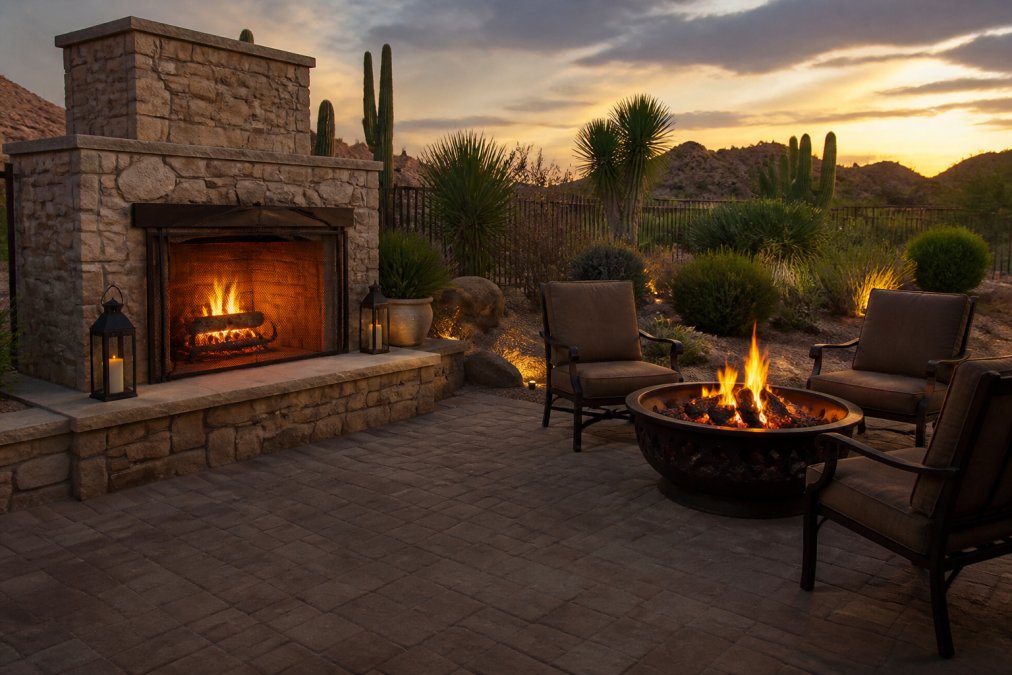
Here's the short version. Fireplaces win on permanence, smoke control, and property value. Fire pits win on cost, flexibility, and portability.
| Factor | Outdoor Fireplace | Fire Pit |
|---|---|---|
| Permanence | Permanent, built-in | Portable or semi-permanent |
| Typical use | Focal point, conversation area | Casual seating, s'mores, travel |
| Smoke control | Chimney directs smoke up | Open burn, smoke drifts |
| Fuel options | Wood, natural gas | Wood, propane, natural gas |
| Best for | Long-term backyard renovation | Renters, small patios, flexibility |
Space Requirements, Patio Layout, and Seating Capacity
A fire pit fits almost anywhere, while an outdoor fireplace needs dedicated footprint and vertical clearance. Most portable fire pits work on a patio of roughly 1.8 by 1.8 meters, but a built-in fireplace typically requires a masonry base, a chimney, and a seating zone planned around it from the start (Wildfire Prevention Tips for Fire Pits and Outdoor Fires).
Plan your patio layout around the safety circle, not the fire feature itself. Homeowners often buy the fireplace first and then discover the conversation area feels cramped once chairs are pulled back to a safe distance. Map seating capacity before you commit.
- Fire pit: seats 4-6 around a 0.9 to 1.2 meter bowl
- Fireplace: seats 4-8 in a crescent facing the hearth
- Clearance: keep combustible materials well away from the burn area
For a full backyard renovation, integrating the fire feature with existing hardscaping, retaining walls, and landscape design keeps the space cohesive. A fireplace built into a seat wall looks intentional. A fire pit dropped onto finished pavers can look like an afterthought. Thoughtful placement ensures that your fire feature serves as the anchor for a broader backyard patio design that balances comfort with architectural flow.
Cost of Installing an Outdoor Fireplace vs Fire Pit
The cost of installing an outdoor fireplace vs fire pit is the single biggest dividing line: a portable fire pit is a one-time purchase, while a masonry fireplace is a project-based build. Portable propane and wood pits fall in the low hundreds, and sculptural metal fireplaces start around $2,000. A custom masonry fireplace is a professional build quoted per project.
Because pricing depends on materials, size, gas line runs, and site access, there's no honest single number. Get a project-based quote rather than trusting a generic online figure.
| Option | Price Band | Installation |
|---|---|---|
| Portable fire pit | $150 - $600 | None, place and use |
| Sculptural metal fireplace | $2,000+ | Minimal, freestanding |
| Custom masonry fireplace | $10,000 - $50,000+ | Professional build, permits |
Fuel Types and Heat Output: Wood-Burning, Natural Gas, and Propane
Fuel choice drives heat output, operating cost, and how much work the feature demands. The three options behave very differently once you're actually sitting next to them.
Wood-burning produces the highest radiant heat and the only true crackle, but output is inconsistent, a softwood fire burns fast and cool, a seasoned hardwood fire burns longer and hotter. You pay in labor: hauling, stacking, ash removal, and chimney sweeping.
Natural gas delivers instant, consistent heat with no hauling and no ash. Output is rated in BTUs, and most built-in gas fireplaces and gas fire pits run in the 40,000 to 90,000 BTU range depending on burner size (energy.gov). The catch is infrastructure: a natural gas unit needs a permanent gas line run from the meter, which means a plumber, a permit, and a trench through your yard. Once it's in, you never think about fuel again.
Propane matches natural gas on convenience but travels. A propane fire pit or fireplace runs off a standard 20-pound tank or a larger 100-pound cylinder, and output is comparable, many portable propane pits are rated around 50,000 to 60,000 BTU. You trade the gas line for refills, and you trade infinite runtime for a tank that eventually empties mid-gathering.
| Fuel | Typical Output | Upfront Cost Driver | Ongoing Cost | Best Fit |
|---|---|---|---|---|
| Wood | Highest, variable | Firebox, chimney, spark arrestor | Firewood, sweeping, ash disposal | Traditional ambiance, rural lots |
| Natural gas | 40,000-90,000 BTU | Gas line run, permit, burner | Monthly utility bill | Permanent built-ins, urban lots |
| Propane | 50,000-60,000 BTU | Tank, regulator, burner | Tank refills | Portable units, no gas line |
Two mechanisms matter more than the fuel label. First, smoke behavior: wood throws embers and smoke that drift with the wind, while gas and propane burn clean with no ember risk, which is why gas is the default in windy or fire-restricted areas. Second, heat direction: a fireplace with a chimney concentrates heat forward into a seating crescent, while an open fire pit radiates in all directions and loses more to the sky. If you want to heat a specific seating zone efficiently, a chimney or a reflective fire pit insert does more than a bigger burner.
Outdoor Fire Pit Safety Clearance Requirements and Zoning Rules
This is the section most guides skip, and it's the one that can cost you a teardown. Clearance rules, burn bans, and HOA covenants are three separate layers of approval, and you need all three before you dig.
Layer 1: Clearance distances. Exact numbers are set locally, but common code patterns give you a working range to design around:
- 10 feet from any structure, overhang, or combustible wall is the most common minimum for open burning.
- 15 to 25 feet from property lines appears in many municipal fire codes for open fire pits.
- Overhead clearance: nothing combustible within roughly 20 feet above the burn area, no low branches, no patio roof, no awning.
- Surface: a non-combustible base (stone, concrete, metal) extending beyond the burn area, never directly on a wood deck.
A spark arrestor on a wood-burning unit is required in many jurisdictions and is cheap insurance regardless. Gas and propane units generally face lighter clearance rules because they produce no embers, but they still can't sit under a roof.
Layer 2: Municipal fire codes and burn bans. Many cities restrict open burning outright, require a permit for a built-in fireplace, and impose seasonal burn bans during dry or high-wind periods. A built-in masonry fireplace typically needs a building permit because it's a permanent structure; a portable fire pit usually does not, but it can still be banned on a given day. Confirm current requirements through [the U.S. Fire Administration's outdoor fire(/installing-outdoor-fire-features-safely) safety guidance | usfa.fema.gov] and your local fire authority.
Layer 3: HOA and neighborhood covenants. This is the layer homeowners forget. Many HOAs ban wood-burning entirely, cap the height of a built-in structure, require architectural review before construction, or restrict where a fire feature can sit relative to a fence or neighboring lot. Read your CC&Rs before you buy anything, and submit for architectural approval early, retroactive approval is much harder to get.
A pre-build compliance checklist:
- Call your local fire authority and ask about open-burning rules and permit requirements.
- Pull your HOA CC&Rs and architectural guidelines; confirm wood vs. gas is allowed.
- Verify property-line and structure setbacks for your specific lot.
- Check for seasonal burn bans that would limit wood use.
- Get any required permit and architectural approval in writing before you build.
Best Fire Feature for Windy Areas and Desert Climates
The best fire feature for windy areas is a gas or propane unit with a contained burn and a chimney or wind guard. Open wood pits lose heat and throw embers in gusty conditions, which makes them a poor fit for exposed patios. A fireplace with a chimney directs smoke and heat upward and holds its flame in the wind.
Desert climates add a second consideration: dust, dry vegetation, and heat. A masonry fireplace handles temperature swings and requires less fuss than a portable unit that has to be stored. For multi-generational usability, a built-in fireplace with a raised hearth is easier for older guests to enjoy safely than a low open pit.
Maintenance, Permanence, and Long-Term Value
A masonry outdoor fireplace is a permanent improvement that can raise curb appeal and property value, while a fire pit is a replaceable accessory. Maintenance tracks the same split: wood-burning units need ash removal and chimney attention, gas units need occasional burner checks, and propane pits need refills. Stainless steel and powder-coated finishes hold up best against weather.
For homeowners weighing a long-term backyard renovation, the fireplace's permanence is the point. It becomes part of the outdoor living space rather than a piece you store each season.
Choosing a fire feature is really a question about how you live outside. If you want a permanent focal point that anchors your outdoor living space, improves curb appeal, and handles wind and desert heat, allvalley builds and installs custom masonry fireplaces backed by 26 years of experience and professional delivery and installation. If you want flexibility and lower commitment, a portable fire pit gets you outside tonight. Call allvalley at 760-342-5277 to plan your fire feature, and get started with a backyard that works for every season.
Frequently Asked Questions
Is an outdoor fireplace better than a fire pit?
It depends on what you want from the space. A built-in outdoor fireplace gives you a permanent focal point, a chimney that manages smoke, and heat that lingers in the masonry after the fire dies. A fire pit costs less, sits lower for face-to-face conversation, and can be moved or stored. If you plan to stay in the home long term and want a hardscaped centerpiece, the fireplace wins. If you want flexibility and a lower entry price, the fire pit is the smarter pick.
How far should an outdoor fire pit be from a house?
A common rule of thumb is at least 10 feet from any structure, and 20 to 25 feet if the fire pit is wood-burning and near flammable siding, mulch, or low tree branches. Check your local fire code and HOA rules before you build, because some jurisdictions require more. Keep the safety circle clear of furniture, decor, and anything that can catch sparks, and never place a fire pit under an overhang or covered patio roof.
What is the cost of installing an outdoor fireplace vs fire pit?
Portable propane and wood fire pits typically run a few hundred dollars, while a professionally built masonry outdoor fireplace is a project-based quote that depends on size, stone, fuel type, and site access. A custom fireplace also involves footings, a chimney, and often a permit, which pushes the total well above a freestanding unit. For exact figures on your layout, request a quote so the number reflects your patio, gas line, and finish choices.
Which fire feature is best for windy areas?
For windy backyards, a propane fire pit or a fireplace with a chimney is the better choice. Propane burns clean with no sparks or embers to blow around, and a chimney on a fireplace pulls smoke up and away from the seating area. Open wood-burning fire pits lose heat and throw ash in gusty conditions.
Do I need a permit for an outdoor fireplace or fire pit?
It varies by jurisdiction. Portable fire pits usually need no permit, but built-in fireplaces, gas lines, and permanent structures often do, especially when they involve electrical, plumbing, or footings. Check with your local building department and HOA before you buy. A professional installer can pull the right permits and confirm clearance zones, which protects you if an inspector or insurance adjuster ever asks questions about the build.