 how-to
Backyard Fireplace Permit Requirements: A Step-by-Step Guide
Table of Contents
- When Is a Building Permit Required for a Backyard Fireplace?
- Understanding Local Codes and Municipal Ordinances
- Outdoor Fireplace Clearance Requirements and Safety Setbacks
- How to Apply for a Backyard Fireplace Permit
- Permanent vs. Portable Fire Features: Permit Differences
- Choosing a Durable Outdoor Fireplace for Windy Areas
- HOA Restrictions and CC&R Compliance
- Insurance and Liability Considerations
Last Updated: August 20, 2026
When Is a Building Permit Required for a Backyard Fireplace?
A building permit is required for most permanent backyard fireplace installations in residential areas. Permanent fire features, those attached to your property or built into hardscaping, including masonry fireplaces, gas line installations, and built-in fire pits, almost always require a permit. Portable fire features like freestanding metal fire bowls may not require permits, though many municipalities restrict their use.
The key distinction is permanence. If your outdoor fireplace is anchored to the ground, connected to gas or electrical lines, or part of your home's structural system, your local building division will require a permit application before installation begins. Contact your local building department before spending money on materials or hiring a contractor, they'll tell you definitively whether your specific project needs a permit.
Understanding Local Codes and Municipal Ordinances
Local codes and municipal ordinances dictate what's allowed in your backyard and how it must be installed. Most municipalities follow the International Building Code (IBC) or a variation of it, though local amendments often make codes stricter based on wildfire risk, population density, or other factors.
Common code requirements include:
- Clearance from structures: 10-15 feet from your home and 5-10 feet from fences or other buildings
- Setback from property lines: Typically 5-10 feet
- Height restrictions: Some jurisdictions limit outdoor fireplace height
- Material specifications: Requirements for fire-resistant materials
- Ventilation and air quality: Rules about smoke dispersal
- Gas shut-off valve requirements: For gas-fired fireplaces
The International Building Code standards for residential fire features provides a framework, but your local building division interprets and applies these rules. Request a copy of your local residential code from your building division, it's free and available online in most jurisdictions.
Outdoor Fireplace Clearance Requirements and Safety Setbacks
Clearance requirements and safety setbacks are the most critical part of any backyard fireplace installation. These distances protect your home, neighboring properties, and people from fire hazards.
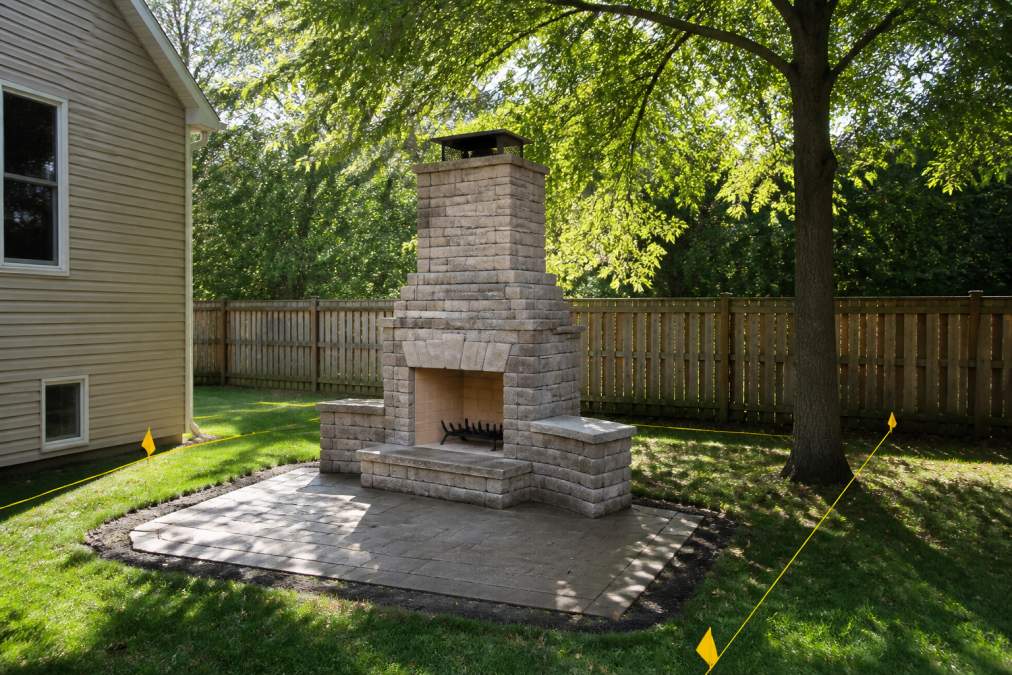
Standard clearance requirements typically include:
- 10-15 feet from your home's exterior walls: Prevents heat damage to siding, roofing materials, and windows
- 10-15 feet from overhanging tree branches: Branches can ignite from radiant heat
- 5-10 feet from property lines: Protects neighbors' structures and complies with zoning laws
- 3-5 feet from fences: Wooden fences are combustible
- 10-12 feet of clearance above: To the nearest combustible materials
These distances are based on fire behavior and heat transfer calculations. A permanent fire feature generates intense radiant heat that travels in all directions. Wind direction also matters, if prevailing winds blow smoke toward a neighbor's property, your fireplace may violate air quality regulations.
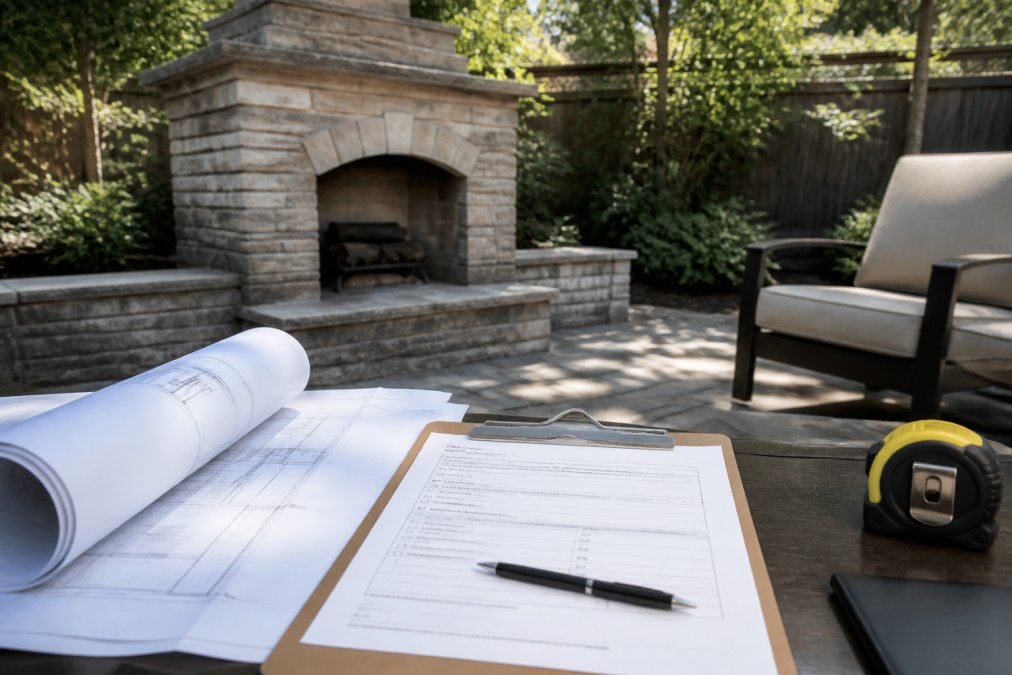
When you apply for your permit, you'll submit a site plan showing exact distances from your fireplace to all structures, property lines, and overhead obstacles. The building inspector will verify these measurements during inspection.
How to Apply for a Backyard Fireplace Permit
The permit application process varies by jurisdiction, but the basic steps are consistent.
Step 1: Gather Your Site Plan and Property Documentation
Before contacting the building division, prepare your site plan and property documents. Gather:
- Property deed or title: Proves ownership
- Current property survey: Shows exact property lines
- Site plan or sketch: Shows fireplace location, distances to structures and property lines, and overhead clearances
- Fireplace specifications: Manufacturer details, dimensions, and fuel type
- Contractor information: License number and proof of insurance (if applicable)
Your site plan must show your home's footprint, exact fireplace location, measurements to your home, property lines, fences and trees, overhead clearance, utility lines, and a north arrow with scale. If you're not comfortable drawing this yourself, ask your contractor to prepare it.
Step 2: Submit Your Permit Application to the Building Division
Contact your local building division and request a permit application for a residential fireplace installation. Most jurisdictions have online portals for downloading forms and submitting applications electronically.
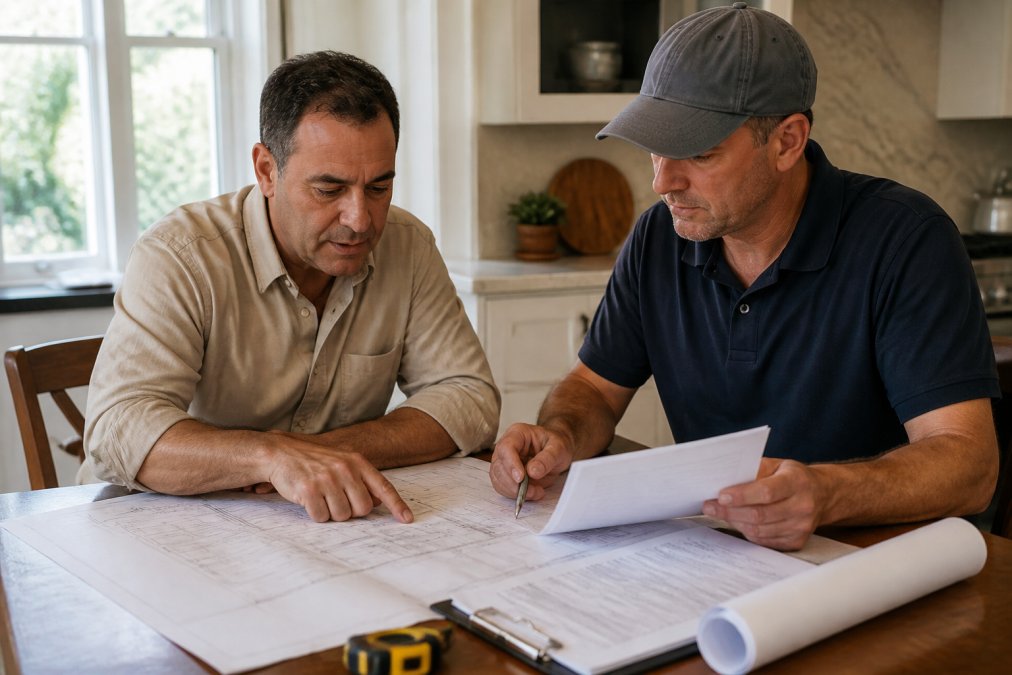
When you submit your application, include:
- Completed permit application form
- Site plan with measurements and clearances
- Fireplace specifications or manufacturer documentation
- Proof of property ownership
- Contractor license and insurance (if applicable)
- Application fee (typically $150-$500, varying by jurisdiction)
The building division will review your application for completeness and code compliance. If documents are missing or don't meet code, they'll request revisions. Submit complete, accurate applications the first time to avoid delays.
Step 3: Schedule and Pass Inspection
After receiving your permit, contact the building division to schedule inspections at key stages:
- Foundation inspection: After excavation and before pouring concrete footings
- Rough inspection: After the fireplace structure is built but before finishing materials
- Final inspection: After all work is complete
Call at least 24 hours before each inspection. The inspector will verify that your installation meets code requirements, clearances are correct, materials are appropriate, and all connections are safe. Once you pass final inspection, the building division will issue a certificate of occupancy or completion. Keep this document with your home records.
Permanent vs. Portable Fire Features: Permit Differences
Permanent fire features are attached to your property or built into your landscape, including masonry fireplaces, gas-fired outdoor fireplaces, and built-in fire pits. These always require a permit because they're part of your home's structure.
Portable fire features are freestanding and not permanently attached, including metal fire bowls and portable fire tables. Many jurisdictions don't require permits for portable features, but restrictions often apply. You may need a permit if the feature is used regularly, creates smoke concerns, violates HOA rules, or is placed too close to structures or property lines.
Even if a permit isn't required, you still must comply with setback requirements, fire safety codes, and local ordinances.
Choosing a Durable Outdoor Fireplace for Windy Areas
Wind presents unique challenges for outdoor fireplaces. If you live in a windy region, selecting a durable outdoor fireplace designed to handle wind is critical.
Wind-resistant fireplace features include:
- Enclosed designs: Three or four walls contain flames and direct heat downward
- Wind deflectors or screens: Tempered glass or metal screens protect flames
- Low-profile construction: Shorter fireplaces present less surface area to wind
- Heavy-duty materials: Steel and masonry withstand wind stress better
- Deep fireboxes: Greater depth allows flames to burn below the rim
Materials matter too. Cast iron and heavy-gauge steel resist warping and maintain structural integrity in high winds. Position your fireplace in a sheltered area if possible, against a wall, within a courtyard, or surrounded by landscaping that breaks wind patterns.
Before purchasing, ask the manufacturer about wind performance ratings.
HOA Restrictions and CC&R Compliance
If you live in a community with a homeowners association, your CC&Rs may impose additional requirements beyond municipal codes. These restrictions can be more stringent and may prohibit outdoor fireplaces entirely or require specific approval.
Review your CC&Rs for sections on exterior alterations, nuisance provisions, architectural review requirements, and restrictions on open flames. Many HOAs require architectural review and approval before you install any permanent outdoor structure. This is separate from your municipal permit and typically takes 2-4 weeks.
Some HOAs prohibit open flames entirely due to fire risk or community aesthetics. In these cases, you may be limited to gas fireplaces with glass enclosures. Always get written approval before spending money on design or materials.
Insurance and Liability Considerations
Your homeowners insurance policy may have specific requirements for outdoor fireplaces. Before you install, contact your insurance agent and ask:
- Does your policy cover outdoor fireplaces?
- Are there specific safety requirements for coverage?
- Will the fireplace increase your premium?
- Does the policy require a licensed contractor?
- Are there liability limits specific to fire features?
Many insurers require that permanent outdoor fireplaces be installed by licensed contractors and comply with all local codes. An unpermitted or code-violating fireplace could void coverage, leaving you personally liable for damages. If you sell your home, a buyer's inspector will note any unpermitted structures, which can complicate the sale and reduce your home's value.
Getting a backyard fireplace permit requires planning, documentation, and patience, but it's the only way to ensure your installation is safe, legal, and protected by insurance.
If you're ready to add a permanent outdoor fireplace to your backyard, allvalley can guide you through the process. With over 26 years of experience in backyard transformations, we offer professional installation services for high-quality fireplace products designed for durability and performance. Call us at 760-342-5277 for a consultation and site assessment.
Frequently Asked Questions
Do I need a permit for a portable fire pit versus a permanent backyard fireplace?
Yes, the answer depends on your local code and what type of fire feature you're installing. Permanent outdoor fireplaces, chimneys, and gas line installations almost always require a building permit and inspection. Portable fire pits may be exempt in some jurisdictions, but many municipalities classify them as permanent structures once they're set in place. Contact your local building division to confirm the rules in your area before purchasing or installing anything.
What happens if you install a backyard fireplace without a permit?
Installing a fireplace without a permit can result in fines, orders to remove the structure, failed property inspections, insurance claim denials, and liability issues if someone is injured. Your homeowner's insurance may refuse to cover damage or injuries related to an unpermitted installation. When you sell your home, unpermitted work can complicate the sale or reduce your property value. The cost and hassle of obtaining a permit upfront is far less expensive than dealing with violations later.
How far should an outdoor fireplace be from a house and property line?
Setback requirements vary by local code, but typical outdoor fireplace clearance requirements are 10-15 feet from your house and 5-10 feet from property lines. Gas line installation may require additional clearance from utilities and combustible materials. Your site plan must show exact measurements and distances. Always verify the specific setback requirements with your local building division or contractor before finalizing your design, as some municipalities have stricter rules.
What should I do if my HOA prohibits outdoor fireplaces?
Review your CC&R (Covenants, Conditions, and Restrictions) document carefully, some HOAs ban open flames entirely, while others allow gas fireplaces or require architectural approval. Contact your HOA board to request permission or explore alternatives like gas-only models that may comply with your community rules. If restrictions are unclear, ask for written clarification before investing in a fireplace. Working with your HOA upfront prevents costly conflicts and ensures your investment is protected.
This article was written using GrandRanker