 ultimate-guide
Custom Outdoor Fireplace Design Tips: A Complete Guide
Table of Contents
- Planning Your Custom Outdoor Fireplace Design
- Best Materials for Outdoor Fireplace Construction
- How to Choose a Durable Outdoor Fireplace for Windy Areas
- Outdoor Fireplace Safety Clearance Requirements
- Designing Your Hearth, Mantel, and Firebox
- Integrating Your Fireplace Into Your Outdoor Living Space
- Wood-Burning vs. Gas-Burning Fireplaces
- Maintenance and Seasonal Care for Outdoor Fireplaces
Last Updated: August 24, 2026
Planning Your Custom Outdoor Fireplace Design
A well-planned custom outdoor fireplace becomes the centerpiece of your backyard, transforming how your family gathers and entertains. The best designs start with understanding your space, climate, and goals before the first stone is laid.
Begin by assessing your backyard layout. Where does the sun hit throughout the day? Which direction do winds typically blow? How far is the fireplace from your house, deck, or pool? A fireplace positioned downwind from seating sends smoke directly at guests. One placed too close to the house creates fire safety concerns. Sketch your outdoor space on paper or use a digital tool, marking existing trees, structures, utilities, wind patterns, and sun exposure. You'll also need to understand local building codes and permitting requirements before committing to a design.
Best Materials for Outdoor Fireplace Construction
Natural Stone and Masonry
Natural stone and masonry remain the gold standard for outdoor fireplace construction because they handle temperature swings, weather exposure, and fire intensity without degrading. Granite works exceptionally well for hearths and exterior cladding, resisting heat damage better than softer stones. Limestone and sandstone provide beautiful aesthetics but are more porous and can develop cracks in freeze-thaw cycles. If you choose softer stone, plan for regular sealing.
Masonry veneer, thin-cut stone applied over concrete block or steel frame, offers design flexibility and cost efficiency while maintaining authentic stone appearance. Dry-stack stone (stones without mortar) creates a modern aesthetic and performs well outdoors because water drains freely. However, it requires precise cutting and careful stacking to ensure structural integrity.
Brick and Concrete Block Options
Kiln-fired clay bricks designed specifically for fireplaces (fire brick) handle thermal cycling better than standard building brick. Standard brick can spall when exposed to repeated heating and cooling. Concrete block provides an affordable, practical base layer for your fireplace structure, though it looks utilitarian alone. Most designs use concrete block as the structural backbone, then cover it with veneer, brick, or stone for finished appearance.
Engineered concrete products, including manufactured stone veneers, have improved dramatically and now replicate natural stone appearance convincingly while offering better consistency and weather resistance.
Veneer and Cladding Solutions
Stone cladding and veneer systems simplify installation and reduce costs compared to full masonry. Veneer attaches to a structural base using mortar and metal anchors. Natural stone veneer requires proper installation; inadequate anchoring or flawed waterproofing will cause failure. Manufactured stone veneer often performs better in freeze-thaw climates because it's engineered for dimensional stability.
How to Choose a Durable Outdoor Fireplace for Windy Areas
Wind is one of the most underestimated design challenges for outdoor fireplaces. A fireplace that draws beautifully on a calm day can smoke terribly when wind shifts direction.
The firebox design and chimney height determine draft performance. Most effective outdoor fireplaces have chimneys that extend at least 10-12 feet above the firebox, and ideally higher if surrounded by tall trees or structures (nfpa.org). Wind caps and chimney design matter more in windy locations. A well-designed wind cap reduces downdrafts and turbulence without restricting the chimney opening excessively.
Position your fireplace to minimize wind exposure. A fireplace on the leeward side of a structure or tree line performs better than one exposed to prevailing winds. If your yard lacks natural windbreaks, consider building a partial enclosure (three walls instead of four) to create shelter while maintaining open-air ambiance.
Material durability matters more in windy areas because wind-driven rain penetrates deeper. Choose materials that shed water quickly and don't trap moisture behind mortar joints. Dry-stack stone performs better than traditional mortar-set stone in windy, wet climates.
Outdoor Fireplace Safety Clearance Requirements
Building codes establish minimum clearances from combustible materials to prevent fires. These aren't suggestions; they're legal requirements that vary by jurisdiction.
Most jurisdictions require at least 10 feet of clearance from the firebox opening to any overhead structures (tree branches, roof overhangs, pergolas) (iccsafe.org). Horizontal clearances from combustible materials (wood siding, decks, fences) typically range from 3-5 feet. The firebox itself requires clearance from the ground, typically 12-18 inches minimum, to prevent ground moisture from wicking into the structure.
Check with your local building department before designing your fireplace. A brief conversation with the building inspector saves redesign work later. Chimney flue sizing also falls under safety codes. An undersized flue creates draft problems and increases creosote buildup. An oversized flue wastes heat and reduces efficiency. The building code specifies the relationship between firebox opening size and flue dimensions.
Designing Your Hearth, Mantel, and Firebox
Hearth Construction and Dimensions
The hearth is the foundation of your fireplace, literally and functionally. A properly constructed hearth prevents heat damage to surrounding materials and provides a safe surface for ash and embers. Hearth construction begins with a stable base, typically reinforced concrete, that won't shift or crack under thermal stress.
Hearth dimensions are partly aesthetic and partly functional. A hearth extending 12-18 inches in front of the firebox opening provides adequate space for ash and debris to fall safely. Width should match or exceed the firebox opening width. Material selection differs from the fireplace body. The hearth experiences direct heat exposure and thermal cycling. Granite, slate, and engineered stone work well. Avoid porous materials that absorb moisture and crack in freeze-thaw cycles.
Proper hearth construction includes a moisture barrier beneath the stone to prevent water wicking from the ground. This is often overlooked but critical for long-term performance.
Mantel Design and Placement
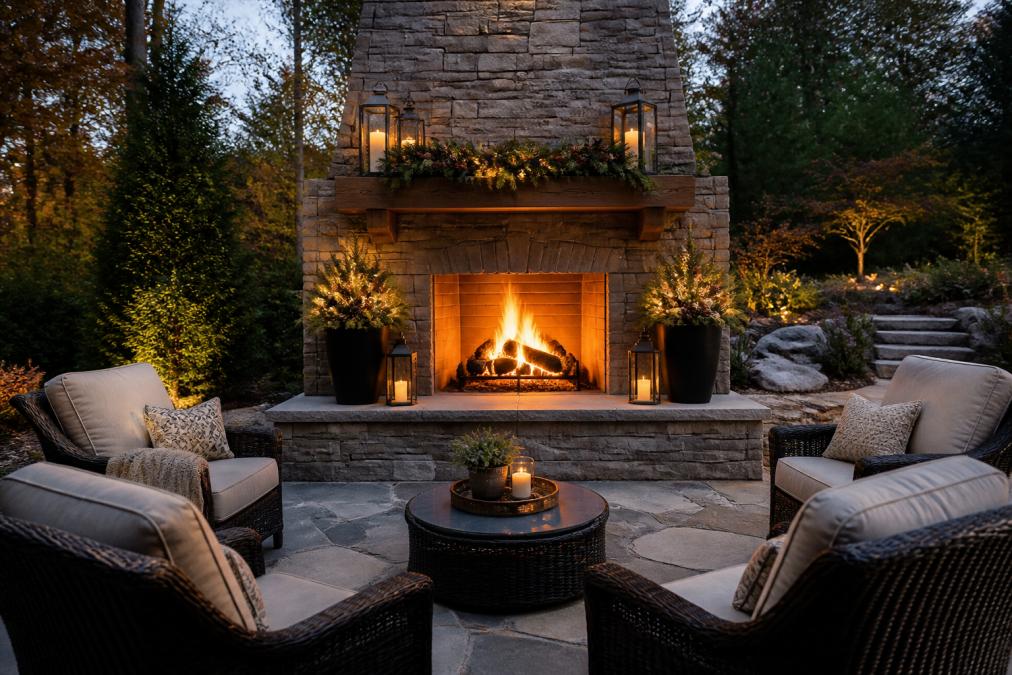
The mantel frames the firebox, provides a surface for decoration, and shields combustible materials above the opening. Building codes specify minimum clearance from the mantel to the firebox opening. Typically, the mantel must be at least 12 inches above the firebox opening, and the bottom surface must be at least 12 inches from the back wall. Combustible materials like wood require larger clearances, often 18-24 inches.
Mantel materials should withstand heat exposure. Stone, engineered stone, and sealed wood work. If you choose wood, select dense hardwoods and apply a heat-resistant finish. Mantel depth affects both appearance and function. A shallow mantel (6-8 inches) works for modern designs. A deeper mantel (12-18 inches) provides more display surface and creates a traditional appearance but requires stronger support.
Firebox Sizing and Chimney Flue Considerations
Firebox size determines how much wood you can burn and how much heat the fireplace generates. The relationship between firebox opening dimensions and chimney flue area is governed by building code. Most codes specify that the flue area should be 1/10 to 1/12 of the firebox opening area (iccsafe.org). A 36-inch-wide by 30-inch-tall firebox opening (1,080 square inches) would require a flue area of 90-108 square inches.
Chimney height and flue sizing work together. A taller chimney (15-20 feet) creates stronger draft and can accommodate slightly smaller flue areas. A shorter chimney (10-12 feet) needs larger flue area to maintain adequate draft. The firebox depth affects how efficiently the fireplace heats your space. A deeper firebox (20-24 inches) allows wood to burn further back, directing heat outward.
Integrating Your Fireplace Into Your Outdoor Living Space
Patio Layout and Furniture Arrangement
Your fireplace becomes the focal point of your outdoor living area, so its placement relative to seating and other features matters significantly. Position seating in a semi-circle facing the fireplace, maintaining 8-12 feet of distance. This spacing allows people to enjoy the fire without excessive heat.
Consider traffic flow through your outdoor space. The fireplace shouldn't block the main path from house to deck or yard. Positioning it to the side creates a gathering zone without disrupting circulation. Hardscaping around the fireplace, pavers, gravel, or concrete, defines the gathering area and contains ash and debris. A 10-15 foot radius of hardscape around the fireplace creates a defined space and simplifies maintenance.
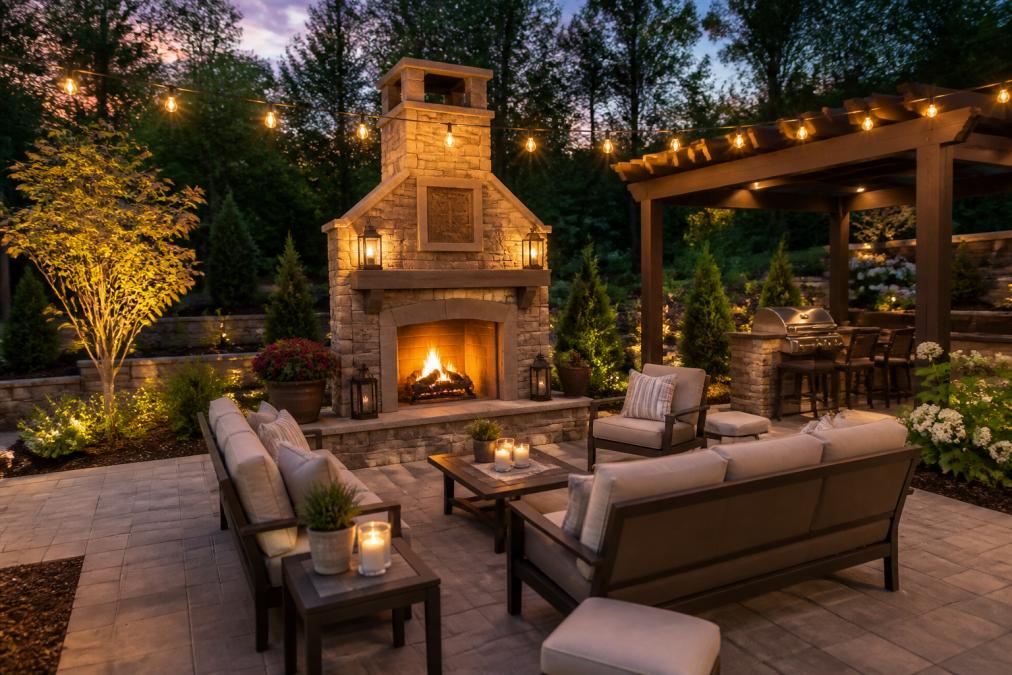
Lighting and Ambient Design
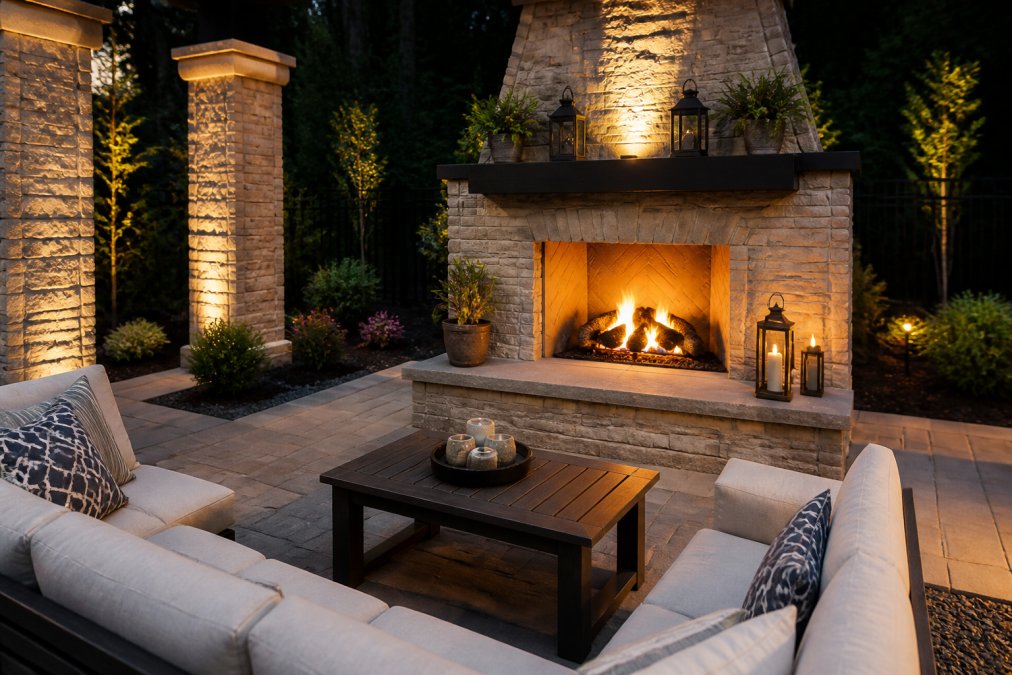
Lighting transforms your fireplace from a daytime feature into an evening gathering place. Ambient lighting should complement the fireplace's glow without overwhelming it. String lights or bistro lighting overhead creates warmth and defines the space. Mount them on posts, pergolas, or the house. Warm white LED lights (2700K color temperature) complement the fireplace's amber glow.
Uplighting on the fireplace structure itself, subtle spotlights pointing upward at the stone or brick, adds drama and depth. Position these lights low and aim them to graze the texture of the materials. Pathway lighting between the house and fireplace area improves safety and extends usability into evening hours. Low-level lights along edges and steps prevent trips while maintaining the ambient aesthetic.
Wood-Burning vs. Gas-Burning Fireplaces
Wood-burning fireplaces offer authentic fire experience and atmospheric appeal. The crackling sound, visible flames, and smell of wood create an experience that gas can't fully replicate. They require less infrastructure, no gas line or electrical connection, making them simpler to install in remote yard locations.
The downsides are significant. Wood-burning fireplaces require seasoned firewood stored properly. They produce ash and creosote that accumulate in the chimney, requiring regular cleaning and inspection. Creosote buildup is a legitimate fire hazard if neglected. In areas with air quality regulations, wood-burning fireplaces may face restrictions during certain seasons.
Gas-burning fireplaces offer convenience and consistency. They light with a switch or ignition button, provide controllable heat output, and produce no ash or creosote. Gas fireplaces are cleaner to operate and require minimal maintenance. They work reliably in windy conditions because the flame is protected inside the firebox.
Gas fireplaces require installation of a gas line, which adds upfront cost and may require professional installation and permitting. The flame appearance, while improved in modern designs, doesn't quite match real wood. Operating costs depend on local gas prices, but gas typically costs less than purchasing quality firewood.
Maintenance and Seasonal Care for Outdoor Fireplaces
A well-maintained outdoor fireplace lasts decades and performs reliably year after year. Spring inspection should focus on winter damage. Check for cracks in mortar joints, especially around the firebox. Look for spalling or flaking on stone or brick surfaces. Inspect the chimney from outside for missing mortar, damaged flashing, and debris accumulation.
Summer is the ideal time for repairs. Mortar joints can be re-pointed if crumbling. Damaged stone or brick can be replaced. Chimney flashing can be resealed. Fall preparation means cleaning the chimney if you plan to use the fireplace. Professional chimney sweeps remove creosote safely. Clear debris from around the fireplace.
Year-round, keep the hearth and surrounding area clean. Remove ash regularly; it's acidic and can damage stone over time. Sweep leaves and debris away from the base of the chimney. Sealed finishes on stone or brick should be reapplied every 2-3 years. In harsh climates, annual sealing is worth the investment.
A custom outdoor fireplace design transforms your backyard into a year-round gathering space. The process requires planning, material selection, and attention to safety codes, but the result is an investment in your home and lifestyle that pays dividends for decades. allvalley has helped homeowners throughout the region create outdoor fireplaces that combine beauty with durability. Our team handles design consultation, material selection, and professional installation, ensuring your fireplace meets code requirements and performs reliably. Ready to start planning your custom outdoor fireplace? Call us at 760-342-5277 for a consultation and design guidance.
Frequently Asked Questions
What permits do I need to build a custom outdoor fireplace?
Permit requirements vary by local jurisdiction. Most areas require building permits for permanent outdoor fireplace structures, and some require separate permits for chimney installation or gas connections. Contact your local building department before starting construction. They'll specify setback distances from property lines, roof clearances, and foundation requirements. Working with a contractor familiar with local codes streamlines this process significantly.
What are the best materials for outdoor fireplace construction in harsh weather?
Natural stone, fire-rated brick, and concrete block withstand freeze-thaw cycles and UV exposure best. Avoid porous materials that absorb water and crack in winter. Stone veneer over a concrete block base offers durability with aesthetic appeal. Ensure all mortar is rated for outdoor use and can handle temperature swings. Heat-resistant finishes protect exposed surfaces from weather damage and extend the fireplace lifespan.
How do I choose a durable outdoor fireplace for windy areas?
In windy locations, prioritize a fireplace with a tall, properly-sized chimney flue that creates strong draft and prevents downdrafts. Position the firebox opening away from prevailing wind direction. A gas-burning fireplace with a sealed combustion system performs better in wind than wood-burning models. Use a protective cap or spark arrestor on the chimney top, and consider a windbreak structure nearby to reduce exposure without blocking the flue.
What safety clearances are required for outdoor fireplaces?
The National Fire Protection Association (NFPA) and local codes typically require 10 feet of clearance from the firebox opening to combustible structures like fences, overhangs, or trees. The chimney must be 3 feet above the roofline of any structure within 10 feet. Maintain at least 5 feet of clearance from seating areas and furniture. Always verify exact requirements with your local building department, as codes vary by region.
Should I choose a wood-burning or gas-burning outdoor fireplace?
Wood-burning fireplaces offer authentic ambiance and require no gas line installation, but demand more maintenance and cleanup. Gas-burning models ignite with a switch, produce consistent heat, and require minimal maintenance. Gas fireplaces work better in windy conditions and meet stricter air quality standards in some areas. Consider your lifestyle, local regulations, and how often you'll use the fireplace when deciding between the two.
How do I maintain an outdoor fireplace through the seasons?
Before winter, inspect the chimney for blockages and have it professionally cleaned if wood-burning. Apply weather-resistant sealant to masonry and stone annually. Cover the firebox opening with a weather-resistant cap during off-season. Check mortar joints for cracks and repair as needed. After each use, remove ash and debris from the firebox. In spring, inspect for winter damage and address any cracks or spalling before the next heating season.
Can I add smart home technology to my outdoor fireplace?
Yes, gas fireplaces can integrate with smart home systems through remote ignition controls and thermostats. Some models support app-based operation and scheduling. Smart controls let you adjust flame height and heat output from indoors or your phone. Installation requires a licensed technician to ensure proper gas connections and safety compliance. Smart technology works best with new gas fireplace installations rather than retrofitting older wood-burning models.
This article was written using GrandRanker