 how-to
Are Your Spa Filter Pleats Damaged? How to Tell
Last Updated: November 1, 2026
Quick Summary
To tell if spa filter pleats are damaged, pull the cartridge, hold a light parallel to the pleat tips, and look for tears, pinholes, flattened folds, or a loose end cap. Any visible hole, split, cracked band, or brittle fabric is permanent damage, so replace the cartridge instead of cleaning it.
- Hold a flashlight parallel to the pleat tips so cracks and splits cast shadows.
- Never bang the cartridge against a hard surface, which cracks pleats and end caps fast.
- Pleats that stay crushed after a full air dry are permanently damaged and need replacement.
- Skip pressure washers, bleach, and household cleaners, which shred or break down pleat fabric.
- Run the recovery test once when in doubt, then replace the cartridge.
Table of Contents
- The 60-Second Spa Filter Pleats Inspection
- What You'll Need Before You Start
- Visual Damage Checklist: What Damaged Spa Filter Pleats Look Like
- Signs a Hot Tub Filter Needs Replacing (Before the Pleats Fail)
- How to Clean a Hot Tub Filter Without Causing Pleat Damage
- Normal Wear vs. Real Damage: How to Tell the Difference
- How Often to Replace a Hot Tub Filter
- What Causes Pleats to Collapse, Flatten, or Tear
- Repair, Keep Using, or Replace? A Simple Decision Path
- Frequently Asked Questions
The 60-Second Spa Filter Pleats Inspection
Damaged spa filter pleats are the hidden cause of cloudy water, weak jets, and overworked pumps.
Spa filter pleats are the accordion-style folds of fabric that trap dirt, pollen, and oils before they reach your pump. When those folds fail, filtration fails with them.
Below, we'll show you exactly how to inspect, what damage looks like, and when to replace instead of clean.
What You'll Need Before You Start
Gather these four things first; the job takes about a minute.
- A bright flashlight or your phone light
- A garden hose with a spray nozzle
- A clean towel or bucket
Turn off the spa and pull the cartridge straight up from its housing. Set it on the towel. Never bang the cartridge against a hard surface to knock off debris, because that cracks pleats fast.
Visual Damage Checklist: What Damaged Spa Filter Pleats Look Like
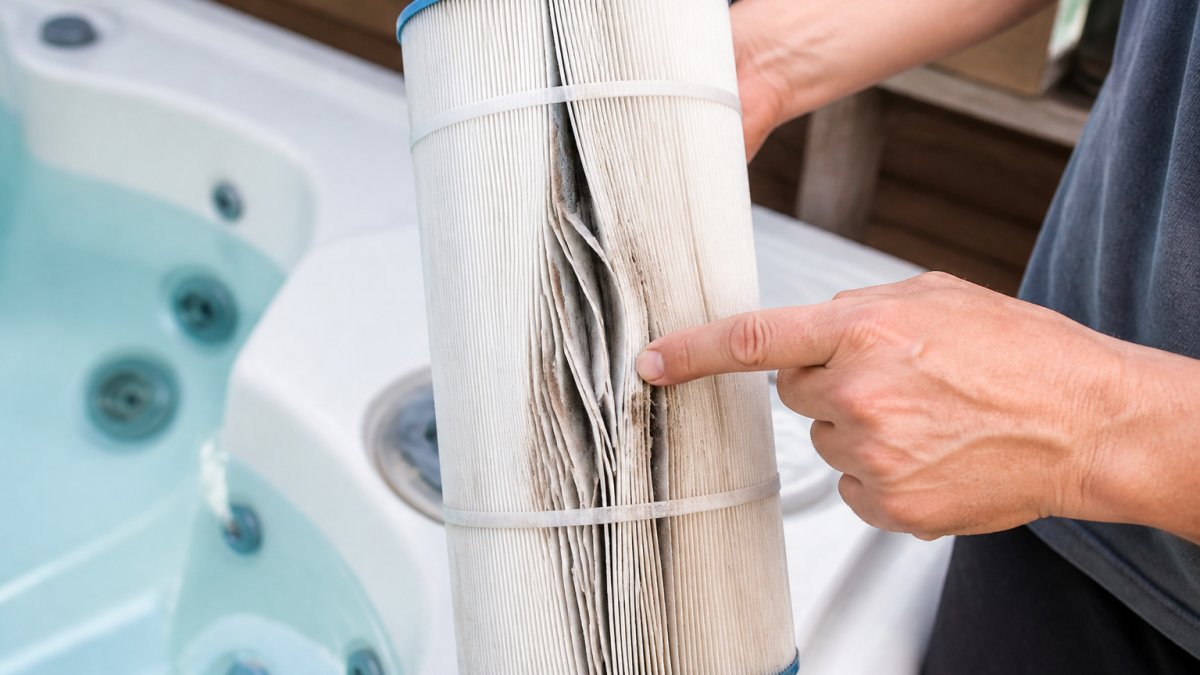
Damaged spa filter pleats show up as cracks, splits, tears, flattened folds, collapsed accordion sections, or loose end caps.
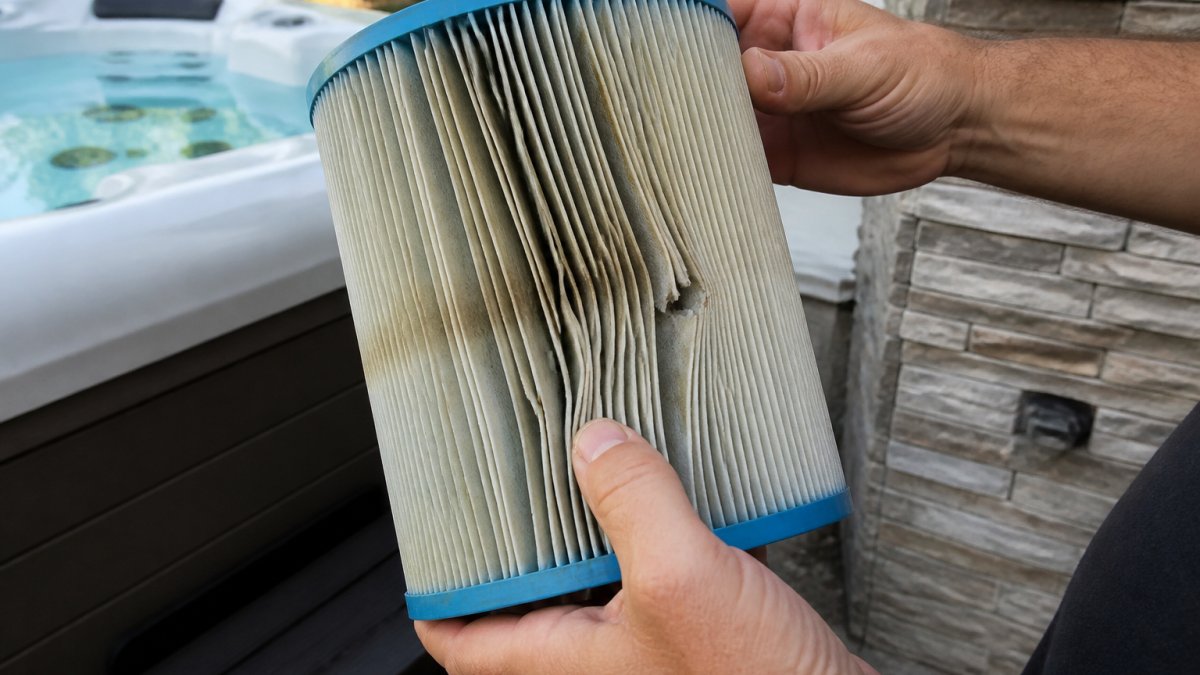
Work through the four checks in order. Hold the cartridge so a bright light rakes across the pleat tips; side lighting makes cracks and splits cast a shadow and become visible.
1. Cracks, Splits, and Tears in the Pleat Media
What to look for: Small holes, pinholes, frayed spots, or splits along the top edge and the outer face of the pleats.
How to check: Shine the light along the top edge and look for a shadow or bright spot where fabric is missing.
Mechanism: Pleat media is a nonwoven fabric.
Severity: Any visible hole, split, or tear is permanent damage. Replace the cartridge. Do not try to patch it.
2. Flattened, Misshapen, and Collapsed Pleats
What to look for: Healthy pleats stand up like a fresh accordion with even gaps between folds.
How to check: Sight down the cartridge from the top. Pleat gaps should look like evenly spaced lines.
Mechanism: Trapped dirt and oils bridge the gaps between pleats, and water pressure pushes the folds together until they crush.
Severity: Pleats that stay crushed after drying are permanent damage. Replace the cartridge.
3. Support Bands and End Caps
What to look for: The plastic bands and the top and bottom caps should sit tight and flush.
How to check: Grip the cartridge by the end caps and twist gently. Any movement between cap and pleat pack means the seal is compromised.
Mechanism: The end caps and bands are the structural frame.
Severity: A cracked band or loose cap is permanent damage. Replace the cartridge.
4. Brittle or Stiff Pleat Fabric
What to look for: Pleats that feel stiff, crack when flexed gently, or look chalky.
How to check: With a gloved hand, gently flex one pleat at the top edge.
Mechanism: Chlorine, bromine, and unbalanced water break down the polymer fibers over time.
Severity: Brittle fabric is permanent damage. Replace the cartridge before it tears and sends debris to the pump.
Quick Severity Reference
| What You See | Permanent or Temporary | Action |
|---|---|---|
| Pinhole, split, or tear in media | Permanent | Replace cartridge |
| Pleats crushed and stay flat after drying | Permanent | Replace cartridge |
| Pleats bent but spring back after drying | Temporary | Clean and reuse |
| Cracked band or loose end cap | Permanent | Replace cartridge |
| Brittle fabric that cracks when flexed | Permanent | Replace cartridge |
If every check passes, the pleats are intact and the cartridge can go back into service after cleaning. If any check fails, move to the decision path below to confirm replacement.
Signs a Hot Tub Filter Needs Replacing (Before the Pleats Fail)
Watch for these warning signs a hot tub filter needs replacing, even before visible damage.
- Water turns cloudy within a day or two of cleaning
- Jets feel weaker than usual
- The spa takes longer to heat
If you notice these, inspect the pleats right away. For a deeper look at the early warnings, see our guide on signs your hot tub filter needs replacing.
How to Clean a Hot Tub Filter Without Causing Pleat Damage
Cleaning a hot tub filter the right way protects the pleats and extends cartridge life. Most damage comes from harsh handling, not normal use.
Follow these steps:
- Rinse with a wide spray from the top down, working between the folds.
- Never use a pressure washer; it shreds pleats in seconds.
- Skip bleach and household cleaners, which break down the fabric.
- Soak in a spa-specific filter cleaner if the cartridge is greasy.
- Let it air dry completely before reinstalling.
A common mistake is twisting or wringing the cartridge to dry it. For a full walkthrough, read how to deep clean pleated spa filters. And avoid the rinsing errors in our guide to hot tub filter rinsing mistakes that cloud your water.
Normal Wear vs. Real Damage: How to Tell the Difference
Not every odd-looking pleat needs a new cartridge. Use this recovery test and defect-by-defect comparison to tell temporary compression from real damage without guessing.
The Recovery Test
- Rinse the cartridge with a wide spray from the top down, working between the folds.
- Let it air dry completely, standing upright, away from direct sun.
- Look again at the pleat gaps and flex one pleat gently with a gloved finger.
If the folds spring back and the gaps are even, the pleats experienced temporary compression and the cartridge is fine. If they stay flat, stay stuck together, or you still see a split, the damage is permanent and the cartridge should be replaced.
Temporary Compression vs. Permanent Damage
| Sign | Temporary Compression | Permanent Damage |
|---|---|---|
| Pleats bent after cleaning | Spring back after drying | Stay flat or crushed |
| Pleat gaps | Even after drying | Uneven or closed |
| Fabric feel | Flexes and returns | Stiff, brittle, or cracks when flexed |
| Surface | Dirt rinses away | Holes, splits, or tears remain |
| End caps and bands | Tight and flush | Cracked, loose, or separated |
What Causes Temporary Compression
Temporary compression usually comes from handling, not from the filter failing:
- Wet pleats during cleaning: wet media is softer and folds more easily. Once dry, pleats recover.
- Stacking or storing cartridges on their side: the cartridge's weight presses pleats together. Store upright.
- Rinsing with a narrow, high-pressure stream: the force bends pleats without tearing them. Use a wide spray.
If any of these happened, run the recovery test before assuming the cartridge is ruined.
What Causes Permanent Damage
Permanent damage comes from forces that exceed what the media and frame can take:
- Clogged pleats: trapped dirt and oils push water pressure against the folds until they crush.
- Pressure washers: the stream shreds pleats in seconds.
- Harsh chemicals: bleach and household cleaners break down the fabric and make it brittle.
When to Stop Testing and Replace
Stop testing and replace the cartridge if any of these are true:
- You see a tear, hole, or split anywhere in the media.
- A support band is cracked or an end cap is loose.
- Pleats stay crushed after a full dry.
For a deeper look at the early warnings, see our guide on signs your hot tub filter needs replacing.
How Often to Replace a Hot Tub Filter
Replacement timing depends on how often you use the spa and how well you maintain the filter. Replace the cartridge when cleaning no longer keeps the water clear.
Keep a spare on hand so you're never stuck waiting on a part. Rotating two cartridges also gives each one time to dry fully, which helps pleats last longer.
What Causes Pleats to Collapse, Flatten, or Tear
Pleat damage rarely happens overnight. It builds from a few repeat offenders.
- Clogged pleats: trapped dirt and oils push water pressure against the folds until they crush.
- Harsh cleaning: pressure washers and strong chemicals weaken the fabric.
- Poor water chemistry: unbalanced water makes debris stick and breaks down the media.
The fix is prevention. Rinse weekly, clean deeply monthly, and keep your water balanced. Our guide on preventing hot tub filter clogging walks through seven easy steps that keep pleats strong.
Repair, Keep Using, or Replace? A Simple Decision Path
Use this quick path to decide what to do with a questionable cartridge.
| What You See | Verdict | Action |
|---|---|---|
| Folds bent but spring back after drying | Keep using | Rinse and reinstall |
| Light surface dirt, pleats intact | Keep using | Deep clean |
| One small tear or pinhole | Replace | Order a new cartridge |
| Cracked end cap or loose band | Replace | Order a new cartridge |
| Pleats flattened, brittle, or stuck together | Replace | Order a new cartridge |
| Water still cloudy after cleaning and balancing | Check flow first | Rule out pump or flow issues |
If water flow problems mimic filter failure, work through our hot tub water flow troubleshooting guide before buying a new cartridge. When in doubt, replace.
At allvalley, we stock quality hot tubs and spa supplies, and every hot tub we sell comes with free starter kits and chemicals to make upkeep simpler.
Frequently Asked Questions
How can you tell if a hot tub filter is damaged?
Pull the cartridge out and look at it in daylight. Damaged spa filter pleats show cracks, splits, or holes in the fabric, pleats that are flattened or squashed together instead of standing in even folds, and a collapsed accordion shape. Check the support bands and end caps too: loose bands, cracked plastic, or a cartridge that no longer seats with a water-tight seal all point to damage. If the pleats look fine but water clarity is still poor, clean the cartridge first and recheck flow before assuming the worst.
What do damaged spa filter pleats look like?
Healthy pleats stand in even, deep folds like an accordion. Damaged ones look different in three ways: fabric that is brittle and gray or brown instead of white, pleats that are crushed flat or pressed together so water cannot pass between them, and physical breaks such as tears, splits, or pinholes. You may also see debris, gunk, or pollen packed deep into the folds that rinsing will not remove. Compare the cartridge to a new one side by side and the difference in shape and color is usually obvious.
Can you use a hot tub filter with torn pleats?
No. A torn or cracked cartridge lets debris, dirt, and pollen straight through the filter and into the pump and heater. That shortens the life of expensive parts and leads to cloudy water, weak circulation, and more shock treatment to keep up. A cartridge with a small hole is not a filter anymore, it is a bypass. Replace it rather than trying to patch or glue the pleats, and check the filter housing for trapped debris while the old cartridge is out.
How often to replace a hot tub filter?
Replacement timing depends on how often you use the spa and how well you maintain the filter. Heavy use, pets, nearby trees, or a household that skips regular cleaning will shorten that. Replace sooner if you see torn or collapsed pleats, if the cartridge stays clogged after a proper cleaning, or if water clarity drops even with correct chemicals. Keep a spare on hand so a failing filter never leaves the spa sitting idle while you wait on a replacement.