 how-to
How to Extend the Life of Hot Tub Filters
Last Updated: November 6, 2026
Quick Summary
Rinse hot tub filters weekly with a garden hose to remove loose debris, and deep clean them monthly with a filter cleaner to strip oils and lotions. Rotating two filter sets and soaking with vinegar every few months further extends their life.
- Rinse the cartridge weekly at an angle, one pleat at a time, and never use a pressure washer.
- Soak the filter in a hot tub filter cleaner monthly, often overnight, then rinse and dry it in the shade.
- Mix one part white vinegar with four parts water and soak for one to two hours for mineral buildup.
- Most hot tub filters last one to three years, but replace when two or more condition criteria fail.
- Buy a second cartridge and rotate sets so each filter gets rest time and half the wear.
Table of Contents
- Step 1: Rinse Filter Pleats Weekly to Remove Debris
- Step 2: Deep Clean with a Hot Tub Filter Cleaner Every Month
- How to Clean a Hot Tub Filter with Vinegar for Mineral Buildup
- How Long Do Hot Tub Filters Last and When to Replace Them
- Rotate Two Filter Sets to Double Filter Lifespan
- How to Extend the Life of Hot Tub Filters in Winter
- Fix Low Flow After Cleaning: Troubleshooting Clogged Filters
- Build a Filter Care Schedule That Matches Your Bather Load
- Frequently Asked Questions
Step 1: Rinse Filter Pleats Weekly to Remove Debris
Learning how to extend the life of hot tub filters starts with the simplest habit: a weekly rinse. This one step removes the loose debris that starts the clogging cycle, and it takes about five minutes.
Most filters don't die from old age. They die from neglect.
Here's how to rinse a cartridge filter the right way:
- Power off the hot tub and pull the filter cartridge out.
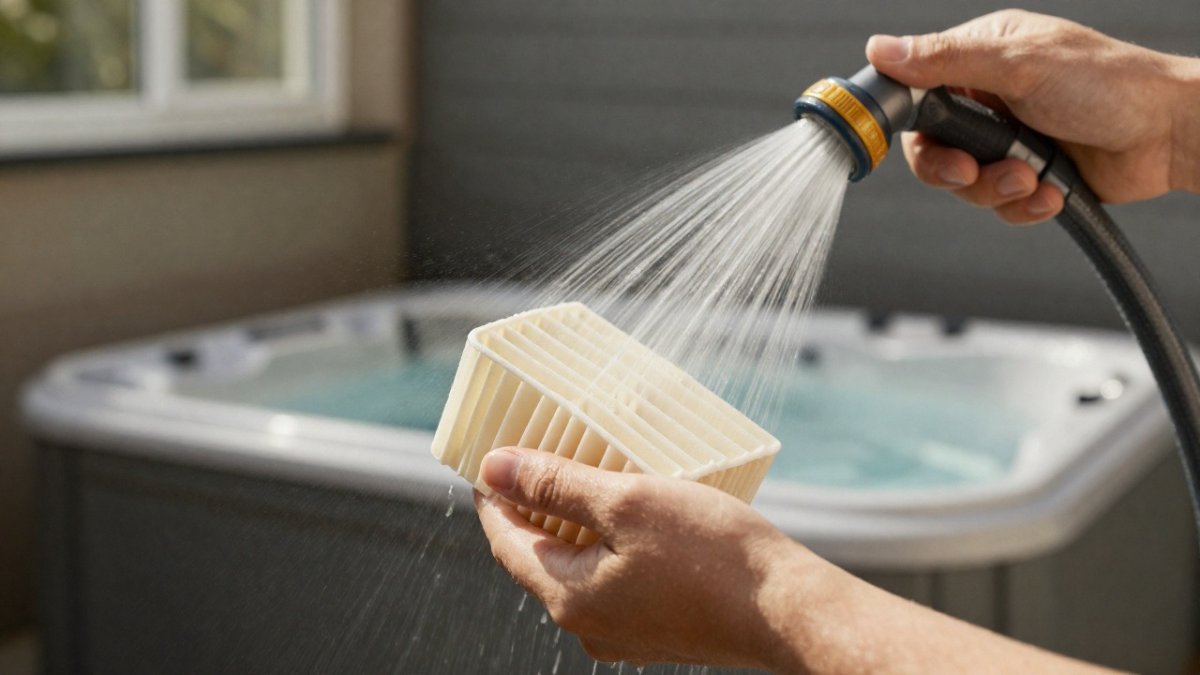
- Hold the cartridge at an angle and spray a garden hose between each pleat.
- Work top to bottom, one pleat at a time.
- Rinse the filter core and end caps too.
- Never use a pressure washer. High pressure tears the filter media (The Pool Service Professional's Guide to Cartridge Filter Care).
A common mistake is blasting the pleats straight on. That pushes dirt deeper into the fabric instead of washing it out.
Watch out: skipping this weekly rinse lets oils and minerals harden on the pleats, and once that happens no amount of soaking brings the filter back.
Before your first rinse, it pays to know the common filter rinsing mistakes that cloud your water so you don't undo your own work.
Step 2: Deep Clean with a Hot Tub Filter Cleaner Every Month
A weekly rinse handles surface debris. Once a month, you need a filter cleaner to strip the oils, lotions, and body fats a hose can't touch.
The process is straightforward:
- Fill a bucket with water and mix in a hot tub filter cleaner per the label.
- Soak the cartridge for the time the product recommends, often overnight.
- Rinse thoroughly with a garden hose before reinstalling.
- Let the filter dry fully in the shade.
An overnight soak works best because the cleaning solution needs time to break down oils trapped in the filter media. Soaking also loosens scale on the pleats without scrubbing.
One insider tip: never mix cleaners, and never use household bleach on a cartridge. Harsh chemicals break down the filter fabric and shorten its lifespan fast.
If you want the full walkthrough, our guide on how to deep clean pleated spa filters covers each step in detail.
How to Clean a Hot Tub Filter with Vinegar for Mineral Buildup
Vinegar is the go-to fix for mineral buildup, and it's a smart addition to your routine. White vinegar dissolves the calcium and scale that clog filter pleats, especially in hard water.
Here's the safe method:
- Mix one part white vinegar with four parts water in a bucket.
- Soak the cartridge for one to two hours, no longer.
- Rinse the filter thoroughly with a garden hose.
- Let it dry completely before reinstalling.
Vinegar is acidic, so moderation matters. Soaking too long or using it too often can wear down the pleats and end caps. Use it when you spot white crust or when water flow drops.
A good rhythm is a vinegar soak every few months, with a proper hot tub filter cleaner in between.
How Long Do Hot Tub Filters Last and When to Replace Them
Most hot tub filters last one to three years with proper care, but age alone is a poor replacement trigger. A lightly used cartridge with good water chemistry can outlast a heavily used one by a year or more, and a filter that looks old may still perform if the pleats are intact and the core is sound. The better question is not "how old is it?" but "can it still flow water and hold back debris?"
Use condition, not the calendar, to decide. Inspect the cartridge under good light after a full clean and dry, and score it against these criteria:
- Pleats. They should spring back when you run a finger across them. Pleats that stay matted, crushed, or flattened after a deep clean have lost their surface area and cannot be restored.
- Media integrity. Look for tears, holes, thin spots, or pleats that separate from the end caps. Any breach lets debris bypass the filter and reach the pump.
- Core. The inner core should feel rigid. A soft, cracked, or collapsing core means the cartridge can no longer hold its shape under flow.
- End caps. Check for cracks, warping, or separated glue lines. A cracked cap is a failure point that worsens with every rinse.
- Persistent discoloration. Gray or black staining that survives a cleaner soak and a vinegar soak usually means oils or minerals have bonded to the media. If the stain remains after two deep-clean cycles, the filter is near the end of its service life.
- Performance. If flow stays weak after a full clean and a spare-filter swap, and water clouds quickly despite balanced chemistry, the cartridge is the likely culprit.
A practical rule: replace when two or more of those criteria fail. One marginal item is worth monitoring; two or more means you are fighting a losing battle against cloudy water and a strained pump.
Water chemistry and cleaning habits move that timeline more than most owners realize. Consistently high pH and calcium hardness accelerate scale on the pleats, while heavy lotions, oils, and sunscreen load the media with organics that a hose cannot remove. Skipping the monthly deep clean lets those deposits harden, and hardened deposits shorten life faster than heavy bather load alone.
Watch out: never judge a filter by color alone. A stained cartridge that still flows and holds debris can keep working, while a clean-looking cartridge with a cracked core or torn pleat is already failing.
Our guide to the signs your hot tub filter needs replacing walks through each warning in detail so you can decide with confidence.
Rotate Two Filter Sets to Double Filter Lifespan
This is the single best upgrade to your filter routine: buy a second cartridge and rotate them.
The logic is simple. When one filter is soaking or drying, the other is in the tub doing the work. Your spa never runs on a damp, half-clean cartridge, and each filter gets real rest time.
Rotation pays off in three ways:
- Longer filter lifespan. Each cartridge sees half the wear and tear.
- Better water flow. A fully dry filter moves water better than a damp one.
- Less downtime. No waiting around for a filter to dry.
Store the spare in a clean, dry spot away from sunlight. UV light degrades filter media over time. Let it dry completely before it goes back in the tub, because a damp filter invites bacteria and mold.
How to Extend the Life of Hot Tub Filters in Winter
Cold weather brings its own filter challenges, and how to extend the life of hot tub filters in winter comes down to a few adjustments.
Freezing temperatures make filter media brittle. Handle cartridges gently and never bang them against a wall to knock off debris. A cracked end cap in January means an emergency replacement.
Winter also means more debris from wind, leaves, and storm runoff. Rinse more often, and keep the tub covered when it's not in use.
If you shut the tub down for the season, clean and dry the filter fully before storage. Store it indoors, upright, and away from moisture. A filter packed away wet comes out smelling like a swamp in spring.
Fix Low Flow After Cleaning: Troubleshooting Clogged Filters
Still seeing weak jets after a full clean? The filter may not be the whole story, but it's the first place to check.
Run through this list:
- Reinstall check. Is the cartridge seated correctly with no gaps?
- Air lock. Loosen the filter housing to let trapped air escape.
- Second filter. Swap in your spare to rule out a worn cartridge.
- Pump basket. Clear debris from the pump strainer.
- Water level. Low water pulls air into the system and kills flow.
If flow stays weak after all five, the clogged filter may be past saving, or the issue sits in the pump or plumbing. Our troubleshooting guide for water flow issues covers the next steps fast.
Build a Filter Care Schedule That Matches Your Bather Load
One schedule doesn't fit every hot tub. Bather load, usage frequency, debris exposure, and water conditions should all drive how often you rinse, soak, and replace. The table below is a baseline; the paragraphs after it explain how to adjust it.
| Bather Load | Weekly Rinse | Deep Clean Soak | Vinegar Soak | Replace |
|---|---|---|---|---|
| 1-2 people, light use | Once | Every 4-6 weeks | Every 3 months | 2-3 years |
| 3-4 people, regular use | Twice | Every 3-4 weeks | Every 2 months | 1-2 years |
| 5+ people or daily use | 2-3 times | Every 2 weeks | Monthly | 12-18 months |
Usage frequency. A tub used every day accumulates body oils and lotions faster than one used on weekends, even with the same number of bathers. If your tub runs daily, move up one row in the table.
Debris exposure. An uncovered tub under trees, near a lawn, or in a windy spot collects leaves, pollen, and grit that a covered tub never sees.
Water conditions. Hard water leaves calcium scale on the pleats, which is what the vinegar soak is for.
Bather load details. The table counts people, but what they bring matters too. Heavy sunscreen, lotions, and hair products load the filter with organics that a hose cannot remove.
How to adjust in practice. Start on the row that matches your typical week, then watch two signals: how fast flow drops between rinses, and how quickly water clouds after a fresh clean. If flow weakens before the next scheduled rinse, rinse more often. If water stays clear and flow holds, you can stretch the deep-clean interval slightly.
Water chemistry matters too. Keep sanitizer and pH balance in range, because off-balance water speeds up scale and oil buildup on the filter media. Test the water weekly and adjust before problems start.
For ongoing prevention, our steps to prevent hot tub filter clogging build on this schedule.
Frequently Asked Questions
How often should you clean a hot tub filter?
Rinse the filter pleats with a garden hose every week to remove loose debris, oils, and dirt. Do a deeper soak in a filter cleaner every four to six weeks, depending on how often you use the tub. If the water looks cloudy or flow slows down, clean the filter immediately rather than waiting for the next scheduled date.
Can you clean a hot tub filter with vinegar?
Yes. A 1:1 mix of white vinegar and water works well for dissolving mineral scale and calcium buildup on filter pleats. Soak the cartridge for 30 to 60 minutes, then rinse thoroughly with a garden hose before reinstalling. Avoid vinegar soaks more than once a month, because the acid can degrade the filter media over time.
How long do hot tub filters last?
Most cartridge filters last 1 to 3 years with regular maintenance. Heavy use, high bather load, and poor water chemistry shorten that range. Replace the cartridge when pleats stay crushed or matted after cleaning, end caps crack, or water flow stays weak even after a deep soak. Rotating two filter sets helps you get the full lifespan from each one.
Can you extend the life of a hot tub filter in winter?
Yes. In winter, rinse filters more often because cold water holds sanitizer less effectively and oils congeal on the pleats. Keep a spare dry filter on hand so you can swap and soak without shutting down the tub. Store the spare indoors in a dry, ventilated spot, and never let a wet filter freeze, since ice expands and damages the filter media.