 listicle
High Quality Outdoor Fireplaces for Sale: 2026 Buyer's Guide
Table of Contents
- Quick Comparison: Top Outdoor Fireplaces for Sale
- Gas vs Wood-Burning Outdoor Fireplaces: Which Is Right for You
- Durable Materials for Outdoor Fireplaces: What Lasts
- Our Top Outdoor Fireplace Recommendations
- Heat & Glo Carolina: High-Efficiency Gas Fireplace for Screened Spaces
- Fire Pit Art Asia: Handcrafted Carbon Steel for Modern Backyards
- American Fyre Designs Contractor's Fireplace: Customizable Masonry Option
- Montigo Divine H38VO: Luxury Vent-Free Design
- Isokern Magnum: Versatile Pumice Fireplace for Any Fuel
- Outdoor Fireplace Installation Cost: What to Budget
- Safety, Permits, and Local Codes You Need to Know
- Maintenance and Long-Term Ownership Costs
- Conclusion: Finding Your Ideal Outdoor Fireplace
- Frequently Asked Questions
Last Updated: September 2, 2026
Quick Comparison: Top Outdoor Fireplaces for Sale
When shopping for outdoor fireplaces, gas models promise convenience and consistent heat, while wood-burning designs deliver authentic ambiance and lower fuel costs. Vent-free units offer installation flexibility, and masonry fireplaces provide permanent elegance. Each serves different needs, budgets, and aesthetic goals.
This guide breaks down the best outdoor fireplaces across multiple categories, covering durability, heat output, installation requirements, and long-term costs. We'll compare gas versus wood-burning models, explain which materials withstand weather and time, and walk you through the real expenses of ownership.
Quick Picks:
- Best Overall Value: allvalley's curated selection of premium outdoor fireplaces combines professional installation with proven durability
- Best Gas Option for Screened Spaces: Heat & Glo Carolina with FireBrick Technology for high efficiency
- Best Artistic Design: Fire Pit Art Asia handcrafted carbon steel for modern backyards
- Best Customizable Masonry: American Fyre Designs Contractor's Fireplace for integrated patio designs
- Best Luxury Vent-Free: Montigo Divine H38VO with stainless steel durability
- Best Multi-Fuel Flexibility: Isokern Magnum pumice fireplace compatible with wood, gas, or propane
Gas vs Wood-Burning Outdoor Fireplaces: Which Is Right for You
The choice between gas and wood-burning hinges on convenience, ambiance, and operating costs. Gas models ignite instantly with no fuel storage needed. Wood-burning fireplaces deliver authentic crackling flames and lower per-use fuel expenses, but require active maintenance and cleanup.
Gas Fireplaces: Gas models heat faster and run cleaner, ideal for screened porches and covered patios where smoke would be problematic. Modern systems use propane or natural gas with electronic ignition and remote controls. Heat output ranges from 20,000 to 50,000 BTUs depending on size. Natural gas installation requires professional plumbing of underground or overhead lines.
Wood-Burning Fireplaces: Wood-burning models create genuine flames and sensory experience many homeowners prioritize. They work anywhere without fuel lines or electricity, with operating costs depending on local firewood prices. However, they demand regular chimney cleaning, ash removal, and proper firewood seasoning. They also produce smoke, which limits placement and may trigger local air quality ordinances.
Durable Materials for Outdoor Fireplaces: What Lasts
Materials determine whether your fireplace lasts 5 years or 25 years. Weather resistance, rust prevention, and structural integrity matter far more than aesthetics alone.
Corten Steel and Carbon Steel: Corten steel develops a protective rust patina that prevents deeper corrosion. Carbon steel, used in handcrafted models like Fire Pit Art Asia, offers similar durability at lower cost. Quarter-inch thick carbon steel resists warping and provides excellent heat retention. Both materials age visibly, developing a darkened appearance many homeowners find attractive.
Stainless Steel: 304 stainless steel resists corrosion in coastal and high-humidity environments (astm.org). It's the premium choice for vent-free models like the Montigo Divine H38VO. Stainless steel costs more upfront but requires minimal maintenance beyond occasional cleaning, maintaining a polished finish for decades.
Glass Fiber Reinforced Concrete (GFRC): GFRC, used in American Fyre Designs fireplaces, combines concrete durability with lightweight construction. It resists freeze-thaw cycles better than traditional concrete and accepts tile, stone, or paint finishes. GFRC fireplaces are modular, shipping in pieces and assembling on-site, reducing installation complexity.
Pumice: Isokern's volcanic pumice construction offers a middle ground between concrete and traditional masonry. Pumice is significantly lighter than concrete, reducing foundation requirements, and resists freeze-thaw damage. It accommodates multiple fuel types but requires professional installation and proper venting.
Our Top Outdoor Fireplace Recommendations
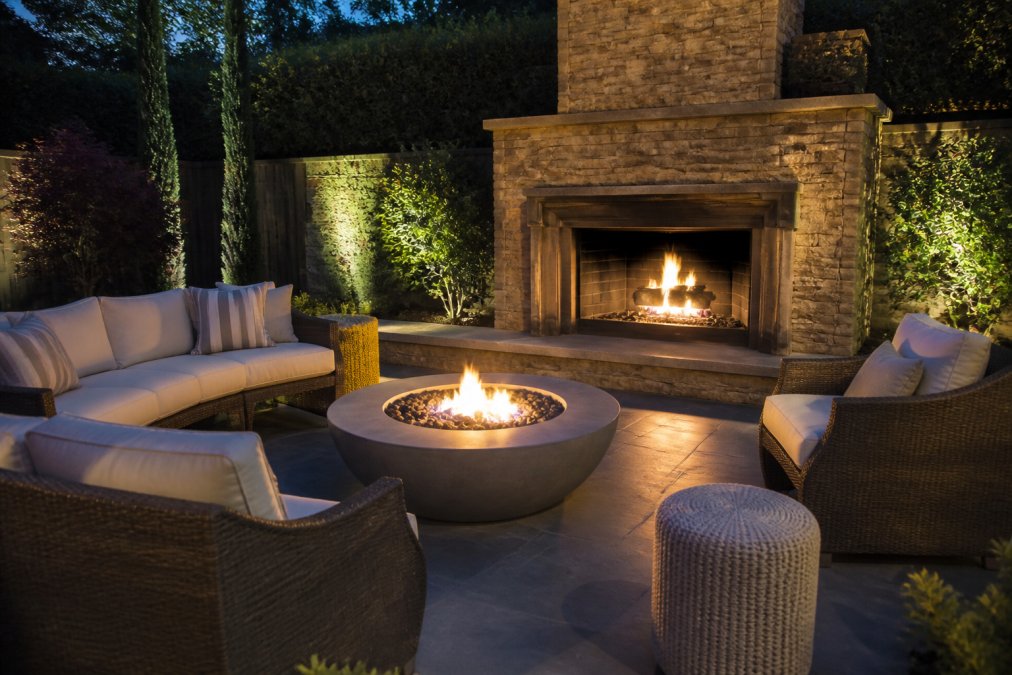
Heat & Glo Carolina: High-Efficiency Gas Fireplace for Screened Spaces
The Heat & Glo Carolina stands out for screened porches and covered areas where you want serious heat without venting complications. This 42-inch gas fireplace uses FireBrick Technology to maximize radiant heat output. The IntelliFire Plus ignition system starts reliably in cold weather, and stainless steel screens and weather-resistant gas logs come included.
Heat & Glo designed the Carolina specifically for outdoor living spaces. It's available in 36-inch and 42-inch sizes, operating on propane or natural gas with simple gas line connection and basic roof or wall venting.
Best for: Homeowners with screened porches or covered patios who prioritize heat output and convenience.
Standout feature: FireBrick Technology delivers higher BTU efficiency, meaning lower propane consumption per season.
Fire Pit Art Asia: Handcrafted Carbon Steel for Modern Backyards
Fire Pit Art's Asia model is handcrafted from quarter-inch thick carbon steel with an iron oxide finish. The 48-inch diameter creates a dramatic focal point, and the minimalist oriental-inspired shape works in contemporary or eclectic spaces.
This fireplace operates on natural gas or propane with match-lit or electronic ignition options. The iron oxide finish requires minimal maintenance, designed to patina over time rather than rust out. A rain drain prevents water pooling inside the bowl. Each unit is individually made, not mass-produced, translating to authentic charm.
Best for: Design-conscious homeowners who view their fireplace as outdoor art and want a conversation-starting centerpiece.
Standout feature: Quarter-inch carbon steel construction and handcrafted design mean this fireplace will outlast most competitors, developing a beautiful weathered patina.

American Fyre Designs Contractor's Fireplace: Customizable Masonry Option
The American Fyre Designs Contractor's Fireplace is built for integration. Constructed from white GFRC, it ships as a modular unit and accepts virtually any noncombustible veneer, tile, stone, brick, stucco, or paint. This flexibility makes it ideal for homeowners wanting their fireplace to match existing patio stonework or home exterior.
The modular GFRC construction simplifies installation compared to traditional masonry. A general contractor or handy homeowner can assemble and finish it. The fireplace doesn't come plumbed for gas, allowing you to choose the fuel type and have a professional run the line exactly where you want it.
Best for: Homeowners undertaking full patio renovations who want their fireplace to match custom stonework.
Standout feature: GFRC construction is lighter than concrete, reducing foundation strain, and accepts any finish material you choose.
Montigo Divine H38VO: Luxury Vent-Free Design
The Montigo Divine H38VO brings luxury finishes to outdoor fireplace design. Built with 304 stainless steel, it withstands coastal salt spray, high humidity, and extreme temperature swings. The vent-free design means no chimney or venting pipe, maximizing installation flexibility. heavy-duty outdoor grills.
This model produces 34,000 BTUs with a traditional burner design and includes a fiber log set. You choose between standing pilot or hot surface ignition. The stainless steel construction requires almost no maintenance beyond occasional cleaning, maintaining a pristine appearance for decades.
Best for: Luxury-focused homeowners in challenging climates who want minimal maintenance.
Standout feature: 304 stainless steel construction resists salt spray and humidity better than any other material in this price range.
Isokern Magnum: Versatile Pumice Fireplace for Any Fuel
The Isokern Magnum is the most flexible fireplace available. Built from volcanic pumice, it's compatible with wood, natural gas, or propane. The 72-inch size makes it a true focal point, and you can construct it as a single-opening or see-through unit.
Pumice is significantly lighter than concrete and resists freeze-thaw cycles better, making it ideal for harsh winters (peer-reviewed research). The interior can be customized with different brick colors and patterns. Isokern fireplaces require professional installation and proper venting, which adds to overall cost but offers versatility in fuel type, size, and design options.
Best for: Homeowners in cold climates or those wanting multi-fuel flexibility.
Standout feature: Volcanic pumice construction is lighter than concrete and resists freeze-thaw damage, extending lifespan in harsh winters.
Outdoor Fireplace Installation Cost: What to Budget
Installation costs vary dramatically based on fireplace type, fuel source, and existing infrastructure. A simple gas fireplace in a screened porch might cost $500-$1,500 in labor. A custom masonry fireplace with stone veneer and new gas line installation can run $3,000-$8,000 or more.
Gas Fireplace Installation: Propane models require minimal installation, securing the unit, connecting the tank, and running a simple gas line. Natural gas fireplaces require a professional plumber to run a gas line from your home's main supply, adding significant cost if the line must cross distance or obstacles.
Wood-Burning Fireplace Installation: Wood-burning fireplaces need proper chimney venting and often require a concrete foundation. Building new involves foundation work, masonry labor, and chimney construction. Retrofitting an existing structure is less expensive.
Masonry and Custom Installations: Custom GFRC or pumice fireplaces require assembly, finishing work, and often foundation preparation. Budget $2,000-$6,000 in labor for custom installations, depending on complexity.
At allvalley, we handle both fireplace sales and professional installation services. Our team manages delivery, site preparation, gas line setup, and finishing work, eliminating delays and ensuring correct installation.
Safety, Permits, and Local Codes You Need to Know
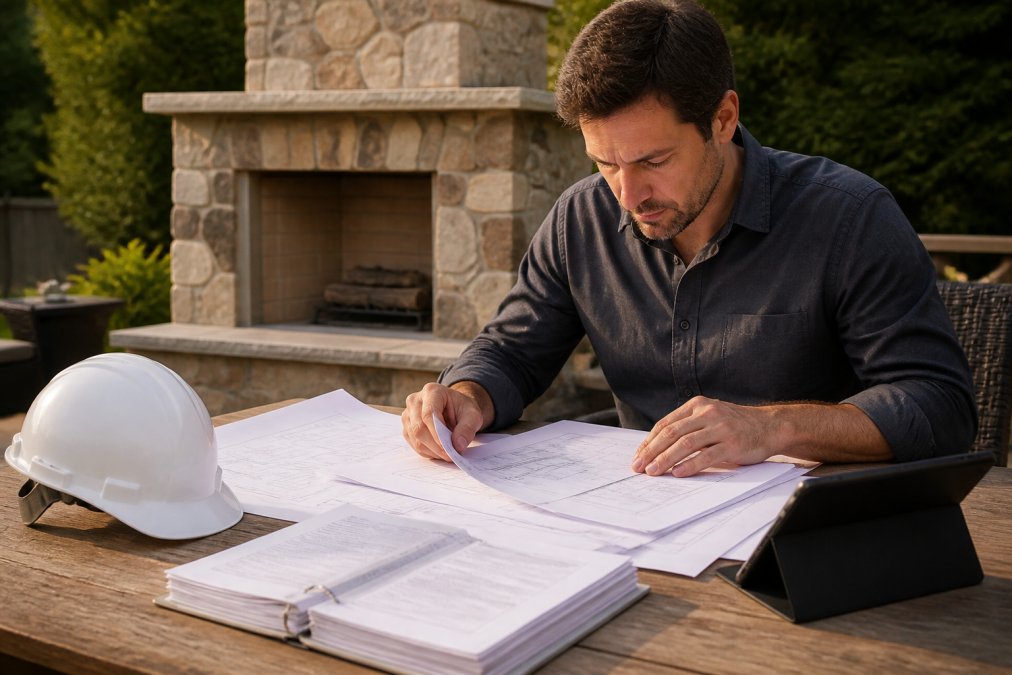
Before you buy, check your local fire codes and building permit requirements. Many jurisdictions require permits for outdoor fireplaces, and some restrict wood-burning models due to air quality concerns. Gas fireplaces face fewer restrictions but still need venting compliance and clearance from combustible materials.
Common Code Requirements:
Typical clearance minimums are 10 feet from your home, 5 feet from property lines, and 15 feet from overhanging tree branches (nfpa.org). Gas fireplaces generally require 3-6 feet of clearance from combustible materials. Wood-burning fireplaces demand more space due to radiant heat.
Venting requirements depend on fireplace type. Vent-free models must meet oxygen depletion sensor standards and may be prohibited in states with strict air quality regulations. Vented gas fireplaces need proper chimney or vent pipe sizing based on BTU output and vent height.
Foundation and installation requirements protect against settling and structural damage. Most codes require a concrete pad under masonry fireplaces, and gas fireplaces need secure mounting to prevent tipping.
Permit Process:
Most jurisdictions require a building permit before installation. The process involves submitting plans (which the manufacturer provides), paying a fee, and scheduling an inspection after installation. Inspectors verify clearances, venting, gas line safety, and structural compliance. Permits usually cost $50-$300.
Air quality regulations are increasingly strict in urban areas. Some regions prohibit wood-burning fireplaces entirely or restrict their use to certain seasons. Check your county or city air quality board before purchasing a wood-burning model.
Maintenance and Long-Term Ownership Costs
The cheapest fireplace upfront often becomes the most expensive over time. Maintenance costs and fuel expenses compound over years of ownership.
Gas Fireplace Maintenance:
Gas fireplaces require annual inspection and cleaning of the burner, logs, and venting system, typically costing $100-$300. Propane fireplaces need tank refills at $15-$30 per fill. A typical household uses one 20-pound propane tank every 4-6 weeks during heavy use, translating to $200-$400 per season.
Natural gas fireplaces eliminate propane refills but tie you to utility rates. Electronic ignition systems require occasional battery replacement or transformer maintenance.
Wood-Burning Fireplace Maintenance:
Wood-burning fireplaces require annual chimney sweeping and inspection, costing $150-$300 per year. Seasoned hardwood typically runs $150-$300 per cord, and a fireplace burns roughly one cord per season of moderate use.
Masonry repairs are expensive. Cracks, damaged mortar, or deteriorating bricks require professional work. Partial repointing costs $500-$1,500. Major structural repairs can run $2,000-$5,000 or more.
Long-Term Cost Comparison:
Over 20 years, a gas fireplace costs roughly $2,000-$6,000 in maintenance and fuel. A wood-burning fireplace costs $3,000-$10,000+ when factoring in annual chimney sweeping, firewood, and likely masonry repairs.
Conclusion: Finding Your Ideal Outdoor Fireplace
Choosing the right outdoor fireplace requires balancing aesthetics, fuel type, installation complexity, and long-term costs. Gas models offer convenience and efficiency. Wood-burning fireplaces deliver authenticity. Vent-free designs provide installation flexibility. Masonry options integrate seamlessly with custom patio designs.
allvalley has spent 26 years helping homeowners select and install outdoor fireplaces that match their backyards and budgets. Our team handles delivery, installation, gas line setup, and finishing work, removing coordination headaches. We offer a wide selection of models to fit your specific needs.
Ready to transform your outdoor space? Call allvalley at 760-342-5277 for a consultation. Our team will walk you through your options, explain permit requirements in your area, and provide a complete installation quote. We've been doing this for over 26 years, let's build your ideal outdoor retreat.
=== FAQ ANSWERS (audit these too, same rules) ===
Frequently Asked Questions
Q: What's the difference between gas and wood-burning outdoor fireplaces?
A: Gas fireplaces offer clean-burning convenience, instant ignition, and precise heat control. Wood-burning fireplaces deliver authentic ambiance and traditional aesthetics but require more maintenance and produce more smoke. Gas models are ideal for frequent use and low-maintenance preferences, while wood-burning suits those who value the classic fireplace experience and don't mind regular cleaning of ash and creosote buildup.
Q: How much does outdoor fireplace installation cost?
A: Installation costs vary significantly based on fireplace type, complexity, and local labor rates. Professional installation for a gas fireplace typically ranges from moderate to premium pricing depending on whether venting is required and if gas lines need extension. Masonry fireplaces require more extensive work. For accurate pricing on outdoor fireplace installation cost specific to your project, contact allvalley directly at 760-342-5277 for a quote that reflects your exact requirements and delivery area.
Q: Which materials are most durable for outdoor fireplaces?
A: Stainless steel, weathered corten steel, and volcanic pumice are among the most durable materials for outdoor fireplaces. Stainless steel resists rust and corrosion excellently. Corten steel develops a protective oxide patina that prevents deeper rust. Volcanic pumice is lighter than concrete while maintaining strength. Glass fiber reinforced concrete (GFRC) offers durability and customization. All quality outdoor fireplaces include weather-proof covers to extend lifespan and protect against freeze-thaw cycles.
Q: Do I need a permit to install an outdoor fireplace?
A: Yes, most jurisdictions require permits for outdoor fireplace installation due to fire safety codes and building regulations. Permit requirements vary by location and fireplace type. Professional installation services, like those offered by allvalley, handle permit coordination and ensure compliance with local ordinances. This protects your investment and ensures the fireplace meets safety standards. Always verify requirements with your local building department before purchasing.
This article was written using GrandRanker