 listicle
Outdoor Kitchen Design Ideas for Luxury Homes
Table of Contents
- Outdoor Kitchen Design Ideas That Define a Luxury Backyard
- Outdoor Kitchen Layout Ideas for Entertaining and Everyday Cooking
- High-End Outdoor Kitchen Features That Earn Their Place
- Outdoor Kitchen Materials Built for Sun, Heat, and Cold Nights
- Outdoor Kitchen Appliances: Grills, Sinks, and Beverage Zones
- Lighting, Seating, and Dining Areas That Make It a Room
- Permits, Utilities, and Installation Planning Before You Build
- Budget, Maintenance, and Property Value: The Numbers Behind the Design
- Frequently Asked Questions
Last Updated: October 17, 2026
Outdoor Kitchen Design Ideas That Define a Luxury Backyard
A luxury outdoor kitchen is a fully equipped cooking and entertaining space built into a patio or backyard, designed to work as hard as the kitchen inside your home. The best outdoor kitchen design ideas for luxury homes start with one rule: build for how you actually cook and host, not for a photo.
That rule matters because most disappointing builds fail on function, not style. Below, we'll walk through layouts, materials, appliances, lighting, and the permitting and cost questions that decide whether the space gets used or ignored.
Here's what most guides get wrong: they sell the look first. The look follows the layout.
Outdoor Kitchen Layout Ideas for Entertaining and Everyday Cooking
The best outdoor kitchen layout ideas put the cook facing the guests, not a wall. Three configurations cover most luxury homes:
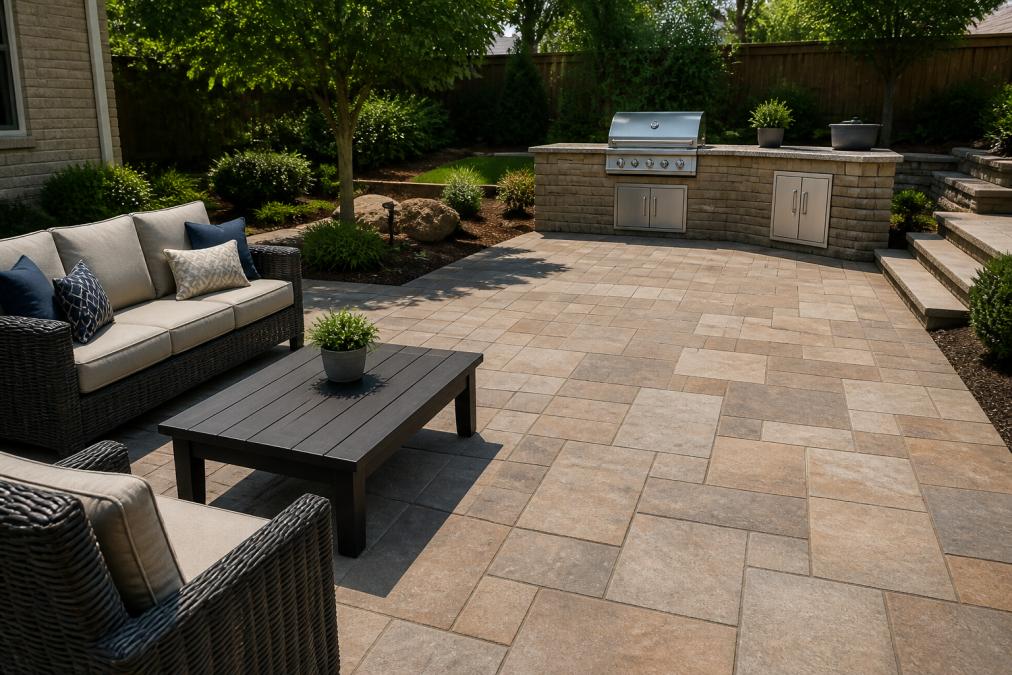
- L-shaped: fits a corner patio, separates the grill zone from prep, and works well with a bar counter on the open side.
- Linear: runs along one wall or the house edge. Best for narrow patios, and the cheapest to run utilities to.
- Island with bar seating: the classic entertaining setup. Guests sit at a raised counter while the cook works the grill.
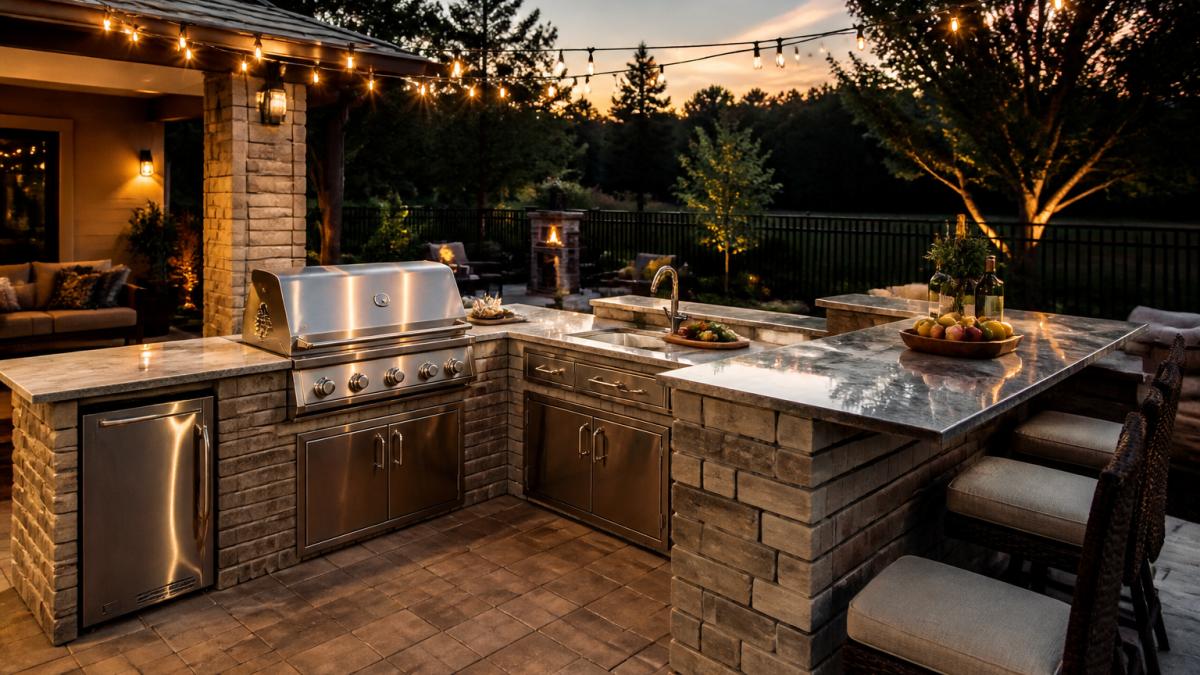
Workflow Rules That Keep the Cook in the Conversation
Plan the work triangle the same way you would indoors: grill, prep sink, and refrigerator within a few steps of each other. Keep the grill on the outside edge so smoke drifts away from seating. Leave at least 36 inches of clear counter beside the grill for landing platters, and put trash and storage out of the sightline from the table.
High-End Outdoor Kitchen Features That Earn Their Place
Features worth the money are the ones you touch every time you cook. A built-in grill with a dedicated gas line beats a portable tank you have to swap mid-party.
The features that rarely earn their keep: elaborate pizza ovens used twice a year, and oversized bars that eat the patio. Match the feature list to your actual hosting calendar.
Outdoor Kitchen Materials Built for Sun, Heat, and Cold Nights
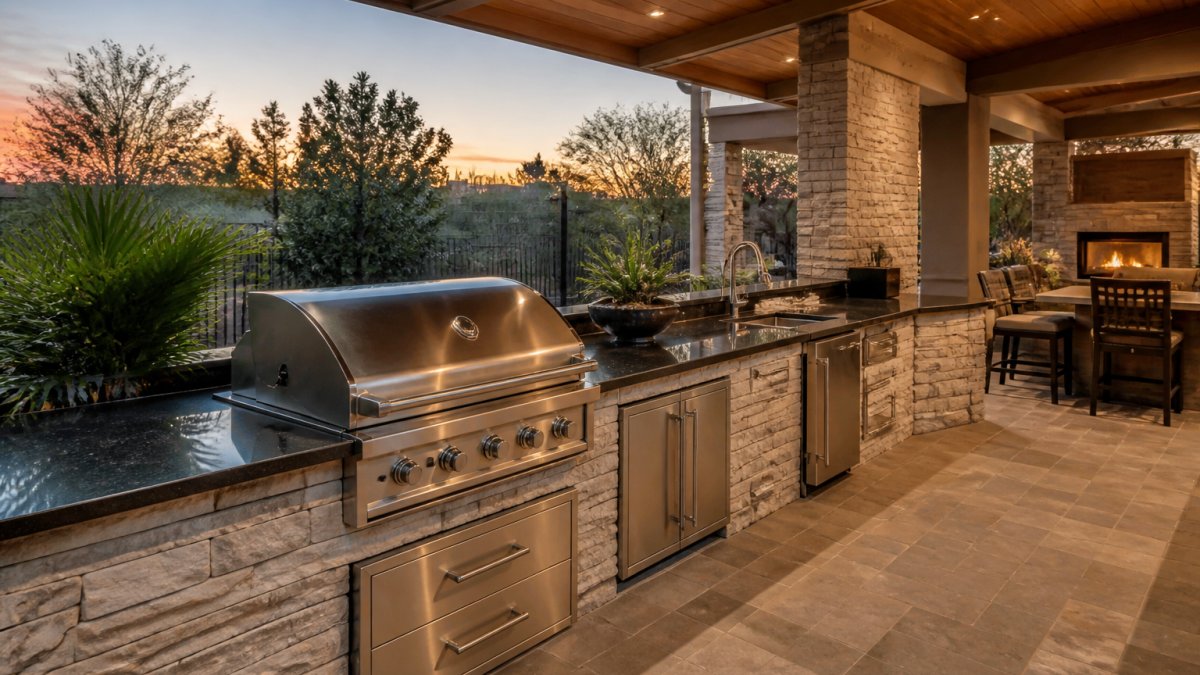
Materials decide how the space ages. Stainless steel cabinetry holds up to heat and moisture, and it's the standard for a reason. Porcelain countertops resist stains, UV fading, and thermal shock better than most natural stone. For framing, powder-coated steel and masonry outperform wood in desert heat.
Climate-Specific Material Choices
In our region, summer sun and cool winter nights punish the wrong finishes. Choose light-colored countertops that stay cooler to the touch, UV-stable powder coatings, and sealed stone that won't chalk. Avoid dark, unshaded surfaces near seating. If your winters dip below freezing, confirm your sink lines can be drained and shut off.
Outdoor Kitchen Appliances: Grills, Sinks, and Beverage Zones
Appliances should be rated for outdoor use, full stop. Indoor refrigerators and dishwashers fail fast outside because their compressors, seals, and control boards aren't built for temperature swings and humidity. The core lineup for a luxury build:
| Zone | What to Include | Why It Matters |
|---|---|---|
| Cooking | Built-in gas grill (or grill plus side burner) | Handles the main event and sides at once |
| Prep | Outdoor-rated sink and faucet | Keeps the cook outside, not running in |
| Beverage | Undercounter fridge, ice bin | Guests serve themselves |
| Storage | Sealed stainless drawers | Keeps tools dry and rust-free |
Grills: Match the Fuel and Output to How You Cook
Gas grills dominate luxury builds because they light fast, hold temperature, and run off a dedicated line.
If you want charcoal or wood-fired flavor, plan a separate charcoal or kamado station rather than a combo unit, combo grills tend to do neither job well. Pellet grills are increasingly common in luxury setups for low-and-slow cooking, but they need a covered location and a nearby outlet.
Sinks, Faucets, and Prep Zones
An outdoor sink is the feature that keeps the cook outside instead of shuttling dishes through the house. Specify a stainless or composite sink rated for freeze-thaw cycles, and choose a faucet with a ceramic cartridge and a finish rated for UV exposure, brushed stainless and powder-coated finishes hold up better than polished chrome in sun. If your winters drop below freezing, plan a shutoff and drain valve on the supply line, or run a seasonal drain-down routine.
Refrigeration and Beverage Zones
Undercounter refrigerators built for outdoor use carry sealed, weather-rated components and are designed to vent correctly when built into cabinetry, an indoor fridge stuffed into an outdoor cabinet overheats and dies early. Size the beverage fridge to your entertaining pattern: a 24-inch unit holds roughly a case of cans plus bottles, which is plenty for most households. Ice makers are a genuine luxury upgrade, but they need a water line and a drain, so decide before the rough-in stage.
Utilities That Make the Appliance Package Work
Run a dedicated gas line sized for the grill and any side burner, and confirm the line can carry the load if you add a patio heater or fire feature later. Size the electrical circuit for the fridge, lighting, rotisserie, and warming drawer together rather than adding them piecemeal. Most outdoor kitchens need at least one GFCI-protected circuit, and any appliance near water should be on one.
Climate-Specific Appliance Choices
Where you live should drive the spec sheet as much as your cooking style. In hot, sunny climates, choose lighter-colored or stainless finishes that stay cooler to the touch and specify UV-stable controls and display panels. In coastal areas, salt air attacks fasteners and lower-grade stainless, specify 316-grade stainless hardware and rinse the grill and cabinets periodically. In freeze-thaw climates, plan drain-down valves for sinks and ice makers, and choose refrigerators rated for low ambient temperatures so they keep working through cold snaps.
Lighting, Seating, and Dining Areas That Make It a Room
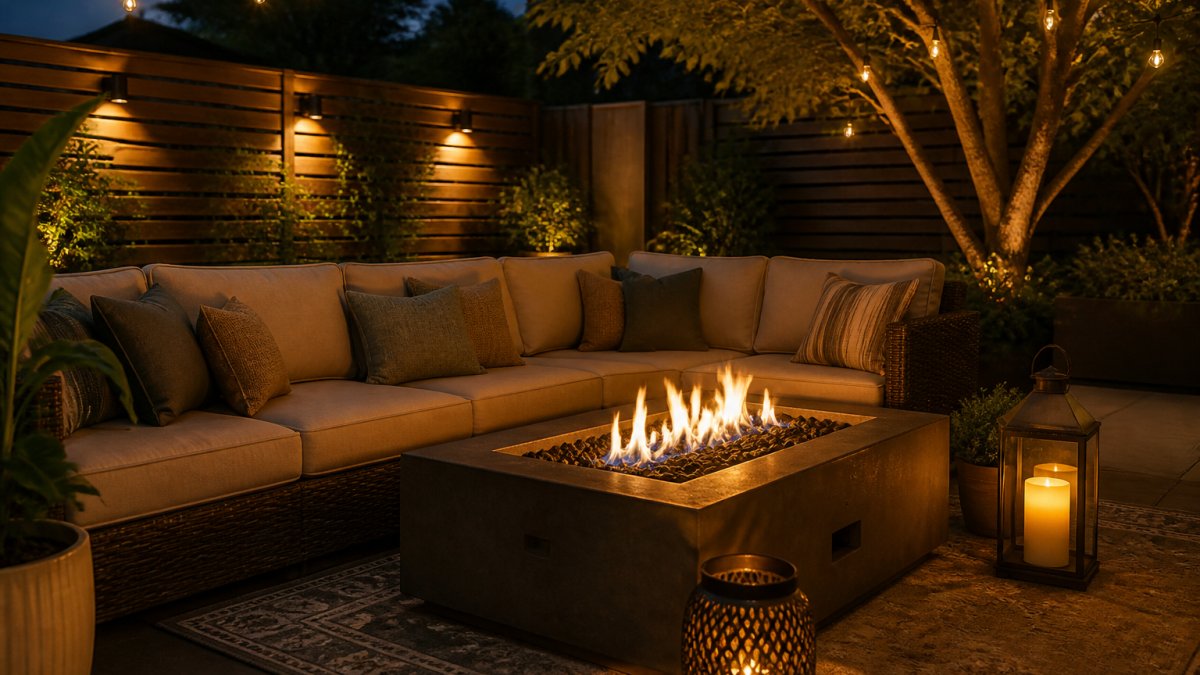
Lighting turns a cooking station into a room. Layer three types: task lighting over the grill and prep counter, ambient string lights or lanterns overhead, and low path lighting for safety.
For seating, plan a dining area that seats your real guest count, plus a lounge corner for people who aren't eating yet. Keep the dining table close enough to the bar that conversation carries, but out of the smoke path.
Permits, Utilities, and Installation Planning Before You Build
Permits and utilities are where projects stall. Built-in gas lines, electrical runs, and permanent structures usually require permits, and rules vary by city and county. Confirm gas line sizing, electrical load, and drainage before anyone breaks ground, and check setback rules from property lines and pools.
This is the part most homeowners underestimate. A beautiful design that fails inspection costs more to fix than to plan correctly. We handle delivery and installation services.
Budget, Maintenance, and Property Value: The Numbers Behind the Design
Budget depends on size, materials, and how much utility work your yard needs. Rather than publish a single number that won't fit your yard, ask for a line-item quote that separates appliances, cabinetry, countertops, utilities, and labor, that breakdown is what lets you compare bids honestly and decide where to spend and where to save.
What Drives the Price
Four factors move the number more than anything else:
- Size and layout. A linear kitchen along the house edge is the least expensive to build because utilities run short distances. An island or L-shape adds cabinetry on multiple sides and usually more utility trenching.
- Utilities. Running a gas line, electrical circuits, plumbing, and drainage is often the largest hidden cost. The farther the kitchen sits from the house, the more trenching and the higher the bill.
- Materials. Stainless cabinetry, porcelain or natural stone counters, and masonry framing each carry different price points and different installation labor.
A practical way to budget is to separate the project into bones (structure, utilities, countertops, cabinetry) and swaps (appliances, lighting fixtures, decor). Spend on the bones, because they're the hardest to change later. Once the foundational elements are secured, you can integrate futuristic home decor to elevate the aesthetic appeal of your outdoor space while ensuring the overall design remains cohesive and adaptable.
Maintenance and Lifecycle Costs by Material
Maintenance is the quieter cost, and it varies widely by material. A rough comparison of what to expect:
| Material | Routine Upkeep | Long-Term Watch-Outs |
|---|---|---|
| Stainless steel cabinetry | Wipe down periodically; rinse coastal installations | Cheaper grades can pit or rust; specify marine-grade hardware near salt air |
| Porcelain countertops | Soap and water; minimal sealing | Resists UV, stains, and thermal shock well; edges can chip on heavy impact |
| Natural stone counters | Reseal periodically; avoid acidic cleaners | Can etch, stain, or chalk under harsh sun if unsealed |
| Masonry framing | Little routine care | Mortar and sealant need occasional inspection; freeze-thaw can open joints |
| Wood elements | Regular sealing or oiling | Moves and cracks with moisture and sun; highest upkeep of the common options |
Appliances carry their own lifecycle math. Outdoor-rated refrigerators and ice makers typically need service or replacement sooner than indoor units, and grill burners, igniters, and heat plates are wear items. Budget for a service visit or two a year and for replacing wear parts every few seasons. Covers are the cheapest insurance you can buy: a fitted cover protects appliances and finishes between uses and extends the life of everything under it.
Property Value: Real but Not Guaranteed
A well-built outdoor living space tends to appeal to buyers, particularly in warm climates where the space gets used most of the year. The value bump is strongest when the kitchen fits the house and the lot, a scaled, well-integrated build reads as an upgrade, while an oversize kitchen that eats the yard or blocks the view can narrow your buyer pool.
Frequently Asked Questions
What features should a luxury outdoor kitchen include?
Start with a built-in grill and a prep zone with a sink and faucet, then add a beverage center or refrigerator and a bar counter that seats guests. High-end outdoor kitchen features that justify the spend include weather-rated cabinetry, a dedicated pizza oven or side burner, and layered lighting. Storage matters more than most people expect: drawers for tools, a trash pull-out, and covered space for serving ware keep the kitchen functional rather than decorative.
How do you plan an outdoor kitchen layout?
Map the cooking, prep, and serving zones first, then place the grill so the cook faces the seating area instead of a wall. Keep the distance between the grill, sink, and refrigerator short so you are not walking laps during dinner. Leave at least 36 inches of clear walkway behind seating, and plan the layout around existing utilities and shade. A covered section protects the cook and appliances during summer heat and sudden rain.
What materials are best for an outdoor kitchen?
Porcelain countertops, stainless steel cabinetry, and stone or concrete masonry hold up best outdoors. In hot desert climates, lighter-colored surfaces stay cooler to the touch and resist fading, while sealed natural stone needs resealing more often than porcelain. Avoid materials that absorb moisture or warp with temperature swings. Weather-resistant finishes and UV-stable sealants extend the life of any outdoor kitchen materials you choose.
Should an outdoor kitchen be covered?
A cover is worth it in most climates. It shields appliances from direct sun, keeps the cook comfortable during summer afternoons, and extends the usable season into cooler evenings. A pergola with a solid roof or a pavilion also protects cabinetry and countertops from UV damage and rain. If full coverage is not in the budget, at minimum shade the grill and prep area and choose outdoor-rated appliances rated for exposed installation.
A luxury outdoor kitchen only pays off if it's built right the first time, and that means getting the layout, materials, and utility planning correct before the first grill is set. At allvalley, we bring 26 years of backyard experience, professional delivery and installation, and reliable equipment built to minimize maintenance so your space is ready whenever guests show up. Call us at 760-342-5277 to plan your build and get a quote tailored to your yard.