 ultimate-guide
Choosing the Right BBQ Fuel Type: A 2026 Guide
Table of Contents
- Charcoal Grilling: Pros and Cons
- Natural Gas vs Liquid Propane for Outdoor Kitchens
- Pellet Grills and Automated Temperature Control
- Electric Grills for Urban Living
- Charcoal vs Propane Flavor Comparison
- Best Practices for Grill Maintenance and Fuel Storage
- Cost-Per-Cook Analysis and Fuel Efficiency
- Conclusion
Last Updated: August 30, 2026
Choosing the Right BBQ Fuel Type: A 2026 Guide
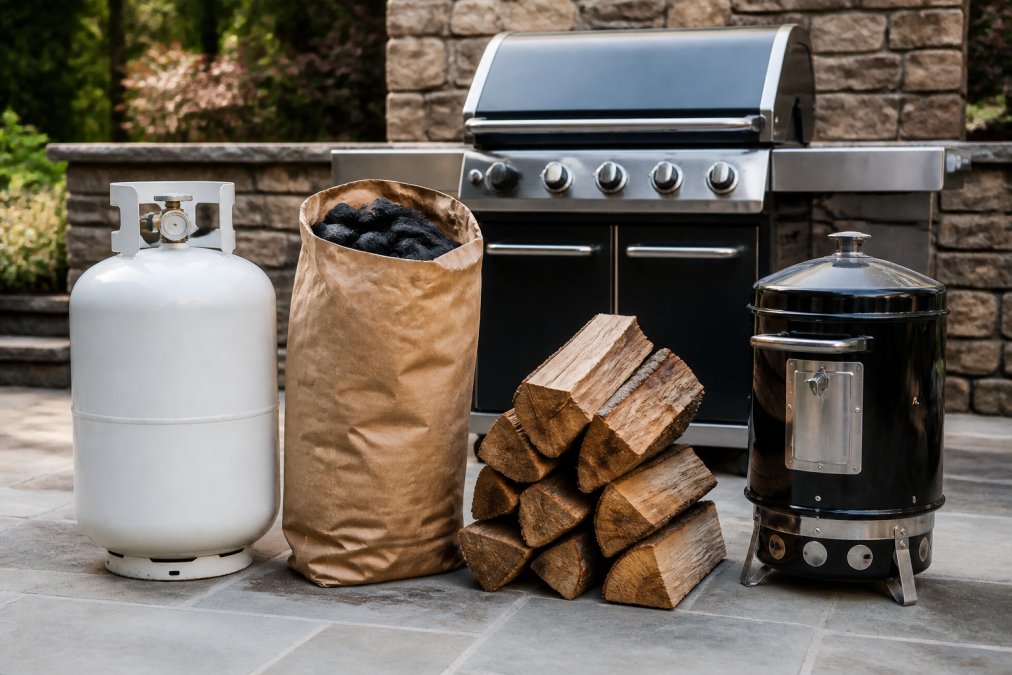
When upgrading your backyard grill, the fuel type you choose affects how your food tastes, maintenance requirements, per-cook costs, and cooking speed. At allvalley, we've helped homeowners in the Coachella Valley and Riverside County transform their outdoor spaces. This guide breaks down every major fuel option: charcoal, propane, natural gas, pellets, and electric, comparing flavor profiles, ease of use, maintenance, and real cost of ownership.
Charcoal Grilling: Pros and Cons
Charcoal delivers authentic smoke flavor, reaches high temperatures quickly, and offers versatility for searing and slow-cooking. It gives precise heat control through airflow management, making it excellent for beginners learning temperature fundamentals.
The downsides emerge quickly. Charcoal requires 15-20 minutes to light, demands monitoring throughout cooking, and creates tedious ash cleanup (peer-reviewed research). It costs more per cook than propane when buying consistently. Lump charcoal burns hotter but less consistently than briquettes, which burn longer but contain binders. Charcoal absorbs moisture and needs dry storage. Wind also affects charcoal grills more than gas alternatives, cooling cooking surfaces unpredictably.
Best for: Purists who prioritize authentic smoke flavor and don't mind extra maintenance. Charcoal excels for weekend grilling sessions where you have time to manage heat.
Natural Gas vs Liquid Propane for Outdoor Kitchens
The choice between natural gas and propane is consequential when planning an outdoor kitchen. Both deliver consistent, controllable heat, but differ fundamentally in availability, convenience, and long-term cost.
Natural gas connects directly to your home's gas line. Once installed, you never run out of fuel. This makes natural gas ideal for frequent grillers. The downside is installation, running a gas line requires a licensed plumber, permits, and inspection. Costs vary widely, but this one-time expense pays dividends if you grill regularly.
Propane uses portable tanks you swap when empty. This flexibility means no installation hassle and setup almost anywhere. Propane also reaches higher BTU output than natural gas, enabling faster ignition and hotter cooking surfaces (energy.gov). However, you're dependent on tank availability and must track inventory.
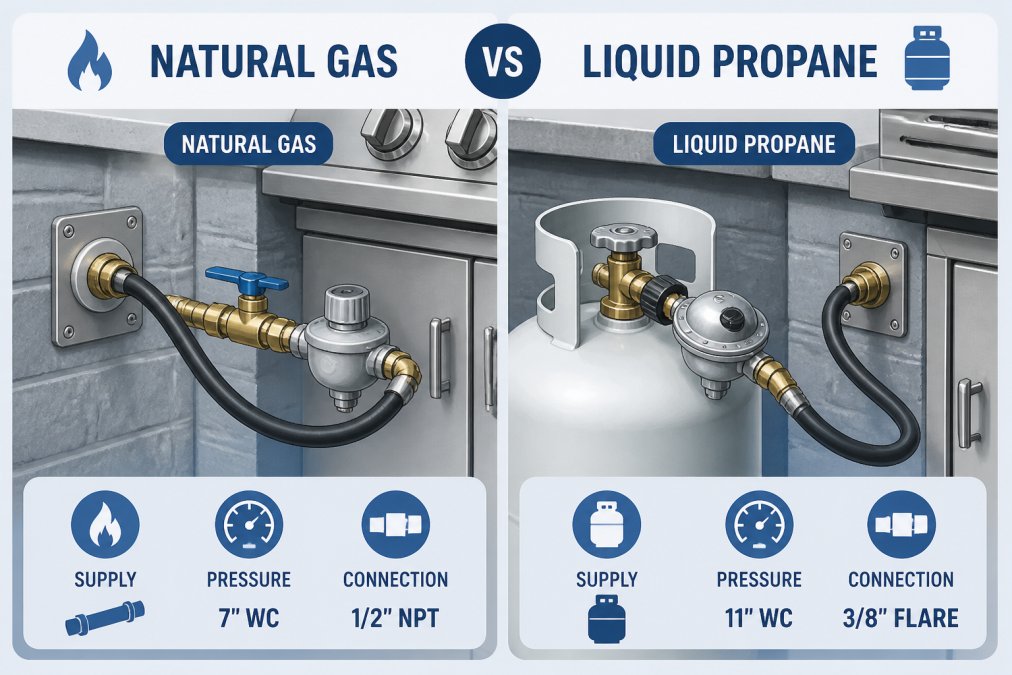
Temperature control differs slightly. Natural gas offers consistent pressure throughout cooking because supply is continuous. Propane pressure drops as tanks empty, affecting heat output in longer sessions. For most home cooks, this difference is negligible.
Natural gas requires upfront installation investment but offers lower per-cook costs and unlimited fuel supply. Propane trades convenience for flexibility and higher BTU output.
Best for: Natural gas suits homeowners with permanent outdoor kitchen setups who grill multiple times weekly. Propane works better for renters, those without gas service, or anyone wanting to relocate their grill.
Pellet Grills and Automated Temperature Control
Pellet grills blend smoke flavor of charcoal with convenience and precision of gas, using wood pellets as fuel and an electric auger to feed them automatically. Set your target temperature on the digital controller, and the grill maintains it automatically, ideal for low-and-slow cooking where briskets, ribs, and whole chickens come out incredibly consistent.
Wood pellets come in varieties: oak, hickory, mesquite, apple, and cherry, each imparting distinct smoke flavor. The flavor profile sits between charcoal and gas, more nuanced than propane but less intense than traditional charcoal smoking.
Pellet grills require electricity to operate the auger and controller, meaning you can't use them during power outages. They're more expensive upfront than charcoal or propane grills. Maintenance involves cleaning the auger, checking for pellet dust buildup, and occasionally replacing the hot rod igniter. Pellets cost more per pound than charcoal or propane, though per-cook cost is competitive when factoring in automation and consistent results. Pellets need dry storage like charcoal.
Best for: Serious home cooks who want "set it and forget it" temperature control and value consistent results. Pellet grills excel for smoking and low-temperature cooking.
Electric Grills for Urban Living
Electric grills are the only fuel type producing zero emissions, requiring no fuel storage, and working where open flames are restricted. For apartment dwellers, condo owners, and anyone with strict HOA rules, electric grills might be the only option.
Electric grills use heating elements to cook food, reaching high temperatures quickly with even heat distribution. They don't produce smoke or flavor compounds from burning charcoal or wood. What they do well is consistency and ease, they preheat in minutes, maintain exact temperatures, and require minimal cleanup. There's no ash, no fuel storage, and minimal maintenance.
The downside is flavor and versatility. You won't achieve the depth of flavor that charcoal or wood smoke provides. For people prioritizing convenience and living in urban environments where traditional grilling isn't possible, electric is practical. For anyone with the choice, it's usually a compromise.
Best for: Apartment dwellers, condo owners, and anyone with fire restrictions. Electric grills work well for weeknight cooking where speed and consistency matter more than authentic smoke flavor.
Charcoal vs Propane Flavor Comparison
Charcoal produces complex smoke compounds during combustion, releasing volatile organic compounds that infuse meat with smoky flavor (peer-reviewed research). Lump charcoal burns hotter and produces more smoke; briquettes burn longer and more evenly. Many pitmasters prefer lump charcoal for this reason.
Propane burns cleanly, producing heat and water vapor but minimal smoke compounds. Flavor comes primarily from meat juices dripping onto hot surfaces and vaporizing, creating grilled flavor and caramelized surfaces but not layered smokiness. Natural gas behaves identically to propane in terms of flavor.
Pellet grills split the difference, producing authentic wood smoke while maintaining automated temperature control. The smoke flavor is less intense than traditional charcoal smoking but more complex than propane.
If authentic smoke flavor is your priority, charcoal or pellets are non-negotiable. If grilling steaks and burgers with quick, convenient cooking matters most, propane delivers excellent results.
| Fuel Type | Smoke Intensity | Flavor Complexity | Heat Control | Convenience |
|---|---|---|---|---|
| Charcoal (lump) | High | Complex | Manual | Low |
| Charcoal (briquettes) | Medium-High | Complex | Manual | Low |
| Propane | None | Clean/grilled | Precise | High |
| Natural Gas | None | Clean/grilled | Precise | High |
| Pellets | Medium-High | Complex | Automated | Medium-High |
| Electric | None | Minimal | Precise | High |
Best Practices for Grill Maintenance and Fuel Storage
How you maintain your grill and store fuel directly impacts safety, longevity, and performance.
Charcoal storage requires a dry location. Store bags in sealed containers or waterproof bins in garages, sheds, or covered areas. Check charcoal before use, clumped or damp charcoal won't light properly.
Propane tank safety is non-negotiable. Store tanks upright, outdoors, in well-ventilated areas away from heat sources. Never store in enclosed spaces like garages or basements. Check connections regularly for leaks using soapy water. Have tanks inspected annually by professionals and replace tanks more than 12 years old.
Natural gas lines require professional inspection. Have a licensed plumber check connections annually and before grilling season. If you smell gas, shut off supply immediately and call your utility.
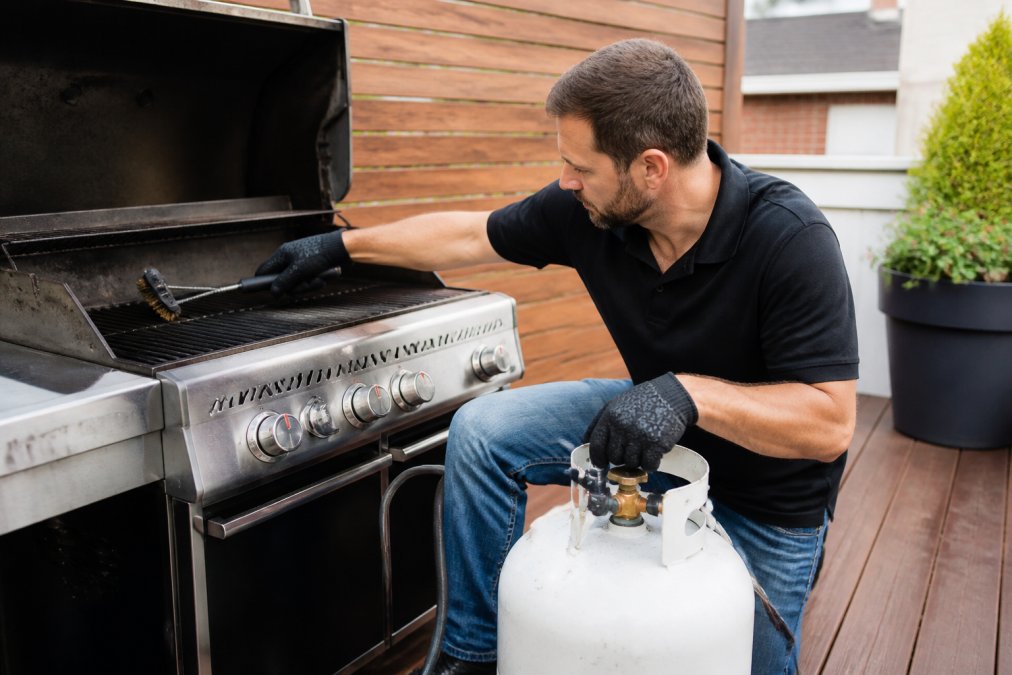
Grill cleaning extends equipment life. Clean grates after every cook while warm using a grill brush. For propane or natural gas grills, clean the firebox monthly during heavy use to prevent flare-ups. For charcoal grills, empty ash after every few cooks.
Seasonal maintenance matters. At season start, inspect thoroughly for rust, loose bolts, and damaged seals. At season end, clean thoroughly, cover, and store in a dry location.
Cost-Per-Cook Analysis and Fuel Efficiency
Understanding true cost requires calculating what you spend per cooking session beyond the grill's sticker price.
Charcoal cost-per-cook depends on grilling frequency and fuel efficiency. A typical backyard cook uses 8-12 pounds of charcoal, roughly $8-15 per cook. Weekly grilling costs $400-780 annually in fuel alone.
Propane cost-per-cook is lower than charcoal. A 20-pound tank provides roughly 20-25 grilling hours, costing $3-6 per cook. Propane is more fuel-efficient because gas burns at precise temperatures without waste.
Natural gas cost-per-cook is lowest ongoing. Your utility bill increases slightly, but per-cook cost is often under $2. Upfront installation ($500-2000+ depending on distance and permits) takes time to recoup, but grilling 50+ times annually makes natural gas most economical.
Pellet cost-per-cook ranges from $4-8, depending on pellet quality and cooking temperature. For low-and-slow cooking, pellet efficiency is excellent.
Electric cost-per-cook is negligible, under $1 per cook in most cases.
Calculate your annual grilling frequency. Weekly grillers should consider natural gas for long-term savings. Casual grillers can choose based on flavor preference.
Conclusion
Choosing the right bbq fuel type comes down to balancing flavor, grilling frequency, and lifestyle fit. Charcoal delivers authentic smoke but requires attention. Propane and natural gas offer convenience and consistency. Pellets automate smoking. Electric works when nothing else is allowed.
At allvalley, we've installed outdoor kitchens across the Coachella Valley and Riverside County. The best grill is the one you'll actually use. Our team can help you select equipment matching your fuel choice and handle professional delivery and installation, ensuring everything is properly connected, safely installed, and ready for your first cook. Call us at 760-342-5277 to discuss your backyard vision and get a quote for your next outdoor upgrade.
Frequently Asked Questions
What is the best type of fuel for a BBQ?
The best BBQ fuel type depends on your priorities. Propane offers convenience and fast ignition with minimal setup. Charcoal delivers superior smoke flavor and sear capability but requires more hands-on management. Natural gas provides consistent BTU output if your backyard has a gas line. Pellet grills automate temperature control for set-and-forget cooking. Electric grills work best for apartment living. Consider your cooking style, available space, and how often you grill when choosing.
How does natural gas compare to propane for outdoor kitchens?
Natural gas requires a permanent gas line installation but eliminates tank refills and offers lower per-unit costs over time. Propane tanks are portable and don't need professional installation, making them ideal for renters or temporary setups. Natural gas provides consistent pressure and BTU output, while propane performs well in cold climates. Natural gas is more convenient for frequent grilling, but propane offers flexibility. Both fuels deliver similar cooking results and heat retention.
Which BBQ fuel type is most cost-effective for frequent grilling?
Natural gas typically offers the lowest cost-per-cook for frequent grilling due to lower fuel costs and no tank replacement fees. Propane costs more per use but requires no installation. Charcoal is economical for occasional grilling but becomes expensive with regular use. Pellet grills offer moderate fuel costs with superior convenience. Calculate your annual grilling frequency and local fuel prices to determine true cost-per-cook for your situation.
What maintenance differences exist between BBQ fuel types?
Charcoal grills require ash disposal after each use and grate cleaning. Propane and natural gas grills need occasional grate scrubbing and burner inspection. Pellet grills require hopper cleaning and regular auger maintenance. Electric grills demand minimal upkeep beyond surface cleaning. All fuel types benefit from cover storage and seasonal inspections. Propane tanks need pressure checks, while natural gas lines need professional inspection every few years. Regular maintenance extends equipment life regardless of fuel choice.
Does fuel choice affect how long my grill lasts?
Yes, fuel type impacts longevity. Charcoal grills experience more corrosion from ash and moisture but are simple to repair. Gas grills (propane and natural gas) last longer with proper maintenance due to fewer moving parts. Pellet grills require more mechanical maintenance but last with care. Electric grills are durable but have shorter lifespan than gas. Proper storage, regular cleaning, and seasonal maintenance extend any grill's life, regardless of fuel source.
Can I switch fuel types on my existing grill?
Some grills offer conversion kits to switch between propane and natural gas, but this requires professional installation and voids warranties on many models. Charcoal grills cannot convert to gas. Pellet and electric grills use dedicated fuel systems. Most homeowners find it more practical to purchase a grill designed for their preferred fuel type. If you're uncertain about your fuel choice, rent or borrow different grills before investing in permanent equipment.
Many homeowners struggle to coordinate outdoor kitchen installations, worry about whether their fuel setup is safe, and wonder if they're overpaying for equipment. The right partner handles all of this, sourcing quality products, managing installation, and standing behind the work. That's what allvalley has done for over 26 years. With professional installation and our commitment to quality, you'll have a grill setup that works reliably for decades.
This article was written using GrandRanker