 comparison
Are Expensive BBQ Grills Worth It in 2026
Table of Contents
- The Real Cost of Ownership: Breaking Down the Investment
- Build Quality and Material Thickness That Lasts
- How Long Do Expensive Grills Last Versus Budget Models
- Maintenance Requirements for High-End Grills
- Performance Differences: Heat Distribution and Cooking Consistency
- Best Outdoor Kitchen Equipment Brands 2026
- When a Premium Grill Makes Sense
Last Updated: August 26, 2026
When you're standing in front of a grill showroom, the sticker shock can be real. A premium gas grill costs three to four times what you'd pay for an entry-level model. That gap raises an obvious question: are expensive BBQ grills worth it? The answer depends on what you actually grill, how often you use your equipment, and whether you're willing to invest upfront to avoid replacing your grill every few years.
This guide from allvalley explores what separates a budget grill from a premium one, and whether that difference translates to real value in your backyard. We've spent over 26 years helping homeowners invest in outdoor equipment that actually lasts.
The Real Cost of Ownership: Breaking Down the Investment
Most people focus on the purchase price and ignore the total cost of ownership. A $400 grill might seem like a bargain until you factor in replacement parts, repairs, and the fact that you'll probably buy a new one in three to five years. A $3,000 grill costs more upfront, but if it lasts 15 years with minimal repairs, the annual cost drops significantly.
Budget models use thinner steel, lower-quality burners, and components that corrode faster in outdoor conditions. They're designed to be replaced, not repaired. Premium grills use heavier-gauge stainless steel, better ignition systems, and parts that are actually available five years after purchase.
Consumer Reports' durability testing on outdoor equipment shows that build quality directly correlates with longevity. Grills constructed with thicker materials and better welds simply outlast their cheaper competitors.
| Cost Factor | Budget Grill ($300-600) | Mid-Range Grill ($1,000-1,500) | Premium Grill ($2,500+) |
|---|---|---|---|
| Initial cost | $300-600 | $1,000-1,500 | $2,500+ |
| Expected lifespan | 3-5 years | 7-10 years | 12-15+ years |
| Annual cost (spread over lifespan) | $60-200 | $100-214 | $167-208 |
| Replacement parts availability | Limited | Good | Excellent |
| Typical repair costs | $100-300 | $150-400 | $200-500 |
Build Quality and Material Thickness That Lasts
Budget grills use thin-gauge steel (often 1.5mm or thinner) that rusts through in a few years. Premium grills use heavy-duty stainless steel (typically 3mm or thicker) that resists corrosion far longer (astm.org). That thickness affects heat retention, structural integrity, and how long the grill survives in outdoor conditions.
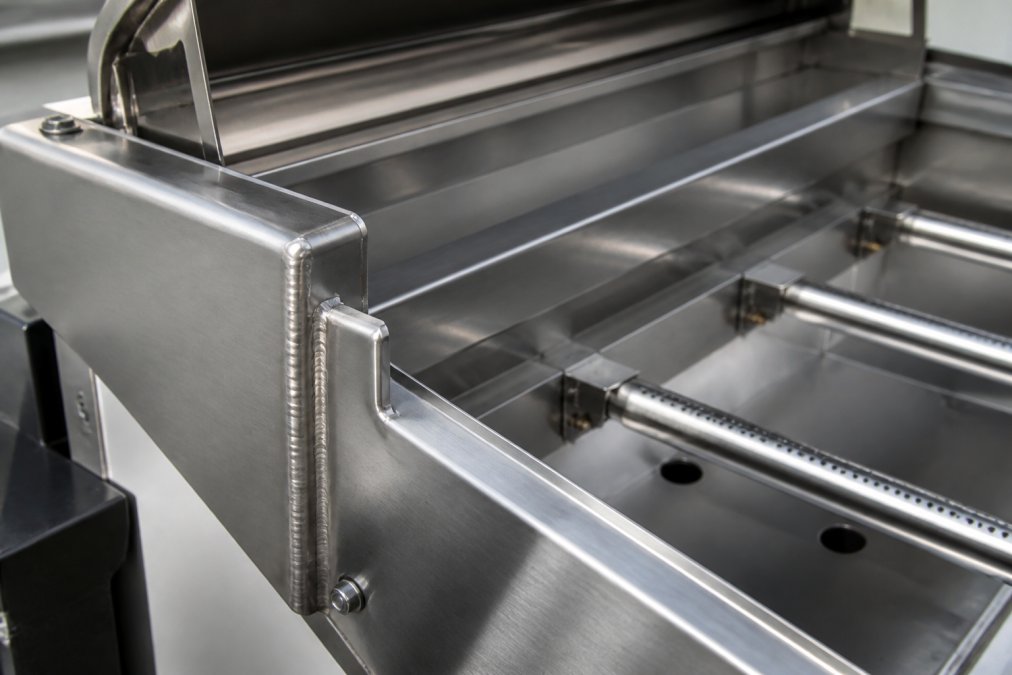
Welding quality separates good grills from mediocre ones. Cheap models use spot welds that can separate over time. Premium grills use continuous welds that distribute stress evenly and last decades. The grates matter too, porcelain-enameled grates on budget models split and chip easily, while premium grills use thicker enamel applied to better-quality steel.
Internal components tell the real story. A budget grill has simple gas regulators and basic burners. A premium grill has precision burners with multiple ignition points, better gas distribution, and regulators designed to maintain consistent pressure across different temperature settings. These directly affect how evenly your food cooks.
At allvalley, we've installed thousands of grills over 26 years, and the pattern is clear: grills that still work perfectly after a decade are built with thicker materials and better components. More mass means better heat retention. Better welds mean the structure doesn't fail under thermal stress.
How Long Do Expensive Grills Last Versus Budget Models
A budget grill typically lasts three to five years before major components fail or rust becomes a problem (consumerreports.org). Mid-range grills last seven to ten years. Premium grills regularly last 12 to 15 years, and many owners report 20+ years of reliable service.
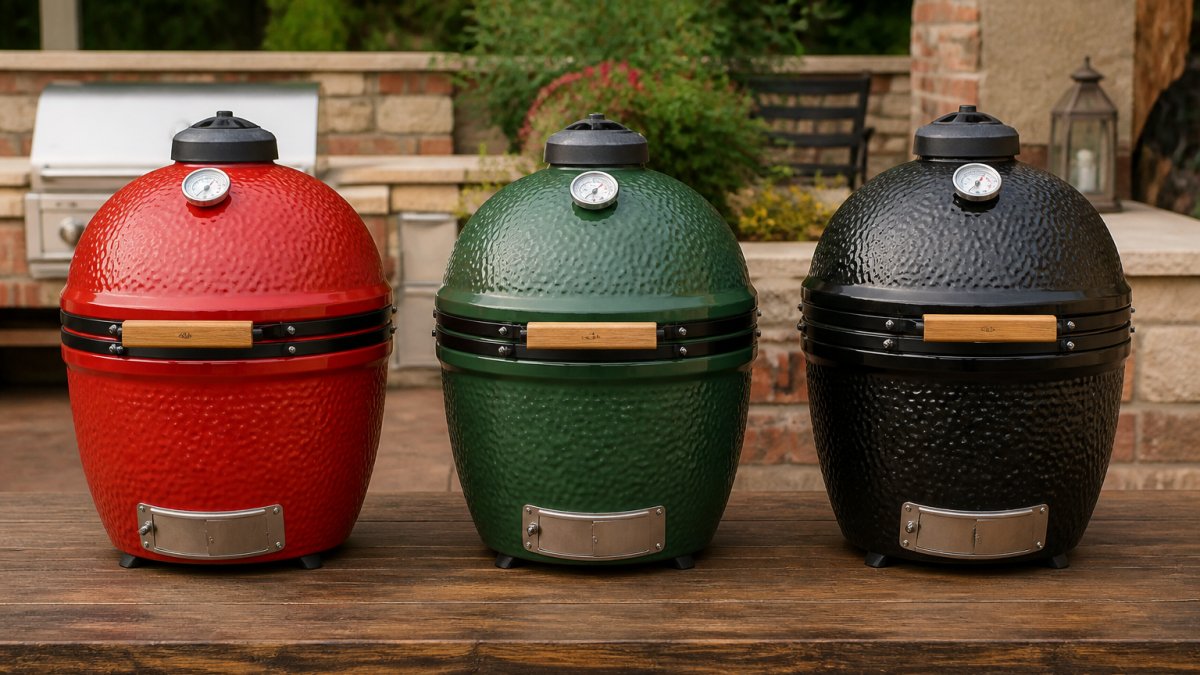
The Big Green Egg Large is a ceramic kamado grill built to last. The ceramic shell doesn't rust or corrode, and owners report using the same Egg for 20 years or more. Compare that to a $400 charcoal grill that might last four years before the metal degrades.
Expensive grills also hold resale value better. A five-year-old premium grill might sell for 40-50% of its original price. A five-year-old budget grill is basically worthless. If you ever want to upgrade, the expensive grill gives you a recovery option.
Maintenance Requirements for High-End Grills
Premium grills don't maintain themselves, but maintenance is straightforward and parts don't degrade as quickly. A $3,000 grill's grates might last five to seven years with regular cleaning. A $400 grill's grates might last two years.
Replacement parts for premium grills are easy to find. Weber, Lynx, Traeger, and Big Green Egg all sell replacement burners, grates, thermometers, and covers directly. For budget grills, you might not find the exact replacement part and end up buying a whole new grill instead.
Warranty coverage reflects manufacturer confidence in durability. Premium grills often come with five to ten-year warranties on the grill body and two to three years on burners and electronic components. Budget grills typically offer one to two years on the body and 90 days on parts.
The real maintenance advantage of expensive grills is that problems are fixable. A corroded burner on a budget grill means replacing the whole unit. A corroded burner on a premium grill means ordering a new burner for $80-150 and swapping it out. That repairability is worth a lot over 10+ years.
Performance Differences: Heat Distribution and Cooking Consistency
Budget grills have uneven heat distribution with hot spots near the burners and cold spots away from them. The thermometer reads 400 degrees, but actual surface temperature varies by 50 degrees or more across the grates.
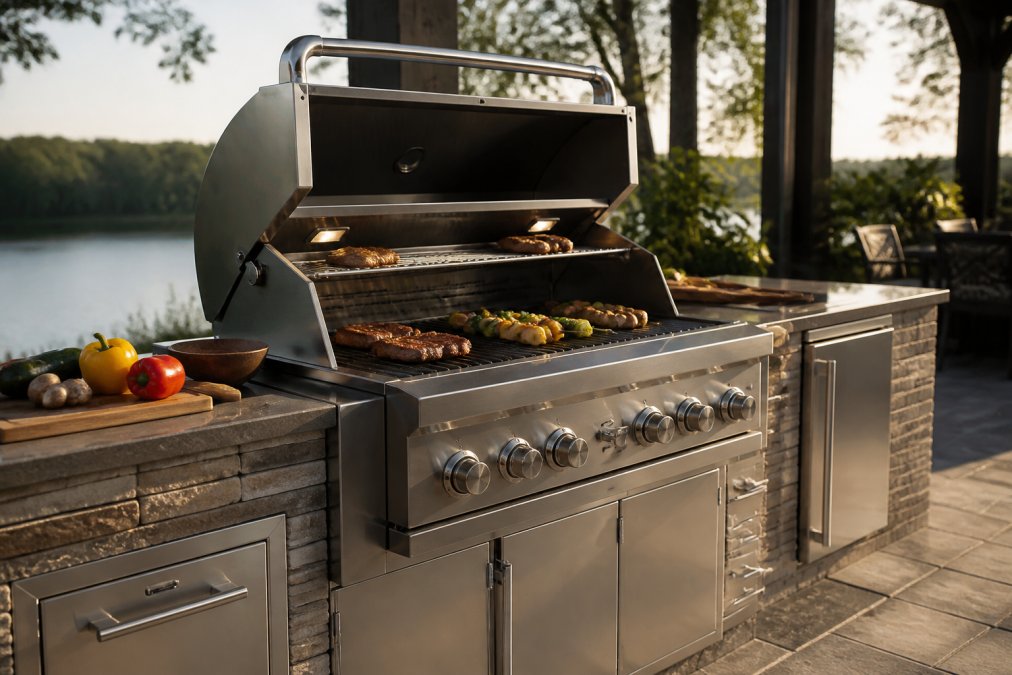
Premium grills use better burner design, thermal mass, and heat deflectors to maintain consistent temperatures across the entire cooking surface. A high-end gas grill like the Weber Summit S-670 or Lynx Sedona L500PSR delivers even heat across all zones. You set it to 400 degrees, and the entire cooking surface stays within 10 degrees of that target.
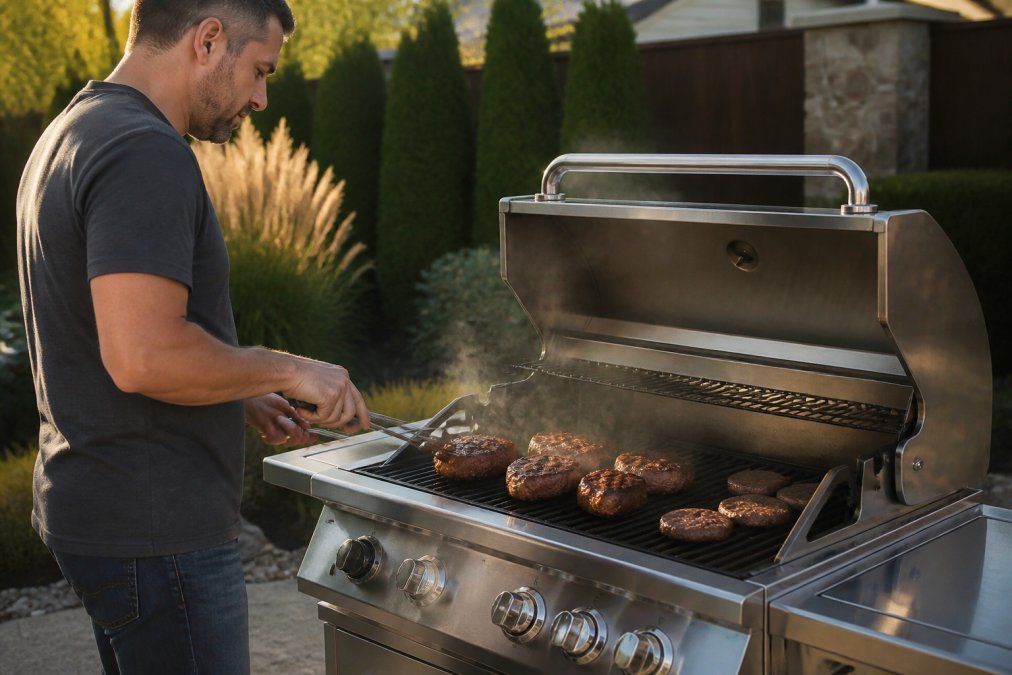
The Traeger Ironwood XL pellet grill uses WiFi-enabled temperature control to maintain consistent heat throughout the cook. Ceramic kamado grills like the Big Green Egg Large excel at heat retention, allowing you to sear at 700 degrees and then drop to 225 for low-and-slow smoking without major temperature swings.
The practical result: expensive grills let you cook better food more reliably. Steaks come out with consistent browning. Chicken cooks evenly without dry spots. Smoking runs at stable temperatures. That consistency compounds over time as your skills improve because you're not fighting the equipment.
Best Outdoor Kitchen Equipment Brands 2026
Weber dominates the premium gas grill market. The Summit S-670 offers six main burners with 60,000 BTU input, a sear station, rotisserie, and smoker box. Stainless steel construction and excellent heat distribution come with parts availability that's hard to beat. Expect to pay $2,800-$3,300.
Lynx builds luxury grills for high-end outdoor kitchens. The Sedona L500PSR combines a ProSear Infrared Burner with precision temperature control and welded construction. Starting around $3,400, these grills are built for performance and longevity.
Big Green Egg stands apart as a ceramic kamado grill. The Large model costs $750-$1,150 for the Egg alone, but add a nest, table, and accessories, and you're looking at $1,500+. Ceramic construction means it'll outlast any steel grill.
Traeger leads the pellet grill market. The Ironwood XL offers WiFi connectivity, Super Smoke mode, and 924 square inches of cooking space. At $1,999, the smart features and consistent performance justify the cost for tech-savvy grillers.
At allvalley, we've worked with all these brands over our 26 years in business. We recommend them because they deliver on durability, support, and performance. We also stock overstock deals on premium equipment, so you don't always pay full retail. Call us at 760-342-5277 to see what we have available.
When a Premium Grill Makes Sense
Expensive grills make sense in specific situations.
You grill more than once a week. Frequent use justifies premium build quality. A budget grill will fail in two to three years; a premium grill will last 12+.
You want to cook multiple styles. If you grill steaks one day and smoke brisket the next, you need a grill with versatility and precision. Budget grills can't maintain low temperatures reliably.
You're building a permanent outdoor kitchen. If you're investing in a built-in grill, custom counter space, and a covered area, a premium grill matches the investment and lasts long enough to justify it.
You cook for groups regularly. Large gatherings need a grill that can handle volume. The Weber Summit S-670 with 769 square inches of cooking space can grill 20 steaks at once.
You value consistency and don't want to fight your equipment. Premium grills remove variables. Even heat, reliable ignition, and stable temperatures let you focus on technique.
You plan to stay in your home for 10+ years. The longer you own the grill, the lower the annual cost. A $3,000 grill over 15 years costs $200 per year.
Budget grills make sense if you grill occasionally, don't care about consistency, or want to test the waters before committing to outdoor cooking. But if you're reading this article, you probably fall into the "expensive grill makes sense" category.
Investing in a premium grill is investing in years of reliable outdoor cooking. The upfront cost is higher, but the total cost of ownership often favors expensive grills over the long term. At allvalley, we help homeowners choose equipment that delivers value, not just features. Our 26 years in business mean we've seen which grills hold up and which ones disappoint. We offer professional delivery and installation, so your new grill is set up correctly from day one. Call us at 760-342-5277 to discuss which premium grill is right for your backyard, or visit our website to explore our current inventory of top-tier outdoor equipment.
=== FAQ ANSWERS (audit these too, same rules) ===
[1] Q: Is it worth buying an expensive gas grill? A: Expensive gas grills justify their cost if you grill frequently and prioritize durability, heat consistency, and long-term reliability. Premium models feature stainless steel construction, superior thermal mass, and better temperature control, factors that reduce maintenance costs and extend lifespan to 15+ years. For casual grillers using a grill fewer than 10 times yearly, entry-level models deliver adequate performance at a fraction of the price.
[2] Q: How long do expensive grills last compared to budget options? A: High-end expensive grills typically last 15-25 years with proper maintenance, while budget models often fail within 5-8 years. Premium construction uses thicker stainless steel gauge, better corrosion resistance, and modular components that can be replaced individually. This longevity reduces your cost-per-use significantly over time, making expensive grills more economical for long-term grilling enthusiasts.
[3] Q: What features justify the price of a luxury grill? A: Luxury grills offer precision ignition systems, ceramic insulation, multiple cooking zones with independent temperature control, and seamless welded construction that eliminates heat loss. They provide superior heat retention, consistent temperature distribution across the cooking surface, and reduced flare-ups. Premium brands also include better warranty coverage and easier replacement parts availability, protecting your investment for decades.
[4] Q: Do expensive grills actually cook food better? A: Yes, premium expensive grills deliver superior cooking results through better heat distribution and temperature consistency. High-end models maintain even temperatures across the entire cooking surface, reducing hot spots and flare-ups. Superior BTU output, thermal mass from materials like cast iron grates and porcelain-enameled surfaces, and precision burner placement enable better searing, smoke control, and overall cooking performance compared to budget alternatives.
Frequently Asked Questions
Is it worth buying an expensive gas grill?
Expensive gas grills justify their cost if you grill frequently and prioritize durability, heat consistency, and long-term reliability. Premium models feature stainless steel construction, superior thermal mass, and better temperature control, factors that reduce maintenance costs and extend lifespan to 15+ years. For casual grillers using a grill fewer than 10 times yearly, entry-level models deliver adequate performance at a fraction of the price.
How long do expensive grills last compared to budget options?
High-end expensive grills typically last 15-25 years with proper maintenance, while budget models often fail within 5-8 years. Premium construction uses thicker stainless steel gauge, better corrosion resistance, and modular components that can be replaced individually. This longevity reduces your cost-per-use significantly over time, making expensive grills more economical for long-term grilling enthusiasts.
What features justify the price of a luxury grill?
Luxury grills offer precision ignition systems, ceramic insulation, multiple cooking zones with independent temperature control, and seamless welded construction that eliminates heat loss. They provide superior heat retention, consistent temperature distribution across the cooking surface, and reduced flare-ups. Premium brands also include better warranty coverage and easier replacement parts availability, protecting your investment for decades.
Do expensive grills actually cook food better?
Yes, premium expensive grills deliver superior cooking results through better heat distribution and temperature consistency. High-end models maintain even temperatures across the entire cooking surface, reducing hot spots and flare-ups. Superior BTU output, thermal mass from materials like cast iron grates and porcelain-enameled surfaces, and precision burner placement enable better searing, smoke control, and overall cooking performance compared to budget alternatives.
This article was written using GrandRanker