 how-to
7 Habits That Keep Spa Water Clear Between Filter Cleanings
Last Updated: November 4, 2026
Quick Summary
To keep clear spa water between filter cleanings, balance pH, alkalinity, sanitizer and calcium hardness weekly, run filtration long enough to turn over the full water volume twice a day, and rinse filter pleats before they clog. Match your rinse interval to your filter media and shorten it during pollen season or heavy use.
- Keep pH at 7.4 to 7.6, total alkalinity at 80 to 120 ppm, and calcium hardness at 150 to 250 ppm.
- Adjust alkalinity first, then pH, then sanitizer, because alkalinity locks pH in place.
- Rinse pleated polyester cartridges every one to two weeks; ceramic media can stretch to three to four weeks.
- Add spa water clarifier after shocking, never before, and never overdose it.
- High total dissolved solids make sanitizer less effective and leave water hazy no matter how clean the filter is.
Table of Contents
- Why Clear Spa Water Comes Down to Two Systems
- Step 1: Test and Balance Your Hot Tub Water Chemistry Balance Weekly
- Step 2: Set Your Hot Tub Filtration Cycle Duration Correctly
- Step 3: Rinse Filter Pleats Before They Clog
- Step 4: Use a Spa Water Clarifier the Right Way
- Step 5: Manage Bather Load and Surface Oils
- Step 6: Shock on a Schedule, Not Just When Water Clouds
- Step 7: Watch Environmental Factors and Total Dissolved Solids
- Your Next Step Toward Clearer Water
- Frequently Asked Questions
Why Clear Spa Water Comes Down to Two Systems
Clear spa water is the result of two systems working together: water chemistry and mechanical filtration. When either one slips, the water clouds, and no amount of extra chlorine fixes a clogged cartridge. This guide covers the habits that keep a spa clear between filter cleanings.
Most hot tub owners treat cloudy water as a chemical problem. They shock, they wait, they shock again. But a dirty filter and unbalanced water produce the same symptom, and treating one while ignoring the other wastes time and chemicals.
Water chemistry balance is the control of pH, alkalinity, sanitizer and hardness so that chlorine or bromine can do its job. Mechanical filtration is the physical removal of debris, oils and particles through the cartridge. Skip either and clarity disappears.
Water Chemistry vs. Mechanical Filtration
Chemistry kills what's in the water. Filtration removes what's in the water. Sanitizer can't oxidize a leaf sitting in the filter housing, and a clean filter can't fix low pH. Both need attention, and most guides only cover one.
A common mistake is buying a stronger sanitizer when the real issue is a filter that hasn't been rinsed in weeks. The fix costs nothing.
Step 1: Test and Balance Your Hot Tub Water Chemistry Balance Weekly
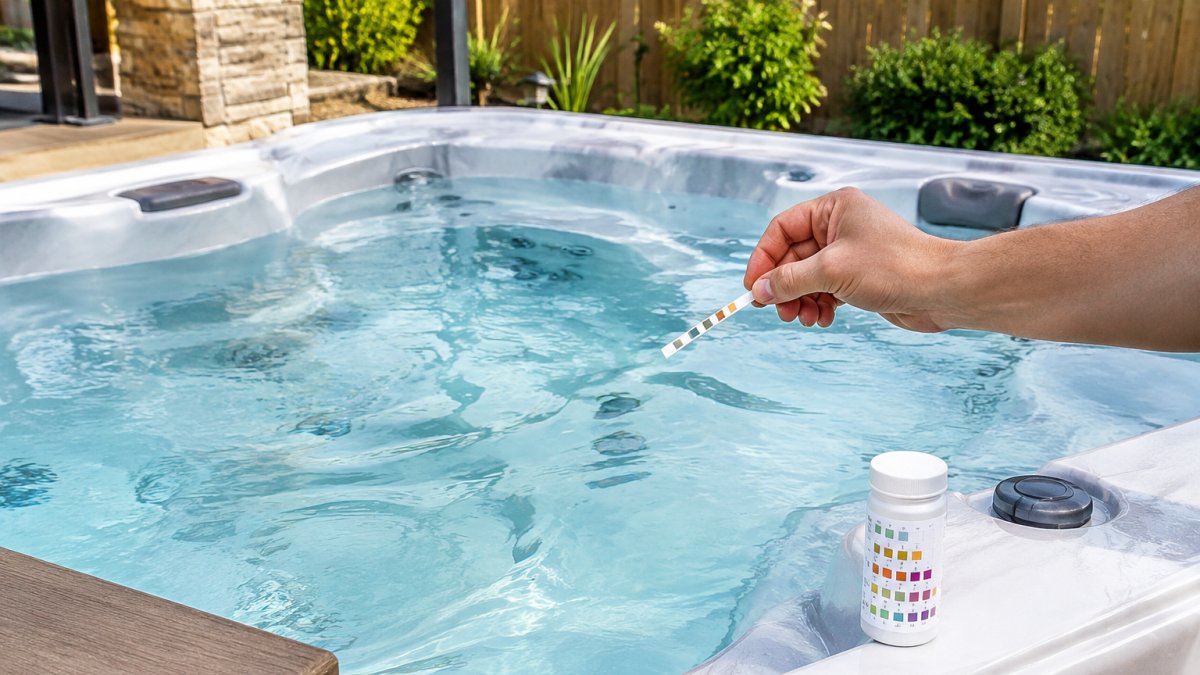
Test your spa water regularly, and rebalance before the numbers drift. Frequent testing catches problems while they're small.
The Four Numbers That Matter Most
- pH: keep it in the 7.4 to 7.6 range
- Total alkalinity: 80 to 120 ppm
- Sanitizer: follow the label for chlorine or bromine
- Calcium hardness: 150 to 250 ppm
Adjust alkalinity first, then pH, then sanitizer. Alkalinity locks pH in place, so fixing pH before alkalinity wastes product. For a deeper walkthrough, see our guide on how to balance hot tub pH levels. If you're ready to upgrade your test kit, we compare the best hot tub water testing kits.
Step 2: Set Your Hot Tub Filtration Cycle Duration Correctly
Run your filtration cycle long enough to turn over the full water volume at least twice a day. Run your filtration long enough to turn over the full water volume, and check your owner's manual for the right duration.
Check your spa's flow rate in gallons per minute and confirm the filter isn't restricting it.
Step 3: Rinse Filter Pleats Before They Clog
Rinse your cartridge filter regularly, before the pleats clog. A clogged filter cuts water circulation, and poor circulation is a common cause of cloudy water. The right interval depends on your filter media, your bather load, and what the pleats are actually trapping.
Why Pleat Geometry Matters
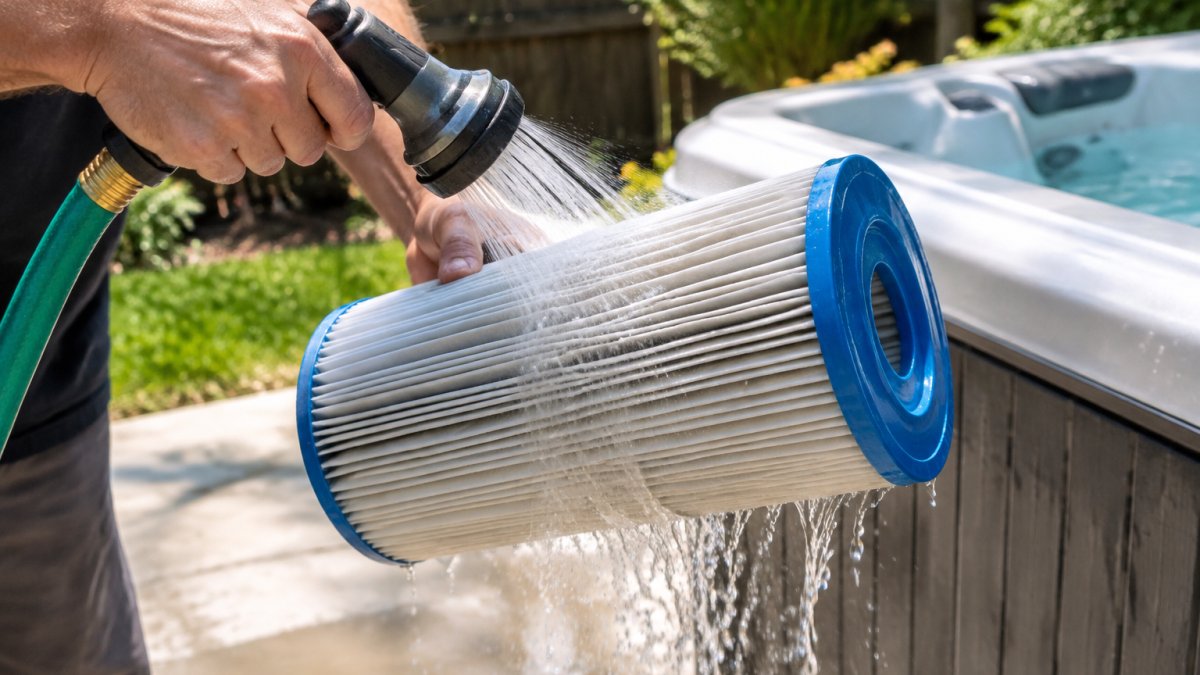
A pleated cartridge works by maximizing surface area: the folds pack a large filter surface into a small housing. Water enters the outer pleat valleys, passes through the fabric, and exits through the inner core. Debris collects in the valleys first, and once those valleys bridge over with oils and hair, the effective surface area collapses. Flow drops, the pump works harder, and turnover time stretches, which is exactly when water clouds even though your chemistry reads fine.
Spray between each pleat from the top down, working the stream into the valley rather than across the pleat face. Watch out: blasting the pleats at full pressure can tear the fabric and let debris straight through. A wide fan nozzle at moderate pressure cleans better than a jet nozzle at full blast.
Match the Rinse Interval to Your Filter Media
Not every cartridge needs the same schedule. The three common media types behave differently between cleanings:
- Pleated polyester cartridges are the standard in most residential spas. They trap fine debris well but load up fastest with oils and lotions, so a one-to-two-week rinse is realistic for a spa used several times a week.
- Ceramic or ceramic-coated media resist oil loading better and can often stretch to a three-to-four-week rinse, but they clog with scale if calcium hardness runs high, so watch for hard, crusty deposits rather than oily ones.
- Mineral or mixed-media cartridges (often paired with silver or copper elements) rely on contact time with the media, so a partially loaded cartridge can actually reduce their effectiveness faster than a plain pleated one. Rinse these on the short end of the interval and never let them sit dirty.
A simple test: after rinsing, hold the cartridge up to light. If you can see daylight evenly through the pleats, it is clean enough to return. If light is blocked in patches, the valleys are still bridged and the filter will restrict flow.
The Chemistry-Filtration Link
Here is the distinction most guides skip: cloudy water has two separate causes, and they look identical. Chemical cloudiness comes from unbalanced pH, high alkalinity, or sanitizer that cannot keep up, the water itself holds dissolved material that has come out of solution. Mechanical cloudiness comes from particles the filter should have caught but didn't, because the pleats were loaded or the flow bypassed them. Rinsing fixes the second; balancing fixes the first. If a fresh rinse does not restore clarity within a day, stop rinsing and test the water, you are treating the wrong system.
Avoid the mistakes in our guide to filter rinsing mistakes that cloud your water, and follow up every few weeks with a full deep clean of your pleated spa filter. For ongoing prevention, read how to prevent hot tub filter clogging.
The right rinse interval depends on the filter media, so match the schedule to what your cartridge is made of.
| Filter media | Rinse interval | Key note |
|---|---|---|
| Pleated polyester cartridges | One to two weeks | Standard in most residential spas; load up fastest with oils |
| Ceramic or ceramic-coated media | Three to four weeks | Resist oil loading but clog with scale if calcium hardness is high |
| Mineral or mixed-media cartridges | Short end of the interval | Rely on contact time; never let them sit dirty |
Step 4: Use a Spa Water Clarifier the Right Way
A spa water clarifier clumps tiny particles together so the filter can trap them. Add it after shocking, not before, and never overdose.
One capful per the label is usually enough. Overuse gums up the cartridge and makes the problem worse. If clarifying doesn't clear the water within a day, the filter is the real issue.
Step 5: Manage Bather Load and Surface Oils
Every bather brings oils, lotions and sweat into the water. High bather load raises chlorine demand fast, and those oils coat the filter pleats.
Rinse off before getting in. Use a scum ball or sponge to soak up surface oils. After a party, shock and run the jets for a full cycle.
Step 6: Shock on a Schedule, Not Just When Water Clouds
Shock your spa regularly, and after heavy-use sessions.
Use the dose on the label and run the jets with the cover off. Don't re-enter until sanitizer levels drop back into range.
Step 7: Watch Environmental Factors and Total Dissolved Solids
Dust, pollen and heat all push your spa toward cloudy water, and they do it independently of how clean your filter is. That is the part most guides miss: environmental loading is a third input alongside chemistry and filtration, and it changes how often you need to rinse the cartridge between full cleanings.
How Outdoor Loading Bypasses Your Schedule
Pollen, tree debris, lawn clippings, and windblown dust land on the water surface and sink. The skimmer and filter catch what reaches them, but fine pollen passes through coarser media and stays suspended, scattering light and making the water look dull even when pH and sanitizer are in range. In heavy pollen season, a filter that normally lasts two weeks may load in five or six days.
Heat matters too. Warmer water holds less dissolved oxygen and speeds up sanitizer demand, so a spa in direct summer sun burns through chlorine faster than the same spa in shade. That raises the chance of combined chloramines, which cloud water and smell sharp. A common pattern is a spa that tests perfectly in the morning and clouds by evening after a hot, sunny afternoon with the cover off.
What Total Dissolved Solids Actually Tell You
Total dissolved solids (TDS) is the sum of everything dissolved in the water, minerals from source water, sanitizer byproducts, and the residue of every chemical you have added. TDS climbs steadily because it has nowhere to go; evaporation removes water, not solids, so the concentration rises as you top off. High TDS makes sanitizer less effective and can leave water looking hazy no matter how clean the filter is.
Check your spa's manual for guidance on how often to drain and refill, and sooner if the water stops responding to normal doses. Between changes, keep the cover on when the spa is idle, rinse the filter more often during dusty or pollen-heavy seasons, and skim the surface after windy days before debris has a chance to sink and load the pleats.
The Takeaway for Your Rinse Schedule
Environmental load is the reason a fixed calendar is not enough. Treat your rinse interval as adjustable: shorten it during pollen season, after windy days, and in hot sunny stretches; stretch it back out when the spa is covered and lightly used. That single habit, reading the environment, not just the calendar, is what keeps clarity steady between filter cleanings.
Your Next Step Toward Clearer Water
Keeping a spa clear between filter cleanings comes down to small habits done on schedule. If you want a system built to be easier to maintain, our hot tubs come with free starter kits and chemicals, and delivery and installation services are available. allvalley has over 26 years of experience helping homeowners build outdoor retreats. Get started with allvalley and enjoy clearer water with less work.
Call us at 760-342-5277.
Frequently Asked Questions
How do I keep my hot tub water crystal clear between filter cleanings?
Clear spa water depends on two things working together: balanced chemistry and clean filtration. Test alkalinity, pH, and sanitizer levels regularly, run your filtration cycle long enough to turn over the full water volume, and rinse your filter pleats periodically. Wipe surface oils from the waterline. If one system slips, cloudy water can follow.
Can a spa water clarifier extend the time between filter cleanings?
A spa water clarifier helps by clumping tiny particles that filter pleats alone cannot catch, so the cartridge traps more debris per pass. Use it when water looks slightly hazy or after heavy bather load, and follow the label dose. Clarifiers do not replace rinsing your filter or balancing hot tub water chemistry balance, and overuse can gum up cartridge media.
How long should my hot tub pump run daily for optimal filtration?
A common rule is to run the pump long enough to turn over the full water volume at least twice per day, . Check your hot tub filtration cycle duration in the owner's manual, since gpm flow rate and tub size change the math. Increase run time after parties or when water looks dull, and keep the cycle consistent rather than running it in one long block.
Why does my spa water turn cloudy even after I clean the filter?
Cloudy water can have chemistry causes as well as filtration causes. Balance pH, alkalinity, and sanitizer levels. Check alkalinity and pH first, shock the tub, and clean the filter housing and lines. If cloudiness returns fast, your chlorine demand may be rising from built-up waste, which means it is time to drain, refill, and start fresh.