 blog
How Can You Upgrade Your Backyard Patio on a Budget?
Last Updated: October 25, 2026
Quick Summary
You can upgrade backyard patio on a budget by prioritizing high-impact, low-cost improvements like solar lighting, outdoor rugs, and thrifted seating. Start with what you have, then add features in phases: lighting and seating first, then a fire pit or privacy screens, and landscaping last.
- Solar string lights cost nothing to run and require no wiring or electrician.
- Outdoor rugs ($30-$150 for 5x8 ft) add comfort over any hard surface in under an hour.
- Concrete stain or paint costs $0.05-$0.30 per sq ft and refreshes a slab in one weekend.
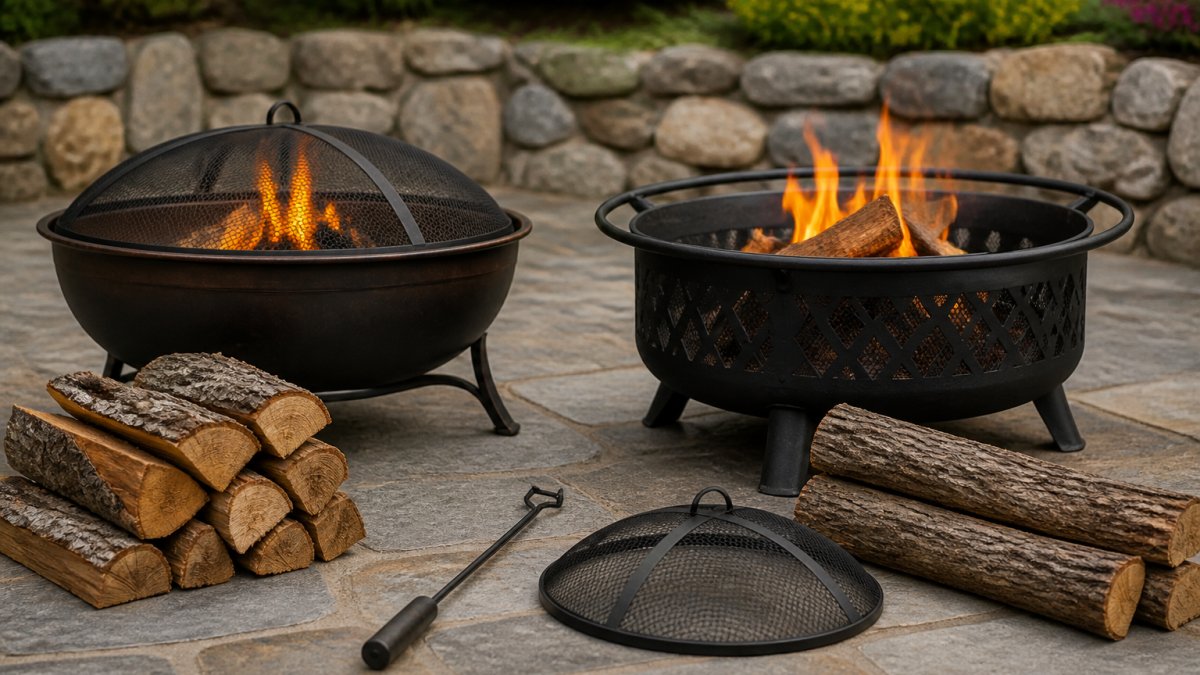
- Portable metal fire bowls ($60-$200) are movable and the cheapest fire pit option.
- Thrifted outdoor chairs refreshed with paint create casual seating at minimal cost.
Table of Contents
- Why a Budget Patio Upgrade Matters
- Budget Outdoor Lighting Ideas That Transform Your Space
- Affordable Patio Flooring Ideas for Every Surface
- Low-Cost Patio Privacy Ideas to Create Your Retreat
- Cheap Patio Makeover Ideas: Fire Pits, Seating, and Gathering Spaces
- Container Gardens and Landscaping on a Shoestring
- Planning Your Patio Upgrade: Prioritize, Budget, and Build
- Frequently Asked Questions
Why a Budget Patio Upgrade Matters
When you upgrade backyard patio spaces cost-effectively, you don't need a full renovation or a massive budget. Small, strategic improvements transform your outdoor space into a retreat your family actually wants to use. Prioritizing these modest enhancements ensures that your vision remains grounded in reality while avoiding backyard renovation costs that often derail more ambitious projects.
At allvalley, we've spent over 26 years helping homeowners maximize their outdoor living areas without breaking the bank. The key is prioritizing upgrades that deliver the most impact per dollar, whether you're working with a concrete slab, an aging patio, or empty yard space.
Think about how you actually use your backyard: gathering in the evenings, cooking outdoors, or a quiet retreat. Your answers determine which upgrades matter most: a fire pit creates gathering energy, better lighting extends usable hours, and fresh seating makes the space inviting.
Budget Outdoor Lighting Ideas That Transform Your Space
Outdoor lighting is one of the fastest ways to change how your patio feels and functions, extending usable hours into the evening cheaply. Explore best outdoor lighting alternatives for ambiance to discover creative options beyond standard fixtures.
Solar lights are the obvious budget choice: zero wiring, no electrician, and free to run once installed. String lights overhead deliver instant coziness, rope lights define edges cheaply, and motion-activated solar lights add security.
Placement beats brightness. A few well-placed lights create more impact than scattered, dim ones.
Many homeowners start with solar string lights because they're affordable, easy to install, and removable. LED versions last longer than older solar tech; look for warm white tones rather than cool blue.
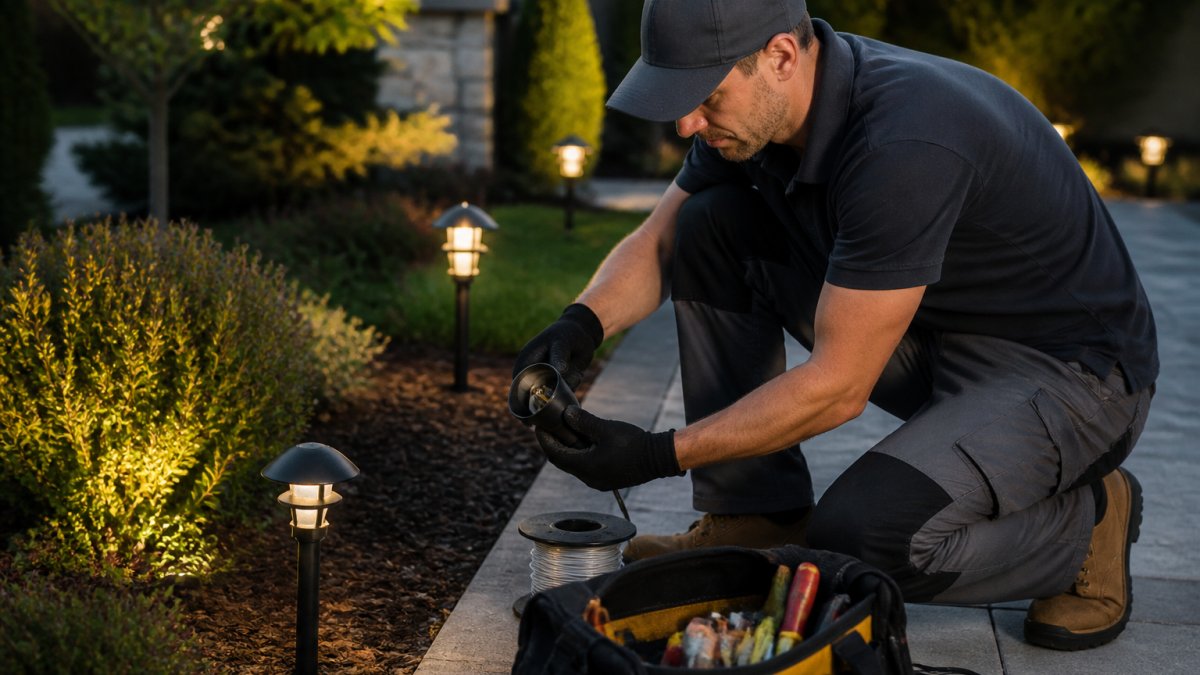
For a more permanent setup, low-voltage landscape lighting wired to a timer costs more upfront but delivers professional results: pathway lights guide people safely and spotlights highlight trees or architectural features.
Affordable Patio Flooring Ideas for Every Surface
Your existing patio surface, concrete, gravel, or bare ground, determines your flooring options. You don't need to replace it.
| Option | Typical Cost (USD) | Difficulty | Time | Best For |
|---|---|---|---|---|
| Concrete stain (DIY) | $0.10-$0.30 per sq ft in materials | Easy | 1 weekend plus cure time | Sound concrete slabs |
| Concrete paint (DIY) | $0.05-$0.20 per sq ft in materials | Easy | 1 weekend | Sound concrete slabs, rental-friendly |
| Outdoor rug | $30-$150 for a 5x8 ft rug | Easy | Under 1 hour | Instant comfort over any hard surface |
| Brick or concrete pavers on sand (DIY) | $1-$3 per sq ft in materials | Moderate | 1-2 weekends for a small area | Expanding usable space over gravel or bare ground |
| Permeable pavers (DIY) | $2-$5 per sq ft in materials | Moderate to hard | 2 weekends | Areas with drainage concerns |
| Composite decking tiles (snap-together) | $3-$7 per sq ft | Easy | A few hours | Renters and small patios |
| Mulch or wood chips | $0.50-$1.50 per sq ft installed | Easy | A few hours | Soft seating or garden zones |
Concrete patios: Paint or stain concrete to refresh the look. Stain penetrates the surface and lasts years; paint is cheaper but needs more frequent reapplication.
Outdoor rugs over concrete add comfort and define zones, and they're removable for seasonal changes.
Gravel or bare ground: Pavers offer an affordable way to expand usable space without pouring concrete. Permeable pavers let water drain naturally.
Mulch or wood chips create soft, defined areas for seating or gardens, are inexpensive, and refresh easily each year.
Decking: Composite decking tiles snap together over existing surfaces and are modular, so you can add more over time.
Match the fix to your patio's condition:
- Small patio (under 150 sq ft): prioritize an outdoor rug and snap-together decking tiles; they add the most perceived change per dollar.
- Sound concrete slab: stain or paint is the lowest-cost refresh, and a rug defines the seating zone.
- Cracked or uneven slab: patch and level before coating; if the slab is badly heaved, budget for pavers over a sand base rather than fighting the surface.
- Gravel or bare ground: pavers on sand give you a firm, clean surface for chairs and a fire pit.
- Rental or temporary setup: rugs and decking tiles are removable and leave no permanent change.
Check Affordable Alternatives to Stone Patio Pavers for 2026 for more budget flooring solutions tailored to your specific surface.
Low-Cost Patio Privacy Ideas to Create Your Retreat
Privacy transforms a patio from a pass-through space into an actual retreat. Budget solutions block views and muffle sound without expensive fencing.
Bamboo screening is affordable, looks natural, and installs quickly.
Tall planters with dense shrubs create living privacy screens. Ask locally which low-maintenance plants thrive in your climate; potted plants are movable, so you can adjust your setup.
Shade cloth or lattice panels cost less than solid fencing, filter views while allowing air circulation, and can be painted to match your home.
For renters or those unwilling to modify the yard permanently, portable screens and roll-up privacy panels are easy to move and remove.
Hedges take longer to establish but provide permanent, attractive privacy. Plant in spring or fall. Water regularly the first year while roots establish.
Cheap Patio Makeover Ideas: Fire Pits, Seating, and Gathering Spaces
A fire pit anchors a gathering area and extends your patio season into cooler months. Pick a fire feature and seating plan that fit your budget and patio surface, then set them up safely.
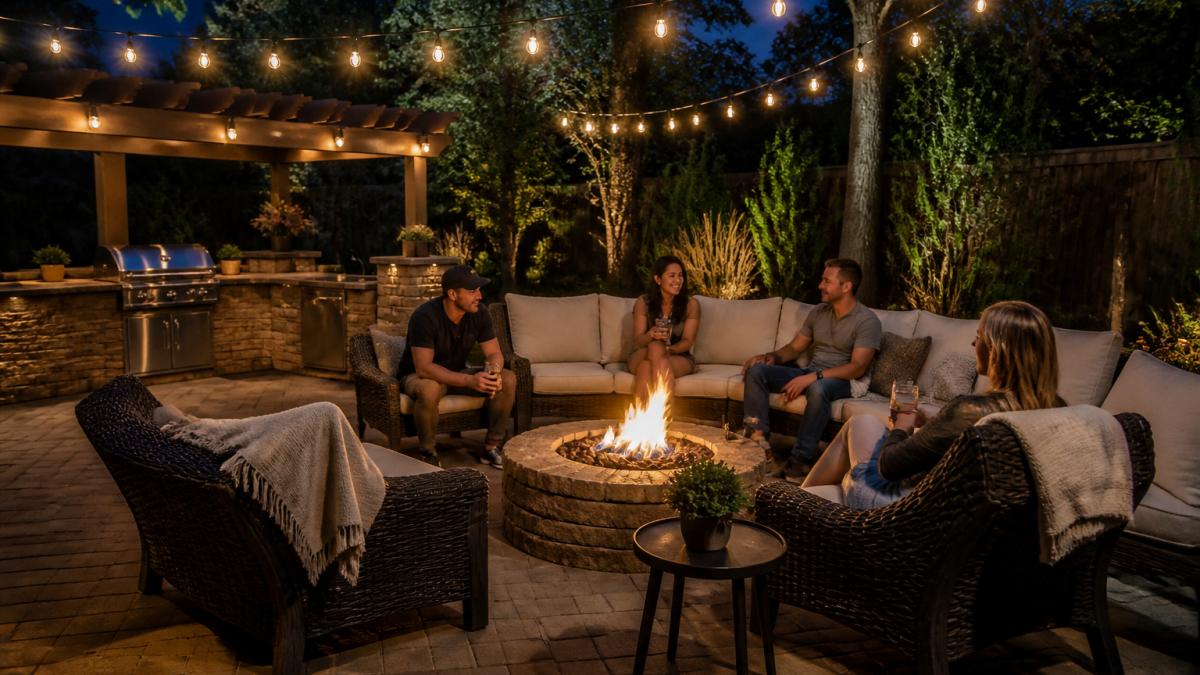
Fire pit options and realistic costs:
| Option | Typical Cost (USD) | Difficulty | Time | Notes |
|---|---|---|---|---|
| Portable metal fire bowl | $60-$200 | Easy | Under 1 hour | Movable; use on gravel, pavers, or a fire-rated mat |
| DIY block fire pit (kit or cinder block) | $150-$500 in materials | Moderate | 1 weekend | Check local burn rules and clearance requirements first |
| Propane or natural gas fire table | $200-$800 | Easy to moderate | 1-2 hours | No wood smoke; follow the manufacturer's clearance specs |
| Chiminea | $100-$300 | Easy | Under 1 hour | Good for small patios; keep away from eaves and railings |
Portable fire pits are the budget option: metal bowls on legs cost less than built-in features, sit on gravel or pavers, and move when you rearrange. Check Wood-Burning Fire Pits: Pros and Cons for maintenance and safety trade-offs.
Safety and placement: Keep wood-burning fire pits at least 10 feet from structures, fences, and low tree branches, and never use them under a covered patio or on a wood deck unless the manufacturer rates them for it. Check with your local fire department about burn bans and permit rules before building a permanent pit. Keep water or a fire extinguisher nearby, never leave a fire unattended, and for gas units follow the manual's clearances and have a professional handle any permanent gas line.
Seating that fits the budget:
- Used and thrift-store chairs. A coat of outdoor paint refreshes old pieces. Cushions add comfort, choose weather-resistant fabrics that resist fading.
- DIY wooden bench. Straightforward to build with basic tools.
- Concrete block bench. Stack cinder blocks and top with a wooden plank; cap the block ends for a cleaner look.
- Folding or picnic tables. These move easily if you want to reconfigure your space seasonally.
Seating defines how your patio functions. Mismatched outdoor chairs create casual charm. Thrift stores, estate sales, and online marketplaces offer used outdoor furniture cheaply. Benches seat multiple people efficiently.
Durability and upkeep: Metal furniture needs touch-up paint where it chips, and wood needs sealer every year or two depending on climate. Store cushions off-season and bring them in during storms. Cover a fire bowl when not in use; block pits may need repointing over time.
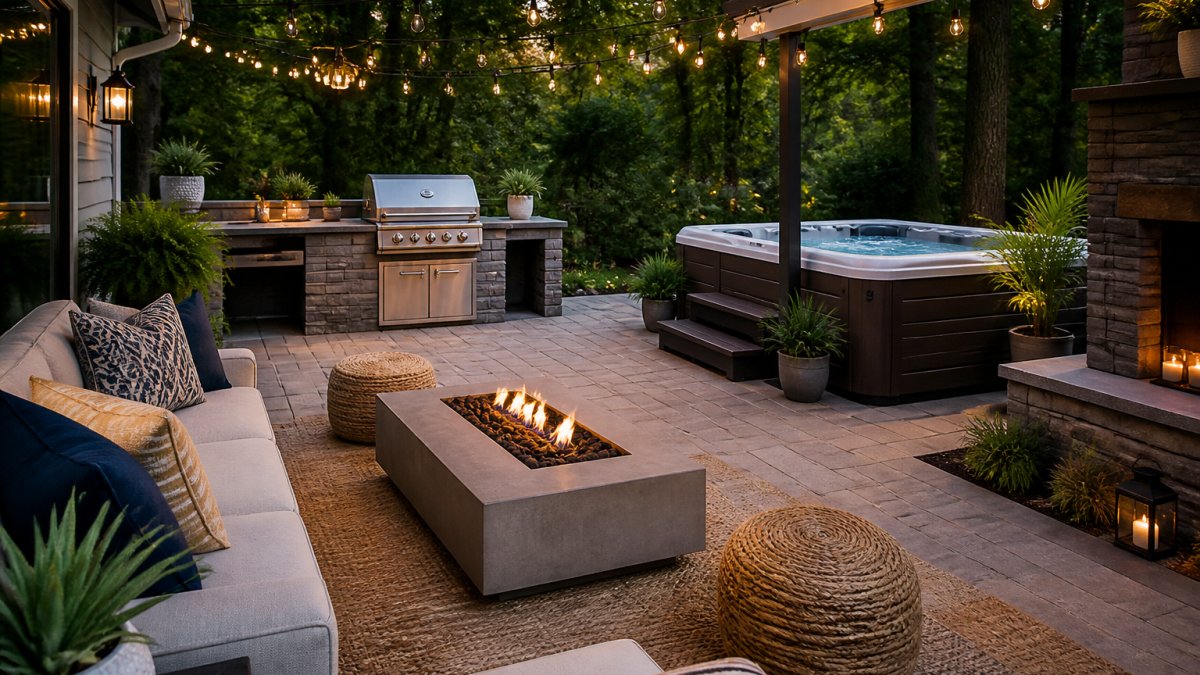
Arranging the gathering space: Gathering areas work best when seating faces inward toward a focal point.
Check How to Plan an Outdoor Entertainment Space for Families for guidance on layout and functionality.
Container Gardens and Landscaping on a Shoestring
Greenery softens hard surfaces and creates life. Container gardens let you control soil, placement, and maintenance without in-ground beds or a green thumb.
Start with large pots, which hold moisture better than small ones and look more intentional.
Fill pots with quality potting soil, not garden soil. Potting soil drains well and resists compaction.
Choose plants based on your climate and sunlight. USDA hardiness zone finder tells you which plants survive in your area.
Herbs in containers serve double duty, they're attractive and useful. Basil, rosemary, and oregano grow easily and give you fresh ingredients for grilling.
Trailing plants like ivy or sweet potato vine soften container edges.
Water containers deeply but less frequently. This encourages deep root growth. Mulch the soil surface to retain moisture and reduce watering needs.
Check Best Low Maintenance Plants for Backyard Gardens for specific plant recommendations and care requirements.
Planning Your Patio Upgrade: Prioritize, Budget, and Build
When you plan to upgrade backyard patio spaces, start by listing what you actually want from it. Entertaining? Quiet relaxation? Cooking?
Set a realistic budget and break it into phases if a full upgrade isn't possible right now.
Here's a practical prioritization framework:
| Priority Level | Upgrade Type | Typical Impact | Best Timing |
|---|---|---|---|
| Phase 1 (Foundation) | Seating, basic cleanup | Makes space usable | Immediately |
| Phase 2 (Ambiance) | Lighting, privacy | Extends usable hours | Next season |
| Phase 3 (Focal Points) | Fire pit, water feature | Creates gathering energy | Following year |
| Phase 4 (Details) | Landscaping, decor | Adds polish and character | Ongoing |
Start with what you have. Clean, organize, and arrange existing furniture. Pressure wash concrete. Remove dead plants.
Lighting comes next because it changes how the space feels and functions. Solar string lights are affordable and require no installation.
Seating is essential. People won't use a patio without comfortable places to sit.
A fire pit or water feature creates a focal point. These draw people outdoors and anchor the gathering area.
Landscaping and decor come last. They're the polish that makes a space feel intentional and complete.
allvalley has helped thousands of homeowners create outdoor retreats that fit their budgets and lifestyles.
Frequently Asked Questions
What is the most cost-effective way to upgrade your backyard patio?
Start with high-impact, low-cost projects: add outdoor lighting, paint or stain concrete surfaces, install pavers over existing patios, and add an affordable fire pit. Prioritize based on your patio's current condition and your budget. Most homeowners see the biggest visual transformation from lighting and seating upgrades first, then move to flooring and privacy solutions.
How can I add shade to a patio without spending a lot?
Repurposed materials and DIY solutions work well: build a basic trellis from lumber and grow climbing plants, use shade cloth or old bedsheets attached to posts, or install a simple pergola frame. Container plants and tall potted trees also provide shade and cost less than permanent structures. For budget outdoor lighting ideas that work with shade, combine solar lights with strategic plant placement to create layered ambiance.
What affordable patio flooring ideas work best for existing concrete?
Painting or staining concrete is the cheapest option and transforms appearance in one weekend. Interlocking pavers laid over concrete extend your patio without removal costs. Outdoor rugs and runners add color and define seating areas. For low-cost patio privacy ideas combined with flooring, use raised planters with pavers to create distinct zones while improving drainage and visual interest.
How long does a DIY patio upgrade typically take?
Simple projects like painting concrete, installing solar lights, or laying outdoor rugs take one weekend. Medium projects like building a basic fire pit or adding pavers take 2-3 weekends. Larger projects like installing a pergola or trellis system take 3-4 weekends depending on complexity and skill level. Always budget extra time for material sourcing and weather delays in outdoor work.
Your backyard patio doesn't need a massive budget to become a space your family loves. Start small, prioritize what matters most to you, and build from there. Each upgrade, lighting, seating, landscaping, moves you closer to an outdoor retreat that works for your life. Call us at 760-342-5277 if you're ready to discuss larger projects like fire pits or professional installation services. We'll help you create the outdoor space you've been imagining.