 how-to
How to Maintain Stainless Steel Outdoor Grills Step by Step
Table of Contents
- Why Stainless Steel Grills Need a Maintenance Routine
- Tools and Products You Need Before You Start
- How to Clean a Stainless Steel Grill Grate
- Cleaning the Exterior and Hood
- Choosing the Right Brush and Cleaning Tools
- Polishing, Protecting and Preventing Rust
- A Maintenance Schedule by Frequency and Season
- Scheduling Your Next Deep Clean at allvalley
- Frequently Asked Questions
Last Updated: November 7, 2026
Why Stainless Steel Grills Need a Maintenance Routine
Stainless steel outdoor grills resist rust better than most materials, but learning how to maintain stainless steel outdoor grills still requires regular care. If you are weighing a higher-end unit, see this premium kamado grill features comparison. Grease, food residue and heat stains build up fast on a grill that sees weekly use. Skipping maintenance shortens the life of the finish and makes every cookout harder to clean.
Many homeowners in the Coachella Valley cook outside most of the year. Desert heat, dust and occasional wind all leave residue on exposed stainless steel. A simple routine keeps the grill looking sharp and working well.
Here is the good news: most maintenance takes only a few minutes after each cookout. A short routine is the single habit that makes the biggest difference.
Tools and Products You Need Before You Start
Gather your supplies before you begin. Having everything ready keeps the job quick and prevents you from scratching the surface.
- A soft microfiber cloth for wiping and buffing
- A nylon or brass-free grill brush for the grates
- Warm water and a mild dish soap
- A stainless steel cleaner made for grills
- A dry towel for a streak-free finish
- Disposable gloves to keep grease off your hands
Avoid steel wool and harsh scrubbers. They leave tiny scratches that trap grime and dull the finish over time. Stick with soft tools.
Before cleaning, make sure the grill is off and fully cool. If you have a natural gas line connected to your grill, turn off the gas valve at the source before you start any work near the burners. Learn more about natural gas line installation for outdoor grills before you begin.
How to Clean a Stainless Steel Grill Grate
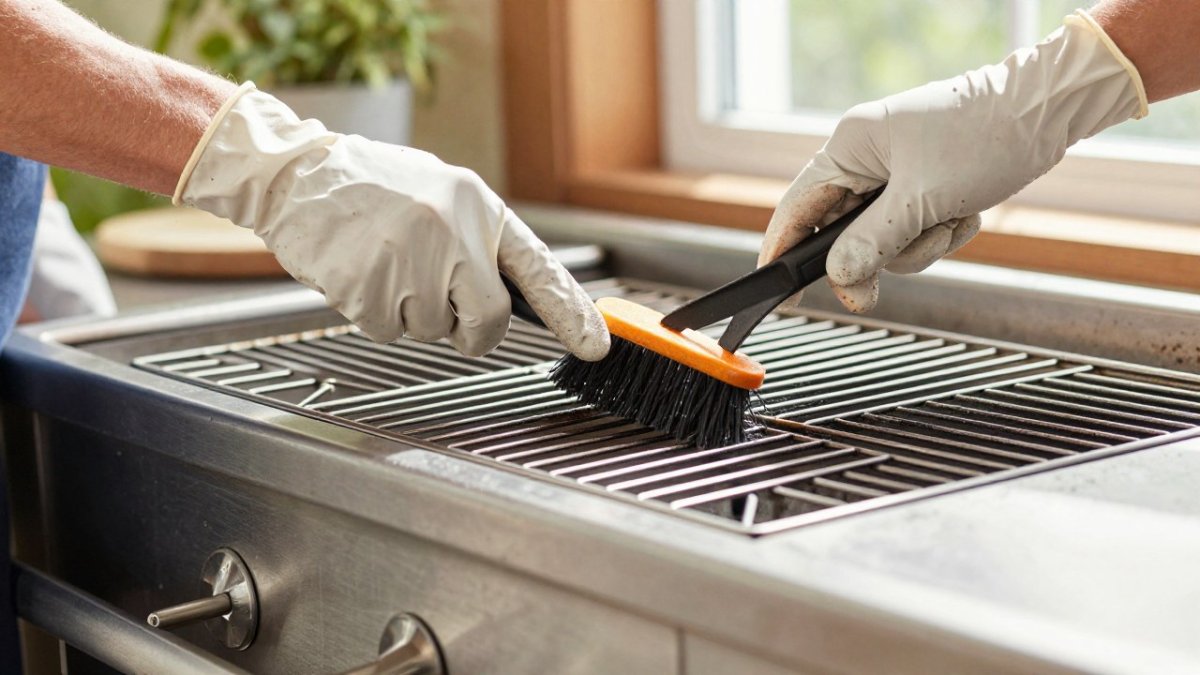
Clean the grates while the grill is still warm, but not hot. Heat loosens food residue, which makes it easier to remove. Here is a simple process for how to maintain stainless steel outdoor grills at the grate level:
- Turn the burners on high for 10 to 15 minutes to burn off loose food.
- Turn off the burners and let the grates cool slightly.
- Scrub the grates with a grill brush, working across the bars.
- Wipe the grates with a damp cloth and a little mild soap.
- Rinse with clean water and dry completely.
- Lightly oil the grates with a high-heat cooking oil to prevent sticking.
Watch out: Never use a wire brush with loose bristles on the grates. Stray wires can stick to food and end up in your meal.
This routine works for most grates. For a persistent buildup, let the grates soak in warm soapy water for 20 minutes before scrubbing.
Cleaning the Exterior and Hood
The exterior and hood show grease and fingerprints first. Cleaning them regularly keeps the grill looking new and protects the finish. The method depends on the finish, so identify it before you start.
Identify Your Finish and Grain Direction
Most outdoor grill hoods and carts use brushed stainless steel, which has a visible directional grain. Polished stainless is mirror-smooth, and coated or painted panels have a clear film over the metal. To find the grain on a brushed surface, hold a flashlight at a low angle across the panel; the grain runs in the direction the light streaks. Wipe parallel to that line, not across it.
- Brushed stainless: Wipe with the grain using a soft microfiber cloth. Cross-grain scrubbing leaves visible scratches that catch light.
- Polished stainless: Use a clean microfiber cloth and a non-abrasive cleaner. Polished surfaces show swirl marks from circular wiping, so work in straight passes.
- Coated or painted panels: Skip abrasive cleaners and polishes entirely. Mild soap and water on a soft cloth is the safe default, and dry immediately to avoid water spotting at edges.
Step-by-Step Exterior Cleaning
- Make sure the grill is off and fully cool, and shut off the gas valve at the source if a line is connected.
- Mix a few drops of mild dish soap in a bucket of warm water.
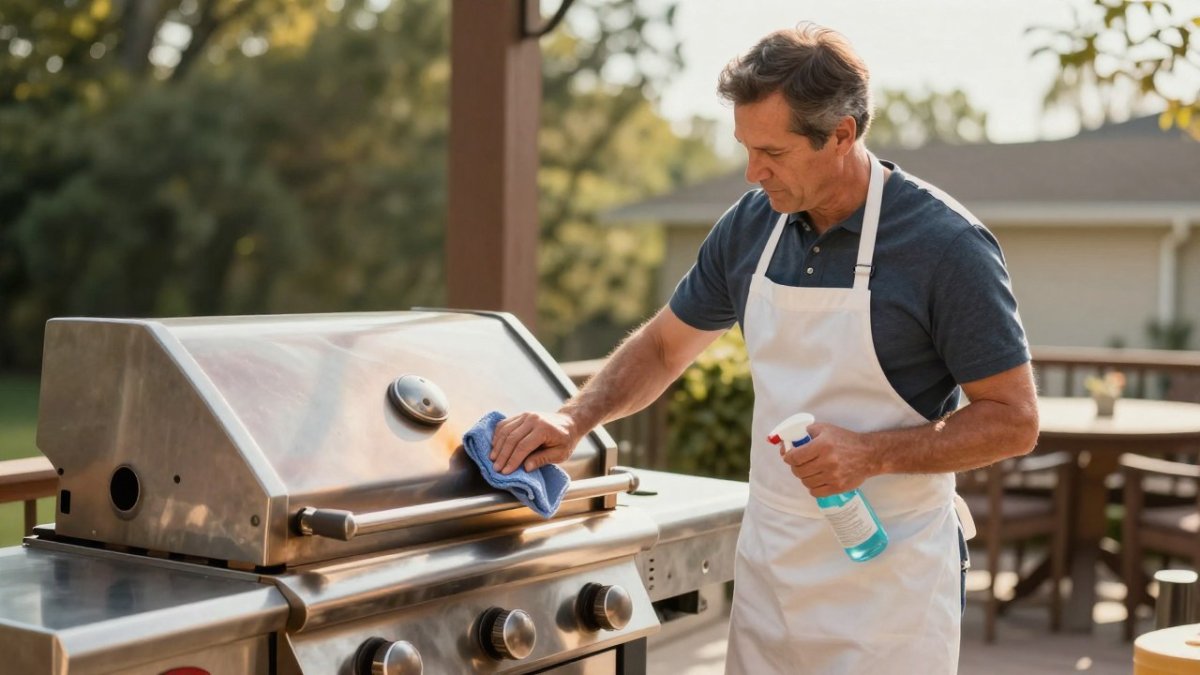
- Dip a microfiber cloth, wring it out, and wipe the hood and panels parallel to the grain.
- Rinse the cloth in clean water and wipe again to remove soap residue.
- Dry immediately with a separate microfiber towel. Air-drying leaves mineral spots, especially with hard water.
Watch out: Spraying cleaner directly onto the grill can push liquid into burner openings, knobs, and electronic ignition components. Apply cleaner to the cloth first.
Removing Grease, Fingerprints and Heat Stains
Grease and fingerprints come off easily with a stainless steel cleaner. Spray a small amount on the cloth, not directly on the grill, then wipe along the grain. For fingerprints on a polished hood, a dry microfiber buff after cleaning usually removes the last smears.
Heat stains look like faint rainbow or brown marks near the burners. A dedicated stainless steel cleaner or a paste of baking soda and water usually lifts them. Test any product on a small hidden area first.
Troubleshooting Stubborn Marks
Match the mark to the method before you scrub:
- Heat tint (rainbow or gold discoloration): Often a thin oxide layer from high heat. A stainless steel cleaner or a baking soda paste applied along the grain usually reduces it. Heavy tint near burners may be permanent without professional polishing.
- Water spots: Mineral deposits from hard water. Wipe with a 50/50 mix of white vinegar and water, then dry immediately. Vinegar is acidic, so keep it off coated panels and rinse well.
- Grease that has baked on: Soften with warm soapy water for a few minutes, then lift with a plastic scraper or a soft cloth. Avoid metal blades that gouge the surface.
- Pitting or rough spots: Small pits mean the protective oxide layer has broken down. Clean gently, dry fully, and apply a stainless steel protectant. Pitting that has eaten into the metal cannot be polished away and may need a professional assessment.
Cleaning the Hood Interior and Vents
The inside of the hood collects grease vapor and can drip onto food. Wipe the interior with warm soapy water and a soft cloth, then rinse and dry. Check the hood vents for grease buildup; clogged vents reduce airflow and can affect burner performance. A nylon brush helps clear vent slots without scratching.
Choosing the Right Brush and Cleaning Tools
The right brush makes cleaning faster and protects your grates. Look for these features:
- Nylon bristles or a brass-free design
- A sturdy handle that reaches the back of the grill
- A scraper edge for stuck-on food
- Replaceable heads, so you do not need a whole new tool
Brass brushes can work on heavy buildup, but they can also shed fine metal bits. Check that any brush you buy is labeled safe for stainless steel.
When choosing a cleaner for stainless steel grill grates, look for a product with no harsh chlorine and a clear label for food-contact surfaces.
Polishing, Protecting and Preventing Rust
A protective finish slows down rust and keeps the surface shiny. After cleaning, apply a thin layer of stainless steel polish or protectant with a soft cloth. Buff gently until no residue remains. Keep polish off the grates.
Component-by-Component Protection
Treat each part of the grill differently:
- Exterior panels and hood: Apply stainless steel polish along the grain every one to two months. Buff off excess so dust does not stick.
- Grill grates: Season with a high-heat cooking oil after cleaning instead of polish. Wipe on a thin coat with a paper towel and heat briefly to set it.
- Burners: Keep burner ports dry and clear. A soft brush removes debris; never apply polish or oil to burner openings.
- Heat plates and flame tamers: Scrape off heavy grease, then wipe with a damp cloth. These parts run hot and do not need polish.
- Grease tray and drip pan: Empty and wash after each heavy cookout. A layer of grease left in the tray attracts moisture and pests.
- Knobs and control panel: Wipe with a damp cloth only. Cleaner residue around knobs can gum up the valves.
Weatherproofing for Outdoor Exposure
Stainless steel outdoors faces rain, humidity, dust, and in coastal areas, salt air. Salt is the biggest corrosion driver, so rinse and dry exterior surfaces more often if the grill sits near the coast. After a rainstorm, wipe down the hood and panels rather than letting water sit in seams and around fasteners.
A grill cover protects the surface, but only if the grill is dry before you cover it. For ideas on protecting your equipment within a larger setup, see how to design a functional outdoor cooking area. Trapping moisture under a cover accelerates corrosion. In windy areas, secure the cover so it does not flap and scuff the finish.
Watch out: Sealing a warm or damp grill under a tight cover creates a humid pocket that promotes rust. Let the grill cool and dry completely first.
Off-Season and Winter Storage
If the grill will sit unused for weeks or months:
- Deep clean grates, burners, heat plates, and the grease tray.
- Dry every surface thoroughly, including under the hood and around fasteners.
- Apply a thin coat of stainless steel protectant to exterior panels.
- Oil the grates lightly to block moisture.
- Disconnect the propane tank and store it upright outdoors, never in a basement or garage. If a natural gas line is connected, shut off the valve at the source.
- Cover the grill with a breathable, vented cover once everything is dry.
Check the grill once a month during storage for moisture, pest nests, and early rust spots. Small rust spots can often be removed with a paste of baking soda and water, scrubbed gently with a soft cloth along the grain. Rust that keeps returning in the same spot usually means moisture is trapped there, so inspect seams, fasteners, and the cover fit.
A Maintenance Schedule by Frequency and Season
Use this schedule to keep your grill in good shape all year:
| Task | Frequency | Time Needed |
|---|---|---|
| Clean grates while warm | After each cookout | 5 minutes |
| Wipe exterior and hood | Weekly during peak use | 10 minutes |
| Deep clean grates and burners | Monthly | 30 minutes |
| Polish and protect finish | Every 1 to 2 months | 15 minutes |
| Check gas connections and burners | Twice a year | 20 minutes |
| Cover and store | Off-season or during wind storms | 5 minutes |
Time Needed
In the summer, when the grill runs most often, a quick wipe after each use works well. In cooler months, check for rust and apply extra protection before storing the grill.
Scheduling Your Next Deep Clean at allvalley
Deep cleaning every month keeps your grill in top shape, but many homeowners find it easier with a plan. If you want help with installation, maintenance questions or a new outdoor setup, contact allvalley at 760-342-5277. Our team serves homeowners across the Coachella Valley and Riverside County with BBQ equipment, outdoor living products and professional installation.
Frequently Asked Questions
What should I use to clean the outside of a stainless steel grill?
Use warm water with a few drops of mild dish soap and a soft microfiber cloth. Wipe in the direction of the grain to avoid streaks. For stubborn grease, apply a small amount of a dedicated stainless steel cleaner, then rinse and dry thoroughly. Avoid abrasive scrubbers, which can leave fine scratches that dull the finish over time and make future grime harder to remove.
Can I use WD-40 to clean my stainless steel grill?
WD-40 can loosen some grease and remove sticky residue, but it is not designed for cooking surfaces and can leave an oily film that attracts dust and burns off unevenly during the next cookout. After using it, wipe the area with warm soapy water and a clean cloth, then rinse and dry. For routine cleaning, a mild soap or a purpose-made stainless steel cleaner is a safer choice for the exterior and grates.
How often should I clean my outdoor grill?
Clean the grates briefly after each cookout while they are still warm, and do a fuller exterior wipe-down every week during grilling season. Schedule a deep clean at least once a month, or more often if you cook frequently or live near the coast where salt air accelerates corrosion. Before winter or long periods of disuse, clean thoroughly, dry completely and cover the grill.
What to put on a stainless steel grill to prevent rust?
A thin coat of food-safe high-heat cooking oil on the grates after cleaning helps repel moisture. For the exterior, a light application of stainless steel polish or protectant creates a barrier against water spots. Most rust on stainless steel comes from trapped salt, moisture and scratches, so keeping surfaces dry, clean and free of abrasive damage matters more than any single product.