 listicle
Hot Tub Mineral Sanitizer Reviews 2026: Top Picks
Table of Contents
- Quick Comparison: Top Mineral Sanitizers for 2026
- FROG @ease Floating System Review
- Frog Filter Mate Review
- Nature2 Spa Mineral Sanitizer Review
- Sundance Spas Mineral Cartridge Review
- Spa Marvel Enzyme Treatment Review
- Hot Tub Mineral Cartridge Replacement Frequency
- Best Practices for Hot Tub Water Chemistry
- Frequently Asked Questions
Last Updated: September 16, 2026
Quick Comparison: Top Mineral Sanitizers for 2026
A hot tub mineral sanitizer is a silver- or zinc-based cartridge or floater that releases sanitizing ions to suppress bacteria growth, cutting how much chlorine or bromine you need to add. This review covers six products worth considering in 2026, plus the real replacement intervals and water-chemistry habits that decide whether they actually work.
Here's the quick version before the detail.
| Product | Type | Key Minerals | Stated Lifespan | Best For |
|---|---|---|---|---|
| FROG @ease Floating System | Floating dispenser | Silver + SmartChlor | Cartridge-based | Hands-off, automated sanitization |
| Frog Filter Mate | In-filter stick | Silver ions | Up to 4 months | Set-and-forget, hidden installation |
| Nature2 Spa Mineral Sanitizer | In-filter stick | Silver + copper | 4 months | Compatibility with chlorine, bromine, or ozone |
| Sundance Spas Mineral Cartridge | In-filter cartridge | Silver ions | Up to 4 months | Spa-specific filter housings |
| Spa Marvel Enzyme Treatment | Liquid additive | Enzyme formula | Regular dosing | Reducing chemical load and skin irritation |
FROG @ease Floating System Review
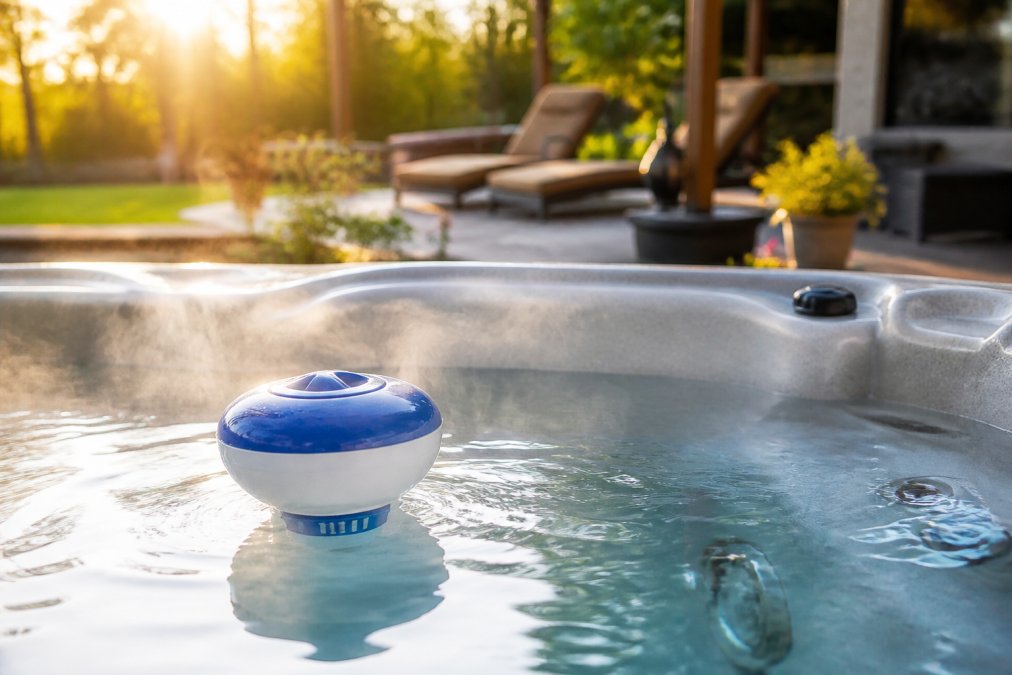
The FROG @ease is the easiest mineral system to live with if you dislike measuring chemicals. It floats in the water, self-regulates output based on demand, and pairs mineral technology with SmartChlor to hold chlorine at low levels. The manufacturer states it reduces chlorine usage by up to 75%.
Frog Filter Mate Review
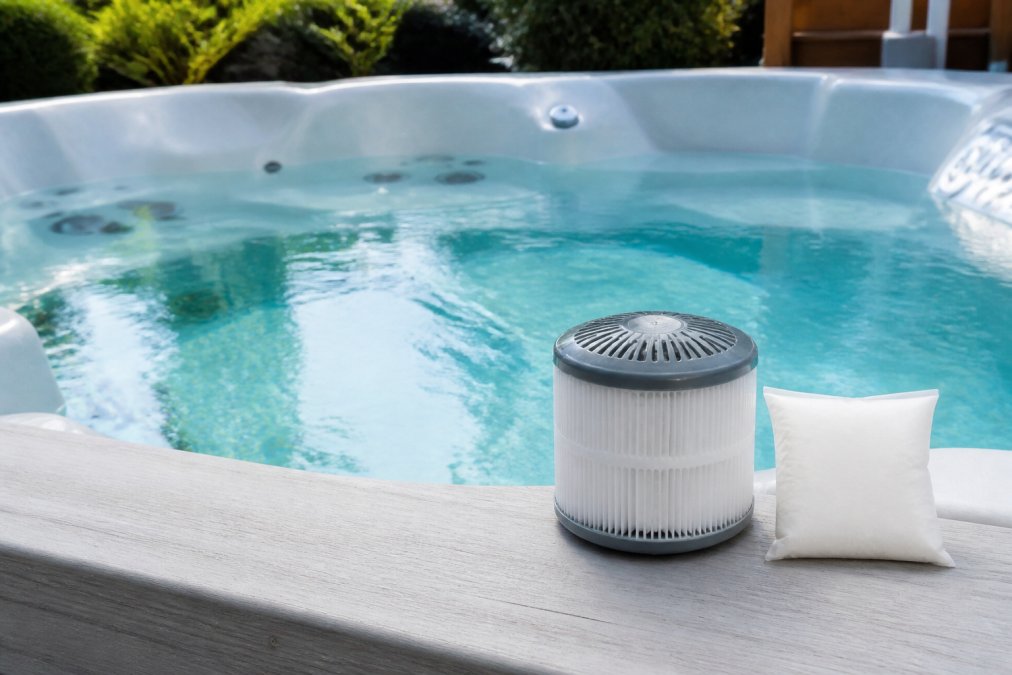
Frog Filter Mate hides the mineral stick inside your existing filter cartridge, releasing silver ions directly into the circulation path. Installation takes seconds, and the unit lasts up to 4 months. It suits owners who want zero visible hardware in the water.
Nature2 Spa Mineral Sanitizer Review
Nature2 is the closest thing this category has to a default. It releases silver and copper ions, works with chlorine, bromine, or ozone systems, and carries a 4-month lifespan. If you want a proven mineral stick and don't have unusual filter housing, start here.
Sundance Spas Mineral Cartridge Review
Sundance's mineral cartridge uses silver ion technology rated for 500-gallon water capacity, installs in minutes, and lasts up to 4 months. It's aimed at specific filter housing designs, so measure before you buy. The payoff is odor reduction: owners consistently report less chemical smell and softer-feeling water.
Spa Marvel Enzyme Treatment Review
Spa Marvel isn't a mineral sanitizer, and that's exactly why it belongs in this list. It's an enzyme formula that breaks down oils, lotions, and organic contaminants before they become the food source bacteria feed on. Used alongside a silver ion cartridge, it reduces how often you clean filters and how much oxidizer you need.
Hot Tub Mineral Cartridge Replacement Frequency
Most mineral cartridges are rated for roughly 4 months, and the clock starts when the cartridge hits the water, not when you bought it. That single detail is where most owners lose money: a cartridge that sat in a garage for two months before install is already partway through its service life, and no indicator light will tell you that.
What actually shortens cartridge life
Silver and zinc ions are released at a rate set by the cartridge's surface area and the water flowing past it, not by how many people use the spa. That means a lightly used spa does not stretch the interval much, the minerals deplete on a schedule whether you soak twice a week or twice a month. What does move the needle:
- Heavy bather load. More bodies means more organic load, which consumes oxidizer and forces the mineral cartridge to work against a higher bacteria population. The ions still deplete at their fixed rate; you just notice the drop-off sooner.
- Poor water balance. Minerals are far more effective in balanced water. When pH climbs above roughly 7.8 or alkalinity drifts high, the sanitizing ions become less active and you burn through the cartridge's useful window faster than the calendar suggests.
- High calcium hardness and total dissolved solids. In hard-fill areas, scale can coat the cartridge surface and slow ion release, so the cartridge reads as 'still installed' while doing less and less.
- Filter neglect. A clogged filter cuts circulation, and minerals only sanitize the water that actually passes them. Poor flow means uneven protection even with a fresh cartridge.
How to tell a cartridge is spent before the calendar says so
Watch for these signals rather than trusting the rated lifespan alone:
- Water clarity starts slipping a few days after a shock, when it used to hold for a week.
- You need noticeably more chlorine or bromine to hold a residual.
- The cartridge body looks discolored, chalky, or coated with scale.
- The floating indicator (on systems that have one) still reads 'good' while test results say otherwise, the indicator tracks cartridge life, not water balance.
2026 replacement context
The bigger shift this year is that several manufacturers have moved to smart-monitoring integration, where a cartridge or floater pairs with a spa app that logs install date, water temperature, and bather hours, then pushes a replacement reminder based on actual conditions rather than a fixed 4-month countdown. If you are buying in 2026, this is the single feature most worth paying for, because it removes the guesswork that causes most premature replacements and most 'why is my water cloudy' calls.
Replacement cost versus the cost of waiting
Best Practices for Hot Tub Water Chemistry
Mineral sanitizers reward owners who test consistently, but the reason most mineral systems underperform is not laziness, it is that owners treat water chemistry as a checklist instead of understanding how minerals interact with the rest of the water. This section covers the habits that matter and, more importantly, how to troubleshoot when mineral levels and pH or alkalinity start fighting each other.
The baseline routine
- Test pH, alkalinity, and sanitizer levels two to three times a week.
- Shock weekly, and again after heavy use.
- Clean the filter every two to four weeks.
- Keep total dissolved solids and calcium hardness in check so minerals are not competing with buildup.
- Run circulation long enough for the minerals to reach every jet and line.
- Drain and refill on schedule to reset dissolved solids and accumulated metals.
That is the easy part. The hard part is what happens when the numbers drift.
How minerals actually interact with pH and alkalinity
Silver and copper ions are most effective in a fairly narrow pH band, roughly 7.2 to 7.8. Push pH above that and the ions become less active, so the cartridge is still releasing minerals but they are doing less work. Push it below and you risk corroding metal components and irritating skin. This is why a mineral cartridge can read 'good' while your water goes cloudy: the cartridge is fine, the pH is not.
Troubleshooting the common conflicts
Cloudy water with a fresh cartridge. Check pH first. If it is above 7.8, bring it down before you blame the cartridge. If pH is fine, check circulation, a clogged filter starves the minerals of flow.
A note on long-term equipment health
A fair question owners ask is whether minerals cause scale or corrosion in heater elements over time. The honest answer is that the minerals themselves are not the main culprit, water balance is. A spa kept in range with a mineral cartridge shows no more scale than one run on chlorine alone. A spa with chronically high pH and hardness will scale regardless of what sanitizer you use.
When to test more often
Test daily for the first week after a fresh fill or a cartridge change, so you learn how your specific water behaves. After that, two to three times a week is enough for most households. If the spa gets daily use or sits in direct sun, add a test on heavy-use days.
Frequently Asked Questions
Do mineral sanitizers eliminate the need for chlorine or bromine?
No. Mineral sanitizers work alongside a primary sanitizer like chlorine or bromine. The minerals (silver and copper ions) help control bacteria and algae, but you still need a low level of chlorine or bromine to kill viruses and other pathogens quickly. Most systems allow you to reduce your chlorine or bromine use by 50-75%, but not eliminate it entirely.
How often should you replace mineral sanitizer cartridges?
Most mineral cartridges last about four months. That's the standard replacement cycle for products like the Frog Filter Mate, Nature2 Spa Mineral Sanitizer, and Sundance Spas Mineral Cartridge. However, heavy use or poor water chemistry can shorten that lifespan. Check your cartridge monthly and replace it when the mineral indicator shows depletion or when water clarity drops.
Are mineral sticks effective at preventing biofilm?
Mineral sticks help inhibit biofilm formation by releasing silver ions that disrupt bacterial growth. They are not a standalone solution. Biofilm thrives in areas with poor circulation and unbalanced water. Combine mineral sanitizers with regular filter cleaning, proper pH and alkalinity balance, and periodic shock treatment to keep biofilm from taking hold in your hot tub.
What is the best sanitizer for hot tubs?
The best sanitizer depends on your priorities. For minimal chemical use, a mineral sanitizer paired with a low level of chlorine or bromine is a popular choice. For those who want no chlorine at all, bromine or salt water systems are alternatives, though each has trade-offs. Many hot tub owners find that mineral sanitizers reduce odors and skin irritation while still keeping water safe.
How do mineral sanitizers compare to salt water systems?
Mineral sanitizers use silver and copper ions to control bacteria, while salt water systems generate chlorine from salt via electrolysis. Mineral sanitizers are simpler to install (usually a cartridge or floating unit) and don't require a salt cell or added salt. Salt systems can be more convenient for some, but they still produce chlorine and require regular maintenance of the salt cell.
Keeping a hot tub clear takes less work when the system and the chemicals are matched to how you actually use the spa. allvalley stocks hot tubs that ship with free starter kits and chemicals, offers professional delivery and installation, and prices overstock models below what you'd expect to pay elsewhere. Call us at 760-342-5277 and we'll help you pick the setup that fits your backyard.