 how-to
Luxury Hot Tub Installation Checklist: A 2026 Guide
Table of Contents
- What to Do Before Your Hot Tub Installation Day
- Hot Tub Foundation Requirements: What Can Actually Support the Weight
- Hot Tub Electrical Requirements: Breakers, Wiring, and GFCI
- Hot Tub Installation Timeline: What Happens and When
- Hot Tub Water Chemistry Startup: Filling and Balancing Your Spa
- Aesthetic Integration for Luxury Outdoor Spaces
- Post-Installation Maintenance Schedule and Cost Breakdown
- Conclusion
Last Updated: August 9, 2026
What to Do Before Your Hot Tub Installation Day
A luxury hot tub installation checklist is only as good as the preparation behind it. At allvalley, we've spent over 26 years helping Coachella Valley homeowners avoid the most expensive mistakes in spa installation, and almost every problem we see traces back to something that should have been handled weeks before delivery day. Pre-installation prep breaks into three areas: site selection, permits, and delivery access. Get all three right and installation day becomes smooth and predictable.
Site Selection and Space Assessment
Site selection shapes everything else. Measure your intended placement area carefully, most full-size luxury spas require a minimum clearance of 24 inches on all sides for service access, though 36 inches is better. This clearance is often required by local code and is essential for future equipment service.
Consider sun exposure, privacy, proximity to the house, and drainage. Low-lying areas create standing water problems with the foundation and spa insulation. Elevated or graded sites with natural drainage are significantly better. Also confirm the load-bearing capacity of any deck or elevated surface, a filled hot tub weighs 3,000 to 6,000 pounds depending on size, and most residential decks require modification to handle that load.
Municipal Permits and Local Code Requirements
Most jurisdictions in Riverside County require a permit for hot tub installation, covering electrical work, foundation, and sometimes fencing if the spa is accessible to children. The Riverside County Building and Safety Department permit requirements outlines what triggers a permit application in unincorporated areas, though city-specific municipalities like Palm Desert and Palm Springs have their own departments.
Skipping permits is the single most common mistake we see from homeowners trying to move fast. Consequences range from fines and forced removal to complications when selling the property. Plan for a permit processing window of two to four weeks before scheduling delivery.
Delivery Path and Access Clearance
Hot tubs do not fit through standard gates. Measure every access point from the street to your intended spa location: gate widths, overhead clearances, utility lines, and landscaping that might obstruct a delivery vehicle.
A standard hot tub requires a minimum 36-inch-wide clear path. Many luxury models are 7 to 9 feet wide and cannot be tilted, so the delivery path must accommodate full horizontal width. If there is no clear path, crane rental becomes necessary, common in Coachella Valley properties with block walls and narrow side yards. Budget for this in advance, not on delivery morning.
Hot Tub Foundation Requirements: What Can Actually Support the Weight
The foundation is the most underestimated part of hot tub installation. A spa that is not properly supported will settle unevenly, stress the shell, crack the plumbing, and void most manufacturer warranties.
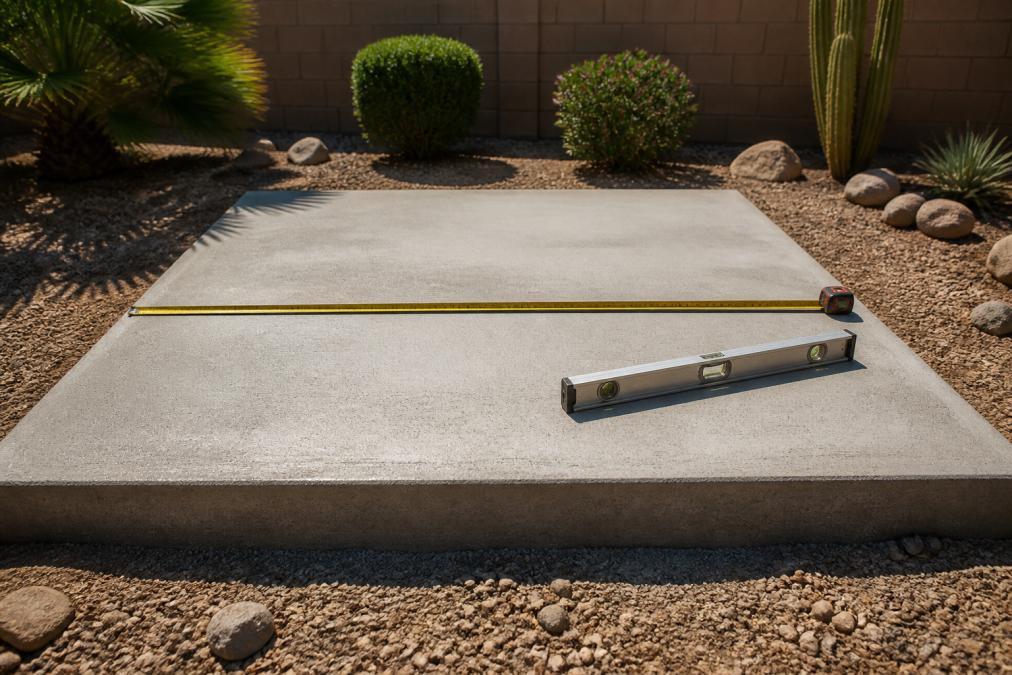
The standard recommendation is a reinforced concrete pad, typically 4 inches thick with compressive strength suitable for the spa's total filled weight. The pad should be level to within 1/8 inch across its entire surface. Any slope or irregularity will cause structural stress over time.
Alternatives include:
- Compacted gravel base: Works for lighter models but is not recommended for luxury spas above 400 gallons
- Existing concrete patio: Acceptable if structurally sound, level, and thick enough to handle weight distribution
- Reinforced deck: Requires engineering review to confirm load-bearing capacity; joists typically need to be doubled or tripled beneath the spa
The concrete pad should cure for a minimum of 28 days before the spa is placed on it, according to American Concrete Institute curing standards. The pad should be slightly pitched away from the spa's equipment bay so water drains away rather than pooling beneath the unit.
Hot Tub Electrical Requirements: Breakers, Wiring, and GFCI
Hot tub electrical requirements are non-negotiable and must be handled by a licensed electrician. This is not a DIY category.
Most luxury hot tubs operate on 240-volt service and require a dedicated 50-amp or 60-amp circuit, though some models run on 120-volt plug-and-play configurations. Check your specific model's requirements before any electrical work begins. The dedicated circuit must run from your main panel or a sub-panel to a disconnect box located within sight of the spa but at least 5 feet away.
GFCI protection is mandatory. A ground fault circuit interrupter is required by the National Electrical Code Article 680 for hot tubs and spas and is the primary safety mechanism preventing electrical shock near water. Every hot tub circuit must have GFCI protection at the breaker level.
Key electrical checklist items:
- 240V dedicated circuit (50-amp for most models)
- Licensed electrician for all hardwiring
- GFCI breaker installed in the panel
- Disconnect box within line of sight, minimum 5 feet from spa
- Electrical conduit run underground or through conduit to protect wiring
- Sub-panel may be required if your main panel lacks capacity
Hot Tub Installation Timeline: What Happens and When
The hot tub installation timeline from purchase to first soak typically runs four to eight weeks. Variables include permit processing time, foundation curing, and electrician availability.
Here is a realistic week-by-week breakdown:
| Phase | Task | Typical Duration |
|---|---|---|
| Weeks 1-2 | Site assessment, permit application | 1-2 weeks |
| Weeks 3-4 | Permit approval, foundation pour | 1-2 weeks |
| Weeks 5-6 | Foundation curing period | 28 days minimum |
| Week 6-7 | Electrical rough-in and inspection | 3-5 days |
| Delivery week | Spa delivery, placement, hardwiring connection | 1 day |
| Post-delivery | Fill, startup, water chemistry balance | 24-48 hours |
Projects that skip the permit step or pour a foundation without adequate curing time almost always take longer overall because problems surface later and require rework.
Installation Day: Step-by-Step Sequence
Installation day is straightforward when preparation is complete:
- Final site inspection: Confirm the concrete pad is level and fully cured, and the delivery path is clear
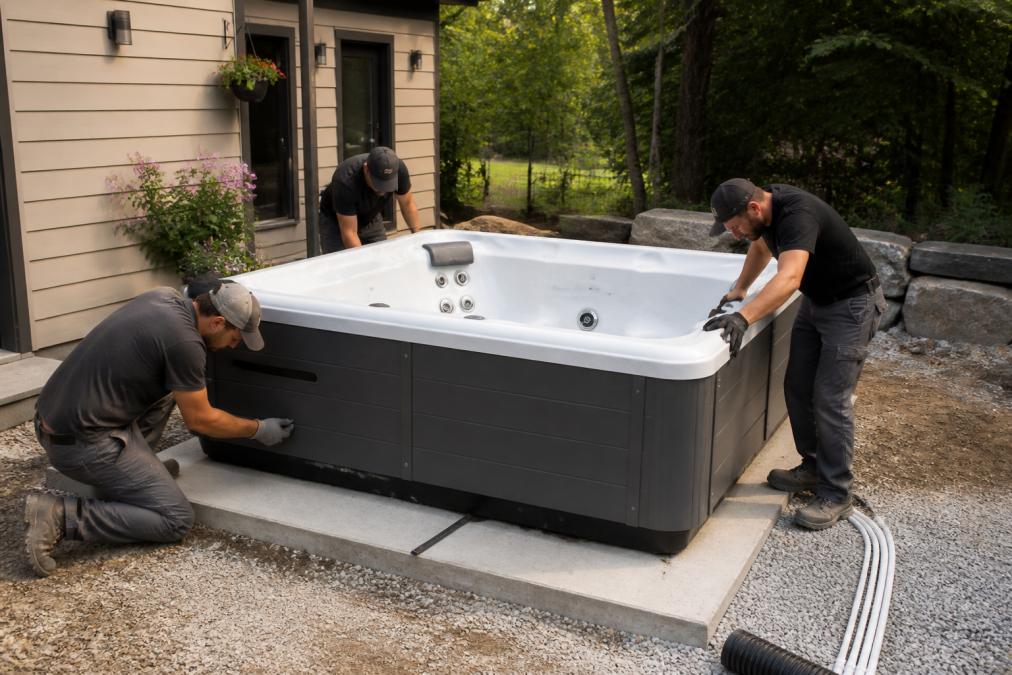
- Delivery and placement: The spa is moved to its final position via dolly, spa mover, or crane depending on access
- Leveling confirmation: The spa is checked for level in all directions before any connections are made
- Electrical connection: A licensed electrician completes the hardwiring from the disconnect box to the spa's control panel
- Initial fill: The spa is filled with a garden hose inserted into the filter well to prevent air locks in the plumbing
- Power-on and system check: The circulation pump, jets, and heater are tested before the owner takes possession
The entire installation day process typically takes four to six hours for a standard placement. Crane placements take longer due to rigging and positioning time.
Hot Tub Water Chemistry Startup: Filling and Balancing Your Spa
Water chemistry startup is where many new hot tub owners make their first mistake. The correct sequence is:
- Fill through the filter well to purge air from the plumbing lines
- Test source water before adding any chemicals (tap water chemistry varies significantly across Riverside County)
- Adjust total alkalinity first, targeting the range your spa manufacturer recommends (commonly 80-120 ppm)
- Adjust pH after alkalinity is stable (target range typically 7.4-7.6)
- Add sanitizer (chlorine or bromine depending on your preference and spa type)
- Shock the water with an oxidizing shock treatment to establish a clean baseline
- Test again after 24 hours and adjust as needed before the first soak
The allvalley team includes a free starter kit and chemicals with every hot tub purchase, which covers this entire initial startup process and takes the guesswork out of the first fill.
Aesthetic Integration for Luxury Outdoor Spaces
A luxury hot tub should look like it belongs in your backyard. This is where the difference between a good install and a great one becomes visible every day.
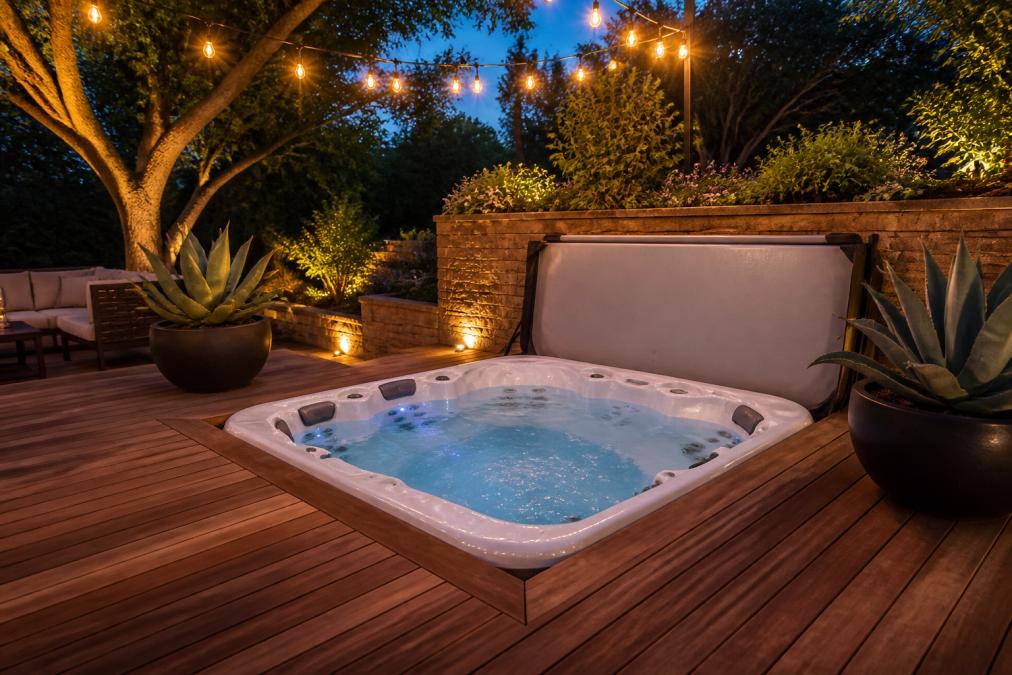
Start with the surround. Options include:
- Poured concrete decking with a broom finish or exposed aggregate for a clean, modern look
- Pavers in travertine, flagstone, or concrete for a more traditional aesthetic
- Composite decking for a warm, wood-like appearance with low maintenance in the desert climate
- Natural wood (teak or ipe) for premium installations, though it requires more upkeep in high-UV environments
Landscaping around the spa matters as much as the surround material. Tall ornamental grasses, potted succulents, or a low block wall with stucco finish can create privacy screening that anchors the space visually.
Lighting is frequently underestimated. Low-voltage path lighting, recessed deck lights, and overhead string lights all serve different functions. A well-lit spa area is usable after dark and significantly more enjoyable year-round. The thermal cover should complement the spa cabinet and surrounding decking, and a cover lifter makes daily use practical.
Post-Installation Maintenance Schedule and Cost Breakdown
The real cost of hot tub ownership is ongoing maintenance. Understanding it upfront prevents frustration from surprise expenses.
Here is a realistic maintenance schedule for a luxury spa in a desert climate:
| Task | Frequency | Notes |
|---|---|---|
| Test water chemistry | 2-3x per week | pH, alkalinity, sanitizer levels |
| Add sanitizer | Weekly | Chlorine or bromine based on use |
| Clean filter cartridges | Monthly | Rinse with garden hose; soak quarterly |
| Shock treatment | Weekly or after heavy use | Oxidizing shock, not chlorine shock |
| Full drain and refill | Every 3-4 months | Prevents total dissolved solids buildup |
| Inspect cover and gaskets | Monthly | Check for wear, UV damage, water absorption |
| Flush plumbing lines | Before each drain | Use a plumbing flush product |
| Professional service check | Annually | Inspect heater, pump seals, and electrical connections |
Monthly chemical expenses vary based on spa size, frequency of use, and local water chemistry. The allvalley starter kit covers the first several weeks of chemical needs, giving you time to establish a routine before your first restock.
Common post-installation cost surprises include filter replacement (cartridge filters typically last one to two years with proper care), cover replacement (quality covers last three to five years in high-UV desert environments), and occasional equipment service. Budgeting for these in advance makes ownership significantly less stressful.
Troubleshooting common startup errors:
- Spa not heating: Check that the GFCI breaker has not tripped and that the circulation pump is running. A tripped breaker on first startup usually indicates a wiring connection that needs to be re-seated.
- Cloudy water after first fill: Almost always a water chemistry issue, not a filtration problem. Re-test and adjust alkalinity and pH before adding more sanitizer.
- Jets not priming: Air lock in the plumbing. Turn jets on high for 30-second bursts to purge trapped air.
- Error codes on the control panel: Consult your owner's manual first. Most error codes relate to temperature sensors or flow sensors and clear after the water reaches operating temperature.
Planning a hot tub installation in the Coachella Valley involves more moving parts than most homeowners expect, from permits and foundation work to electrical requirements and water chemistry. The allvalley team handles professional delivery and installation services and includes free starter kits and chemicals with every hot tub purchase, so you start on the right foot from day one. With over 26 years of experience transforming Riverside County backyards, we know what a smooth installation looks like, and we're here to make sure yours goes that way. Call us at 760-342-5277 to get started.
Frequently Asked Questions
What site preparation is required for a luxury hot tub?
You need a flat, load-bearing surface, typically a reinforced concrete pad at least 4 inches thick, that can handle the full weight of the spa filled with water and occupants. Beyond the foundation, you'll need a clear delivery path at least 36 inches wide, proper drainage nearby, a dedicated electrical circuit within reach, and any required municipal permits pulled before the crew arrives. Getting these details sorted before delivery day prevents costly delays.
Do I need a permit for hot tub installation in the US?
Most municipalities in the US require at least an electrical permit for hot tub installation, and many also require a building or zoning permit depending on whether you're adding a deck or enclosure. In California, local building departments typically enforce setback rules, often 5 feet from property lines, and require GFCI protection on all spa circuits. Check with your city or county building department before scheduling installation. Skipping permits can create problems when you sell your home.
What are the electrical requirements for a high-end hot tub?
Most luxury hot tubs require a dedicated 240-volt, 50-amp or 60-amp circuit with a GFCI breaker installed at a sub-panel located within sight of the spa. The circuit must be hardwired, no extension cords or standard outlets. National Electrical Code (NEC) Section 680 governs outdoor spa wiring, requiring the disconnect to be positioned between 5 and 10 feet from the water's edge. Always have a licensed electrician handle this work to ensure code compliance and safety.
How long does a professional hot tub installation take?
The physical placement and connection of a hot tub typically takes one day once all prep work is complete. However, the full hot tub installation timeline, including site prep, concrete curing (which takes 28 days for full strength), electrical rough-in, permit inspections, and water chemistry startup, can run two to six weeks from start to finish. Planning ahead, especially scheduling the electrician and permit inspections early, prevents the most common delays.
This article was written using GrandRanker