 how-to
7 Common Causes of High Pool Electricity Bills
Last Updated: October 26, 2026
Quick Summary
High pool electricity bills stem from several preventable issues: your pump might be running too long, your filter could be clogged, or you're heating water inefficiently. Most homeowners can control their energy costs with simple adjustments like reducing run time, switching to a variable-speed pump, or optimizing heating.
- Variable-speed pumps reduce energy consumption by 50 to 75% compared to single-speed pumps and pay for themselves within 3 to 5 years.
- A clogged filter can increase your motor's electrical load by 10 to 20%, so clean filters every 2 to 4 weeks to prevent strain.
- Shifting your pump schedule to off-peak hours on time-of-use rate plans cuts costs without changing kilowatt-hour usage.
- Most residential pools need one to two full water turnovers per day, not continuous 24/7 operation.
- Electric heaters consume 5 to 15 kilowatt-hours daily, while heat pumps use only 2 to 5 kilowatt-hours daily for the same heating.
Table of Contents
- Why Your Pool Pump Electricity Cost Keeps Rising
- How Many Hours to Run a Pool Pump Daily
- Single-Speed vs. Variable Speed Pool Pump Savings
- Filter Resistance and Motor Strain Driving Up Energy Draw
- Pool Heating Impact on Your Kilowatt-Hours
- How to Lower Pool Electric Bill with Timers and Automation
- Seasonal Usage Patterns and Time-of-Use Rate Optimization
- Getting Your Pool Energy Audit and Next Steps
- Frequently Asked Questions
Why Your Pool Pump Electricity Cost Keeps Rising
Your pool pump runs nearly every day, and it's one of the biggest energy consumers in your backyard.
High pool electricity bills stem from several preventable issues. Your pump might be running too long, your filter could be clogged, or you're heating water inefficiently.
The key is understanding what drives your kilowatt-hours consumption. Once you identify the main energy drains, you can make targeted changes that actually stick.
How Many Hours to Run a Pool Pump Daily
Most residential pools need one to two full water turnovers per day, not a fixed number of hours. Compare pool and hot tub maintenance requirements to understand how their energy demands differ. The right run time is whatever achieves that turnover at the lowest wattage, which is why the same pool can run 4 hours on a variable-speed pump or 10 hours on a single-speed pump and still be equally clean.
Calculate your turnover target first
Turnover is the time it takes to move your entire pool volume through the filter once. The formula is simple:
Turnover hours = Pool volume (gallons) ÷ Pump flow rate (gallons per hour)
Two examples:
- 15,000-gallon pool ÷ 1,500 GPH pump = 10 hours for one turnover
- 20,000-gallon pool ÷ 2,500 GPH pump = 8 hours for one turnover
Most practitioners target 1-2 turnovers per day for residential pools. Heavily used pools, pools in hot climates, and pools with large debris loads sit at the higher end; lightly used pools can often stay near one turnover.
Why hours alone mislead
A pump's flow rate is not constant across its speed range. On a variable-speed pump, flow drops roughly in proportion to speed, but power draw drops much faster, which is the core efficiency story. Running a variable-speed pump at half speed for twice as long often moves the same water for meaningfully less energy than running it at full speed for half the time.
Practical run-time ranges
- Single-speed pump: typically 8-12 hours daily to hit one to two turnovers, depending on pool size and pump horsepower.
- Variable-speed pump: often 6-10 hours at low-to-mid speed, or split schedules (e.g., 4 hours high, 6 hours low) to handle skimming and circulation separately.
- Saltwater and heated pools: may need slightly longer circulation to distribute chemicals and heat evenly.
The overrun trap
Running 24/7 is the most common overrun. A pump left on continuously can add hundreds of kilowatt-hours per month with no water-quality benefit once turnover is met. The fix is a timer or automation schedule that matches run time to turnover, not habit.
Match run time to your rate plan
Once you know your turnover hours, place them in the cheapest window your utility offers. If your plan has Time-of-Use rates, running the pump overnight or in early-morning off-peak blocks can cut the cost of the same kilowatt-hours without changing circulation at all.
Single-Speed vs. Variable Speed Pool Pump Savings
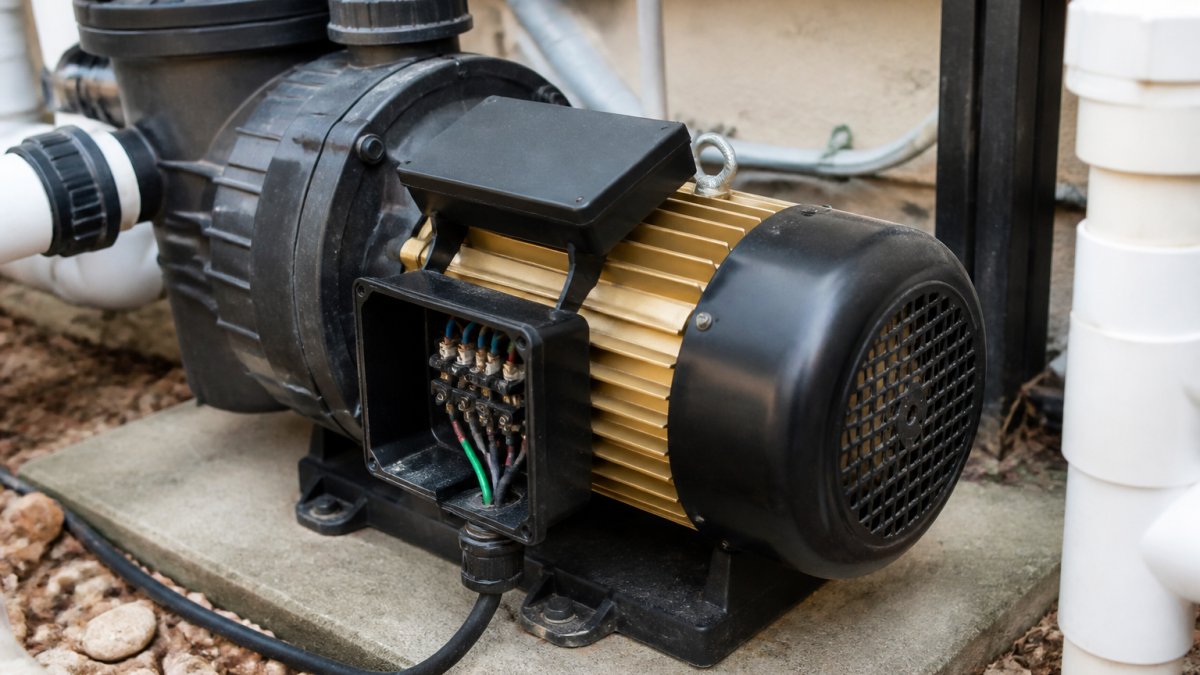
Single-speed pumps run at full power whenever they're on. They consume the most energy and are the most common type in older pools.
A single-speed pump typically draws 1 to 3 horsepower continuously. When running 10 hours daily, that adds up fast in your utility bill. Variable-speed pumps can reduce energy consumption by 50 to 75% because they run at lower speeds most of the time.
Here's the practical difference:
- Single-speed: Full power output, no adjustment
- Variable-speed: Adjusts flow rate to match demand
- Result: Variable-speed cuts kilowatt-hours significantly
The upfront cost of a variable-speed pump is higher, but the energy savings pay for the upgrade within 3 to 5 years for most homeowners. After that, it's pure savings.
Many modern variable-speed pumps include automation features. They can adjust speed based on time of day, water temperature, or preset schedules.
Variable-speed pumps use far less energy than single-speed models by adjusting output to match your pool's actual needs.
| Pump Type | Power Draw | Energy Savings | Payback Period |
|---|---|---|---|
| Single-speed | 1 to 3 horsepower continuously | Baseline | N/A |
| Variable-speed | Adjusts to demand | 50 to 75% reduction | 3 to 5 years |
Filter Resistance and Motor Strain Driving Up Energy Draw
A dirty filter forces your pump to work harder. When your filter clogs with debris, water can't flow freely.
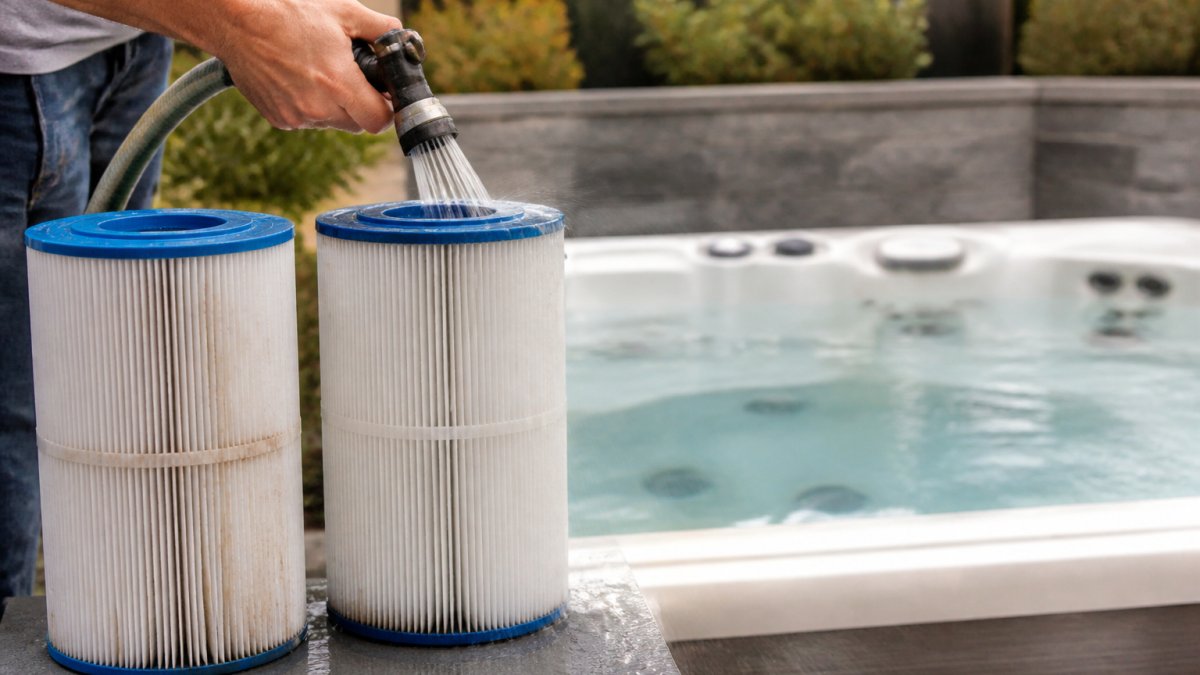
Most pool filters need cleaning every 2 to 4 weeks, depending on usage. Backwashing a sand filter or rinsing a cartridge filter takes just 15 minutes but cuts energy draw noticeably.
Signs your filter needs attention:
- Pump pressure reads higher than normal
- Water flow feels weak at returns
- Your pump runs hotter than usual
A clogged filter can increase your motor's electrical load by 10 to 20%. That strain shortens pump life and drives up your bill every month.
Filter resistance builds gradually. Most homeowners don't notice until their electric bill jumps. Regular cleaning prevents the problem before it starts.
Pool Heating Impact on Your Kilowatt-Hours
Heating water is expensive.
Electric heaters and heat pumps work differently. Electric resistance heaters convert electricity directly to heat, consuming enormous amounts of power.
Here's what heating actually costs:
- Electric heater: 5 to 15 kilowatt-hours per day (heavy usage)
- Heat pump: 2 to 5 kilowatt-hours per day (lighter usage)
- Gas heater: Runs on natural gas, not electricity
If you heat your pool to 85°F year-round, expect your electric bill to reflect that choice.
Many homeowners heat their pools only when they plan to use them. Running a heater on demand rather than continuously cuts energy waste.
How to Lower Pool Electric Bill with Timers and Automation
The simplest way to cut costs is to stop running your pump when it's not needed.
A basic mechanical timer costs under $50 and pays for itself in weeks.
Smart automation goes further:
- Schedule different run times for weekdays and weekends
- Adjust speed based on water temperature
- Stop the pump when the pool isn't in use
Modern systems let you control your pool equipment from your phone.
Explore smart home automation solutions for pool equipment to see how integrated systems can optimize your energy usage automatically.
Automation also prevents accidental overruns. Forgetting to turn off your pump wastes energy every time. Timers remove that risk.
Seasonal Usage Patterns and Time-of-Use Rate Optimization
Time-of-Use (TOU) plans are the single most underused lever for pool owners, and most articles mention them without explaining how to actually use them. The mechanic is straightforward: your utility charges a different price per kilowatt-hour depending on the hour of the day and the season. The same pump, running the same hours, can cost noticeably more or less depending on when those hours fall.
How TOU plans are structured
Most TOU plans divide the day into three blocks:
- On-peak: typically late afternoon to evening (commonly around 4 PM to 9 PM), when grid demand is highest. Highest price per kWh.
- Off-peak: late night and early morning. Lowest price per kWh.
- Mid-peak (or shoulder): the remaining daytime hours. Middle price.
Seasonal blocks matter too. Many utilities raise on-peak prices in summer and shift the peak window, and some add a separate super-peak tier on the hottest days. The exact hours and prices vary by utility and by plan, so the first step is to pull your utility's current rate schedule, usually a one-page PDF on the utility's website, and note the on-peak, off-peak, and seasonal windows.
The pool-specific opportunity
A pool pump is one of the few large household loads you can move almost freely. Unlike an air conditioner or refrigerator, the pump does not need to run at a specific time, it needs to complete its turnover within the day.
A common pattern:
- Run the bulk of turnover overnight or in the early-morning off-peak block.
- Use a short mid-day or early-evening skim cycle only if the pool is in heavy use.
- Avoid running the pump during the on-peak window unless water quality demands it.
The kilowatt-hours are roughly the same; the price per kilowatt-hour is not. On plans with a wide spread between off-peak and on-peak prices, shifting the pump schedule is often the highest-return change a pool owner can make without buying any equipment.
Seasonal adjustments that pair with TOU
- Summer: highest on-peak prices and highest circulation demand. Push as much run time as possible into off-peak hours, and consider splitting the schedule so a short high-speed skim runs in the morning and the long low-speed circulation runs overnight.
- Spring and fall: pool use drops, so turnover demand drops. Reduce total run time and keep it in off-peak blocks.
- Winter: if the pool is not heated, circulation needs fall sharply, often 4-6 hours is enough to maintain chemistry. If the pool is heated, heating becomes the dominant load, and the heater schedule matters more than the pump schedule.
Reading your bill to confirm the shift worked
Compare the same month year over year, or compare a month before and after the schedule change. Look at total kWh and at the split between on-peak and off-peak usage if your bill breaks it out. A successful shift shows up as lower on-peak kWh with roughly stable total kWh.
Where this fits with equipment upgrades
TOU scheduling and a variable-speed pump compound. The variable-speed pump lowers total kilowatt-hours; the TOU schedule lowers the price per kilowatt-hour. Together they address both sides of the bill. Neither requires the other, but the combination is the most complete answer to a high pool electricity bill. Refining these operational strategies provides a foundation for broader household energy management, which remains essential for those seeking to lower electric bills across all utility categories.
Getting Your Pool Energy Audit and Next Steps
An energy audit identifies exactly where your kilowatt-hours are going. You can hire a professional, or start by checking your pump's specifications and your recent electric bills.
To audit yourself:
- Note your pump's horsepower and model
- Track how many hours it runs daily
- Calculate estimated daily kilowatt-hours (horsepower × hours ÷ 0.75)
- Compare against your electric bill
- Identify which changes would save the most
If your pump runs 12 hours daily and pulls 2 horsepower, you're consuming roughly 32 kilowatt-hours per day just for circulation. Add heating and the number climbs fast.
The biggest opportunities for savings usually come from three areas: reducing run time, switching to a variable-speed pump, or optimizing heating. Tackle the largest energy drain first.
Start by measuring your current usage. Then pick one change to implement. Once you confirm the savings, consider the next upgrade.
Frequently Asked Questions
How much electricity does a pool pump use per month?
Your actual usage depends on pump size, run-time, and whether a pool heater runs simultaneously. Check your utility bill's kilowatt-hour total and compare month-to-month to track your pool pump electricity cost.
Can a dirty pool filter increase electricity bills?
A dirty filter can affect pool circulation. Follow the filter manufacturer's instructions for maintenance.
What's the best way to lower pool electric bill costs?
If your utility offers time-of-use rates, check its rate schedule to learn when rates are lower. Follow the equipment manufacturer's instructions for operating and maintaining your pool equipment.
Does running a pool heater really increase electricity usage that much?
A pool heater's electricity use depends on the heater and how it is operated. Check the manufacturer's information and your utility bill to understand its effect on your electricity use.
Your pool should enhance your life, not drain your wallet. Understanding what drives your high pool electricity bills puts you in control. Whether you adjust your run times, upgrade your equipment, or optimize your heating schedule, each step reduces your kilowatt-hours and lowers your bill. Call us at 760-342-5277 to discuss which improvements make sense for your specific setup.