 how-to
How Long Does a Backyard Renovation Take?
Table of Contents
- Backyard Renovation Timeline: What to Expect
- Factors Affecting Landscaping Project Duration
- Backyard Renovation Planning Steps
- Backyard Renovation Permit Requirements
- DIY vs. Professional Installation Timeline
- Phased Renovation Strategies to Speed Up Your Project
- Common Timeline Delays and How to Avoid Them
- Frequently Asked Questions
Last Updated: September 22, 2026
Backyard Renovation Timeline: What to Expect
How long does a backyard renovation take to complete? The answer depends on what you're building. A simple patio might take 2-4 weeks. A full outdoor living space with hardscaping, softscaping, and entertainment features can stretch 8-16 weeks or longer.
The timeline varies based on project scope, permits, weather, and material availability. Understanding these factors helps you plan realistically and avoid costly delays.
Most backyard renovation projects follow a predictable sequence: design, permits, site prep, construction, and finishing touches. You can control many variables with smart planning.
Factors Affecting Landscaping Project Duration
Your project's timeline depends on several interconnected factors. Understanding these helps you set realistic expectations and avoid surprises.
Project Scope and Complexity
A basic patio takes 2-4 weeks. Adding a fire pit, seating area, and landscape lighting adds another 1-2 weeks. When you include custom masonry, an outdoor kitchen, or a pool, you're looking at 12-20 weeks minimum.
Project complexity matters more than size. A 500-square-foot patio with standard pavers finishes faster than a 300-square-foot custom stone installation.
Consider these complexity levels:
- Simple projects (basic patio, new plants, mulch refresh): 1-4 weeks
- Moderate projects (patio + hardscaping + basic planting): 4-8 weeks
- Complex projects (outdoor kitchen, custom stonework, drainage systems): 8-16+ weeks
- Very complex projects (pool, multiple zones, extensive grading): 16+ weeks
The more custom elements you add, the longer your backyard renovation takes. Stock materials and standard designs move faster than bespoke solutions.
Weather and Seasonal Delays
Weather is the biggest wildcard in any backyard renovation timeline. Rain stops excavation and concrete work; extreme heat affects curing times; winter halts construction in many regions.
Spring and fall offer ideal conditions. Temperatures are moderate, rainfall is manageable, and crews have good availability. Summer heat can slow concrete curing and make outdoor work uncomfortable. Winter weather makes grading impossible when ground is frozen or saturated.
Spring and fall offer ideal conditions. A spring project might finish in 10 weeks; the same project in winter could take 14-16 weeks due to weather delays and shorter working days.
Supply Chain and Material Lead Times
Material availability significantly affects timelines. Custom materials require 4-8 week lead times; standard materials need 1-3 weeks. Order materials during design phase so they arrive as construction begins.
Common material lead times:
- Standard pavers and stone: 1-3 weeks
- Custom or specialty materials: 4-8 weeks
- Outdoor kitchen components: 3-6 weeks
- Pool equipment: 6-12 weeks
- Trees and plants: 2-4 weeks (seasonal availability)
Backyard Renovation Planning Steps
Your backyard renovation timeline starts with planning. Each phase has specific tasks and durations. Breaking down the process helps you understand where time gets spent.
Phase 1: Design and Site Assessment
This phase typically takes 2-4 weeks. Your contractor or designer visits your backyard, measures the space, and identifies existing features. They assess drainage, soil conditions, utility locations, and shade patterns.
During this phase, you'll have 1-3 consultation meetings. You'll share your vision, budget, and timeline. The designer creates sketches or digital renderings. You review, provide feedback, and refine the design.
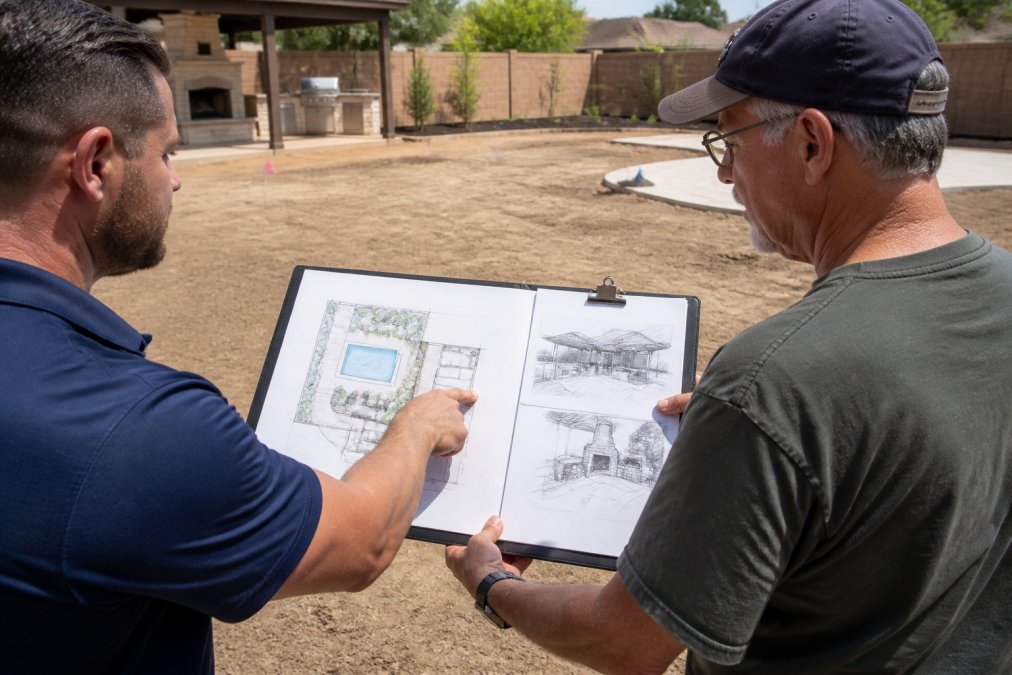
Key activities in Phase 1:
- Site measurement and photo documentation
- Soil and drainage assessment
- Utility location identification
- 2-3 design consultation meetings
- Digital renderings or sketches
- Design refinement and approval
Phase 2: Permits and Regulatory Approvals
Permit timelines vary widely (2-6 weeks). Check local requirements early, some areas require permits for pools, electrical work, or structures over certain sizes. Start the permit process during design phase, not after.
Phase 3: Site Preparation and Demolition
Site preparation takes 1-3 weeks depending on existing conditions. Contractors remove existing hardscaping, clear vegetation, and prepare the ground. Weather affects this phase significantly, wet conditions slow excavation, frozen ground prevents digging.
Phase 4: Construction and Installation
This is the longest phase. Hardscaping takes 2-6 weeks, softscaping 1-2 weeks, and custom features 2-4 weeks. Each phase depends on the previous one, concrete must cure before pavers go down, grading must be complete before planting.
Backyard Renovation Permit Requirements
Permit requirements vary by jurisdiction. Most areas require permits for pools, electrical work, and structures. Permit costs range from $50-200 for simple projects to $500-2,000 for complex ones. Plan for 1-2 inspection days during your project.
DIY vs. Professional Installation Timeline
DIY projects take 2-4 times longer than professional installations. Understanding this difference helps you decide whether DIY makes sense.
Timeline Comparison by Project Type
Simple patio installation (500 sq ft, standard pavers)
- Professional crew (2-3 people): 2-3 weeks
- Experienced DIYer: 6-10 weeks (weekends only)
- First-time DIYer: 10-16 weeks (weekends only)
Professionals have equipment, experience, and full-time focus. A DIYer working weekends spends 8-12 hours per week; a professional crew spends 80-120 hours per week.
Planting and softscaping (1,000 sq ft area, 15-20 plants)
- Professional crew: 3-5 days
- Experienced DIYer: 2-3 weekends
- First-time DIYer: 4-6 weekends
Outdoor kitchen installation (modular unit, electrical hookup)
- Professional crew: 3-5 days
- Experienced DIYer with electrical knowledge: 2-3 weeks
- First-time DIYer: 4-8 weeks (plus potential rework)
Fire pit and seating area (patio + hardscape + built-in seating)
- Professional crew: 1-2 weeks
- Experienced DIYer: 4-6 weeks
- First-time DIYer: 8-12 weeks
Labor Hour Requirements: What You're Actually Committing To
Understanding labor hours helps you assess whether you have the time.
Simple patio (500 sq ft): 80-120 labor hours. Working 10 hours per weekend, this is 8-12 weekends (3-4 months).
When DIY Makes Financial Sense
DIY saves money on labor, but only if you have the time and skill. Here's the math:
Planting and softscaping: DIY makes sense
- Professional labor cost: $1,500-3,000
- DIY material cost: $800-1,500
- Time commitment: 2-4 weekends
- Savings: $700-1,500
- Risk level: Low (mistakes are usually fixable)
Simple patio installation: DIY is borderline
- Professional labor cost: $3,000-6,000
- DIY material cost: $2,000-4,000 (plus equipment rental $200-500)
- Time commitment: 8-15 weekends
- Savings: $1,000-2,000
- Risk level: Medium (poor grading or base prep causes long-term problems)
Hardscaping with drainage: DIY is risky
- Professional labor cost: $4,000-8,000
- DIY material cost: $2,500-5,000 (plus equipment rental $300-800)
- Time commitment: 12-20 weekends
- Savings: $1,500-3,000
- Risk level: High (improper drainage leads to foundation issues, water damage)
Outdoor kitchen or pool: DIY is not recommended
- Professional labor cost: $5,000-15,000+
- DIY material cost: $3,000-10,000+
- Time commitment: 20-40 weekends
- Savings: $2,000-5,000 (if nothing goes wrong)
- Risk level: Very high (electrical, gas, and structural mistakes are dangerous and expensive)
Hidden Costs of DIY Projects
Equipment rental: $500-4,500 for a 12-week project. Mistakes and rework: Poorly graded patios cause water pooling and require weeks to fix. Material waste: Adds 10-20% to costs. Time value: DIY consumes weekends for months, affecting family time and rest.
When Professional Installation Saves Time and Money
Faster completion: A 12-week professional project vs. a 6-month DIY project means you enjoy your backyard sooner. That has value.
Phased Renovation Strategies to Speed Up Your Project
Phasing your backyard renovation spreads costs and timelines across multiple seasons. You complete one area, then move to the next. This approach works well for large projects.
Benefits of phasing:
- Spreads costs across multiple years
- Lets you enjoy completed areas while other work continues
- Allows budget adjustments based on Phase 1 results
- Reduces overall project disruption
Challenges of phasing:
- Total timeline extends longer
- Contractor availability varies between phases
- Material costs may increase between phases
- Design must account for future phases
Common Timeline Delays and How to Avoid Them
Most backyard renovation delays fall into predictable categories. Understanding these helps you avoid them.
Frequently Asked Questions
What factors cause the most delays in backyard renovations?
The biggest delays stem from permitting (2-4 weeks), material lead times for custom hardscaping or outdoor kitchens (4-8 weeks), weather interruptions, and utility location delays. Supply chain issues for specialty items like hot tubs or custom masonry can add 2-3 months alone. Contractor availability and site access problems also push timelines back. Planning ahead for permits and ordering materials early minimizes these bottlenecks.
How long does it take to install a hot tub or outdoor kitchen?
Installation itself typically takes 1-3 days for a hot tub and 2-5 days for an outdoor kitchen, depending on complexity and utility connections required. However, lead time for delivery and setup can stretch 4-8 weeks from order to completion. Utility work (gas, electrical, plumbing) adds 1-2 weeks. Professional installation ensures proper permitting and inspection compliance, which is critical for safety and resale value.
Can I speed up my backyard renovation timeline by doing it in phases?
Yes. Phased renovation strategies let you complete high-impact areas first (like patio and hardscaping) while waiting for material lead times on other elements. This approach spreads costs, reduces contractor coordination complexity, and lets you enjoy parts of your outdoor living space sooner. However, multiple phases mean multiple permitting cycles and site mobilization costs, so plan carefully with your contractor to balance speed against expense.
How long does the permitting process take for a backyard renovation?
Permitting timelines vary by jurisdiction but typically range from 2-6 weeks. Simple projects like patios may need only a basic building permit (2-3 weeks), while complex work involving pools, kitchens, or structures requires additional inspections and can take 4-6 weeks or longer. HOA approval adds another 1-3 weeks if your property is deed-restricted. Always check local requirements early, permits are often the longest single bottleneck in project timelines.