 ultimate-guide
Backyard Design Trends 2026: The Ultimate Guide
Table of Contents
- Backyard Design Trends 2026: What's Changing This Year
- Climate-Resilient Landscapes and Water-Wise Design
- Drought-Tolerant Plant Selection for Desert Climates
- Modern Desert Hardscaping Materials and Stone Features
- Luxury Outdoor Living Features for Resort-Style Retreats
- Sustainable Desert Garden Design with Biophilic Principles
- Trends Going Out of Style: What to Avoid in 2026
- DIY vs. Professional Installation and Permitting Compliance
Last Updated: August 16, 2026
Backyard Design Trends 2026: What's Changing This Year
Backyard design trends 2026 are shifting toward sustainability, smart technology, and resort-style comfort. Homeowners are moving beyond traditional lawns toward landscapes that work with the desert climate. Water conservation, intelligent automation, and luxury outdoor living now converge in ways that reduce maintenance while increasing enjoyment.
At allvalley, we've spent over 26 years watching families transform their outdoor spaces. The patterns we're seeing now are fundamentally different from two years ago. It's not just about aesthetics anymore, it's about creating functional retreats that align with environmental realities and personal wellness priorities. The backyard design trends 2026 reflect a maturation in how people think about outdoor living: less about impressing neighbors, more about creating spaces that genuinely enhance daily life.
What makes this moment unique is the convergence of three forces: climate urgency making water-wise design non-negotiable, smart irrigation technology becoming affordable and reliable, and homeowners demanding outdoor spaces that rival resort experiences.
Climate-Resilient Landscapes and Water-Wise Design
Climate-resilient landscape design creates outdoor spaces that thrive despite temperature extremes and unpredictable water availability while minimizing required resources. Xeriscaping, the practice of landscaping with minimal water requirements, has moved from niche concept to mainstream standard. Modern xeriscaping integrates native desert flora, strategic hardscaping, and thoughtful plant placement to create visually rich landscapes while consuming a fraction of the water traditional lawns demand.
The fundamental principle is micro-climate awareness. Every backyard contains multiple microclimates created by shade patterns, wind exposure, soil composition, and reflected heat. Design that accounts for these variations allows plants to thrive with minimal intervention.
Drip Irrigation and Smart Landscape Technology
Drip irrigation delivers water directly to plant roots through tubing, eliminating waste from evaporation and runoff. Modern systems are intelligent: smart controllers adjust watering schedules based on real-time weather data, soil moisture sensors, and plant-specific requirements. Instead of watering on fixed schedules, smart irrigation responds to actual needs. If rain falls overnight, the system skips the next watering. If temperatures spike, it adjusts automatically. Water consumption can drop 30-50% compared to traditional sprinkler systems.
Basic drip systems can be DIY projects if you're comfortable with tubing layout. Smart controllers typically require professional setup to ensure proper sensor placement and programming. Soil health integration is equally important, drip irrigation works best paired with mulch layers and soil amendments that improve water retention.
Drought-Tolerant Plant Selection for Desert Climates
Choosing plants adapted to desert conditions is the foundation of water-wise landscaping. Drought-tolerant plants have evolved mechanisms to survive with minimal water: deep root systems, waxy leaf coatings, and the ability to store water in stems or leaves. The visual palette available through drought-tolerant selection is broader than most realize.
Native Desert Flora and Micro-Climate Specific Palettes
Native desert flora evolved to thrive in local conditions. These plants require minimal supplemental water once established, no fertilizer inputs, and attract native wildlife. Micro-climate specific plant selection means matching plant requirements to actual conditions in different yard areas. North-facing areas stay cooler and can support shade-preferring plants. South and west-facing areas need the most heat-tolerant species.
A well-designed palette might include native succulents like agave and yucca for structural pieces, desert shrubs like creosote for mid-story layering, and groundcovers like desert gold verbena for lower layers. Newly planted drought-tolerant plants still need consistent water for the first growing season while roots develop. After establishment, typically 12-18 months, they transition to minimal supplemental watering.
Modern Desert Hardscaping Materials and Stone Features
Hardscaping, non-plant landscape elements like patios, pathways, and retaining walls, anchors the visual composition while serving practical functions. Modern desert hardscaping moves beyond basic concrete toward natural stone, boulders, and permeable paving materials that integrate with the landscape.
Permeable paving is gaining prominence as homeowners recognize the value of water infiltration. Permeable alternatives like permeable pavers, decomposed granite, and gravel allow water to permeate while providing functional surfaces.
Structural Statement Pieces and Boulder Placement
Large boulders serve as focal points, visual anchors, and functional elements in desert landscape design. Strategic boulder placement creates visual interest, defines spaces, and provides scale contrast. A single large boulder placed thoughtfully has more impact than scattered smaller stones.
Boulder selection considers color, texture, and geological authenticity. Placement matters equally, boulders positioned at slight angles rather than perfectly level appear more natural. Beyond aesthetics, boulders create microclimates where shade-loving plants thrive, define pathways without constructed walls, and anchor planting beds. Large boulders need proper foundation preparation and sometimes professional placement equipment.
Luxury Outdoor Living Features for Resort-Style Retreats
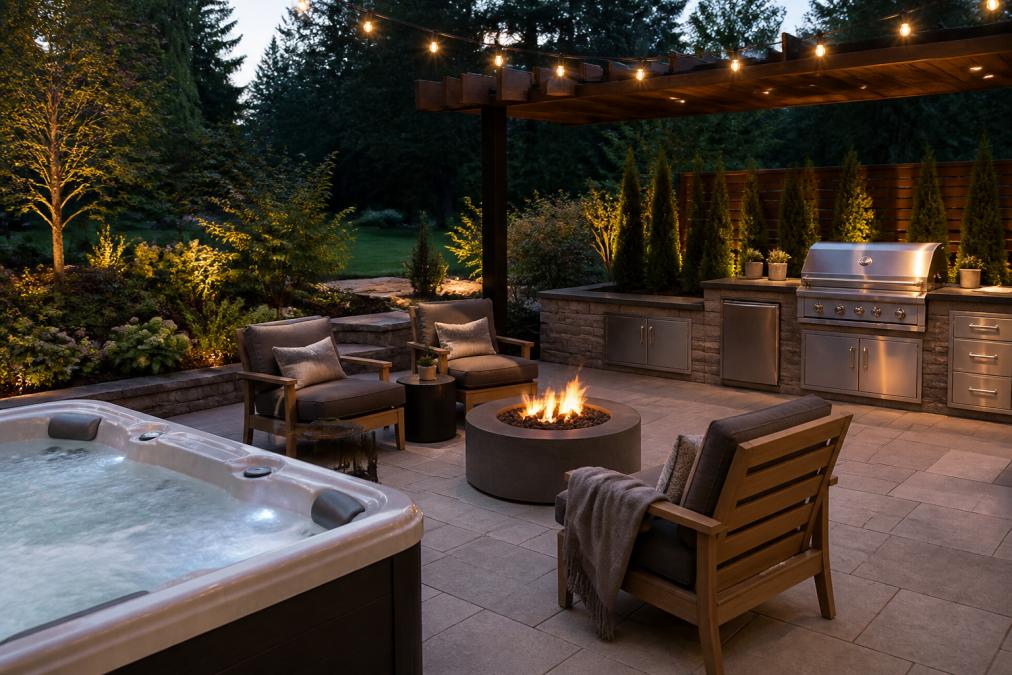
The gap between a functional backyard and a resort-style retreat comes down to intentional design of outdoor living spaces. Luxury outdoor features, hot tubs, outdoor kitchens, entertainment areas, and wellness zones, transform backyards into destinations.
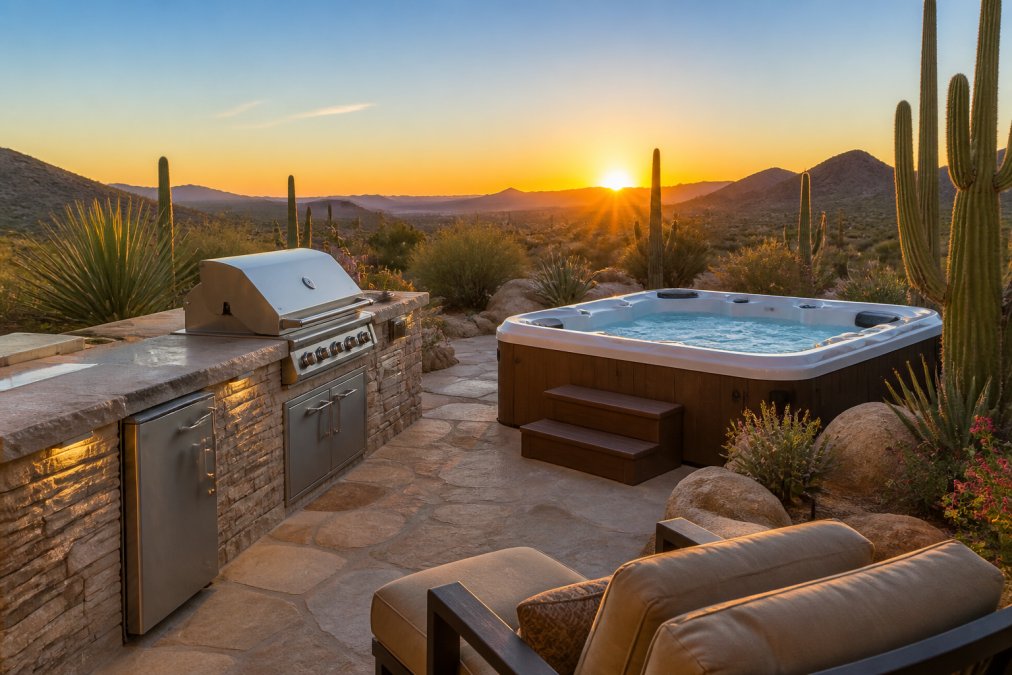
The 2026 trend is toward integrated outdoor living where multiple functional zones flow together as a cohesive retreat. Successful designs create intentional pathways and sight lines connecting different spaces.
Outdoor Kitchens, Entertainment Hubs, and Wellness Zones
Outdoor kitchens have evolved from novelty features to essential elements in luxury backyard design. A properly designed outdoor kitchen includes cooking surfaces, food prep areas, storage, and seating for entertaining. Placement matters strategically, proximity to the main house simplifies utility connections and allows entertaining to flow between indoor and outdoor spaces.
Material selection prioritizes durability and maintenance ease. Stainless steel appliances resist corrosion. Stone countertops handle heat and weather. High-quality cabinetry with marine-grade hardware withstands temperature swings.
Hot tubs represent the wellness component of resort-style retreats. Positioning them as intentional wellness spaces, near shade structures and surrounded by comfortable seating, creates a genuine wellness zone. allvalley specializes in premium hot tubs with professional installation services that ensure proper placement, utility connections, and deck integration. Their hot tubs come with free starter kits and chemicals included, reducing barriers to getting started.
Entertainment hubs combine multiple functions, dining, games, conversation, entertainment, in a single integrated space. Shade structures provide thermal comfort while allowing gatherings to extend through hot daylight hours. Outdoor lighting creates ambiance and extends usable hours into evening.
Sustainable Desert Garden Design with Biophilic Principles
Biophilic design incorporates natural elements and patterns into built environments, creating spaces that feel restorative and connected to nature. In desert garden design, biophilic principles mean designing landscapes that engage the senses, support wildlife, and create psychological benefits through connection to natural systems.
Sustainable desert garden design integrates water conservation, native plant selection, and ecological health with intentional aesthetic and wellness outcomes. The most beautiful desert gardens are often the most sustainable ones because they work with natural systems rather than fighting them.
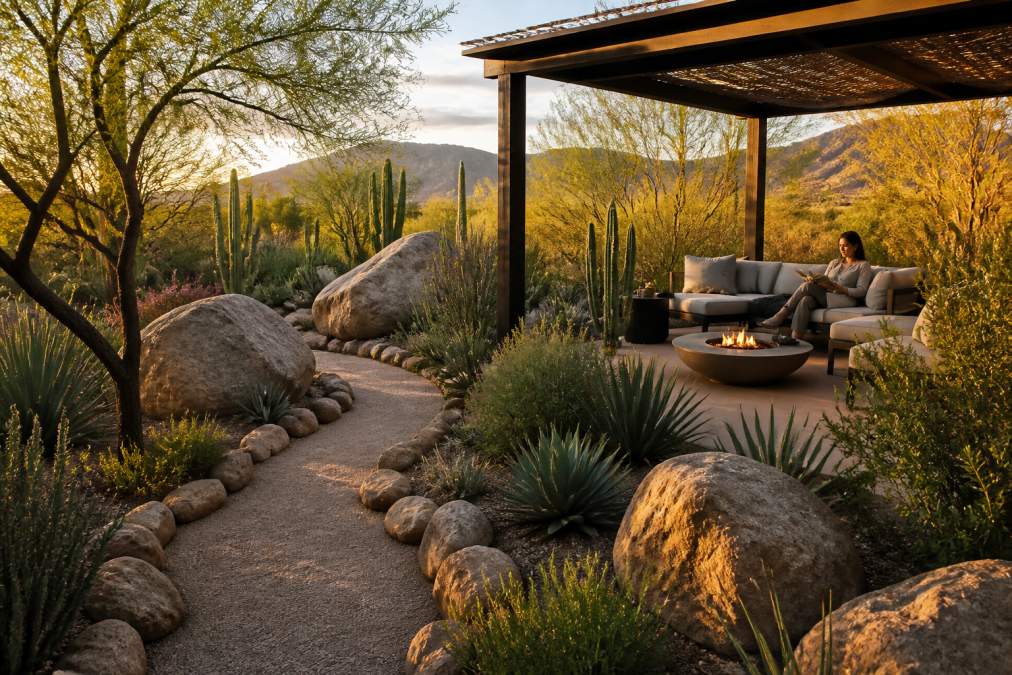
Heat Mitigation, Shade Structures, and Outdoor Lighting
Heat mitigation strategies are essential in desert climates where summer temperatures regularly exceed 100°F. Shade structures, pergolas, shade sails, trees, and arbors, reduce surface temperatures by 15-20°F while creating comfortable outdoor spaces. Deciduous trees provide seasonal shade control: full coverage during hot months and open canopy during cooler months.
Water features contribute to cooling through evaporation while providing visual and auditory engagement. Outdoor lighting extends usable hours while creating ambiance. LED technology makes outdoor lighting energy-efficient and long-lasting. Layered lighting, ambient overhead, accent on focal points, and path lighting for safety, creates depth and visual interest.
Thermal comfort design considers wind patterns, reflected heat from hardscaping, and microclimates created by structures. Placing seating areas in naturally cooler microclimates makes outdoor spaces genuinely comfortable.
Trends Going Out of Style: What to Avoid in 2026
Ornamental grass lawns are declining as water consciousness increases. The trend is moving toward eliminating large turf areas entirely and replacing them with functional hardscaping and native plantings.
Exotic plants requiring significant supplemental water and care are falling out of favor. The trend toward native and adapted plants reflects both practical and values-driven choices.
Over-designed hardscaping, excessive stonework covering large percentages of yards, is declining in favor of balanced integration of hardscape and planting. Ornamental water features requiring significant water and maintenance are being replaced by functional elements like smart irrigation systems and wellness-focused water features.
DIY vs. Professional Installation and Permitting Compliance
The decision between DIY implementation and professional installation depends on project complexity, your skill level, and local permitting requirements. Simple projects suitable for capable homeowners include planting, mulching, basic hardscaping like decomposed granite pathways, and installing simple drip irrigation systems.
Complex projects requiring professional expertise include hot tub installation (utility connections, foundation preparation, deck integration), outdoor kitchen installation (gas/electrical connections, ventilation), and major hardscaping (retaining walls, extensive paving, boulder placement).
Permitting requirements vary by jurisdiction. Hot tub installation typically requires permits for electrical and plumbing work. Deck construction requires permits and inspections. Professional installation through experienced contractors ensures compliance with local codes and proper execution.
Hybrid approaches, professional installation for complex systems combined with DIY planting and simple hardscaping, balance cost savings with ensuring critical systems are properly installed.
| Project Type | DIY Feasibility | Permitting Required | Best Approach |
|---|---|---|---|
| Planting and mulching | High | No | DIY |
| Drip irrigation installation | Medium | No | DIY or professional |
| Decomposed granite pathways | High | Usually no | DIY |
| Hot tub installation | Low | Yes | Professional |
| Outdoor kitchen | Low | Yes | Professional |
| Retaining walls | Medium | Sometimes | Professional for tall walls |
| Deck construction | Medium | Yes | Professional |
| Boulder placement | Medium | No | Professional for large boulders |
The backyard design trends 2026 reflect a maturation in how homeowners approach outdoor living: prioritizing sustainability without sacrificing luxury, embracing smart technology for efficiency, and creating spaces that genuinely enhance daily life.
allvalley brings 26 years of expertise in transforming backyards into ultimate retreats. Their professional installation services handle complex systems, hot tubs, outdoor kitchens, and integrated entertainment spaces, that require specialized knowledge. Free starter kits and chemicals with hot tub purchases remove barriers to getting started. Call allvalley at 760-342-5277 to discuss your backyard transformation and explore how professional installation can bring your 2026 design vision to life.
Frequently Asked Questions
What are the top backyard design trends for desert climates in 2026?
The biggest trends are climate-resilient landscaping with smart irrigation systems, drought-tolerant native plants, modern hardscaping with natural stone and boulders, and luxury outdoor living features like outdoor kitchens and entertainment hubs. Biophilic design principles, creating spaces that connect you to nature, are also gaining traction. Heat mitigation through shade structures and thermal comfort design is essential for desert environments where temperatures can be extreme.
How can I create a sustainable desert garden design that requires less maintenance?
Start with drought-tolerant plant selection using native desert flora suited to your micro-climate. Install drip irrigation or smart landscape technology to reduce water waste. Use permeable paving and natural boulders for hardscaping to minimize soil compaction. Group plants by water needs, add shade structures to reduce heat stress on plants, and apply mulch to retain soil moisture. These practices significantly lower maintenance demands while supporting environmental sustainability.
What plants thrive in a desert yard and require minimal watering?
Native desert flora like desert-adapted succulents, palo verde trees, desert marigold, and brittlebush are excellent choices. Other low-water options include agave, ocotillo, and desert willow. These plants are naturally suited to arid conditions and require minimal supplemental watering once established. Micro-climate specific plant palettes work best, consider sun exposure, soil type, and wind patterns in different areas of your yard to maximize plant health.
Should I hire a professional for backyard design or attempt DIY installation?
Professional installation ensures proper permitting compliance, correct hardscaping placement, and optimal irrigation system setup. DIY works for smaller projects like planting or adding mulch, but complex work like outdoor kitchens, hot tubs, or structural features requires expertise and permits. Professionals handle HOA compliance and building codes, reducing costly mistakes. Consider your budget, project scope, and local regulations before deciding.
What landscaping trends are becoming outdated for 2026?
Overly manicured lawns, high-water ornamental grass, generic non-native plants, and purely decorative hardscaping without function are fading. Water-intensive landscaping is out due to drought concerns and water restrictions. Generic designs lacking biophilic elements or heat mitigation are also considered outdated. The shift is toward functional, sustainable, climate-resilient designs that balance aesthetics with environmental responsibility.
How much will a backyard renovation cost, and what's the maintenance budget for 2026?
Costs vary significantly based on project scope, materials, and whether you hire professionals. Pricing depends on the size of your yard, specific features like outdoor kitchens or hot tubs, and local labor rates. Maintenance costs for sustainable desert gardens are typically lower than traditional lawns, expect reduced water bills and minimal chemical inputs. For exact quotes and current pricing on premium products and professional installation, contact us directly at 760-342-5277.
What is the rule of 3 in landscaping, and how does it apply to desert design?
The rule of 3 means grouping plants or design elements in odd numbers (3, 5, 7) for visual balance and natural appeal. In desert landscaping, plant three varieties of drought-tolerant plants together, use three different stone sizes in hardscaping, or create three distinct zones (entertaining, relaxing, dining) in your outdoor space. This principle creates harmony and prevents a cluttered or chaotic appearance while maximizing the impact of your design choices.
Do I need permits for backyard improvements like outdoor kitchens or hot tubs?
Yes, most jurisdictions require permits for permanent structures like outdoor kitchens, fire features, and hot tubs. Permit requirements vary by location and HOA rules. Professional installers handle permitting and ensure code compliance, protecting your investment and avoiding fines. Before starting any major project, check local building codes and HOA guidelines. Professional installation services typically include permit navigation and compliance verification.
This article was written using GrandRanker